The Best Computer Graphics Books, in Order
This curriculum is designed for an expert-level learner who wants to achieve deep mastery of computer graphics — from the mathematical and algorithmic foundations of rendering to the cutting edge of real-time shaders and ray tracing. The four stages build deliberately: first cementing the core theory and math, then mastering physically based rendering and ray tracing, then diving into GPU shaders and real-time pipelines, and finally reaching research-grade and specialized advanced topics.
Core Theory & Mathematical Foundations
IntermediateEstablish a rigorous shared vocabulary in linear algebra, transformations, the rendering pipeline, and the fundamental algorithms that underpin all of computer graphics.
▸ Study plan for this stage
Pace: 8–10 weeks, ~40–50 pages/day, with 2–3 days per week dedicated to exercises and review
- Linear algebra fundamentals: vectors, matrices, determinants, and their geometric interpretations
- Affine and homogeneous coordinate systems, and why homogeneous coordinates enable perspective projection
- Transformation matrices: translation, rotation, scaling, and composition of transformations
- The rendering pipeline: from world space through camera space to screen space, and the role of each transformation
- Ray tracing and rasterization as the two fundamental rendering paradigms
- Barycentric coordinates and their use in interpolation and triangle rasterization
- Lighting models: Phong shading, normal vectors, and the relationship between surface orientation and illumination
- Texture mapping and UV coordinates as a bridge between 2D images and 3D geometry
- Why are homogeneous coordinates necessary for representing perspective projection as a matrix operation, and how do they differ from Cartesian coordinates?
- Describe the complete transformation pipeline from object space to screen space, naming each coordinate system and the transformation between them.
- How do you compose multiple transformations (e.g., scale, then rotate, then translate) into a single matrix, and why does the order matter?
- What is the geometric meaning of the cross product and dot product, and how are they used in lighting calculations?
- Explain the difference between ray tracing and rasterization: what problems does each solve, and what are their computational trade-offs?
- How do barycentric coordinates enable smooth interpolation of vertex attributes (like color or normal vectors) across a triangle during rasterization?
- Implement a 4×4 matrix library in your language of choice (or use an existing one) and verify that composing translation, rotation, and scaling matrices produces the expected combined transformation.
- Write a program that transforms a 3D point through the full rendering pipeline: apply a model matrix, a view matrix, perform perspective division, and output screen coordinates.
- Build a simple ray tracer that shoots rays from the camera through each pixel, intersects them with a sphere, and computes Phong shading based on surface normals and light direction.
- Implement triangle rasterization using barycentric coordinates: given three vertices with different colors, fill a triangle by interpolating color across its surface.
- Create a visualization tool that shows how different transformation matrices affect a 3D mesh (e.g., a cube or teapot), allowing you to interactively adjust rotation, scale, and translation.
- Work through the mathematical derivation of the perspective projection matrix from Shirley's text, then verify it by projecting known 3D points and checking that they land at the correct screen positions.
Next up: Mastery of these mathematical foundations and the rendering pipeline prepares you to dive into specific rendering techniques—shaders, advanced lighting models, and real-time graphics optimization—because you will understand the "why" behind every transformation and illumination decision.
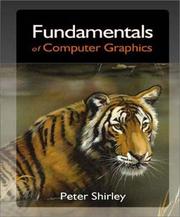
The single best entry point for a serious learner: covers ray casting, rasterization, transformations, and sampling with mathematical precision. Reading this first ensures every later topic has a clean conceptual anchor.
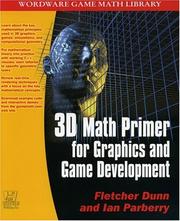
Fills in any gaps in the geometric and linear-algebraic machinery — vectors, matrices, quaternions, and coordinate spaces — that all subsequent rendering and shader work depends on heavily.
Rendering & Ray Tracing — From Principles to Production
ExpertUnderstand physically based rendering theory end-to-end, implement a full path tracer, and grasp the light-transport mathematics that drives modern offline and real-time rendering alike.
▸ Study plan for this stage
Pace: 12–16 weeks, ~40–50 pages/day (with implementation sprints). Allocate ~3 weeks to "Ray Tracing in One Weekend" (intensive coding), ~6–7 weeks to "Physically Based Rendering" (theory + reference), and ~3–4 weeks to "Real-Time Rendering" (breadth + optimization patterns).
- Ray-tracing fundamentals: ray generation, intersection testing, and recursive color computation
- Monte Carlo integration and importance sampling for unbiased light transport estimation
- BRDF theory and material models (Lambertian, specular, microfacet, Fresnel equations)
- Path tracing as a solution to the rendering equation via stochastic sampling
- Physically based units and radiometric quantities (radiance, irradiance, luminous intensity)
- Acceleration structures (BVH, spatial partitioning) for efficient ray–geometry queries
- Real-time rendering trade-offs: deferred shading, screen-space techniques, and approximations to offline rendering
- Light transport phenomena: direct illumination, global illumination, caustics, and subsurface scattering
- How does a basic ray tracer compute pixel colors, and why is recursive ray tracing necessary for global illumination?
- Explain the rendering equation and how Monte Carlo integration with importance sampling solves it in a path tracer.
- What is a BRDF, and how do microfacet models (e.g., GGX) improve upon simple Lambertian and specular models?
- Why are acceleration structures like BVH essential for production rendering, and how do they reduce ray–geometry intersection cost?
- How do real-time renderers approximate offline path tracing using deferred shading, screen-space reflections, and other techniques?
- What are the key differences in radiometric units between offline and real-time pipelines, and why does physical correctness matter?
- Implement a basic ray tracer from 'Ray Tracing in One Weekend': ray generation, sphere intersection, and recursive color computation; render a scene with diffuse and reflective spheres.
- Extend your ray tracer with anti-aliasing, depth-of-field, and motion blur using stratified sampling; measure convergence and noise reduction.
- Implement importance sampling for direct illumination (next-event estimation) and compare variance against naive Monte Carlo; visualize sample efficiency.
- Build a physically based material system supporting Lambertian, specular, and microfacet BRDFs; render a test scene with varying roughness and metallic parameters.
- Implement a BVH acceleration structure from scratch; benchmark ray–intersection performance before and after; profile bottlenecks.
- Port a simple scene from your offline path tracer to a real-time renderer (e.g., WebGL or a game engine); compare visual results and identify approximations used.
Next up: This stage equips you with both the mathematical foundations and practical implementation skills to understand how rendering engines work at their core, preparing you to explore specialized topics like advanced shading techniques, GPU optimization, or perceptually-driven rendering in subsequent stages.

A fast, hands-on construction of a working ray tracer that builds physical intuition for rays, BVHs, and materials before the heavier theory arrives.
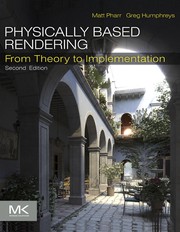
The definitive reference on PBR — light transport, BSDFs, Monte Carlo integration, and a full production renderer (PBRT). Reading it after the mini ray tracer means the theory lands on prepared ground.

Bridges offline PBR theory to the real-time world, covering the full GPU pipeline, BRDFs, shadows, global illumination approximations, and acceleration structures at expert depth.
Shaders, the GPU Pipeline & Real-Time Techniques
ExpertWrite expert-level GLSL/HLSL shaders, understand GPU architecture deeply, and implement state-of-the-art real-time lighting, post-processing, and procedural techniques.
▸ Study plan for this stage
Pace: 12–14 weeks, ~40–50 pages/day, with 2–3 days per week dedicated to shader implementation and GPU architecture deep-dives
- Shader fundamentals: vertex, fragment, and geometry shaders; shader compilation and linking pipeline
- GPU architecture: parallel processing, thread organization, memory hierarchy (registers, cache, VRAM), warp execution, and occupancy optimization
- Real-time lighting techniques: deferred rendering, forward+ rendering, physically-based rendering (PBR), and advanced shadow mapping (cascaded, variance, exponential)
- Post-processing and image effects: bloom, tone mapping, motion blur, screen-space ambient occlusion (SSAO), and temporal techniques
- Procedural generation: noise functions (Perlin, Simplex, Worley), fractals, and GPU-driven procedural content synthesis
- Optimization strategies: GPU profiling, bottleneck identification, memory access patterns, instruction-level parallelism, and shader optimization techniques
- Advanced rendering techniques: volumetric effects, particle systems, compute shaders, and real-time ray tracing fundamentals
- Practical GLSL/HLSL: precision handling, intrinsics, platform-specific optimizations, and debugging techniques
- Explain the complete GPU pipeline from vertex input to pixel output, including how shaders fit into each stage and what data flows between stages
- What is GPU occupancy, why does it matter, and how do register usage, thread block size, and memory access patterns affect it?
- Compare deferred rendering and forward+ rendering: when would you choose each, and what are the trade-offs in terms of bandwidth, cache efficiency, and light count scalability?
- Design a physically-based rendering shader that handles multiple light sources, normal mapping, and roughness/metallic parameters; explain how you would optimize it for a mobile GPU
- Implement a procedural noise-based terrain or texture generator in a fragment shader; explain the mathematical foundations and how to avoid aliasing artifacts
- Describe how cascaded shadow mapping works, why it's necessary for large outdoor scenes, and what GPU-specific optimizations you would apply
- What are the key differences between GLSL and HLSL, and how would you write portable shader code that compiles for both?
- Analyze a real-time rendering bottleneck (e.g., pixel shader bound vs. vertex bound vs. memory bound) and propose optimization strategies using GPU architecture knowledge
- Work through 'The Book of Shaders' interactive examples: master Perlin noise, fractional Brownian motion (fBm), and domain warping; create 3–4 original procedural textures combining multiple noise functions
- Implement a complete deferred rendering pipeline: G-buffer generation, light culling, and shading pass; profile and optimize for a target GPU (desktop or mobile)
- Build a physically-based material system with albedo, normal, roughness, and metallic maps; implement multiple light types (directional, point, spot) and validate against reference renders
- Implement cascaded shadow mapping with percentage-closer filtering (PCF); measure performance impact and optimize memory access patterns using GPU Gems 2 techniques
- Create a post-processing pipeline: implement bloom, tone mapping, and temporal anti-aliasing (TAA); measure GPU time per effect and identify optimization opportunities
- Write a compute shader for particle simulation or screen-space ambient occlusion (SSAO); benchmark against equivalent fragment shader implementation
- Implement a volumetric lighting effect (god rays or fog) using ray marching in a fragment shader; optimize for real-time performance on target hardware
- Profile a complex shader using GPU debugging tools (RenderDoc, Nsight, or PIX); identify bottlenecks (ALU, memory, bandwidth) and apply targeted optimizations from GPU Pro 360
Next up: This stage equips you with expert-level shader authoring, GPU architecture intuition, and real-time optimization skills—the foundation for tackling advanced topics like ray tracing, machine learning on GPUs, or specialized rendering for VR/AR in subsequent stages.

Builds deep intuition for fragment shaders and procedural math (noise, patterns, SDF) through progressive, visual examples — essential vocabulary before tackling GPU architecture texts.
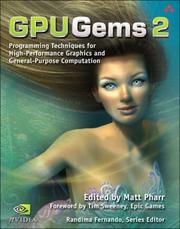
A landmark collection of real-world GPU techniques — terrain, water, skin, HDR, shadows — that shows how shader theory is applied at production scale.

Distills the best rendering chapters from the GPU Pro series into one volume, covering deferred shading, screen-space effects, and advanced lighting techniques used in shipped games and engines.
Advanced & Specialized Mastery
ExpertReach research-grade understanding of global illumination, ray tracing APIs, and the mathematical formalism of light transport, enabling original work or contribution to cutting-edge graphics systems.
▸ Study plan for this stage
Pace: 8–10 weeks, ~40–50 pages/day with 2–3 days per week for implementation work
- Light transport equation (LTE) and its mathematical formulation as a Fredholm integral equation of the second kind
- Monte Carlo integration theory applied to rendering: importance sampling, variance reduction, and convergence analysis
- Global illumination algorithms: path tracing, bidirectional path tracing, photon mapping, and Metropolis light transport
- Ray tracing API architecture and optimization: BVH construction, ray-primitive intersection, and GPU acceleration patterns
- Spectral and physically-based rendering: color spaces, spectral distributions, and energy conservation in light transport
- Advanced sampling techniques: stratified sampling, low-discrepancy sequences, and adaptive sampling for variance control
- Rendering equation decomposition: direct illumination, indirect illumination, and caustics in the context of global illumination
- Modern ray tracing systems: real-time ray tracing, denoising, and practical trade-offs between accuracy and performance
- Derive the light transport equation from first principles and explain why it is formulated as a Fredholm integral equation; what does each term represent physically?
- Compare and contrast path tracing, bidirectional path tracing, and Metropolis light transport in terms of variance, convergence rate, and computational cost; when would you choose each?
- Explain the role of importance sampling in Monte Carlo rendering and derive the optimal importance sampling distribution for a simple rendering scenario.
- Design a BVH construction algorithm for ray tracing and analyze its time complexity and memory overhead; what heuristics improve ray tracing performance?
- Implement a physically-based material model and explain how energy conservation is maintained across spectral channels in global illumination.
- Analyze the mathematical foundations of photon mapping: how does it approximate the rendering equation, and what are its variance characteristics compared to path tracing?
- Implement a Monte Carlo path tracer from scratch that correctly evaluates the light transport equation; validate convergence against analytical solutions for simple scenes (e.g., Cornell box).
- Build a bidirectional path tracer and compare its variance and convergence to unidirectional path tracing on scenes with difficult lighting (e.g., caustics, small light sources).
- Implement importance sampling for multiple light sources and measure variance reduction compared to uniform sampling; experiment with multiple importance sampling (MIS) weighting.
- Construct a BVH acceleration structure, implement ray-AABB and ray-triangle intersection tests, and profile ray tracing performance; optimize using spatial partitioning heuristics.
- Implement Metropolis light transport or photon mapping and compare image quality and convergence speed to path tracing on a complex global illumination scenario.
- Write a physically-based material system supporting diffuse, specular, and mixed BRDFs; verify energy conservation by integrating the BRDF over the hemisphere and rendering a white furnace test.
Next up: This stage establishes the mathematical rigor and algorithmic mastery needed to understand cutting-edge research in rendering—such as neural rendering, differentiable rendering, or specialized domain applications—by grounding you in the fundamental equations and proven optimization techniques that modern systems build upon.
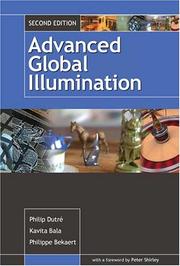
Provides the rigorous mathematical treatment of light transport — the rendering equation, radiosity, photon mapping, and Monte Carlo methods — at a depth that complements PBRT's implementation focus.
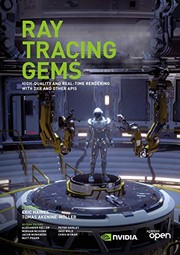
A curated collection of expert techniques for DirectX Raytracing and Vulkan ray tracing — denoising, hybrid rendering, BVH construction — representing the current frontier of real-time ray tracing.
Discussion
Keep reading
Paths that share books, cover the same subject, or open a related topic.