The Best Books on Recommender Systems
This curriculum is designed for expert-level learners who already have strong foundations in machine learning and want to achieve deep mastery of recommender systems — from the mathematical underpinnings of collaborative filtering and matrix factorization, through modern deep learning and ranking approaches, to production-scale system design. Each stage builds directly on the last: theoretical rigor first, then algorithmic depth, then real-world engineering and cutting-edge research.
Canonical Foundations & Core Algorithms
IntermediateEstablish a rigorous, unified vocabulary for recommender systems — covering collaborative filtering, content-based methods, matrix factorization, and evaluation — so every subsequent technique has a clear conceptual home.
▸ Study plan for this stage
Pace: 8–10 weeks, ~40–50 pages/day (mix of dense technical content and worked examples)
- Collaborative filtering (user-based and item-based) as the foundational paradigm for leveraging user-item interactions
- Content-based filtering: feature engineering, similarity metrics, and the complementary role to collaborative approaches
- Matrix factorization (SVD, NMF, latent factor models) as a unifying mathematical framework for dimensionality reduction and prediction
- Evaluation metrics and methodologies (RMSE, MAE, precision, recall, NDCG, A/B testing) for rigorous performance assessment
- The cold-start problem and sparsity challenges in real-world recommendation tasks
- Hybrid approaches that combine multiple recommendation strategies to overcome individual method limitations
- Implicit vs. explicit feedback and their impact on algorithm design and evaluation
- Ranking vs. rating prediction as distinct recommendation objectives with different evaluation requirements
- Explain the core difference between user-based and item-based collaborative filtering, and when you would choose one over the other.
- How does matrix factorization address the sparsity problem in collaborative filtering, and what are latent factors?
- What are the key differences between content-based and collaborative filtering, and why might a hybrid approach outperform either alone?
- How do you distinguish between rating prediction and ranking tasks, and why do their evaluation metrics differ?
- What is the cold-start problem, and what strategies does the literature propose to mitigate it?
- Describe the evaluation pipeline for a recommender system: how would you design an offline evaluation, and what metrics would you prioritize for a ranking task vs. a rating prediction task?
- Implement user-based collaborative filtering from scratch on a small dataset (e.g., MovieLens-100K): compute user similarities, generate predictions, and evaluate with RMSE.
- Implement item-based collaborative filtering on the same dataset and compare performance and computational efficiency to user-based CF.
- Build a simple content-based recommender using item features (e.g., movie genres, tags) and cosine similarity; compare its ranking quality to collaborative filtering using precision@k and recall@k.
- Implement matrix factorization (SVD or NMF) on the MovieLens dataset, tune the number of latent factors, and visualize how reconstruction error changes with rank.
- Design and execute a full evaluation pipeline: split data into train/test, compute multiple metrics (RMSE, MAE, precision@5, recall@5, NDCG@10), and create a comparison table across CF, content-based, and matrix factorization methods.
- Implement a hybrid recommender that blends collaborative filtering and content-based predictions (e.g., weighted average); measure whether it outperforms single-method baselines.
Next up: This stage establishes the mathematical and conceptual vocabulary—collaborative filtering, matrix factorization, evaluation rigor—that all advanced techniques (deep learning, knowledge graphs, context-aware systems, session-based methods) build upon or refine.

The single most comprehensive survey of the field, covering collaborative filtering, content-based, hybrid, and knowledge-based methods with both theory and worked examples. Read first to build a complete mental map of the landscape.

A deep, multi-author reference covering every major paradigm in academic depth. Read second to fill in mathematical details and see how leading researchers frame each sub-problem.
Matrix Factorization, Latent Factor Models & Optimization
ExpertMaster the mathematical core of modern recommender systems — SVD, ALS, BPR, and probabilistic latent factor models — and understand how they are optimized at scale.
▸ Study plan for this stage
Pace: 4–5 weeks, ~40–50 pages/day (with code implementation breaks)
- Singular Value Decomposition (SVD) and its role in low-rank matrix factorization for collaborative filtering
- Alternating Least Squares (ALS) optimization algorithm and its convergence properties for large-scale systems
- Bayesian Personalized Ranking (BPR) and pairwise loss functions for implicit feedback data
- Probabilistic latent factor models (e.g., probabilistic matrix factorization, Bayesian approaches) and their advantages over deterministic methods
- Regularization techniques (L1, L2, elastic net) and their impact on overfitting and generalization in latent factor models
- Optimization at scale: stochastic gradient descent (SGD), mini-batch training, and distributed computing considerations
- Evaluation metrics for recommender systems (RMSE, MAE, ranking metrics) and how they guide model selection
- Cold-start problem and how latent factor models address (or fail to address) new users/items
- How does SVD decompose a user-item rating matrix, and why is low-rank approximation effective for collaborative filtering?
- Explain the ALS algorithm: how does it alternate between optimizing user and item factors, and why is this more scalable than direct SVD on massive matrices?
- What is the key difference between explicit feedback (ratings) and implicit feedback (clicks, purchases), and how does BPR address implicit feedback?
- Compare deterministic matrix factorization with probabilistic latent factor models: what additional insights do probabilistic approaches provide?
- How do regularization terms prevent overfitting in latent factor models, and what trade-offs exist between different regularization strategies?
- Describe the optimization landscape of matrix factorization: what challenges arise when scaling to millions of users and items, and how do SGD and distributed approaches mitigate them?
- Implement SVD from scratch (using numpy) on a small rating matrix; compare your results to scikit-learn's implementation and interpret the latent factors
- Code the ALS algorithm for explicit feedback on a real dataset (e.g., MovieLens); tune regularization and rank, and plot convergence curves
- Implement BPR with SGD for implicit feedback data; compare ranking metrics (NDCG, Recall@k) against a baseline ALS model
- Build a probabilistic matrix factorization model using a Bayesian framework (e.g., with PyMC or Stan); visualize posterior uncertainty in latent factors
- Experiment with different regularization strengths (L2, elastic net) on the same dataset; create a validation curve showing RMSE vs. regularization parameter
- Implement mini-batch SGD for matrix factorization and measure wall-clock time and convergence speed vs. full-batch ALS on a large dataset
Next up: This stage equips you with the mathematical and computational foundations of latent factor models, preparing you to explore advanced topics such as neural collaborative filtering, temporal dynamics, and hybrid systems that combine content features with learned factors.

Covers probabilistic and statistical modeling of user-item interactions, including contextual bandits and exploration-exploitation trade-offs. Builds directly on latent factor intuition and adds rigorous statistical grounding.
Learning to Rank & Information Retrieval
ExpertUnderstand ranking as a first-class problem — learning-to-rank algorithms, IR metrics (NDCG, MAP), and how retrieval and ranking pipelines are structured in production recommendation engines.
▸ Study plan for this stage
Pace: 8–10 weeks, ~40–50 pages/day (mix of dense technical content and hands-on implementation)
- Boolean and vector space models as foundations for document retrieval and ranking
- Ranking functions and scoring mechanisms: TF-IDF, BM25, and language models for IR
- Evaluation metrics for ranking: NDCG, MAP, MRR, and why they matter for production systems
- Learning-to-rank (LTR) as a supervised machine learning problem: pointwise, pairwise, and listwise approaches
- Feature engineering for ranking: query-document features, document features, and query features in LTR
- Gradient boosting and neural network models for learning-to-rank (GBDT, LambdaMART, neural LTR)
- Production ranking pipelines: retrieval stage, candidate ranking, and multi-stage architectures
- Online evaluation and A/B testing for ranking systems in real-world recommendation engines
- How do vector space models and TF-IDF scoring differ from language model-based ranking, and when would you use each?
- Explain the difference between NDCG and MAP as ranking metrics. Why is NDCG often preferred in production systems?
- What are the three main approaches to learning-to-rank (pointwise, pairwise, listwise), and what are the trade-offs between them?
- How do you design features for a learning-to-rank model, and what types of features are most important for ranking quality?
- Describe a typical two-stage or multi-stage ranking pipeline in a production recommendation engine. Why is this architecture necessary?
- What is LambdaMART, and why is it effective for learning-to-rank compared to standard gradient boosting?
- Implement TF-IDF and BM25 ranking from scratch on a small document collection (e.g., 1000 documents) and compare retrieval quality using MAP and NDCG
- Build a simple pointwise learning-to-rank model using logistic regression or a decision tree on a public ranking dataset (e.g., MSLR-WEB10K or Yahoo! Learning to Rank Challenge data)
- Extract and engineer 10–15 query-document features (e.g., BM25 score, query length, document length, term overlap) and measure their predictive power for ranking
- Implement NDCG and MAP evaluation metrics from scratch and validate them against reference implementations
- Train a pairwise LTR model (e.g., using RankNet or LambdaRank) on a public dataset and compare results to a pointwise baseline
- Design and simulate a two-stage ranking pipeline: first stage retrieves top-K candidates using BM25, second stage re-ranks using a learned model; measure latency and quality trade-offs
Next up: This stage establishes ranking as a core machine learning problem with rigorous evaluation metrics and production-ready algorithms, preparing you to integrate learned ranking into end-to-end recommendation systems and optimize for business metrics like engagement and conversion.

The canonical IR textbook, freely available online. Provides the rigorous foundation in ranking, indexing, and evaluation metrics (NDCG, MAP, MRR) that underpin every modern recommendation ranking layer.
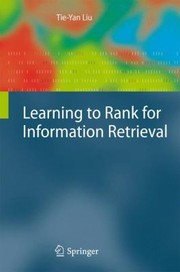
The definitive monograph on LTR, covering pointwise, pairwise, and listwise approaches. Read after Manning to move from classical IR into the machine-learned ranking methods used in recommendation engines.
Deep Learning for Recommender Systems
ExpertApply deep learning — embeddings, neural collaborative filtering, sequence models, and graph neural networks — to recommendation, understanding both the architectures and their trade-offs versus classical methods.
▸ Study plan for this stage
Pace: 8–10 weeks, ~40–50 pages/day (mix of dense theory and practical implementation)
- Feedforward neural networks and backpropagation fundamentals for recommendation tasks
- Embeddings as learned representations of users and items in continuous vector spaces
- Neural Collaborative Filtering (NCF) architecture and how it extends matrix factorization
- Sequence models (RNNs, LSTMs, GRUs) for capturing temporal dynamics in user behavior
- Graph Neural Networks (GNNs) for modeling user-item interactions as heterogeneous graphs
- Trade-offs between deep learning and classical methods: computational cost, interpretability, data requirements, and performance gains
- Practical implementation patterns: data preprocessing, negative sampling, evaluation metrics, and production considerations
- Regularization and optimization techniques specific to recommender systems (dropout, batch normalization, learning rate scheduling)
- How do embeddings in neural recommender systems differ from one-hot encoded features, and why are they more effective for capturing user-item relationships?
- Explain the Neural Collaborative Filtering architecture: how does it combine embeddings with neural networks, and what advantages does it offer over traditional matrix factorization?
- When would you use a sequence model (RNN/LSTM) versus a static embedding-based approach, and what specific user behaviors does a sequence model capture?
- How do Graph Neural Networks represent user-item interactions, and what types of recommendation problems benefit most from GNN-based approaches?
- What are the key trade-offs between deep learning recommender systems and classical methods (e.g., SVD, content-based filtering) in terms of accuracy, interpretability, scalability, and data requirements?
- Describe the end-to-end pipeline for training and deploying a deep learning recommender system, including data preparation, negative sampling, model evaluation, and serving considerations.
- Implement a basic feedforward neural network from scratch (using only NumPy) for a toy recommendation problem; then replicate it with TensorFlow/PyTorch to understand the abstraction layers
- Build a Neural Collaborative Filtering model on the MovieLens dataset: train embeddings for users and items, concatenate them, and pass through dense layers; compare results against SVD baseline
- Implement negative sampling for NCF training and measure the impact on convergence speed and final model performance
- Create a sequence-based recommender using LSTM on a dataset with temporal user interactions (e.g., e-commerce or music streaming); visualize how the hidden state captures user preference evolution
- Implement a simple Graph Neural Network for recommendation using a user-item bipartite graph; experiment with different aggregation functions and compare against NCF
- Conduct a comparative analysis: train classical (SVD, content-based), NCF, sequence-based, and GNN models on the same dataset; document trade-offs in training time, inference latency, accuracy, and model interpretability
- Build an end-to-end recommendation pipeline including data loading, train/validation/test splitting, hyperparameter tuning, and evaluation using standard metrics (NDCG, Recall@K, MRR); document design decisions
- Implement and experiment with regularization techniques (L2, dropout, early stopping) on an NCF model; measure the effect on overfitting and generalization
Next up: This stage equips you with the architectural foundations and practical skills to apply deep learning to recommendation, preparing you to explore advanced topics such as multi-task learning, cross-domain recommendation, real-time systems, and production-scale deployment challenges in subsequent stages.

Provides the deep learning foundations (embeddings, attention, sequence models) needed to reason rigorously about neural recommender architectures. Read first in this stage as a reference anchor.

Bridges theory and implementation, covering neural and non-neural approaches with concrete code examples. Grounds the abstract architectures from Goodfellow in practical recommender system contexts.
Production Systems, Scaling & Real-World Design
ExpertDesign and deploy recommender systems at industrial scale — covering system architecture, A/B testing, feedback loops, cold-start, and the engineering trade-offs made by leading technology companies.
▸ Study plan for this stage
Pace: 8–10 weeks, ~40–50 pages/day (with 2–3 days per week for exercises and reflection)
- End-to-end ML system design: data pipelines, model training, serving, and monitoring as an integrated whole
- Production constraints and trade-offs: latency, throughput, cost, accuracy, and how to navigate them in real systems
- Feedback loops and data drift: detecting, understanding, and mitigating distribution shift in live recommender systems
- A/B testing and experimentation: designing valid experiments, avoiding pitfalls, and measuring business impact
- Cold-start and exploration strategies: handling new users, items, and the exploration–exploitation trade-off
- System architecture patterns: batch vs. real-time serving, caching, feature stores, and orchestration
- Failure modes and debugging: identifying why recommender systems degrade and how to diagnose root causes
- Stakeholder alignment and iteration: translating business requirements into ML objectives and managing expectations
- How do you design a recommender system that balances real-time personalization with latency constraints, and what architectural choices differ between batch and online serving?
- What are the main sources of data drift in a recommender system, and how would you detect and respond to them in production?
- How do you design and analyze an A/B test for a recommender system to ensure statistical validity and measure both short-term and long-term business impact?
- What strategies would you use to address the cold-start problem for new users and new items, and how do you balance exploration with exploitation?
- Walk through the complete feedback loop in a production recommender system: how does user interaction data flow back into retraining and serving?
- What are the key trade-offs between model accuracy, system latency, and infrastructure cost, and how do you make principled decisions among them?
- Design a complete ML system architecture for a recommender system (e.g., for an e-commerce or content platform): specify data ingestion, feature engineering, model training cadence, serving strategy (batch/online), and monitoring. Document the latency and throughput constraints you're optimizing for.
- Implement a simple feedback loop simulation: train a recommender model, generate recommendations, simulate user interactions, retrain, and track how model performance changes over time. Identify where data drift occurs.
- Design an A/B test for a recommender system change (e.g., a new ranking algorithm or exploration strategy). Define your primary and secondary metrics, sample size calculation, and how you'd detect if the test is biased or underpowered.
- Build a cold-start handler: implement a strategy for new users (e.g., content-based, popularity-based, or hybrid) and new items. Compare performance against a baseline and document the exploration–exploitation trade-off.
- Conduct a failure analysis: take a real-world recommender system scenario (e.g., from a case study in the books) and trace through what could go wrong—data quality issues, model staleness, feedback loops, etc. Propose monitoring and mitigation strategies.
- Create a feature store design document: specify which features are needed for your recommender system, their update frequency, storage layer, and how they're served to the model and online inference.
Next up: This stage equips you with the systems thinking and engineering discipline to deploy recommender systems reliably at scale; the next stage will likely deepen your understanding of advanced modeling techniques, personalization strategies, or domain-specific applications (e.g., ranking, sequential recommendation, or multi-objective optimization).

Covers the full lifecycle of ML products including recommender features — from prototyping through evaluation to deployment and monitoring. Sets the engineering mindset for the stage.

Addresses production concerns directly relevant to recommenders: feature pipelines, data distribution shift, feedback loops, and online evaluation. Read last as the capstone that ties algorithmic knowledge to real-world system constraints.
Discussion
Keep reading
Paths that share books, cover the same subject, or open a related topic.