Daniel Dennett Reading Order: Where to Start with the Philosophy of Mind
Dennett spent fifty years making one connected case — that minds are what brains do, that Darwinian explanation reaches all the way up, and that the apparent mystery of consciousness dissolves under the right analysis — and reading him out of order turns that case into a series of provocations. This path starts with the toolkit book he wrote late in life precisely to make the rest accessible, then takes the central argument and the leading philosophical objection to it side by side, follows the evolutionary case, and ends with the technical papers and the memoir.
The toolkit
BeginnerLearn the thinking tools and the vocabulary — intentional stance, intuition pump, competence without comprehension — that every other book on this path assumes.
▸ Study plan for this stage
Pace: Two to three weeks. Intuition Pumps is built as roughly seventy short chapters, most of them three to six pages, so it takes to being read a handful at a time over a fortnight — two or three a sitting is the natural rhythm and there is no reason to push. Kinds of Minds is under 200 pages and genuine
- The intentional stance — treating a system as if it had beliefs and desires because that is the most predictive way to describe it, not because you have settled what it really is. This is the move every later book on the path rests on
- What an intuition pump actually is: a thought experiment with adjustable knobs, and Dennett's characteristic method of turning the knobs to see whether the intuition survives
- Competence without comprehension — the idea that something can do a thing well without understanding it, which is the hinge connecting the mind books to the evolution books
- Rathering, deepity, and the rest of the boobytrap vocabulary — Dennett's named catalogue of bad philosophical moves, which he will use as shorthand accusations in the later books
- The design, physical and intentional stances as three levels of description of the same object, and why choosing between them is a practical rather than a metaphysical question
- Kinds of Minds' ladder from bacteria through Darwinian, Skinnerian, Popperian and Gregorian creatures — the miniature of the argument From Bacteria to Bach will spend 500 pages on
- Why Dennett thinks the vocabulary you use to pose a question about mind usually contains the error
- Adopt the intentional stance toward a thermostat, then toward a dog, then toward a person. What changes across the three, and does Dennett think anything changes in kind?
- Pick one intuition pump from the book and turn a knob on it as Dennett does. Does the intuition still come out the same way, and what does that tell you about the original?
- What does Dennett mean by a deepity, and can you find one in something you have read recently that is not philosophy?
- Kinds of Minds argues that there is no sharp line where minds begin. What work is that doing for him, and what would it cost his project if a sharp line existed?
- Which of these tools do you already suspect is doing too much — that is, which one looks less like a tool and more like the conclusion smuggled in early?
- Keep a one-page glossary as you read Intuition Pumps: term, Dennett's definition in your words, and one example of your own. Intentional stance, intuition pump, competence without comprehension, skyhook and crane are the five you will need most in later stages.
- Take the Frank Jackson colour-scientist case or the Chinese Room as Dennett presents it, and write a 200-word account of what the thought experiment is designed to make you feel and where Dennett says the feeling comes from.
- After Kinds of Minds, write out Dennett's creature ladder from memory as a single diagram — one line per level, with what each can do that the level below cannot. Keep it; you will hand it back to yourself in the fourth stage.
- Pick any short chapter of Intuition Pumps and try to state the point in one sentence without using any of Dennett's own coinages. Where you cannot, you have found a place where the vocabulary is carrying the argument.
Next up: Consciousness Explained assumes every one of these tools without reintroducing them, so having the glossary in your head is the difference between reading it as an argument and reading it as a series of assertions.
Written as a summary of his own methods after four decades, and the single best entry point: short chapters, each explaining one move he uses elsewhere. Reading it first means the later books arrive with their machinery already installed.
A short popular book on what kinds of things have minds — bacteria, thermostats, dogs, us — and the cleanest statement of the intentional stance for a general reader. It is the miniature of the whole project and takes an afternoon.
The theory of consciousness, and the objection to it
IntermediateUnderstand the multiple-drafts model and why a substantial part of philosophy of mind rejects it, without having the disagreement resolved for you.
▸ Study plan for this stage
Pace: Six to eight weeks, and the hardest stretch of the path. Consciousness Explained runs about 510 pages of dense argument; 20 to 25 pages a day is realistic and 40 is optimistic. Chalmers is shorter but technically harder in places — the two-dimensional semantics chapters in the back half are professi
- The Cartesian theatre — the assumption that there is a place in the brain where it all comes together for an audience — and Dennett's claim that almost every account of consciousness smuggles it back in after officially rejecting it
- The multiple drafts model: content fixations happening at various places and times, with no canonical stream and no moment at which something becomes conscious
- Heterophenomenology, Dennett's method of taking subjects' reports as data about what they believe rather than as reports of inner facts
- The attack on qualia as usually conceived — intrinsic, ineffable, private properties of experience — and the claim that dropping them costs you nothing you actually had
- Chalmers' distinction between the easy problems (discrimination, reportability, integration) and the hard problem (why any of it is accompanied by experience), and the charge that Dennett answers the first set and declares the second dissolved
- The zombie argument and the conceivability-to-possibility step it depends on, which is where most of the disagreement actually lives
- Naturalistic dualism as Chalmers presents it — not Cartesian souls, but experience as a further fundamental feature — and why he thinks this is compatible with physics
- State the multiple drafts model in your own words in five sentences. Where does it deny something you had assumed about your own experience?
- Chalmers' critics summarise his position as taking a conceivability claim to a metaphysical conclusion; Dennett's critics summarise his as changing the subject. Which summary is fairer to its target, and can you argue the other side?
- Is a philosophical zombie conceivable to you? Trace exactly what you are doing when you try — and consider Dennett's response that you have not really conceived it, only thought you have.
- What would count as evidence against the multiple drafts model? If you cannot name anything, is that a strength or a weakness of the theory?
- Both writers accept that brains are physical and that consciousness depends on them. Given that, what is actually at stake between them — a fact about the world, a choice of vocabulary, or a standard for what counts as an explanation?
- Write a 300-word summary of Consciousness Explained that a Chalmers sympathiser would agree is accurate, then a 300-word summary of The Conscious Mind that Dennett would agree is accurate. Charitable restatement is the whole skill this stage teaches.
- Build a two-column sheet: on the left, each phenomenon Dennett explains (colour phi, metacontrast, the cutaneous rabbit, blindsight); on the right, what Chalmers would say remains unexplained about that same phenomenon.
- Find the specific pages where Chalmers responds to Dennett by name and the passages in Consciousness Explained closest to what he is attacking. Read them back to back and note whether they are addressing the same claim.
- Write down, before you finish either book, which position you expect to end up holding. Revisit it at the end of the path — the intentional-stance material in the fifth stage changes how the disagreement looks and it is worth having a record of what you thought first.
- Do the heterophenomenology exercise on yourself: describe an ordinary minute of experience, then mark each sentence as a report about the world, a report about your belief, or a claim about an inner object. The last category is the contested one.
Next up: You now have the mind half of the argument and the strongest objection to it; Darwin's Dangerous Idea supplies the other half, and it is the book that explains why Dennett thinks he was entitled to the moves you have just watched him make.
The central book: the attack on the Cartesian theatre, the multiple-drafts model, and the argument that qualia as usually conceived do not exist. Long and demanding, and it is the thing his critics are almost always responding to, so it has to be read directly rather than through summaries.
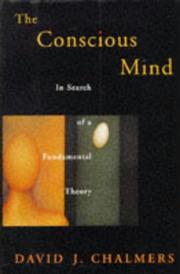
Chalmers' book, published five years later, formulates the hard problem and argues that Dennett has explained the functions and left the experience untouched — critics have joked that the earlier title should have been Consciousness Explained Away. This is a genuine, unresolved split in philosophy of mind and placing the two books adjacent is the only honest way to present it.
Darwin all the way up
IntermediateFollow the evolutionary half of the argument, from natural selection as a universal acid to a naturalistic account of free will.
▸ Study plan for this stage
Pace: Six to seven weeks. Darwin's Dangerous Idea is about 590 pages and unlike Consciousness Explained it accelerates — the opening chapters on the algorithmic character of selection are the slow part and the payoff chapters read fast. Freedom Evolves is 350 pages and roughly a fortnight. Do not read Fre
- Natural selection as a substrate-neutral algorithm — a mindless, mechanical procedure that will run on anything with variation, heredity and differential success, which is what makes it a universal acid
- Skyhooks versus cranes: the demand for an unexplained lifting force from above versus an explanation built from what is already there. Almost every argument in the book is sorted into this pair
- The design space and the library of Mendel — the picture of all possible organisms as a searchable space, and evolution as an actual search through it
- Dennett's case against Gould on spandrels, punctuated equilibrium and adaptationism, and the fact that this is a real dispute among biologists rather than a settled matter — read it knowing Gould answered back
- Greedy reductionism as the error Dennett wants to be acquitted of: explaining a level away rather than explaining how it arises
- The compatibilist move in Freedom Evolves — that determinism does not entail inevitability, and that the freedom worth wanting is an evolved capacity for self-control rather than an exemption from causation
- Evitability, and Dennett's argument that avoidance behaviour is real and increases over evolutionary time even in a fully determined world
- What exactly makes an algorithm substrate-neutral, and why does Dennett think this is the single most important fact about Darwin's idea?
- Give an example of a skyhook someone has offered you — in ethics, in art, in an account of mind. What would the corresponding crane look like?
- Dennett attacks Gould at length. Reconstruct Gould's position as strongly as you can from what Dennett quotes, and identify where you would need to read Gould directly to judge the exchange.
- In Freedom Evolves, what is the difference between determinism and inevitability, and does the distinction do the work Dennett needs it to do?
- Does the compatibilist account preserve moral responsibility in the sense you actually cared about, or does it substitute a different and easier sense? Argue it both ways before deciding.
- How does competence without comprehension, from the first stage, do work in both of these books?
- Diagram the skyhook/crane distinction as a two-column list, filling it with every instance Dennett names as you read. By the end of the book you should have fifteen or twenty entries and a clear sense of what he counts as each.
- Write 400 words defending Gould's side of the adaptationism dispute using only material Dennett himself supplies. If you cannot make it sound like a real position, that tells you something about the book's charity, which is worth noticing either way.
- Take one moral concept — desert, blame, praise — and write out how Freedom Evolves reconstructs it. Then write the strongest single sentence a hard determinist would say in reply.
- Reread the last chapter of Darwin's Dangerous Idea immediately after finishing Freedom Evolves. The books are separated by seven years and the later one is essentially an expansion of that chapter.
Next up: With the algorithm and the compatibilist account in hand you have the two engines Dennett runs everything else on, and the next stage is simply those engines pointed at religion and then at the whole history of minds.
His best book by many readings: natural selection as an algorithmic process whose consequences reach into ethics, meaning and mind. It also contains the sustained attack on Stephen Jay Gould and on what Dennett calls skyhooks, so you get the disputes as well as the thesis.
The compatibilist account of free will, arguing that the freedom worth wanting is not threatened by determinism. It depends on the evolutionary framework of the previous book and on the intentional stance from the first stage, which is why it sits here rather than earlier.
Applying it outward
IntermediateSee the same framework turned on religion and on the whole history of minds and culture.
▸ Study plan for this stage
Pace: Six weeks or so. Breaking the Spell is around 450 pages and reads quickly; two to three weeks. From Bacteria to Bach and Back is 500 pages but far denser, and it is the book on this path most improved by note-taking — allow three to four weeks and keep the first stage's glossary open, because it rec
- Religion as a natural phenomenon — the proposal is that religion be studied with the tools used on any other human behaviour, and the book's actual argument is for permission to ask, not for a finding
- Belief in belief: the distinction between holding a proposition true and holding it important that the proposition be held true, which Dennett thinks explains a great deal of religious behaviour
- The meme as a cultural replicator, and Dennett's more careful late version of it in From Bacteria to Bach — words as the clearest case, and the retreat from Dawkins' stronger claims
- The inversion of reasoning — Darwin's and Turing's shared move, that competence can precede and produce comprehension rather than requiring it. This is the keystone of the late synthesis
- Bottom-up design in evolution, in learning and in culture, and the claim that human minds are themselves a product of cultural selection rather than only its author
- The user illusion, borrowed from computing, as Dennett's late account of what the manifest image of the mind is for — a control interface rather than a false report
- Why Dennett places these two books at the end of the popular sequence: each assumes both the algorithm and the intentional stance and neither re-derives them
- What does Breaking the Spell actually claim, as opposed to what its reputation claims? Write the thesis in one sentence and check it against the book's own framing.
- Distinguish belief from belief in belief with an example from outside religion — a political conviction, a family story, a professional norm. Does the distinction survive the transfer?
- From Bacteria to Bach argues that culture is itself an evolutionary process with its own units. Where do you think that analogy is strongest, and where does it start to feel like a metaphor being asked to carry a proof?
- What is the inversion of reasoning, and how does it connect Darwin, Turing and Dennett's own account of consciousness from the second stage?
- If minds are largely built by cultural selection, what happens to the idea of an author or an original thought? Does Dennett think this is a loss?
- Does the user illusion answer Chalmers, sidestep him, or restate the earlier position in newer vocabulary?
- Go back to the creature ladder you drew in the first stage and extend it with what From Bacteria to Bach adds — words, cultural transmission, deliberate design. You now have the whole arc on one page.
- Summarise Breaking the Spell's central proposal in 200 words in a way a religious reader would call fair. If you cannot, reread the introduction, because that is the test the book sets itself.
- List every place in From Bacteria to Bach where Dennett revises or softens something he asserted in the earlier books. There are several, and finding them is the best way to see the position as a developing one rather than a fixed creed.
- Take one everyday cultural item — a recipe, a joke format, a piece of slang — and try to describe its spread in strictly Dennettian terms. Note where the vocabulary strains.
Next up: Everything to this point has been Dennett writing for general readers; the last stage is the same positions stated where he has to defend them against professionals, which is where you find out how much the popular formulations were doing.
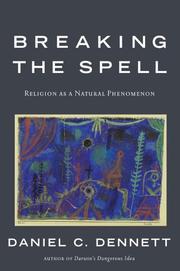
Religion treated as a natural phenomenon with an evolutionary and cultural history. Frequently filed with the New Atheist polemics, and it is worth noticing that this book is markedly more measured than that label suggests — its actual proposal is that religion be studied scientifically.

The late synthesis, pulling memes, cultural evolution, competence without comprehension and the intentional stance into one arc from the first replicators to human culture. It assumes essentially everything above and rewards being read last of the popular books.
The philosopher's Dennett
IntermediateRead the technical papers the popular books draw on, and the memoir that narrates the whole career.
▸ Study plan for this stage
Pace: Open-ended, and the only stage on this path not meant to be read straight through. The Intentional Stance and Brainstorms are paper collections — go to the chapter that answers the question the popular book left you with, rather than starting at page one. I've Been Thinking is different: read that o
- The real pattern argument — Dennett's technical answer to whether beliefs exist, and the reason he denies that the intentional stance is mere instrumentalism
- How the intentional stance is defended when the audience already knows the objections: the papers state it with conditions and qualifications the popular books drop
- Brainstorms as the seed bank — personal and sub-personal explanation, the early functionalism, and 'Where Am I', which does more philosophical work than its comic surface suggests
- The distance between Dennett's 1978 positions and his 2017 ones, and what changed on the way. Reading the two collections against From Bacteria to Bach makes that visible
- What professional replies look like in practice — the collections contain his responses to critics, and the tone and level of concession are instructive after four books of confident popular prose
- The memoir's account of the disputes with Gould, Chalmers, Searle and Fodor as intellectual friendships rather than only as arguments, which reframes the polemics you have just read
- What is a real pattern, and does the account succeed in making beliefs objective without making them things in the head?
- Take one claim from Consciousness Explained that felt too quick. Find the paper that defends it. Is the technical version stronger, or does it concede something the popular version did not?
- In 'Where Am I', what is the philosophical point underneath the joke, and which of the later positions does it prefigure?
- Where has Dennett changed his mind between 1978 and the late work, and where has he only changed the vocabulary?
- After the memoir, does the fifty-year case look like one connected argument, as the overview of this path claims, or like a series of positions held for different reasons?
- Make a list of every question you wrote down while reading the popular books that you felt went unanswered. Then hunt each one in the two collections' tables of contents. This is the only sensible way to read these volumes.
- Read 'Where Am I' aloud, or to someone else. It is the one philosophy paper on this path that works as a performance and the argument survives the entertainment.
- After the memoir, rewrite the sentence you wrote at the end of the second stage — the one recording which side of the Dennett–Chalmers split you expected to land on. Compare the two versions and account for any movement.
- Pick a single term from your first-stage glossary and trace it across all five stages: Brainstorms, The Intentional Stance, Consciousness Explained, Darwin's Dangerous Idea, From Bacteria to Bach. Watching one concept develop over forty years is the clearest picture of the career you can get.
Next up: This is the end of the path; the obvious next step is to read one of his opponents at full length rather than through his summaries — Gould on adaptationism or Searle on intentionality — now that you can tell a genuine disagreement from a difference in vocabulary.
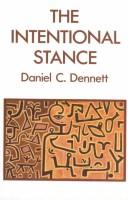
The collected papers where the position is defended in the terms professional philosophers use, including the replies to his critics. Harder than anything above and the place to go when a popular formulation seems to be dodging something.
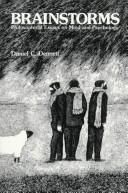
The 1978 collection, and the origin of much of what he spent the next forty years elaborating — including 'Where Am I', probably the most enjoyable philosophy paper ever written. Read for the roots, not for the current statement of the view.

The memoir, published in 2023 shortly before his death, and a genial tour of the arguments and the friendships and feuds around them. It works as a closing chapter because you now know what all the fights were actually about.
Discussion
Keep reading
Paths that share books, cover the same subject, or open a related topic.