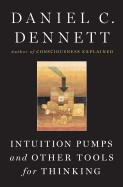
Start with Intuition pumps and other tools for thinking. It is a collection of seventy-odd thinking tools, each a few pages long, drawn from a career of arguing about minds, meaning and evolution. You can read it in any order, it never assumes prior philosophy, and it gives you the moves you will need for everything else — what a thought experiment is for, when one is cheating, and why Dennett distrusts most of the famous ones.
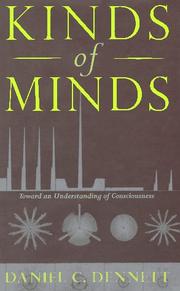
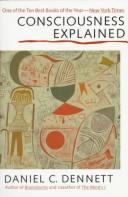
The obvious alternative is Consciousness explained, which is the book he is known for. It is also five hundred pages of sustained argument against positions you have not yet read, and starting there is how people end up describing Dennett as the philosopher who says consciousness does not exist, which is not what the book claims. If you want something shorter than Intuition pumps and other tools for thinking, Kinds of minds is under two hundred pages and is the most compressed statement of his overall view.
The core sequence
Intuition pumps and other tools for thinking, then Kinds of minds, then Consciousness explained. By the third you are ready for the actual thesis: that the mind has no inner theatre, no place where it all comes together, and that the sense of a unified experiencing self is something the brain produces rather than something it reports.
Then read David Chalmers's The Conscious Mind immediately afterwards. This is the most valuable pairing in the path. Chalmers argues that there is a hard problem — that even a complete functional account of the brain would leave unexplained why any of it feels like something — and Dennett's whole project is a denial that the hard problem is what Chalmers takes it to be. Both are serious philosophers, the disagreement has run for three decades without resolution, and reading only one of them leaves you with a confidence you have not earned.
The evolution books
Darwin's dangerous idea is the big one: natural selection as a universal acid that dissolves every explanation appealing to purpose from above. It is long, exhilarating and combative, and its running argument with Stephen Jay Gould over adaptationism was bitter and is still contested by working biologists. Read it as one side of a live scientific and philosophical dispute.
Freedom evolves applies the same machinery to free will, arguing that the only kind of freedom worth wanting is compatible with a deterministic universe. From Bacteria to Bach and Back, published as From Bacteria to Bach and Back: The Evolution of Minds, is the late synthesis that puts consciousness, culture and evolution into one account. It repeats a good deal of the earlier books, so read it either as your fourth Dennett or as your twelfth, not in the middle.
Breaking the spell is the outlier: a proposal to study religion as a natural phenomenon. It is more measured than its reception suggested, but it is also tied to a particular mid-2000s argument about religion and is the least philosophically substantial book here.
The academic Dennett
The intentional stance and Brainstorms are the professional papers, and they are where the ideas were first worked out. They are technical, they assume familiarity with the philosophical literature of their period, and they are the right destination if you intend to argue with him rather than read him.
I've Been Thinking is the memoir, published near the end of his life; he died in 2024. It is genial, discursive and full of anecdotes about the philosophers and scientists he spent sixty years arguing with, and it works best once you know what the arguments were.
Where to stop
Three books and one opponent is a complete introduction: Intuition pumps and other tools for thinking, Kinds of minds, Consciousness explained and The Conscious Mind. Add Darwin's dangerous idea if the evolutionary argument is what drew you. Go to The intentional stance only if you want the primary literature. More philosophy of mind sequences are on Discover.
Follow the full ordered path here: Daniel Dennett Reading Order: Where to Start with the Philosophy of Mind.