The consciousness problem: mind, brain & mystery
This curriculum moves from vivid, accessible introductions to consciousness all the way through rigorous scientific frameworks and the sharpest philosophical debates in the field. Each stage builds the vocabulary, intuitions, and conceptual tools needed to engage meaningfully with the harder material that follows — so by the end, the reader can hold their own in the deepest open questions about the nature of mind and subjective experience.
First Light — Intuitions & Wonder
BeginnerDevelop a felt sense of why consciousness is a hard problem, encounter the key questions (What is experience? What is the self?), and build enough curiosity to sustain the harder reading ahead.
▸ Study plan for this stage
Pace: 8–10 weeks total: Weeks 1–4 for "The Tell-Tale Brain" (~25–30 pages/day, 5 days/week), then Weeks 5–10 for "Consciousness Explained" (~20–25 pages/day, 5 days/week — slower pace to absorb Dennett's dense argumentation). Budget an extra review day at the end of each book before moving on.
- The Hard Problem of Consciousness — why explaining brain function doesn't automatically explain subjective experience (the 'explanatory gap' felt viscerally through Ramachandran's neurological cases)
- Qualia — the 'what-it-is-like' quality of experience (the redness of red, the painfulness of pain), introduced implicitly through phantom limbs and synesthesia in Ramachandran
- The brain as an inference machine — Ramachandran's core thesis that the brain constructs a 'best guess' reality, revealed when that construction breaks down in conditions like Capgras syndrome and neglect
- The self as a construction, not a fixed entity — both authors challenge the intuition that there is a stable, unified 'I' behind experience
- Dennett's Multiple Drafts Model — the idea that there is no single 'Cartesian Theater' where consciousness happens; instead, many parallel narrative streams compete and are edited into the story we call experience
- Heterophenomenology — Dennett's method of taking first-person reports seriously as data without assuming they are infallible windows into inner reality
- The intentional stance — treating systems as if they have beliefs and desires as a useful predictive strategy, blurring the line between 'real' and 'as-if' minds
- Intuition pumps — Dennett's philosophical thought experiments (the Chinese Room response, zimboes, etc.) as tools for stress-testing assumptions about consciousness
- After reading Ramachandran's cases (phantom limbs, Capgras syndrome, synesthesia), can you articulate in your own words why a purely functional account of the brain seems to leave something out — and what that 'something' might be?
- What does Ramachandran's work reveal about the relationship between brain damage and the sense of self? Give at least two specific case studies and explain what they imply about whether the self is unified.
- What is Dennett's central objection to the 'Cartesian Theater' model of consciousness, and what does he propose instead with the Multiple Drafts Model?
- How does heterophenomenology differ from simply believing everything a person reports about their inner life, and why does Dennett think this method is necessary?
- Can you explain the 'intentional stance' and give an example of when adopting it is useful — and when it might mislead us about the nature of mind?
- Having read both books, how has your intuitive picture of 'what consciousness is' changed or been complicated? What questions feel most alive and unresolved for you?
- Phantom-limb journaling: After each Ramachandran chapter, write a one-paragraph 'case reflection' — summarize the neurological condition, then write a second paragraph asking: 'What does this case suggest about the nature of experience or the self?' Accumulate these into a personal case-study log.
- Qualia inventory: Pick five ordinary experiences in a single day (the taste of coffee, the sound of rain, a feeling of mild anxiety). Write a short description of each, then ask: could a complete neuroscientific description of the brain state capture everything you just wrote? Use this as a recurring gut-check on the Hard Problem.
- Cartesian Theater audit: Before starting Dennett, draw or diagram your naive model of how consciousness works — where does experience 'happen' in your mental picture? After finishing the Multiple Drafts chapters, redraw the diagram. Compare the two and write a paragraph on what changed.
- Intuition pump stress-test: Choose one of Dennett's thought experiments (e.g., zimboes or the 'where exactly does the decision happen?' puzzle). Write a one-page steelman of Dennett's point, then write a one-page objection. Try to identify which part of your objection Dennett would call a 'intuition pump' of your own.
- Dialogue exercise: Write a one-page imaginary conversation between Ramachandran and Dennett about a single neurological case from 'The Tell-Tale Brain' (e.g., Capgras syndrome). How would each author interpret it? Where would they agree or disagree about what the case proves?
- End-of-stage synthesis essay (500–700 words): Answer the question 'Why is consciousness hard to explain?' drawing on at least three specific examples or arguments from each book. This essay will serve as a baseline document to revisit and revise as you advance through the curriculum.
Next up: By grounding the Hard Problem in vivid neurological cases (Ramachandran) and then systematically dismantling naive intuitions about a unified inner theater (Dennett), this stage leaves the reader with a productive tension — a felt sense that consciousness is both undeniably real and deeply puzzling — which is precisely the intellectual hunger needed to engage rigorously with more technical philoso
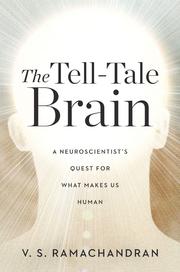
Ramachandran uses vivid neurological case studies to show how the brain constructs reality and selfhood — a gripping, jargon-free entry point that makes the strangeness of consciousness viscerally real.
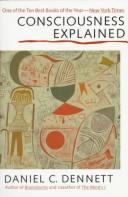
Dennett's landmark book challenges every naive intuition about the 'inner theater' of the mind; reading it first establishes the core vocabulary (qualia, intentionality, the Cartesian Theater) and sets up the debates that dominate the rest of the curriculum.
The Hard Problem — Science Meets Philosophy
BeginnerUnderstand why explaining consciousness scientifically is uniquely difficult, grasp the distinction between 'easy' and 'hard' problems, and meet the two dominant camps: physicalism and alternatives to it.
▸ Study plan for this stage
Pace: 6–8 weeks total: Weeks 1–4 for "The Conscious Mind" (~25–30 pages/day, including re-reading dense sections on the hard problem and property dualism); Weeks 5–8 for "The Feeling of What Happens" (~20–25 pages/day, pausing to journal on Damasio's case studies and neuroscientific arguments).
- The Hard Problem vs. Easy Problems: Chalmers' foundational distinction between explaining cognitive functions (easy) and explaining why there is subjective experience at all (hard)
- Qualia and Phenomenal Consciousness: The 'what it is like' quality of experience (Nagel's phrase, applied by Chalmers) — redness, pain, the taste of coffee — as the core explanandum
- The Explanatory Gap: Why no amount of physical or functional description seems to logically entail the existence of inner experience
- Philosophical Zombies (p-zombies): Chalmers' thought experiment — a being physically identical to a human but with no inner experience — used to argue consciousness is not logically entailed by physics
- Property Dualism and the Two-Aspect View: Chalmers' position that phenomenal properties are real but non-physical, resisting both eliminativism and Cartesian substance dualism
- Physicalism and Its Challenges: The dominant scientific worldview that everything, including mind, is physical — and why Chalmers argues it cannot fully account for phenomenal consciousness
- Core Consciousness vs. Extended Consciousness (Damasio): The distinction between the basic, moment-to-moment sense of self and the richer autobiographical self built from memory and narrative
- The Proto-Self and the Feeling of Knowing: Damasio's neurobiological account of how the brain constructs a 'self' through body-mapping, and how this generates the feeling that accompanies every conscious act — offering a scientific counterpoint to Chalmers' philosophical challenge
- In your own words, what makes the 'hard problem' hard? Why can't we solve it the same way we explain vision, memory, or attention?
- What is a philosophical zombie, and what philosophical work does this thought experiment do for Chalmers' argument against physicalism?
- How does Chalmers distinguish property dualism from Cartesian (substance) dualism, and why does he think property dualism is a more defensible position?
- Damasio argues that emotion and feeling are essential to consciousness — how does his concept of 'core consciousness' relate to, or challenge, Chalmers' framing of the hard problem?
- What is the 'explanatory gap,' and can you give a concrete example (drawn from either book) that illustrates why the gap feels unbridgeable to many philosophers?
- After reading both books, where do you stand: does Damasio's neuroscience dissolve the hard problem, sidestep it, or leave it fully intact? Justify your answer using specific claims from each author.
- Qualia Diary (ongoing): Each day, pick one sensory experience — a sound, a texture, an emotion — and write a paragraph describing what it is like from the inside. Then write a second paragraph describing only its physical/functional causes. Reflect on what the second paragraph leaves out. This directly trains intuition for the explanatory gap.
- P-Zombie Stress Test: Write a one-page dialogue between Chalmers and a committed physicalist. The physicalist must give their best objection to the zombie argument; Chalmers must respond. Swap sides and repeat. This forces you to steelman both camps.
- Concept Mapping: After finishing 'The Conscious Mind,' draw a diagram linking: Hard Problem → Explanatory Gap → Qualia → P-Zombies → Property Dualism. Add arrows showing how each concept supports or depends on the others. Revisit and revise the map after reading Damasio.
- Case Study Analysis (Damasio): Choose one of Damasio's neurological patient cases (e.g., patients with anosognosia or impaired core consciousness). Write a one-page analysis asking: What does this case tell us about the neural basis of consciousness? Does it address the hard problem, or only the easy problems?
- Debate Prep — Two Camps: Divide a page into two columns labeled 'Physicalism' and 'Non-Physicalism (Chalmers).' Populate each column with the strongest 3–4 arguments from the books. Identify one point of genuine agreement between Chalmers and Damasio, and one point of irreducible disagreement.
- Reflective Essay (end of stage): Write a 500-word essay answering: 'Is the hard problem a genuine scientific problem, a philosophical pseudo-problem, or something else entirely?' You must cite at least one specific argument from Chalmers and one from Damasio to support your position.
Next up: By grasping why consciousness resists purely physical explanation (Chalmers) and how the brain nevertheless constructs a felt sense of self (Damasio), the reader is primed to explore more advanced theories — such as Global Workspace Theory, Integrated Information Theory, and Higher-Order Theories — that attempt to build rigorous scientific and philosophical bridges across the very explanatory gap
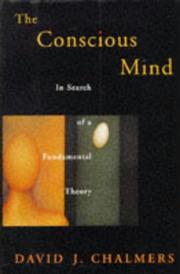
Chalmers coined 'the hard problem' and makes the most rigorous case that subjective experience cannot be reduced to physical processes — essential reading that defines the fault lines every later author responds to.
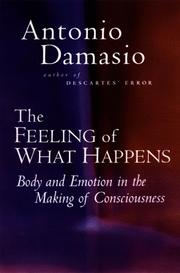
Damasio offers a neuroscientific counterpoint, grounding consciousness in the body and emotion; reading it directly after Chalmers shows how a scientist tries to bridge the explanatory gap from the other side.
Going Deeper — Theories of Consciousness
IntermediateEngage with the leading scientific theories of consciousness — Global Workspace, Integrated Information Theory, Higher-Order theories — and understand how each handles (or sidesteps) the hard problem.
▸ Study plan for this stage
Pace: 10–14 weeks total. Weeks 1–4: "The Case Against Reality" (~25–30 pages/day, reading in thematic chunks around Hoffman's interface theory and evolutionary arguments). Weeks 5–13: "Being No One" (~15–20 pages/day — Metzinger is dense; plan for re-reading key chapters on the Phenomenal Self-Model and r
- Interface Theory of Perception (ITP): Hoffman's argument that conscious experience is a species-specific 'desktop interface' shaped by fitness, not truth — and what this implies for the hard problem
- Fitness-Beats-Truth (FBT) Theorem: the evolutionary game-theoretic proof that organisms tracking fitness payoffs outcompete those tracking objective reality, undermining naive realism
- Conscious Agents: Hoffman's formal framework of interacting conscious agents as the fundamental ontology replacing spacetime and matter
- The Hard Problem as a reframing target: how Hoffman attempts to dissolve (rather than solve) the hard problem by making consciousness ontologically primitive
- Global Neuronal Workspace (background context): understanding the broadcasting model of consciousness that Metzinger's theory responds to and partially incorporates
- Phenomenal Self-Model (PSM): Metzinger's core claim that the 'self' is a transparent, real-time model the brain constructs — not an entity but a process
- Transparency and the Naïve Realist Illusion: why the brain's self-model feels like direct reality rather than a representation, and how this generates the sense of a subject
- No-Self Thesis: Metzinger's conclusion that no such thing as a 'self' exists — only self-models — and how this engages with (rather than sidesteps) the hard problem via the concept of phenomenal properties
- According to Hoffman's FBT theorem, why does evolution favor fitness-tracking over truth-tracking, and what does this imply about the reliability of our perceptual experience as a guide to objective reality?
- How does Hoffman's 'interface' metaphor differ from a straightforward representationalist account of perception, and does his framework actually solve or merely relocate the hard problem?
- What is the Phenomenal Self-Model in Metzinger's theory, and why does its 'transparency' make the brain's self-modeling process invisible to the very system running it?
- How does Metzinger's account of out-of-body experiences, phantom limbs, and other dissociative phenomena serve as empirical evidence for the PSM hypothesis?
- In what ways do Hoffman and Metzinger agree and disagree about the ontological status of the self and the relationship between consciousness and the physical world?
- Does Metzinger's Being No One ultimately solve the hard problem, sidestep it, or reframe it — and what textual evidence from the book supports your answer?
- Interface Mapping Exercise (Hoffman): Choose three everyday perceptual experiences (e.g., seeing a red apple, feeling pain, hearing a melody). For each, write a one-paragraph analysis distinguishing what Hoffman would say the experience represents (a fitness-relevant icon) versus what a naïve realist would say (a mind-independent property). Note where the hard problem resurfaces in each case.
- FBT Debate Drill: Write a 300-word steelman of Hoffman's Fitness-Beats-Truth theorem, then a 300-word rebuttal from the perspective of a scientific realist. Identify which objections Hoffman explicitly addresses in the book and which he leaves open.
- PSM Phenomenology Journal (Metzinger): Over one week, keep a brief daily log (5–10 minutes) noticing moments when your sense of self feels especially solid or especially fragile (e.g., flow states, drowsiness, stress). After finishing Being No One, revisit the log and annotate each entry using Metzinger's vocabulary (transparency, mineness, perspectivalness, etc.).
- Comparative Theory Matrix: Build a table with rows for Global Workspace Theory, IIT (Integrated Information Theory), Higher-Order Theories, Hoffman's Conscious Agent framework, and Metzinger's PSM theory. Columns: core mechanism, how it handles qualia, how it handles the hard problem, key empirical prediction, main objection. Fill in the Hoffman and Metzinger rows from the books; research the othe
- Thought Experiment: 'The Transparent Mirror' — Write a 500-word first-person narrative from the perspective of a system that has a PSM but lacks transparency (i.e., it can 'see' its own self-model as a model). Use this to probe Metzinger's claim that transparency is necessary for phenomenal selfhood.
- Synthesis Essay: In 600–800 words, argue for or against the following claim: 'Hoffman and Metzinger both make consciousness more fundamental than matter, but for incompatible reasons.' Draw exclusively on textual evidence from The Case Against Reality and Being No One.
Next up: By stress-testing two radical theories — one that makes consciousness ontologically primitive (Hoffman) and one that eliminates the self while preserving phenomenal properties (Metzinger) — the reader has built the critical vocabulary and conceptual pressure-points needed to rigorously evaluate the mainstream scientific theories (GWT, IIT, Higher-Order theories) that the next stage addresses head-

Hoffman's radical argument — that perception never shows us objective reality — forces a rethinking of what any theory of consciousness must explain, and introduces evolutionary and mathematical angles not covered so far.
Metzinger's self-model theory of subjectivity is one of the most complete scientific theories on offer; this is the most demanding book in the stage, but the prior readings supply exactly the scaffolding needed to follow his argument.
The Sharpest Debates — Rival Minds
IntermediateWitness the field's best thinkers directly challenging each other, understand panpsychism and illusionism as serious positions, and develop the ability to evaluate competing arguments on their own merits.
▸ Study plan for this stage
Pace: 10–13 weeks total: "Other Minds" (~4 weeks, ~20 pages/day), "Consciousness and the Brain" (~3–4 weeks, ~25 pages/day), "The Ego Tunnel" (~3–4 weeks, ~20 pages/day). Budget an extra 2–3 days between books for review and reflection journaling.
- Convergent vs. divergent evolution of intelligence — Godfrey-Smith's argument that cephalopod minds evolved independently from vertebrate minds, making them a natural 'second experiment' in consciousness
- The hard problem vs. the 'easy problems' framing — how Godfrey-Smith uses octopus biology to probe whether subjective experience can be explained by functional organization alone
- Global Workspace Theory (GWT) — Dehaene's neuroscientific model in which consciousness arises when information is broadcast widely across a 'global neuronal workspace', making it available to multiple brain systems simultaneously
- Neural signatures of consciousness — Dehaene's four experimental markers (P3 wave, late cortical amplification, ignition, and default-mode suppression) as empirical tools for detecting conscious access
- Illusionism and the 'phenomenal self-model' — Metzinger's claim that the self is not a thing but a transparent, real-time model the brain constructs, and that 'you' are the content of that model
- Ego dissolution and out-of-body experiences as evidence — Metzinger's use of neuropathological and altered-state data to argue that selfhood is contingent and constructive, not fundamental
- Panpsychism vs. representationalism — the implicit debate across all three books about whether experience is a basic feature of matter (panpsychism) or an emergent representational achievement of complex nervous systems
- Transparency of mental models — Metzinger's key technical claim that we cannot 'see' our self-model as a model, which is why it feels like direct reality rather than a representation
- After reading Godfrey-Smith, can you explain why octopus and vertebrate nervous systems count as independent evolutionary experiments, and what philosophical weight that independence carries for theories of consciousness?
- What are Dehaene's four empirical signatures of conscious access, and how does each one challenge purely behavioral definitions of consciousness?
- How does Global Workspace Theory (Dehaene) differ from Metzinger's Phenomenal Self-Model theory — do they contradict each other, or can they be reconciled?
- What does Metzinger mean when he says the ego tunnel is 'transparent', and how does evidence from out-of-body experiences and rubber-hand illusions support that claim?
- Across all three books, which position — illusionism, representationalism, or a proto-panpsychist view — best accounts for the evidence presented, and what is the strongest objection to your chosen position?
- How do the three authors each handle the hard problem of consciousness — do any of them dissolve it, defer it, or directly solve it?
- Comparative argument map: After finishing each book, draw a one-page diagram showing each author's core claim, their key evidence, and one unresolved objection. At the end of the stage, lay all three maps side by side and draw arrows where authors would agree or clash.
- Octopus thought experiment (Godfrey-Smith): Write a 300-word first-person description of 'what it might be like' to be an octopus using distributed skin-based photoreception. Then write a 150-word critique of your own description using the hard problem — what did you necessarily leave out?
- Consciousness detection audit (Dehaene): Pick any three non-human systems (e.g., a sleeping infant, a large language model, a bee). Apply Dehaene's four neural signatures as a checklist. Write one paragraph per system explaining what evidence is available and what verdict GWT would deliver.
- Ego dissolution diary (Metzinger): For one week, keep a brief nightly log (5–10 minutes) noting any moments during the day when your sense of being a unified 'self' felt unstable, thin, or constructed — drowsiness, flow states, social mirroring, etc. At the end of the week, re-read Metzinger's chapters on the phenomenal self-model and annotate your diary entries with his vocabulary.
- Steel-man debate: Choose the sharpest disagreement you found between any two of the three authors. Write a 400-word argument for each side, deliberately making the weaker-seeming side as strong as possible. Conclude with a single paragraph verdict and the one piece of evidence that would change your mind.
- Glossary stress-test: Compile a running glossary of 15–20 technical terms across the three books (e.g., 'ignition', 'phenomenal self-model', 'sentience', 'global workspace', 'transparency'). For each term, write the definition in your own words AND a one-sentence example drawn from a real-world scenario outside the book.
Next up: By mapping the sharpest empirical and philosophical fault lines — evolutionary biology of mind (Godfrey-Smith), neuroscientific mechanism (Dehaene), and first-person phenomenology (Metzinger) — this stage equips the reader with a triangulated critical framework, making them ready to engage with more technically demanding or speculative theories of consciousness in the next stage without being dest
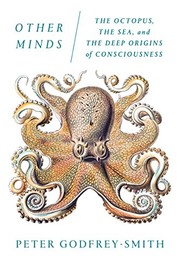
By examining the evolution of consciousness in octopuses and other animals, this book reframes the question of what consciousness is for — and whether it could exist in radically alien forms — adding a crucial biological dimension.
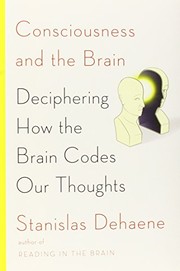
Dehaene presents the Global Workspace Theory with experimental rigor, offering the strongest purely scientific account of consciousness and a direct empirical challenge to both Chalmers and Metzinger.
A more accessible distillation of Metzinger's ideas for a general audience, this book synthesizes the science and philosophy of selfhood and serves as an ideal bridge into the final advanced stage.
The Frontier — Open Questions & Radical Proposals
ExpertGrapple with the most speculative and philosophically demanding ideas at the cutting edge — panpsychism, quantum approaches, and the possibility that science as currently practiced may never solve the hard problem.
▸ Study plan for this stage
Pace: 6–8 weeks total: Weeks 1–4 for "Galileo's Error" (~25–30 pages/day, including re-reading dense philosophical passages); Weeks 5–8 for "The Mystery of Consciousness" (~20–25 pages/day, with slower pacing for Searle's critical dialogues and replies). Reserve 1–2 days between books for reflection journ
- Galileo's Error — the methodological move that excluded consciousness from the scientific image of the world by defining matter purely quantitatively, creating the hard problem by design
- Panpsychism as a serious metaphysical position: the claim that phenomenal properties are fundamental and ubiquitous, not emergent from purely physical processes
- The combination problem: how micro-level experiential properties could combine to yield the rich, unified consciousness of a human being — Goff's central challenge to his own view
- Constitutive Russellian Monism: the idea that physics describes the causal-structural relations of matter while leaving its intrinsic nature open, and that consciousness fills that intrinsic nature
- Searle's Biological Naturalism: consciousness is a real, higher-level biological phenomenon causally produced by (and not reducible to) lower-level neuronal processes
- Searle's critique of strong AI and the Chinese Room argument as it bears on consciousness — syntax is not sufficient for semantics/experience
- The distinction between the 'hard problem' (why there is subjective experience at all) and the 'easy problems' (functional/behavioral explanations) as the axis around which both authors orbit
- The possibility of explanatory closure failure: whether any third-person scientific methodology can, even in principle, account for first-person phenomenal facts
- According to Goff, what specific methodological decision did Galileo make, why was it pragmatically useful for physics, and how does Goff argue it structurally guarantees the hard problem of consciousness?
- What is Russellian Monism and how does Goff use it to motivate panpsychism — and what is the combination problem that threatens to undermine this move?
- How does Searle's Biological Naturalism differ from both dualism and reductive physicalism, and why does Searle insist consciousness is 'real' while also being causally reducible to the brain?
- What is the Chinese Room argument, what conclusion does Searle draw from it about machine consciousness, and what are the strongest objections he considers (e.g., the Systems Reply)?
- Where do Goff and Searle agree and disagree on the hard problem — do both accept it as genuine, and do they converge or diverge on what a solution would look like?
- After reading both books, can you articulate your own position: Is the hard problem a permanent explanatory gap, a temporary scientific puzzle, or an artifact of confused concepts — and which arguments from these texts most influence your view?
- Galileo Autopsy Exercise: After finishing 'Galileo's Error,' write a 1-page reconstruction of Goff's core argument in standard premise-conclusion form. Then write a 1-paragraph steelman of the opposing view (that Galileo's move was not an 'error' but an unavoidable idealization). This forces you to separate Goff's rhetoric from his logic.
- Combination Problem Stress-Test: Draw a diagram showing how panpsychism attempts to scale from micro-experience → macro-experience. Annotate every step where the combination problem bites. Try to sketch one possible solution Goff entertains and evaluate whether it succeeds.
- Searle Dialogue Reconstruction: 'The Mystery of Consciousness' includes critical exchanges with other philosophers. For at least two of these (e.g., Dennett, Chalmers), write a structured 'score sheet': Searle's objection → the reply → Searle's counter-reply → your verdict on who wins and why.
- Chinese Room Role-Play: Simulate the Chinese Room thought experiment in writing. Draft the Systems Reply as persuasively as possible, then draft Searle's rebuttal. Finally, write one paragraph from your own perspective adjudicating the dispute.
- Cross-Book Debate: Write a fictional 2-page dialogue between Goff and Searle in which they directly confront each other's views. Goff should press Searle on whether biological naturalism truly escapes the hard problem; Searle should press Goff on whether panpsychism is falsifiable or explanatorily useful.
- Personal Position Paper: After completing both books, write a 500-word position statement answering: 'Will science, as currently practiced, ever solve the hard problem?' Cite specific arguments from both Goff and Searle — both where they support and where they challenge your conclusion.
Next up: By wrestling with panpsychism's metaphysical ambitions and Searle's biological naturalism, the reader has now mapped the full philosophical battlefield — making them ready to engage empirical and neuroscientific research programs with a sharply critical eye for which philosophical assumptions those programs smuggle in.
Goff makes the most lucid contemporary case for panpsychism — the view that consciousness is a fundamental feature of reality — and directly engages Dennett, Chalmers, and Dehaene, making it a perfect capstone that ties the whole curriculum together.
Searle's sharp, polemical reviews of rival theories (including Dennett's and Chalmers's) model how to critically evaluate any theory of consciousness, leaving the reader equipped to form and defend their own position.
Discussion
Keep reading
Paths that share books, cover the same subject, or open a related topic.