Charles Darwin Books in Reading Order: Where to Start
Darwin is unusual among great scientists in that his own books are still worth reading — he wrote for an educated general audience and the prose holds up. So this path keeps three things apart that are usually mixed together: the primary works, which read like Victorian travel and natural history; the biography, which explains the twenty-year delay and the illness and the loss of his daughter; and modern commentary, which tests the argument against a century and a half of evidence. One practical warning on the primary texts: they are out of copyright and the market is full of cheap scanned print-on-demand reprints with no notes and broken plates. Seek an annotated scholarly edition — Penguin Classics, Oxford World's Classics, or a facsimile of the first edition.
Darwin in His Own Voice
BeginnerMeet Darwin as a writer and a young naturalist before meeting him as a theorist.
▸ Study plan for this stage
Pace: 4 weeks. These are primary sources, not accounts of Darwin — you are reading the man's own prose. The Voyage of the Beagle runs to about 510 pages of travel narrative and natural history and is the most readable thing he wrote; three weeks at 25 pages a day. The Autobiography is short, around 143 pa
- Darwin as a writer for an educated general audience — the prose style that made the later argument publicly arguable
- The five-year circumnavigation as a working itinerary: South America, the Galápagos, Australia, the Cocos atolls
- Geology as his first science, and Lyell's uniformitarianism as the framework he took aboard with him
- The coral-reef subsidence theory, worked out on the voyage and still substantially correct
- Observation and specimen collection as a discipline, and how much of the later argument is already latent in the notebooks
- The Autobiography as a private document: candid about religion, ambition and his own limitations in a way nothing published in his lifetime was
- The gap between what the Beagle journal records and what the Galápagos are popularly said to have shown him
- What did Darwin actually notice in the Galápagos at the time, as against what the story says he noticed?
- What does the coral-reef theory claim, and what kind of evidence did he assemble for it?
- How does he write about slavery in Brazil, and what does that tell you about his politics before the theory?
- What does the Autobiography admit that a published Victorian book could not have?
- What is the effect of his prose style — what does he do to make natural history readable?
- Before buying anything, compare three editions of the Voyage — a Penguin or Oxford annotated edition, a facsimile, and a cheap print-on-demand reprint — for notes, plates and text. Then buy the annotated one. Do the same check on the Autobiography for whether the religious passages are present.
- Read the Galápagos chapters of the Voyage and write down every observation about the finches and the tortoises exactly as he states it. Keep this page; you will set it against the Origin in the next stage.
- Track the coral-reef material through the Voyage and reconstruct his argument as a numbered chain of evidence. It is the cleanest example of his method available before 1859.
- Read the Autobiography and mark every passage about the delay in publishing, about his health, and about religion. Those three threads are what the biographies in stage three are trying to explain.
Next up: You have Darwin's voice and his method as a young naturalist; the next stage reads the books where the argument itself lives, in the same voice.

The five-year circumnavigation, written up as travel narrative, and by far the most readable thing he produced. Note that our catalogue holds it under a slightly mangled display title; the work is the 1839 journal, usually printed today as The Voyage of the Beagle.
Written for his family and not for publication, which is why it is candid about religion, ambition and his own limitations. Note on our copy: this record is the 1929 family edition, which is the text his relatives issued with the religious passages cut. Nora Barlow's 1958 edition restored them — that is the one to look for.
The Argument Itself
IntermediateRead the three books the theory actually lives in, plus one late minor work that shows the method at its purest.
▸ Study plan for this stage
Pace: 10–12 weeks — the longest stage on the path, and all of it primary text. On the Origin of Species is about 500 pages and is one continuous argument rather than a summary of one; Darwin called it an abstract. Give it four weeks and read the first edition if you can, since later editions accumulate co
- The Origin's structure as a single argument: variation under domestication, variation in nature, the struggle for existence, natural selection, then the objections answered in order
- Darwin's decision to open with pigeon breeding — analogy from artificial selection as the rhetorical foundation of the whole book
- The chapter on difficulties, and what it means that he stated the objections to his own theory at length
- Sexual selection as a second and distinct mechanism, worked out at length only in the Descent
- The Descent's two subjects — human descent and sexual selection — and why they are in one book
- Expression as the evidential support for continuity between humans and other animals, and the first serious use of photography in a scientific argument
- The worm book as the method in its purest form: forty years of observation in one garden, and patience rather than genius
- Why editions matter — what the sixth edition of the Origin concedes that the first does not
- Set out the Origin's argument in five steps, in Darwin's own order. Which step did contemporaries find weakest?
- What does Darwin admit he cannot explain in the difficulties chapter, and which of those problems has since been solved?
- How does sexual selection differ from natural selection, and why did it need a separate book?
- What is Expression trying to prove, and does the photographic evidence carry the weight he puts on it?
- What does the worm book actually demonstrate, and why is it a fitting last book?
- How much of the Galápagos material from your stage-one notes actually appears in the Origin?
- Take your Galápagos notes from the Voyage and find every place the Origin uses them. The result surprises most readers and is the best single corrective to the popular story.
- Read the difficulties chapter of the Origin twice and list every objection Darwin raises against himself. Then rank them by how well he answers each. Keep the list for stage five.
- Reproduce one of Darwin's own counts or measurements from the worm book — the rate at which objects sink into turf, or the weight of castings from a measured plot. It takes months of nothing but looking, which is the point of the exercise.
- Read the first two chapters of Descent and the last two, and write down what changes about the subject between them. Most readers find the second half is a different book.
- If you can get both, compare the opening of the first edition of the Origin with the sixth on one contested point — the eye, or the fossil record. Note precisely what has been conceded.
Next up: You have read the argument as Darwin published it; the next stage asks why a man who had it in the late 1830s waited until 1859.
The book, and it is a long single argument rather than a summary of one — Darwin called it an abstract. Read the first edition if you can: later editions accumulate concessions to critics that muddy the case.

Where he finally says out loud what the Origin only implies about humans, and where sexual selection is worked out at length. The second half of the book is really a separate treatise on choice and display.
The companion volume to Descent, and the first serious use of photography in a scientific argument. Read it third — it is the evidence Descent leans on for continuity between humans and other animals.

His last book, on earthworms, based on forty years of observation in his own garden. It is included deliberately: nothing else shows so plainly that the method behind the Origin was patience rather than genius.
The Life Behind the Delay
IntermediateUnderstand why a man who had the theory in the late 1830s did not publish until 1859.
▸ Study plan for this stage
Pace: 10–12 weeks, and this is biography rather than primary source — other people's accounts of Darwin. Start with Quammen's The Reluctant Mr. Darwin, 304 pages, narrow by design and unusually well written; about two weeks. Janet Browne's Charles Darwin: Voyaging is the first volume of the standard schol
- The twenty-year delay: the competing explanations — caution, illness, family, fear of the political company the theory would put him in
- The 1844 essay and the sealed letter of instruction to Emma, which shows he knew what he had
- Wallace's 1858 letter and the Linnean Society joint reading as the event that finally forced publication
- Darwin's chronic illness, undiagnosed then and still disputed now, as a fact of the working life
- Emma Darwin's religious position and the domestic negotiation the theory sat inside
- The death of Annie in 1851 and Keynes's argument about its effect on Darwin's religious position
- Browne's scholarly method against Desmond and Moore's political thesis — two serious biographies with different explanatory frames
- A descendant writing family history: what that access gives and what it may cost in distance
- What does Quammen think the delay was about, and how does his answer differ from Browne's and from Desmond and Moore's?
- What was in the 1844 essay, and what do the instructions to Emma tell you about his own assessment of it?
- How did the Wallace letter actually resolve — who arranged the joint reading, and on what terms?
- What is Desmond and Moore's political argument, and how much of it rests on Darwin's own words?
- What does Keynes claim about Annie's death, and what evidence is available for a claim of that kind?
- Which of these four books would you hand someone who had time for only one, and why?
- Build a single timeline from 1836 to 1859 combining all four books, marking who dates each event where. Disagreements between biographers on dates are rare and revealing.
- Write out the four explanations for the delay — Quammen's, Browne's, Desmond and Moore's, Keynes's — in one paragraph each, then note what evidence would distinguish between them. Some of it exists and some does not.
- Go back to the passages you marked in the Autobiography about the delay and about religion, and check each biographer's use of them. Watch for the ones who quote the same sentence to opposite ends.
- Read Browne's account of the Beagle years against your own reading of the Voyage. She is working from notebooks and letters you have not seen; note three specific things she adds that the published journal conceals.
Next up: Knowing why he waited leads directly to what he was waiting for — the intellectual and political ground the theory had to land on.

The short life, and the right one to read first: Quammen focuses narrowly on the delay and the intellectual problem rather than attempting a full biography. Around two hundred pages and unusually well written.

The first volume of the standard scholarly biography, covering childhood through the Beagle and the years of secret theorising. The second volume, The Power of Place, does not resolve in our catalogue — seek it separately if you want the whole life.
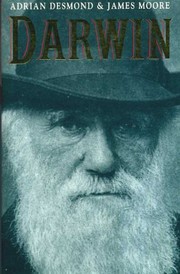
Desmond and Moore's single-volume life, which reads Darwin against the political turmoil of the 1830s and 1840s and argues the delay was partly fear of radicalism. A different thesis from Browne's, and the two are best read together.
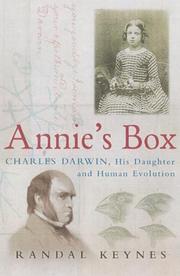
By a descendant, built around the death of Darwin's ten-year-old daughter and the effect it had on his religious position. The most intimate book here and a corrective to the great-man register of the others.
The Context and the Fight
IntermediateSee what the theory was up against, and who had been circling the same idea before him.
▸ Study plan for this stage
Pace: 5–6 weeks. Desmond and Moore's Darwin's Sacred Cause is 484 pages and argues a specific and contested thesis: that Darwin's abolitionism drove his commitment to the common descent of all humans. It is an argument by advocates for that argument, disputed by other historians, and should be read as a c
- Monogenism and polygenism — whether human races share one origin — as the live scientific and political dispute Darwin's theory entered
- The Wedgwood and Darwin families' abolitionism as documented family history, and the step from that to a claim about scientific motivation
- Reading a strong historical thesis: which parts are documented, which are inference, and where other historians have objected
- The predecessors Stott assembles — Aristotle, al-Jahiz, Buffon, Lamarck, Erasmus Darwin, the anonymous author of Vestiges — and what each actually proposed
- What Darwin added that his predecessors did not: a mechanism, and an evidential case for it
- The perennial objection that Darwin invented nothing, and the specific answer to it
- Huxley, Owen and the public fight over reception, which the Origin itself carefully avoided provoking
- What exactly do Desmond and Moore claim, and which documents is the claim built on?
- What would count as evidence against their thesis, and do they engage with it?
- Who among Stott's predecessors came closest to natural selection, and what were they missing?
- How did Vestiges change the terrain Darwin was publishing into?
- Having read both, is the Origin better described as a synthesis or as a break?
- Write Desmond and Moore's thesis in three sentences, then list the three documents it most depends on. Then look for a historian's review of the book and record the strongest objection you find.
- Take each figure in Darwin's Ghosts and write one line on what they proposed and one on what they lacked. That two-column list is the direct answer to the invented-nothing objection.
- Return to the Descent's discussion of human races and read it against the monogenism-polygenism dispute as Desmond and Moore set it out. Then decide for yourself whether their reading of those passages holds.
- Find the passages on slavery in your stage-one Voyage notes and set them beside the Sacred Cause argument. The continuity is real; whether it is causal is the contested part.
Next up: The last stage stops asking about Darwin and asks about the theory — whether the 1859 argument survives a century and a half of testing.
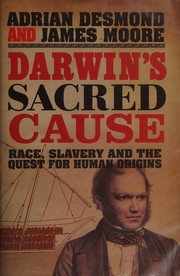
Desmond and Moore's argument that Darwin's abolitionism drove his commitment to the common descent of all humans. A strong claim, contested by other historians, and worth reading as an argument rather than settled fact.

The predecessors — Aristotle, Al-Jahiz, Buffon, Lamarck, Erasmus Darwin, Chambers — assembled as a group biography. It answers the perennial objection that Darwin invented nothing, by showing exactly what he did and did not add.
The Origin, Read With Modern Eyes
IntermediateTest the 1859 argument against what has been learned since, from genetics to observed selection in the field.
▸ Study plan for this stage
Pace: 6–8 weeks, and be clear that these three books are three different kinds of thing. David Reznick's The Origin Then and Now is 432 pages by a working evolutionary biologist and is a chapter-by-chapter scholarly companion to the Origin — it assumes you have read the Origin and are willing to follow re
- Where Darwin was right, where he was wrong, and where he was guessing — Reznick's chapter-by-chapter verdicts
- Inheritance as the great hole in the Origin: Darwin had no mechanism, and the modern synthesis is what filled it
- Observed selection in the field — the Grants' decades of beak measurements on Daphne Major, showing selection acting within single generations
- Darwin's assumption that selection was too slow to observe, and what its refutation cost the argument in nothing and gained it in everything
- The difference between a scientific companion (Reznick), science reporting (Weiner) and a philosophical extension (Dennett)
- Dennett's algorithmic reading of natural selection and the substrate-neutrality claim, which is philosophy rather than biology
- How to hold a contested extension of a theory separate from the theory itself
- On which of the difficulties Darwin listed does Reznick say he was simply wrong, and on which was he right without knowing why?
- What did the Grants actually measure, over how long, and what does the measurement prove?
- Why is the absence of a theory of inheritance not fatal to the Origin's argument?
- What is Dennett claiming beyond biology, and which of his claims would a working evolutionary biologist decline to endorse?
- After all three, which parts of the Origin would you now say have been superseded and which stand unaltered?
- Read Reznick chapter by chapter alongside the corresponding chapter of the Origin. Do not read him straight through — the book is built for the paired reading and loses most of its value otherwise.
- Take your list of Darwin's self-stated difficulties from stage two and write Reznick's modern verdict beside each. That annotated list is the single most useful artefact this path produces.
- Reproduce the Grants' logic from The Beak of the Finch on paper: given their published beak-depth distributions before and after the drought, work out the direction and rough strength of the selection they measured. Weiner supplies the numbers.
- Write out Dennett's central argument in three sentences without his vocabulary, then mark which of the three are about biology and which are not.
- Finally, reread the closing paragraph of the Origin. After the whole path — the primary works, the life, the context and the modern testing — write 300 words on what in it has survived and what has not.
Next up: You have read Darwin's own books, the life that produced them, the ground they landed on and the modern verdict on the argument — enough to read any new book about him and place it immediately.

A chapter-by-chapter companion to the Origin by a working evolutionary biologist, marking where Darwin was right, wrong or guessing. The single most useful book to read alongside the primary text.
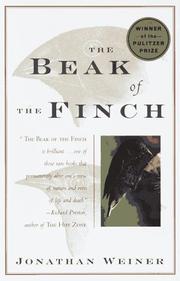
Peter and Rosemary Grant's decades of measurements on Daphne Major, showing natural selection acting within a single lifetime. Darwin thought the process too slow to observe; this is the book that shows it is not.
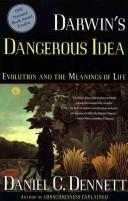
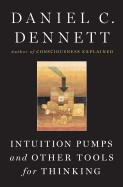
The philosophical extension — what natural selection as an algorithm implies beyond biology. Deliberately last, because it is commentary and speculation rather than Darwin, and it is much easier to argue with once you have read the Origin yourself.
Discussion
Keep reading
Paths that share books, cover the same subject, or open a related topic.