Lucid dreaming and the science of dreams
This curriculum moves from the hard science of sleep and dreaming, through evidence-based lucid dreaming practice, and finally into the deeper neuroscience and philosophy of consciousness in dreams. Each stage builds the vocabulary and critical framework needed for the next, so the learner can engage with advanced material without getting lost in mysticism or pseudoscience.
Foundations: The Science of Sleep & Dreams
BeginnerUnderstand how sleep works, what dreams are from a neuroscientific perspective, and why they matter — building the vocabulary needed for everything that follows.
▸ Study plan for this stage
Pace: 6–8 weeks total: Weeks 1–4 for "Why We Sleep" (~25–30 pages/day, ~5 days/week), then Weeks 5–8 for "The Interpretation of Dreams" (~15–20 pages/day — slower pace to absorb Freud's dense, case-heavy prose)
- Sleep architecture: the cycling structure of NREM (stages 1–3) and REM sleep, and why each stage serves distinct biological functions (per Walker's breakdown in Part 1)
- The two-process model of sleep regulation: circadian rhythm (Process C) and sleep pressure via adenosine buildup (Process S), as Walker explains in 'How and Why We Sleep'
- REM sleep as the neurological stage most associated with vivid, narrative dreaming — Walker's 'overnight therapy' and emotional-memory processing hypothesis
- The consequences of sleep deprivation on cognition, memory consolidation, and mental health, grounding the reader in why sleep (and thus dreams) are not trivial
- Freud's concept of the 'dream-work': the four mechanisms (condensation, displacement, considerations of representability, and secondary revision) that transform latent dream content into manifest content
- The distinction between manifest content (what is literally recalled) and latent content (the hidden, wish-fulfilling meaning) — the cornerstone of Freudian dream theory
- Freud's wish-fulfillment hypothesis: the argument that every dream is an attempt by the unconscious mind to fulfill a repressed desire
- The historical and paradigm-setting role of 'The Interpretation of Dreams' (1900) as the founding text of psychoanalytic dream theory, and how it contrasts with Walker's modern neuroscientific framing
- According to Walker, what are the two main biological processes that govern when and how deeply we sleep, and how do they interact throughout a 24-hour cycle?
- How does Walker differentiate the functions of NREM sleep and REM sleep, particularly regarding memory consolidation and emotional regulation?
- What does Walker mean when he calls REM sleep 'overnight therapy,' and what evidence does he cite to support this claim?
- What is Freud's distinction between 'manifest' and 'latent' dream content, and what are the four mechanisms of 'dream-work' he identifies in 'The Interpretation of Dreams'?
- How does Freud's wish-fulfillment theory of dreams compare and contrast with Walker's neuroscientific account of why we dream? Where do they agree, and where do they fundamentally diverge?
- Why is it important to understand both the scientific (Walker) and psychoanalytic (Freud) frameworks before studying lucid dreaming specifically?
- **Sleep diary (ongoing, both books):** Keep a daily log of your sleep times, estimated sleep quality, and any dream fragments you recall each morning. After finishing Walker, annotate entries with terms like 'likely REM recall' or 'sleep pressure high.' This raw data becomes your personal dataset for later stages.
- **Walker chapter summaries:** After each of Walker's four parts, write a one-paragraph plain-language summary as if explaining it to a friend with no science background. Focus on locking in vocabulary (adenosine, circadian rhythm, sleep spindles, hippocampal replay) before moving to Freud.
- **Two-column comparison chart:** Create a side-by-side table with columns 'Walker's View' and 'Freud's View.' As you read Freud, populate rows for: purpose of dreams, origin of dream content, role of memory, testability of the theory, and practical implications. This forces active synthesis rather than passive reading.
- **Freud dream analysis practice:** Choose 3–5 of your own dream diary entries and attempt a Freudian analysis: identify the manifest content, hypothesize possible latent content, and note which dream-work mechanisms (condensation, displacement, etc.) might be at play. Reflect critically — do you find the method convincing?
- **Vocabulary flashcard deck:** Build a set of at least 20 flashcards covering key terms from both books (e.g., REM atonia, sleep spindle, adenosine, circadian rhythm, manifest content, latent content, condensation, displacement, secondary revision, wish-fulfillment). Review daily using spaced repetition (Anki or similar).
- **Reflective essay (end of stage):** Write a 400–600 word response to the question: 'Is dreaming best understood as a biological process, a psychological one, or both?' Draw explicitly on Walker and Freud. This essay will serve as a baseline you can revisit and revise as the curriculum progresses.
Next up: By establishing both the neuroscience of REM sleep (Walker) and the interpretive tradition around dream content (Freud), this stage gives the reader the biological substrate and the analytical vocabulary needed to understand lucid dreaming — which sits precisely at the intersection of conscious awareness and the dreaming brain.
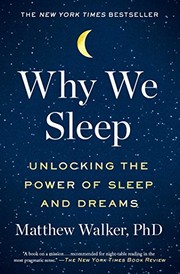
The ideal starting point: a highly accessible, evidence-grounded overview of sleep science that explains sleep stages, REM, and dreaming in plain language. It gives the biological scaffolding every later book assumes you have.

Reading Freud here is not to accept his theories but to understand the cultural and historical baseline — knowing where dream science started makes it far easier to appreciate how far the field has come and what has been debunked.
The Dream Mind: Neuroscience & Meaning
BeginnerDevelop a modern, neuroscience-informed model of what the dreaming brain is actually doing, replacing folk theories with empirical ones.
▸ Study plan for this stage
Pace: 6–7 weeks total. Week 1–4: Hobson's "Dreaming" (~20–25 pages/day, 4–5 days/week) — read slowly and take margin notes on any neuroscience terminology. Week 5–7: Barrett's "The Committee of Sleep" (~15–20 pages/day, 4–5 days/week) — read more reflectively, pausing after each case-study chapter to jour
- Activation-Synthesis Hypothesis (Hobson): the dreaming brain is self-activated from the brainstem, and the cortex synthesizes this random neural noise into narrative
- REM vs. NREM sleep architecture and their distinct roles in dream generation, as outlined by Hobson
- The AIM Model (Activation, Input source, Modulation): Hobson's three-dimensional state-space framework for mapping waking, sleeping, and dreaming consciousness
- Aminergic vs. cholinergic neuromodulation: how the shift from serotonin/norepinephrine dominance to acetylcholine dominance drives REM and dreaming
- Dreams as a protoconscious state: Hobson's argument that dreaming is not noise but a virtual-reality rehearsal system for waking cognition
- Problem-solving incubation in dreams: Barrett's empirical and anecdotal evidence that the sleeping mind continues to work on creative and intellectual problems
- Dream creativity across domains: Barrett's case studies of scientists, artists, and writers (e.g., Kekulé, Stevenson) showing domain-specific dream cognition
- The relationship between presleep intention and dream content: how deliberate focus before sleep can direct the 'committee' toward specific problems
- According to Hobson's Activation-Synthesis model, what is the brainstem's role in initiating a dream, and why does the cortex produce a narrative rather than random imagery?
- What are the three axes of Hobson's AIM model, and how does each axis shift as the brain moves from waking into REM sleep?
- How does the balance between aminergic and cholinergic neuromodulation change during REM sleep, and what cognitive effects does Hobson attribute to this chemical shift (e.g., reduced critical thinking, heightened emotion)?
- What distinction does Barrett draw between 'big' creative dreams and ordinary problem-solving dreams, and what evidence does she use to support the idea that dreams can produce genuinely novel solutions?
- How do Hobson's neurobiological account and Barrett's psychological/creative account complement or tension with each other — where do they agree and where do they diverge?
- What practical techniques does Barrett recommend for harnessing dream creativity, and how are they grounded in what Hobson describes about presleep brain states?
- Neuroscience Glossary Log: While reading Hobson, keep a running one-page glossary of every technical term (REM, AIM, cholinergic, aminergic, pontine brainstem, etc.) and write each definition in your own plain-English words — no copying from the text.
- AIM State Diagram: After finishing Hobson's AIM model chapters, draw the three-axis AIM cube by hand, then plot at least five mental states (deep sleep, light REM, daydreaming, focused waking, hypnagogic state) onto it with a brief justification for each placement.
- Dream Journal with Tagging: Starting on Day 1 of the reading plan, keep a bedside notebook. Each morning, record any dream in as much detail as possible, then tag it with Hobson's categories (emotional tone, bizarreness, narrative coherence) and Barrett's categories (problem-solving content, creative imagery, sensory vividness).
- Presleep Incubation Experiment (Barrett-inspired): Choose a real unsolved problem — academic, creative, or personal. For five consecutive nights, spend 2–3 minutes before sleep deliberately visualizing the problem as Barrett instructs. Record results each morning and write a one-paragraph reflection at the end of the five nights on whether and how the 'committee' responded.
- Synthesis Essay (500–700 words): After finishing both books, write a short essay titled 'What is the dreaming brain actually doing?' that explicitly cites both Hobson's neurobiological model and Barrett's creative-cognition findings, noting where they reinforce each other and where they leave open questions.
- Case Study Comparison: Pick one of Barrett's historical creative-dream cases (e.g., Kekulé's benzene ring, Stevenson's Jekyll & Hyde) and re-analyze it through Hobson's AIM/Activation-Synthesis lens — write a one-page account of what was likely happening neurologically during that dream.
Next up: By replacing folk intuitions with Hobson's neural mechanics and Barrett's empirical creativity research, the reader now has a rigorous baseline model of the dreaming brain — the perfect foundation for exploring how to consciously enter and control that brain state, which is the central focus of lucid dreaming practice in the next stage.
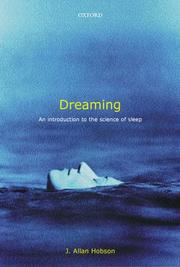
Hobson is one of the founding figures of modern dream neuroscience and a direct counterweight to Freud. This concise book explains the activation-synthesis model and grounds dreaming firmly in brain biology.
A Harvard researcher examines how the dreaming brain solves problems and generates creativity — evidence-based and myth-busting, it bridges pure neuroscience with practical questions about what dreams are for.
Lucid Dreaming: Evidence-Based Practice
IntermediateLearn what lucid dreaming actually is scientifically, understand the verified laboratory evidence for it, and acquire a toolkit of techniques that have empirical support.
▸ Study plan for this stage
Pace: 8–10 weeks total. Book 1 — "Lucid Dreaming" by Robert Waggoner: ~3–4 weeks at roughly 20–25 pages/day (the book is ~280 pages). Book 2 — "Exploring the World of Lucid Dreaming" by Stephen LaBerge: ~4–5 weeks at ~20 pages/day (~300 pages), with extra time built in for the technique worksheets and exe
- Scientific verification of lucid dreaming: the landmark eye-signal protocol used in sleep-lab studies (REM sleep confirmation), establishing that lucid dreaming is a real, measurable physiological state — the empirical backbone LaBerge built at Stanford
- The spectrum of lucid dream control and awareness: Waggoner's argument that the dreamer is not the sole author of the dream — the distinction between controlling dream figures/objects and interacting with a deeper 'dream awareness' or unconscious
- MILD (Mnemonic Induction of Lucid Dreams): LaBerge's flagship technique — prospective memory, reality testing, and the role of intention set during the hypnagogic window just before sleep
- WILD (Wake-Initiated Lucid Dream): maintaining conscious awareness through the sleep-onset transition; the role of hypnagogic imagery, sleep paralysis, and timing relative to REM cycles
- Reality testing and dream signs: Waggoner's and LaBerge's overlapping frameworks for cataloguing personal dream signs, building critical-reflective habits during waking life that transfer into dreams
- REM sleep architecture and its relationship to lucid dreaming: why lucid dreams cluster in late-night/early-morning REM periods, the 90-minute cycle, and how WBTB (Wake-Back-To-Bed) exploits this biology
- Lucid dreaming applications: therapeutic uses (nightmare intervention, rehearsal, creativity), as documented through experiential accounts in Waggoner and the structured protocols in LaBerge
- The observer/witness perspective: Waggoner's unique contribution — using lucid awareness not just to control the dream but to ask questions of the dream environment and interpret symbolic responses as a window into the unconscious
- What specific laboratory methodology did LaBerge use to prove that lucid dreaming occurs during verified REM sleep, and why was the pre-agreed eye-signal protocol scientifically decisive?
- How does Waggoner's concept of the 'larger awareness behind the dream' challenge a simple 'control-everything' model of lucid dreaming, and what practical implications does he draw from it?
- Describe the step-by-step procedure for MILD as outlined by LaBerge: what role does prospective memory play, when should it be performed relative to sleep, and what evidence supports its effectiveness?
- What is WBTB (Wake-Back-To-Bed), how does it leverage REM sleep biology, and how do both Waggoner and LaBerge recommend combining it with other induction techniques?
- What are 'dream signs' according to LaBerge, how does he categorize them, and how does keeping a dream journal systematically improve a practitioner's ability to recognize them?
- In what ways do Waggoner and LaBerge agree and disagree on the purpose and limits of lucid dream control — and what does each author say about using lucid dreams for personal growth or healing?
- Dream journal — daily, non-negotiable: Keep a dedicated notebook or app beside your bed. Immediately upon waking, record every dream fragment before moving or checking your phone. After finishing Waggoner, add a 'dream sign' column; after starting LaBerge, annotate each entry with the LaBerge dream-sign categories (inner awareness, action, form, context). Review weekly to spot recurring signs.
- Reality-testing habit stack: Choose 5 fixed daily triggers (e.g., walking through a doorway, checking your phone, eating a meal). At each trigger, perform LaBerge's recommended reality checks — pinch your nose and try to breathe, push a finger through your palm, read a line of text twice. Log whether the habit is becoming automatic. The goal is transfer into the dream state.
- MILD practice sessions: For at least 3 weeks during the LaBerge reading, set an alarm 5–6 hours after sleep onset. Upon waking, read 20–30 minutes of the book, then lie back and rehearse a vivid mental scenario of becoming lucid in a recent dream. Repeat the mantra 'Next time I'm dreaming, I will remember I'm dreaming' as you drift off. Record outcomes each morning.
- Dream-sign personal catalogue: After completing Waggoner, compile a list of your top 10 recurring dream signs drawn from your journal. Write a one-paragraph 'dream sign profile' for each — what it looks like, what emotion it carries, how often it appears. Use this catalogue as a reference during MILD visualizations.
- Waggoner's 'ask the dream' experiment: During any lucid dream (or, initially, in a hypnagogic/pre-sleep visualization), practice Waggoner's technique of addressing the dream environment directly with a question (e.g., 'What do you want to show me?' or 'What does this symbol mean?'). Record the response — visual, auditory, or felt — in your journal and reflect on it in a short written note the next
- Weekly synthesis log: At the end of each week, write a one-page comparison note: What technique did you attempt? What happened? Which claims from Waggoner or LaBerge were supported or complicated by your own experience? This metacognitive record will be invaluable for the next stage of the curriculum.
Next up: ">Mastering the empirical foundations and core induction techniques here equips the reader with both the scientific vocabulary and personal experiential data needed to engage critically with more advanced or contested territory — such as the neuroscience of consciousness during sleep, cross-cultural dream traditions, or therapeutic applications — in the next stage of the curriculum.
Waggoner is a rigorous and skeptical practitioner who draws on decades of personal experiment and the published research of Stephen LaBerge. Read first in this stage for its clear conceptual map of lucid dreaming territory.
LaBerge is the scientist who first proved lucid dreaming in the laboratory at Stanford. This is the canonical, technique-focused manual — MILD, WILD, reality testing — all grounded in his own peer-reviewed research. The essential practical guide.
Going Deeper: Consciousness, the Self & the Dreaming Brain
ExpertEngage with cutting-edge neuroscience and philosophy of mind to understand what lucid dreaming reveals about consciousness, selfhood, and the nature of waking reality itself.
▸ Study plan for this stage
Pace: 16–20 weeks total, broken into three phases: (1) "The Conscious Mind" — 5–6 weeks, ~20–25 pages/day (the text is dense with philosophical argument; budget extra time for footnotes and thought experiments); (2) "Being No One" — 7–8 weeks, ~15–20 pages/day (the most technically demanding book in the s
- The Hard Problem of Consciousness (Chalmers): why physical/functional explanations of the brain leave subjective experience — 'what it is like' — unexplained
- Philosophical zombies & the conceivability argument (Chalmers): the thought experiment that drives a wedge between functional processes and phenomenal consciousness
- Property dualism vs. physicalism (Chalmers): consciousness as a fundamental, non-reducible feature of reality, and what this implies for dream states
- The Phenomenal Self-Model, or PSM (Metzinger, 'Being No One'): the brain's real-time, transparent simulation of a 'self' — the mechanism behind the feeling of being someone
- Transparency and the 'naive realist' illusion (Metzinger): why we cannot see the PSM as a model — we look through it rather than at it — and how lucid dreaming partially breaks this transparency
- No-self thesis (Metzinger, both books): there is no entity that 'has' experiences; the self is a process, not a thing — and lucid dreaming is the clearest empirical window onto this
- The Ego Tunnel (Metzinger): conscious experience as a tunnel — only a narrow, constructed slice of reality reaches awareness, and the 'I' at the center is itself a representational fiction
- Lucid dreaming as a natural experiment in consciousness science: how the lucid state destabilizes the PSM, reveals the constructed nature of selfhood, and informs debates about the neural correlates of consciousness
- After reading Chalmers, can you articulate in your own words why the Hard Problem is 'hard' — i.e., why no amount of neuroscientific detail about the dreaming brain seems, in principle, to fully explain why there is something it is like to dream?
- How does Chalmers's property dualism challenge purely physicalist accounts of lucid dreaming, and what would a 'phenomenal' explanation of the lucid state look like under his framework?
- What is Metzinger's Phenomenal Self-Model, and how does the concept of 'transparency' explain why ordinary dreamers mistake the dream-self for a real, enduring self?
- According to 'Being No One,' what happens to the PSM during a lucid dream — and why does Metzinger treat lucid dreaming as empirical evidence for his no-self thesis rather than against it?
- How does the metaphor of the 'Ego Tunnel' in Metzinger's third book reframe the relationship between the dreaming brain and waking reality — and what are the ethical implications he draws from it?
- Taken together, what do Chalmers and Metzinger agree and disagree on regarding the ontological status of the conscious self, and how does lucid dreaming serve as a test case for both positions?
- Phenomenal contrast journaling: Each morning immediately after waking (or after a lucid dream if you have one), write a two-paragraph entry — first describing the raw phenomenal 'feel' of the dream state, then attempting to describe it in purely third-person, functional terms. Use this tension to viscerally feel the Hard Problem Chalmers describes.
- Zombie thought-experiment dialogue: Write a short (1–2 page) Socratic dialogue between a philosophical zombie and a lucid dreamer. Force the zombie to 'explain' what it is like to realize one is dreaming — then use Chalmers's framework to analyze where the dialogue breaks down.
- PSM mapping exercise (Metzinger, 'Being No One'): Draw a layered diagram of your own Phenomenal Self-Model as Metzinger describes it — body image, emotional valence, first-person perspective, temporal continuity — and annotate each layer with: (a) what it feels like in waking life, (b) how it changes in a normal dream, and (c) how it changes in a lucid dream.
- Transparency disruption log: Over 2–3 weeks, keep a nightly log specifically tracking moments — in dreams, hypnagogia, or meditation — where the 'self' felt less than fully solid or transparent. Cross-reference entries with Metzinger's chapters on transparency and opacity in 'Being No One.'
- Ego Tunnel essay: After finishing Metzinger's 'The Ego Tunnel,' write a 500-word personal essay answering: 'If the self is a tunnel, what lies outside it — and has lucid dreaming ever given me a glimpse?' Ground every claim in specific passages from the book.
- Chalmers vs. Metzinger position paper: Write a structured 1–2 page comparison arguing which author's framework better accounts for a specific lucid dreaming phenomenon of your choice (e.g., the moment of 'clicking in' to lucidity, dream characters who claim to be conscious, or the dissolution of the self in high-level lucid dreams). Cite specific arguments from both 'The Conscious Mind' and at lea
Next up: By dismantling the naive sense of a fixed, waking self through Chalmers's hard problem and Metzinger's no-self framework, the reader is now philosophically and neuroscientifically equipped to explore the practical and transformative applications of lucid dreaming — asking not just "what is the self?" but "what can a self-aware dreamer deliberately do with that knowledge?"
Chalmers' rigorous philosophical framework for the 'hard problem' of consciousness provides the conceptual tools to ask serious questions about what it means to be aware inside a dream — essential before tackling the neuroscience of self-awareness.
Metzinger's self-model theory of subjectivity is the most scientifically serious account of why the dreaming brain generates a 'self' — his work directly informs the neuroscience of lucid dreaming and is cited by leading researchers in the field.
A more accessible distillation of Metzinger's ideas for a broader audience — read after Being No One to consolidate the theory and see how out-of-body experiences and lucid dreams fit into a unified scientific picture of consciousness.
Discussion
Keep reading
Paths that share books, cover the same subject, or open a related topic.