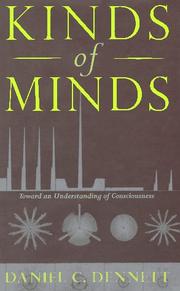
Kinds of minds
Daniel C. Dennett · 1996 · 188 pages
As an Amazon Associate we earn from qualifying purchases. Some book links are affiliate links; you pay the same price and we may earn a small commission.
About this book
In Kinds of Minds, Dennett asks the ultimate metaphysical questions: What is a mind and who else (besides the questioner) has one? Combining ideas from philosophy, artificial intelligence, and neurobiology, Dennett leads the reader on a fascinating journey of inquiry, exploring such intriguing possibilities as: Can any of us really know what is going on in someone else's mind? What distinguishes the human mind from the minds of animals, especially those capable of complex behavior? If such animals, for instance, were magically given the power of language, would their communities evolve an intelligence as subtly discriminating as ours? Would they be capable of developing the uniquely human ability to theorize about the world they inhabit? Will robots, once they have been endowed with sensory systems like those that provide us with experience, ever exhibit the particular traits long thought to distinguish the human mind, including the ability to think about thinking? . Dennett address these questions from an evolutionary perspective. Beginning with the macromolecules of DNA and RNA, whose evolution was determined by Darwinian natural selection, Dennett shows how, step by step, animal life moved from a simple ability to respond to frequently recurring environmental conditions to much more powerful ways of beating the odds, ways of using patterns of past experience to predict the future in never-before-encountered situations. He argues that a series of small but revolutionary ste
Appears in these reading paths
Daniel Dennett Reading Order: Where to Start with the Philosophy of Mind
Related reading guides
Reader reviews
Ratings and notes from readers — tagged with how deep into the subject they were.
Loading reviews…