Company culture: books to build values, trust, and a great workplace
This curriculum builds a deep, layered understanding of company culture — starting with the foundational "what and why," moving through the human dynamics of trust and psychological safety, then tackling the special challenges of remote and distributed teams, and finally reaching the advanced craft of how leaders deliberately design and sustain culture at scale. Each stage equips the reader with the mental models needed to get the most out of the next.
Foundations: What Culture Is and Why It Matters
BeginnerUnderstand what company culture actually means, how it forms, and why it is the invisible force that drives organizational behavior and performance.
▸ Study plan for this stage
Pace: 8–10 weeks, ~40–50 pages/day (approximately 2–3 weeks per book with time for reflection and exercises)
- Culture as a system of shared values, behaviors, and norms that operate below conscious awareness—the 'invisible architecture' that shapes how people work together
- How culture forms through repeated interactions, storytelling, and the modeling of values by leaders, rather than through mission statements alone
- The relationship between psychological safety and high-performing teams: how trust enables vulnerability, risk-taking, and honest communication
- Culture's direct impact on organizational outcomes: employee engagement, retention, customer satisfaction, and financial performance
- The role of purpose and meaning in work: how connecting individual effort to a larger mission drives motivation and culture
- Practical mechanisms for building and sustaining culture: hiring, onboarding, rituals, symbols, and how leaders reinforce cultural norms through daily choices
- The tension between growth/scaling and cultural preservation: how to maintain culture as an organization expands
- Culture as a competitive advantage: why strong, intentional culture creates resilience and adaptability in uncertain environments
- What is the difference between stated values (what a company says it believes) and lived values (what people actually do)? How does Daniel Coyle illustrate this distinction?
- How does Tony Hsieh's concept of 'delivering happiness' connect to company culture, and what role does employee happiness play in organizational performance?
- What are the key mechanisms through which culture is built and reinforced? Provide examples from at least two of the three books.
- Why do Jason Fried and David Heinemeier Hansson argue that 'crazy at work' is a cultural problem, not a badge of honor? What alternative do they propose?
- How do psychological safety and trust function as foundations for strong culture? What happens when they are absent?
- How can leaders intentionally shape culture, and what are the limits of top-down culture change? Use specific examples from the books.
- Read 'The Culture Code' and create a one-page 'culture audit' of an organization you know well (your current workplace, a company you've worked for, or a well-known company). Identify the stated values and the lived values—where do they align and where do they diverge?
- After finishing 'Delivering Happiness,' interview 2–3 people from different organizations about what makes them happy or unhappy at work. Categorize their responses using Hsieh's framework and reflect on how their answers reveal cultural patterns.
- Identify one 'crazy at work' practice from your own experience or observation (overwork, unnecessary meetings, poor communication, etc.). Using Fried's principles, design a small intervention to change it and document what you would do differently.
- Create a 'culture story' from one of the three books—a narrative that illustrates a key cultural principle. Write it as a short case study (500–750 words) that could be used to teach others about culture.
- Map out the 'cultural journey' of one company featured in the books (e.g., Zappos in 'Delivering Happiness' or Pixar in 'The Culture Code'). Show how its culture evolved, what shaped it, and what challenges it faced.
- Conduct a personal reflection: What is your own 'culture code'—the values and behaviors that guide how you work and interact with others? Write a 1–2 page personal culture manifesto inspired by the books.
Next up: This stage establishes the foundational understanding that culture is a tangible, measurable force shaped by intentional choices and daily practices—preparing you to explore in the next stage how to diagnose, assess, and actively transform culture within real organizations.

The perfect entry point — Coyle uses vivid, accessible storytelling to reveal the three core skills that build thriving group cultures, giving beginners a concrete vocabulary before anything else.

A founder's first-person account of deliberately building culture around values at Zappos; it makes abstract culture concepts tangible through a real company's journey.

A short, punchy read that challenges default workplace assumptions and introduces the idea that culture is built through daily decisions — a great bridge into deeper study.
Values & Psychological Safety: The Human Core
BeginnerGrasp how shared values are defined and lived, and understand psychological safety as the foundational condition that allows culture to actually function.
▸ Study plan for this stage
Pace: 4–5 weeks, ~25–30 pages/day. Start with "The Fearless Organization" (300 pages, ~2 weeks), then move to "Dare to Lead" (250 pages, ~2–3 weeks). Allow 3–4 days between books for reflection and integration exercises.
- Psychological safety as the absence of interpersonal fear and the foundation for learning, speaking up, and innovation
- How leaders actively build psychological safety through acknowledging fallibility, inviting input, and responding productively to bad news
- The relationship between organizational values and daily behavior—the gap between espoused values and lived values
- Vulnerability as a leadership strength, not weakness, and its role in modeling psychological safety
- Shame, blame, and perfectionism as culture killers that undermine psychological safety
- The four stages of psychological safety: inclusion safety, learner safety, contributor safety, and challenger safety
- Brené Brown's framework of rumbling with vulnerability and daring leadership as practical tools for building trust-based culture
- How to identify and address cultural misalignment when stated values don't match actual behaviors
- What is psychological safety, and why is it more foundational to organizational culture than trust alone?
- According to Edmondson, what are the four stages of psychological safety, and what does a leader need to do at each stage?
- How does Brené Brown define vulnerability in a leadership context, and what is the relationship between vulnerability and psychological safety?
- What are the key barriers to psychological safety that both Edmondson and Brown identify, and how do shame and blame function as culture killers?
- How can leaders close the gap between espoused values (what the organization says it values) and lived values (what behaviors are actually rewarded)?
- What specific leader behaviors does Edmondson recommend for acknowledging fallibility and inviting input, and how do these relate to Brown's concept of daring leadership?
- Map your organization's (or a team's) espoused values against lived values: list stated values, then track which behaviors are actually rewarded, punished, or ignored over two weeks. Identify three gaps and propose one concrete behavioral change for each.
- Conduct a 'psychological safety audit' using Edmondson's four stages: assess your team or organization against inclusion, learner, contributor, and challenger safety. Write one observation and one action for each stage.
- Practice vulnerability in a low-stakes setting: share a genuine mistake or limitation in a team meeting, then document the response. Reflect on whether the response felt safe or unsafe, and why.
- Read a case study from 'The Fearless Organization' and a story from 'Dare to Lead,' then write a 1–2 page analysis connecting the psychological safety principles in each to a real situation you've witnessed.
- Identify one 'shame-based' or 'blame-based' interaction you've observed (or participated in). Rewrite it using Edmondson's and Brown's frameworks: how would a psychologically safe leader respond instead?
- Interview a colleague or leader you trust about a time they felt psychologically unsafe at work. Listen for the specific behaviors or conditions that created that feeling, then map those to Edmondson's barriers or Brown's shame/blame dynamics.
Next up: This stage anchors the human foundation of culture—values and the psychological safety required to live them—preparing you to explore how these principles scale across systems, structures, and organizational design in the next stage.

Edmondson's landmark work on psychological safety is essential reading here — it explains why people speak up or stay silent, and how that dynamic shapes every cultural norm.
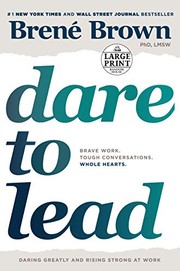
Builds directly on psychological safety by exploring vulnerability and courage as leadership practices; it connects values to everyday behavior in a highly readable way.
Leadership & Norms: How Leaders Shape Culture
IntermediateUnderstand the mechanisms by which leaders — intentionally or not — create, reinforce, and change the norms that define an organization's culture.
▸ Study plan for this stage
Pace: 8–10 weeks, ~40–50 pages/day. Schein (4 weeks), No Rules Rules (2.5 weeks), The Hard Thing About Hard Things (2.5 weeks), with 1 week for integration and reflection.
- Schein's three levels of culture (artifacts, espoused values, basic assumptions) and how leaders embed culture through these layers
- The role of founder and leader behavior as the primary mechanism for culture creation and reinforcement
- How psychological safety and trust enable cultural change and norm-shifting
- Netflix's culture of freedom and responsibility as a case study in deliberately designing norms that scale
- The tension between explicit rules and implicit norms: when to codify culture and when to let it emerge
- How leaders communicate values through storytelling, decision-making, and what they tolerate or punish
- The difference between espoused values (what leaders say) and enacted values (what leaders do and reward)
- Crisis and adversity as moments when leaders either reinforce or reshape organizational norms
- What are Schein's three levels of culture, and how do leaders use each level to shape organizational norms?
- How does Netflix's 'freedom and responsibility' model differ from traditional rule-based cultures, and what assumptions about employees underpin it?
- What is the relationship between psychological safety and a leader's ability to change organizational norms?
- How do leaders' own behaviors and decisions communicate values more powerfully than mission statements or policy documents?
- What does Horowitz mean by 'the hard thing,' and how do leaders use difficult decisions to define or reinforce culture?
- How can leaders distinguish between norms that should be explicitly codified and those that should remain implicit?
- Map your own organization's (or a case study organization's) culture using Schein's three levels: list artifacts (dress code, office layout, rituals), espoused values (mission statement, stated priorities), and infer the basic assumptions underneath.
- Conduct a 'leader behavior audit': document 3–5 recent decisions made by a leader you know or study, then identify what norms those decisions reinforce or challenge. Compare the stated values to the enacted values.
- Write a 2–3 page case study analyzing how Netflix's freedom and responsibility model would work (or fail) in a different industry or organization type. What assumptions would need to change?
- Interview 3–5 people in your organization (or a case study organization) about what 'the way we do things here' is, without mentioning official values. Compare their answers to official documents—where are the gaps?
- Design a 'norm-shifting intervention': identify one norm in your organization you'd like to change, then outline how you'd use Schein's three levels and Horowitz's decision-making framework to shift it. Include what you'd say, what you'd do, and what you'd tolerate.
- Read and annotate one critical moment from The Hard Thing About Hard Things (e.g., the chapter on peacetime vs. wartime CEO) and write a reflection on how that decision-making shaped culture at that company.
Next up: This stage equips you to recognize how leaders actively shape culture through behavior, communication, and decision-making; the next stage will explore how to scale these mechanisms across distributed teams and how to sustain culture during rapid growth or organizational change.
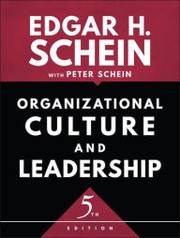
The canonical academic text on culture; now that the reader has intuition from earlier books, Schein's three-level model (artifacts, values, assumptions) provides the rigorous framework to understand how leaders embed culture.
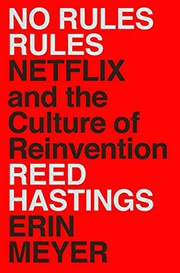
A detailed inside look at Netflix's radical culture of freedom and responsibility — a perfect case study in how a CEO's explicit choices about norms produce a distinctive, high-performance culture.

Offers a brutally honest view of culture under pressure, showing how leaders must make hard calls that either reinforce or erode the culture they claim to want.
Remote & Distributed Teams: Culture Without Walls
IntermediateApply cultural principles to remote and distributed contexts, learning how to build trust, belonging, and shared norms when people are not in the same room.
▸ Study plan for this stage
Pace: 4–5 weeks, ~25–30 pages/day. Start with "Remote: Office Not Required" (2 weeks), then move to "The Long-Distance Leader" (2–3 weeks). Build in time for reflection and exercises between books.
- Asynchronous communication as the foundation for remote culture: how to build trust and clarity when people aren't working in real-time
- The role of intentional documentation and written communication in creating shared norms and reducing ambiguity across distributed teams
- Building belonging and psychological safety remotely through deliberate relationship-building practices and inclusive decision-making
- Leadership presence and influence without physical proximity: how leaders shape culture through visibility, consistency, and clear expectations
- Managing different time zones, work styles, and autonomy levels while maintaining cohesive cultural values
- The shift from presence-based to output-based accountability and how this changes what 'culture' means in practice
- Creating rituals, touchpoints, and informal connection in virtual spaces to replace watercooler moments
- Overcoming isolation and maintaining engagement by intentionally designing for human connection in remote contexts
- How does asynchronous communication change the way cultural norms are established and reinforced compared to co-located teams?
- What are the key differences between managing a remote team and a traditional office team, and how do these differences affect culture-building?
- How can leaders build trust and psychological safety when they cannot rely on physical presence or informal in-person interactions?
- What role does documentation play in creating a strong remote culture, and how does it differ from relying on institutional knowledge?
- How do you maintain a sense of belonging and prevent isolation in a distributed team, and what specific practices does the reading recommend?
- What are the main challenges of leading across time zones and geographies, and what strategies help preserve cultural coherence?
- Audit your team's or organization's current communication channels and document which decisions/conversations happen synchronously vs. asynchronously. Identify one critical process that could move to async and design how you'd implement it.
- Write a 'culture manifesto' for a remote team of 5–10 people, defining 3–5 core values and how they'll be lived out in daily remote work (e.g., how does 'trust' look in async communication?).
- Design a weekly or bi-weekly ritual for a distributed team (e.g., a virtual standup, async check-in, or themed Slack thread) that builds connection without requiring synchronous time across all zones.
- Create a documentation template for a key recurring decision or process in your team, then test it by having someone unfamiliar with the process follow it. Refine based on gaps.
- Conduct a 1:1 conversation with a remote colleague or team member focused on understanding their experience of belonging, isolation, or connection. Identify one thing you could change as a leader/peer.
- Map out your organization's time zones and work patterns, then propose one change to meeting schedules, communication norms, or flexibility policies that would improve cultural inclusion across geographies.
Next up: This stage equips you to apply foundational cultural principles to the realities of distributed work; the next stage will deepen your ability to scale these practices across larger, more complex organizations and navigate the tensions between autonomy and alignment.

The foundational text on remote work culture — it systematically addresses how to preserve trust, communication, and cohesion when a team is geographically dispersed.
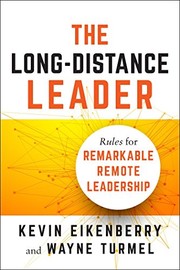
Focuses specifically on the leadership behaviors required to maintain culture and accountability across distance, translating earlier leadership concepts into remote-specific practices.
Advanced Synthesis: Designing Culture at Scale
ExpertSynthesize everything into a systems-level view of culture design — understanding how to measure, change, and sustain culture as an organization grows and evolves.
▸ Study plan for this stage
Pace: 8–10 weeks, ~40–50 pages/day. Start with "An Everyone Culture" (4–5 weeks), then move to "Powerful" (3–4 weeks), with 1–2 weeks for synthesis and application projects.
- Deliberately developmental organizations (DDOs) as a model for culture that supports adult growth and psychological complexity
- The relationship between organizational culture and individual capability development — how culture shapes what people can achieve
- Immunity to change mapping as a diagnostic tool for understanding hidden commitments that block cultural transformation
- Radical transparency and context-setting as mechanisms for building trust and enabling distributed decision-making at scale
- The role of feedback, vulnerability, and psychological safety in sustaining culture through organizational growth
- Culture as a competitive advantage that compounds over time through hiring, retention, and collective capability
- Systems thinking applied to culture: how hiring, onboarding, meetings, and feedback loops reinforce or undermine cultural values
- Measuring culture through behavioral indicators and outcomes rather than surveys alone
- What is a deliberately developmental organization (DDO), and how does it differ from traditional hierarchical cultures in terms of how it treats employee development?
- How does immunity to change mapping work, and what is an example of a hidden commitment that might prevent a team from adopting a new cultural practice?
- According to Kegan and McCord, what is the relationship between psychological safety and organizational performance, and how do you create it at scale?
- What are the key mechanisms McCord identifies in 'Powerful' for maintaining culture as a company scales, and why do traditional HR practices often fail?
- How would you design a feedback system or meeting structure that embodies both radical transparency (McCord) and developmental intent (Kegan)?
- What metrics or behavioral indicators would you use to assess whether a culture change initiative is actually taking root, beyond employee engagement surveys?
- Map your own immunity to change: identify a cultural value or practice you want to adopt but resist. Use Kegan's framework to uncover the competing commitment and assumption beneath it.
- Conduct an immunity to change workshop with a real team or group (5–8 people). Facilitate the four-column exercise and synthesize the hidden commitments that emerge.
- Audit a real organization's (or your own) hiring, onboarding, and feedback processes. Identify which systems reinforce the stated culture and which undermine it.
- Design a radical transparency initiative for a specific decision or metric (e.g., revenue, hiring, product roadmap). Write out what information would be shared, to whom, and how often, and anticipate resistance.
- Create a 90-day culture change experiment: pick one cultural practice (e.g., a new meeting format, feedback ritual, or transparency mechanism), implement it with a team, and measure behavioral change and outcomes.
- Write a case study of a real culture change you've witnessed or led. Analyze it through both Kegan's developmental lens and McCord's systems lens—what worked, what didn't, and why?
Next up: This stage equips you to diagnose and design culture as a strategic system; the next stage would deepen your ability to navigate the political, emotional, and change-management dimensions of culture transformation in resistant or complex organizations.

Introduces the concept of the 'Deliberately Developmental Organization' — a sophisticated framework for building cultures where growth and performance are inseparable, requiring all prior knowledge to fully appreciate.

Written by Netflix's former Chief Talent Officer, this book offers a practitioner's advanced playbook for building a culture of high performance through radical honesty and trust — a fitting capstone that ties values, leadership, and norms together.
Discussion
Keep reading
Paths that share books, cover the same subject, or open a related topic.