Best Books on Customer Success (in Order)
This curriculum builds a complete, practitioner-grade mastery of Customer Success — starting from the strategic and operational foundations, then moving through onboarding excellence, retention and churn reduction, and finally the advanced discipline of turning loyal customers into advocates and revenue drivers. Because the learner starts at an intermediate level, early books establish shared vocabulary and frameworks before later books demand nuanced judgment and cross-functional leadership.
Foundations: The CS Mindset & Operating Model
IntermediateUnderstand what Customer Success really is as a business function, why it exists, and how to structure a CS team and strategy from first principles.
▸ Study plan for this stage
Pace: 4–5 weeks, ~25–30 pages/day with reflection breaks
- Customer Success as a distinct business function: definition, scope, and why it's separate from Sales and Support
- The CS operating model: how to structure teams, define roles, and align incentives around customer outcomes
- The shift from product-centric to customer-centric thinking: why retention and expansion matter more than acquisition
- Metrics that matter: how to measure CS impact (NRR, churn, health scores, CAC payback period) and connect it to revenue
- The customer journey and touchpoints: where CS intervenes and how to map customer lifecycle stages
- Building a CS strategy from first principles: defining success criteria, segmentation, and resource allocation
- Cross-functional alignment: how CS partners with Sales, Product, and Support to drive mutual success
- What is Customer Success and how does it differ from Sales, Support, and other customer-facing functions?
- Why is Customer Success essential to a company's business model, and what does the data show about its impact on revenue?
- How should you structure a CS team and define roles based on your customer base, product, and growth stage?
- What are the key metrics a CS organization should track, and how do they connect to business outcomes?
- How do you segment customers and tailor CS strategies to different customer cohorts (e.g., enterprise vs. SMB)?
- What does a customer health score look like, and how should CS use it to drive proactive interventions?
- How should CS align with Sales, Product, and Support to maximize customer outcomes and company growth?
- Map your own company's (or a company you know well) customer journey from onboarding through expansion and renewal—identify where CS currently intervenes and where gaps exist
- Design a CS operating model for a hypothetical SaaS company at a specific stage (e.g., Series A with 50 customers, or Series C with 500 customers)—define team structure, roles, and reporting lines
- Build a customer segmentation framework for a real or fictional product; justify your segments by customer size, use case, or revenue potential
- Create a customer health score model: define 5–8 leading indicators (usage, support tickets, feature adoption, etc.) and assign weights based on predictive power
- Write a 1-page CS strategy document for a specific company or product, including success metrics, key initiatives, and how CS will drive expansion revenue
- Conduct a cross-functional alignment workshop: interview Sales, Product, and Support leaders (or peers) to identify friction points and design a collaboration framework
Next up: This stage grounds you in the foundational philosophy and structure of Customer Success; the next stage will likely dive into execution—how to actually build programs, run onboarding, manage renewals, and scale CS operations as the company grows.

The canonical text of the field — defines the CS philosophy, the subscription-economy imperative, and the core metrics (NRR, churn, health scores). Read this first to establish shared language for everything that follows.
A strategic sequel that zooms out to show how CS transforms the entire company's go-to-market motion. Reading it second deepens the 'why' before diving into tactical 'how' books.
Onboarding: Getting Customers to First Value
IntermediateDesign and execute onboarding programs that reliably get customers to their first meaningful outcome, reducing early churn before it starts.
▸ Study plan for this stage
Pace: 4-5 weeks, ~40-50 pages/day (approximately 300 pages total)
- Effort as the primary driver of customer dissatisfaction and churn—reducing friction matters more than adding delight
- The three pillars of low-effort customer experience: resolving issues quickly, minimizing customer work, and avoiding repeat contacts
- Mapping and eliminating unnecessary steps in customer journeys, especially during critical onboarding moments
- The distinction between satisfaction and loyalty: why satisfied customers still leave when effort is high
- Designing self-service and support systems that genuinely reduce customer burden rather than shifting it
- Measuring effort through Net Effort Score (NES) and other effort-based metrics to identify pain points
- Building organizational alignment around effort reduction as a strategic priority, not just a service tactic
- Why is reducing effort more effective at preventing churn than increasing delight, and what does the research show about the relationship between effort and loyalty?
- What are the three core pillars of low-effort experience, and how do they apply specifically to your onboarding process?
- How would you map your current onboarding journey to identify where customers are doing unnecessary work or encountering friction?
- What is the Net Effort Score, how is it measured, and what would it reveal about your onboarding program?
- How can you design self-service options and support during onboarding that genuinely reduce customer effort rather than creating new barriers?
- What organizational changes or cross-functional alignment would be needed to prioritize effort reduction in your onboarding program?
- Map your current onboarding journey end-to-end, identifying every step a customer must take to reach first value; mark which steps create friction or require customer effort
- Conduct 5-10 interviews with recent customers (both successful and at-risk) asking specifically about effort: What was hard? What required them to do work? What caused delays?
- Redesign one critical onboarding workflow to eliminate at least 2-3 unnecessary steps or handoffs; document the before/after effort reduction
- Create a Net Effort Score survey for your onboarding process and administer it to at least 20 recent customers; analyze which moments score highest for effort
- Design a self-service resource (checklist, guide, template, or tool) that eliminates a common customer pain point during onboarding without shifting burden to them
- Build a cross-functional onboarding task force and run a 90-minute workshop using the book's framework to identify your top 3 effort-reduction opportunities
Next up: This stage establishes the foundational principle that low-effort onboarding prevents early churn, preparing you to move into deeper customer success strategies like engagement, expansion, and retention that build on a frictionless foundation.
The definitive playbook on B2B customer onboarding — covers orchestrated onboarding frameworks, stakeholder alignment, and time-to-value. The natural next step after understanding CS strategy.
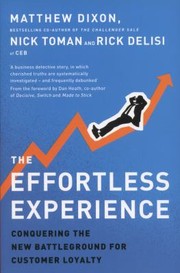
Reframes what customers actually want post-sale (low effort, not delight) and provides research-backed tactics to reduce friction in onboarding and support interactions.
Retention & Churn Reduction
IntermediateBuild proactive retention programs, interpret customer health signals, and systematically identify and rescue at-risk accounts before they churn.
▸ Study plan for this stage
Pace: 6–8 weeks, ~40–50 pages/day (approximately 2–3 weeks per book with overlap for synthesis)
- Jobs to be Done framework: Understanding what customers are actually trying to accomplish, not just their demographics or stated needs, to predict retention patterns
- Subscription economics and customer lifetime value: How recurring revenue models shift focus from acquisition to retention, and how to calculate and optimize CLV
- Churn signals and leading indicators: Identifying behavioral, engagement, and health metrics that predict churn before it happens
- Proactive intervention strategies: Building systems to detect at-risk accounts and execute timely, personalized rescue campaigns
- Trust as the foundation of retention: How advisor-like relationships (transparency, competence, reliability) reduce churn and increase customer advocacy
- Customer health scoring models: Quantifying account health using weighted signals (usage, support tickets, NPS, expansion potential) to prioritize retention efforts
- Segmentation for retention: Tailoring retention programs by customer segment, industry, and lifecycle stage rather than one-size-fits-all approaches
- How does the Jobs to be Done framework help you identify which customers are most at risk of churn, and how would you apply it to your own customer base?
- What are the key differences between transactional and subscription business models in terms of retention strategy, and why does this shift the entire approach to customer success?
- What are 5–7 leading indicators of churn in your product or service, and how would you weight them to create a customer health score?
- How would you design a proactive intervention program for an at-risk account, and what role does trust play in the likelihood of success?
- How do you balance the cost of retention efforts against the lifetime value of different customer segments?
- What does it mean to be a 'trusted advisor' to your customers, and how does this mindset differ from a traditional vendor relationship?
- Map 3–5 of your key customer segments using the Jobs to be Done framework: What job is each segment trying to accomplish? What are their desired outcomes? Create a one-page summary per segment.
- Calculate the customer lifetime value (CLV) for at least two customer segments in your business. Include acquisition cost, average contract value, retention rate, and expansion revenue. Identify which segments are most profitable to retain.
- Audit your current churn data: Identify the top 5 reasons customers have churned in the past 12 months. For each reason, determine what leading indicator(s) would have predicted it 30–60 days in advance.
- Build a customer health score model for your product: Define 6–10 weighted signals (e.g., feature adoption, support sentiment, usage frequency, NPS, expansion signals). Score 10 current customers and validate against their actual risk level.
- Design a proactive intervention playbook for one at-risk segment: Define the trigger (health score threshold), the outreach sequence (email, call, executive check-in), the value proposition (what you'll help them achieve), and success metrics.
- Conduct a 'trust audit' with 3–5 key customers: Ask them to rate your company on competence, reliability, and transparency. Identify gaps and design 2–3 specific actions to strengthen trust in your customer relationships.
Next up: This stage equips you with the frameworks and systems to identify and rescue at-risk customers; the next stage will focus on scaling retention through community, advocacy, and expansion strategies that turn retained customers into growth engines.

Introduces Jobs-to-Be-Done theory — understanding the 'job' a customer hired your product to do is the most powerful lens for diagnosing why customers stay or leave.

Explains the subscription business model in depth, including the financial mechanics of churn and retention, giving CS practitioners the revenue fluency to make a business case for their programs.
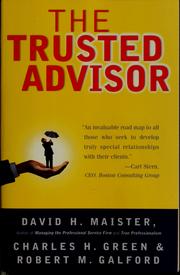
Teaches the interpersonal and relationship skills needed to become a strategic partner — not just a support contact — which is the human engine behind long-term retention.
Advocacy & Expansion: Turning Customers into Growth Engines
ExpertMove beyond retention to proactively drive expansion revenue, net promoter scores, and a community of vocal customer advocates who fuel new pipeline.
▸ Study plan for this stage
Pace: 8–10 weeks, ~25–30 pages/day. Week 1–4: "Hug Your Haters" (approximately 300 pages); Week 5–10: "Farm Don't Hunt" (approximately 250 pages). Allow 1 week buffer for reflection and integration exercises between books.
- Haters as hidden growth opportunities: Reframing negative feedback and complaints as signals for product improvement and customer loyalty recovery
- The HATER framework: How to systematically listen to, respond to, and learn from customer criticism across all channels
- Turning detractors into promoters: The mechanics of converting unhappy customers into vocal advocates through empathetic engagement
- Farming vs. hunting mentality: Shifting from transactional customer acquisition to long-term relationship cultivation and expansion within existing accounts
- Expansion revenue through account farming: Identifying upsell and cross-sell opportunities by deepening customer relationships and understanding their evolving needs
- Building a community of advocates: Creating systems and programs that incentivize customers to refer, recommend, and champion your product
- Data-driven advocacy: Using customer feedback loops, NPS, and sentiment analysis to identify and nurture your most valuable advocates
- According to 'Hug Your Haters,' what is the core business case for treating customer complaints as opportunities rather than problems, and how does this mindset shift impact long-term revenue?
- What are the key steps in Baer's framework for responding to haters, and how can you apply this systematically across social media, reviews, and direct feedback channels?
- How does the 'farm don't hunt' philosophy differ from traditional customer acquisition, and why is farming more effective for driving expansion revenue in mature customer bases?
- In 'Farm Don't Hunt,' what are the primary mechanisms for identifying expansion opportunities within existing accounts, and how do you prioritize which customers to farm?
- How can you build a structured advocacy program that turns your most satisfied customers into active referral sources and community champions?
- What metrics and feedback loops should you establish to measure the success of your advocacy and expansion initiatives, and how do you iterate based on customer signals?
- Conduct a 'hater audit': Collect 20–30 recent negative customer feedback pieces (reviews, support tickets, social media comments) and analyze them using Baer's framework—categorize by issue type, response quality, and opportunity for recovery. Document one case study of converting a detractor.
- Design a customer response protocol: Create a documented playbook for how your team will identify, triage, and respond to customer complaints within 24 hours across all channels (email, social, review sites). Include escalation paths and recovery offers.
- Map your expansion landscape: For 10–15 of your largest/most engaged customers, identify 2–3 upsell or cross-sell opportunities based on their current usage, stated needs, and product roadmap. Prioritize by revenue potential and customer readiness.
- Build an advocacy identification scorecard: Create a simple rubric (NPS, engagement level, product usage depth, referral history) to segment your customer base and identify your top 50–100 advocates. Plan outreach for each tier.
- Launch a micro-advocacy pilot: Recruit 5–10 of your identified advocates and create a structured engagement program (monthly check-ins, early access to features, co-marketing opportunities, referral incentives). Track participation and referral outcomes over 8 weeks.
- Develop a feedback loop system: Design a process to systematically collect, categorize, and act on customer feedback monthly. Share learnings and product improvements back to customers to close the loop and reinforce advocacy.
Next up: This stage equips you to transform customer relationships into a sustainable growth engine; the next stage will likely focus on scaling these advocacy and expansion systems across the organization, operationalizing customer success metrics, and building the technology and team infrastructure to support enterprise-wide expansion and retention at scale.
The foundational text on Net Promoter Score and the loyalty economy — essential reading before designing any advocacy or referral program, as it defines what 'promoter' actually means and how to measure it.

Shows how responding to complaints publicly and privately converts detractors into advocates — a critical, often-overlooked lever for building an advocacy culture at scale.

A concise, advanced guide to the CS-led growth model — covers expansion plays, upsell/cross-sell motions, and building a customer community, tying the entire curriculum together with a revenue lens.
Discussion
Keep reading
Paths that share books, cover the same subject, or open a related topic.