Best Books on the History of Central Asia, in Reading Order
Central Asia is usually taught as somewhere other people passed through, which is exactly the mistake this path is built to undo. It opens with a modern single-volume history and a global reframing, then treats the steppe and the Silk Road cities as the centre of their own world, follows the Russian and British imperial contest that carved the region up, and finishes in the five republics that emerged from the Soviet collapse. Read in order, the travel writing at the end lands as reportage on a place you already know rather than as exotica.
Orientation: the region on its own terms
BeginnerKnow the geography, the peoples and the basic chronology well enough to place any later book, and see why the region belongs at the centre of world history rather than its margins.
▸ Study plan for this stage
Pace: Six to eight weeks. Khalid's Central Asia (576pp) is a modern scholarly survey written for general readers and deserves 25 to 30 pages a session with a map open — it is the reference volume for the entire path and time spent here saves time everywhere else. Frankopan's The Silk Roads sweeps across t
- The physical geography that determines everything else: the steppe belt, the two great rivers Amu Darya and Syr Darya, the Ferghana valley, the oases between the Kyzylkum and Karakum deserts, and the mountain walls of the Tian Shan and Pamir
- Khalid's framing decision — writing the region as a subject rather than as a space empires acted upon — and how differently that reads from the imperial histories in stage three
- The peoples and the languages: Turkic and Iranian, and the fact that the modern national labels are far younger than the populations they name
- The periodisation to get straight now: pre-Islamic Iranian and steppe polities, the Arab conquest and the Islamic centuries, the Mongol and Timurid eras, the khanates, Russian conquest, Soviet rule, independence
- Islam in Central Asia as local and layered — Hanafi legal tradition, Sufi orders and shrine pilgrimage as central features of practice, which is worth understanding descriptively before any later book characterises it
- Frankopan's central claim that the Eurasian interior, not the Atlantic, was the axis of world exchange for most of recorded history, and that European centrality is recent
- The Silk Road as a modern coinage for a real but intermittent set of exchanges, and the useful caution that goods, ideas, religions and diseases all travelled the same routes
- The reason this stage comes first: without the map and the chronology, every later book reads as a set of names
- Name the five modern republics, their capitals, and the physical features that separate them. Then say which of those borders follow geography and which do not.
- What is the difference between the steppe and the oasis zones, economically and politically?
- Give the region's periodisation in order, with approximate dates. If you cannot do this from memory, reread Khalid's framing chapters.
- What is Frankopan's argument about the centre of world history, and what is the strongest objection to a book with that scope?
- How does Khalid's decision to write from inside the region change what appears in the narrative compared with a history organised around Russia or China?
- Draw the region by hand: rivers, deserts, mountains, the Ferghana valley, and the great oasis cities. Then overlay the modern borders in a second colour. That single sheet will be beside you for the rest of the path.
- Build a chronology from Khalid on one page, with a column for the steppe and a column for the cities. The two columns diverge and converge repeatedly, and that pattern is the region's history.
- Write 200 words on why the region is usually taught as a corridor, and what is lost by teaching it that way.
- Pick five place names and note every spelling you encounter across the path. It sounds pedantic until you are trying to reconcile two books.
- List Frankopan's boldest claims and mark which ones Khalid supports, contradicts or does not address. This is your first exercise in triangulating a sweeping book against a specialist one.
Next up: With the map and the chronology fixed, the next stage goes to the two things the region is actually famous for — the steppe empires and the cities that produced a scientific golden age — and treats both as centres rather than as waypoints.

The best modern single volume, written by a historian of the region rather than of the empires that took it. Start here to get the names, borders and periodisation straight.

Frankopan's reframing of world history around the Eurasian interior makes the case for why this path matters at all. Broad rather than deep, which is what you want second.
The steppe and the Silk Road cities
IntermediateUnderstand the nomad-sedentary relationship that structured the region for a millennium, and what the Islamic golden age owed to Bukhara, Samarkand and Merv.
▸ Study plan for this stage
Pace: Four to five months for about 1,760 pages, the longest stage in the path. Empires of the Silk Road (472pp) is a difficult, argumentative scholarly book with substantial linguistic apparatus — read the framing chapters and the appendices on his terminology carefully, then the historical chapters at 2
- Beckwith's core revision: the steppe peoples as constituting a Central Eurasian cultural complex with its own political logic, rather than as barbarian pressure on settled civilisations
- The comitatus — the sworn retinue bound to a leader — which Beckwith treats as the organising political institution of the region and traces across many centuries
- The nomad-sedentary relationship as symbiosis and extraction at once: the steppe needed grain and manufactured goods, the cities needed horses and protection, and each could ruin the other
- Starr's central claim: that the scientific and philosophical achievements usually filed under 'Islamic golden age' were disproportionately produced in Central Asia — Bukhara, Merv, Balkh, Khwarezm, Nishapur
- The figures Starr restores to the region: al-Khwarizmi, Ibn Sina, al-Biruni, al-Farabi, and what each actually contributed
- Starr's explanation of the decline, which is contested — he weighs Mongol destruction, changing patronage, irrigation collapse and intellectual closure, and the argument is worth assessing rather than accepting wholesale
- The Mongol conquests as Weatherford presents them: the political innovations, the postal relay system, religious tolerance as policy, and the trade order across a unified Eurasia
- The Secret History as a source: a Mongol account of Mongol origins, composed for internal use, with legendary material, family conflict, humiliations and moments no victor's history would include
- What is the comitatus, and what does Beckwith claim it explains that the standard nomad-raiding model does not?
- Describe the economic relationship between steppe and oasis. What did each side actually need, and what happened when the exchange broke down?
- Name four scholars Starr places in Central Asia and state each one's contribution precisely.
- What explanations does Starr offer for the region's intellectual decline, and which do you find best supported by his own evidence?
- Which of Weatherford's claims about Mongol governance can you verify against the Secret History, and which are outside its scope entirely?
- What does the Secret History include that a hostile chronicle would omit, and what does it omit that a hostile chronicle would include?
- Map the golden-age cities from Starr onto your hand-drawn map, marking each with its principal scholars. The geographic clustering is the visual form of his argument.
- Take one figure — al-Biruni is the richest — and write a page on what he actually did, from Starr, without using the word 'genius'. Specificity is the exercise.
- Read the Secret History's account of Temüjin's early life, then reread Weatherford's version of the same years, and list every difference in emphasis and fact.
- Write 200 words on the Mongol conquests from the point of view of Merv or Nishapur, then 200 from the point of view of a merchant on the route twenty years later. Both are true and holding them together is the historical skill.
- Test Beckwith's trade thesis against one specific steppe polity described by Khalid or Starr. Does the evidence support commerce as central?
- Add the steppe empires and the Timurid period to your chronology, with the cities column running alongside. The dates when both columns are busy are the region's high points.
Next up: The region's own centuries end with the khanates; the next stage covers how two European empires reduced them to colonies, and it is the first stage where the books are written from outside looking in.

A deliberately revisionist argument that Central Eurasia drove Eurasian history rather than reacting to it. Dense, but it supplies the analytic frame for everything after.
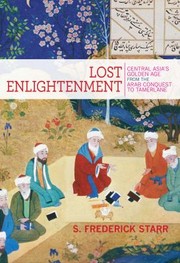
The scientific and philosophical flowering of Bukhara, Khwarezm and Balkh, restored to Central Asia rather than filed under Arab or Persian achievement. The clearest answer to why the region's decline matters.
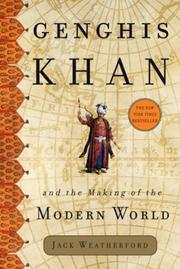
The accessible way into the Mongol conquests and the trade order they imposed. Read it before the primary source so you have a narrative to test against.

The only substantial Mongol account of their own rise, and startlingly unlike the histories written by their victims. Read last in this stage, as a check on Weatherford.
Conquest and the Great Game
IntermediateFollow how Russian expansion and British anxiety turned the khanates into colonies, and how that contest carried into the Bolshevik period.
▸ Study plan for this stage
Pace: Four months for about 1,475 pages. The Great Game (571pp) is enormously readable narrative history and can be read at 35 pages a session. Tournament of Shadows (647pp) covers overlapping ground with more attention to explorers, surveyors and scholars, and is denser; read it second and skim the episo
- The Russian advance across the steppe and into the khanates: Khiva, Bukhara and Kokand, and the sequence of conquest through the 1860s and 1870s
- The British anxiety that drove the contest — the defence of India, the fear of a Russian approach through Afghanistan, and the enormous distances that made the fear both real and exaggerated
- Afghanistan as the buffer, and the two British wars there, which is where imperial confidence meets the region's terrain and politics most disastrously
- The agents as Hopkirk's device: individual officers, disguises, surveys and captivity narratives, which makes the book vivid and also makes it a story about Europeans
- Exploration and mapping as instruments of empire in Meyer and Brysac — the pundits, the surveyors, the archaeological expeditions, and knowledge production as an arm of the contest
- The Bolshevik continuation in Setting the East Ablaze: the attempt to export revolution across Asia, the Baku Congress, and the Basmachi resistance in Central Asia
- The Basmachi as the point where the imperial-side framing is most visible — the movement can be described as banditry or as anti-colonial resistance, and the choice of word is a whole historiography
- How the imperial contest produced the borders: the boundary commissions, the Pamir agreement and the lines drawn between empires that later became the frame for Soviet delimitation
- Trace the Russian conquest of the three khanates with dates. What happened to each ruling house?
- What did Britain actually fear, and how plausible was it? Assess the distances and logistics rather than the rhetoric.
- What happened in the First Anglo-Afghan War, and what did the British conclude from it?
- How does the story change if you narrate the Great Game from Bukhara rather than from Calcutta or St Petersburg? Name three episodes that would look different.
- What was the Basmachi movement, and how do Hopkirk's framing and Khalid's differ?
- Which of the region's modern borders originate in this period, and which were drawn later?
- Add the conquest dates and the boundary agreements to your chronology, and draw the imperial frontier lines onto your map as they moved.
- Take one Hopkirk episode and rewrite it in 300 words from the perspective of the local ruler or population. The book gives you enough detail to do this, which is a credit to it.
- List every Central Asian who is named as an individual across the three books, and compare that list with the number of named British and Russian officers. The ratio is the stage's framing problem in a number.
- Go back to Khalid's chapters on this period and mark every event that the imperial narratives omit entirely.
- Write 200 words on why historians of the region distrust the modern use of 'the Great Game' as an analogy for current politics.
- Trace on your map the route of one of Meyer and Brysac's surveying or collecting expeditions, and note which sites it visited and where the material ended up.
Next up: The empires drew the outer lines; the last stage covers what happened inside them — Soviet nation-making, and then five independent states finding out what those borders now mean.
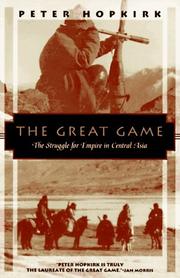
The classic narrative of the nineteenth-century Anglo-Russian contest, told through the agents who fought it. Enormously readable, and openly written from the imperial side — which the Khalid you have read lets you notice.
Covers the same contest with more attention to the scholars, surveyors and spies who mapped the region, and a longer reach into the twentieth century.
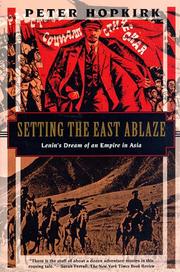
Hopkirk's sequel takes the story into the Bolshevik attempt to export revolution across Asia, bridging the imperial and Soviet halves of the path.
Soviet rule and the five republics
IntermediateExplain how Soviet nationality policy manufactured the modern borders and identities, and what the independent states have made of them.
▸ Study plan for this stage
Pace: Three months for about 1,213 pages. The Lost Heart of Asia (384pp) and Shadow of the Silk Road (363pp) are literary travel writing to be read slowly for the prose; Sovietistan (466pp) is reportage and moves faster. Read Thubron's 1994 book first, then Fatland for the same countries a quarter-century
- National delimitation in the 1920s as the mechanism that produced the five republics: Soviet policy assigned territories, standardised languages and codified nationalities, which is why the borders cut through the Ferghana valley the way they do
- The Soviet double effect Khalid describes and the travel books illustrate: mass literacy, urbanisation and industrialisation alongside collectivisation, purges, the suppression of religious institutions and enormous ecological cost
- The Aral Sea as the concrete monument to cotton monoculture and river diversion, which both Thubron and Fatland visit and which is the most visible legacy in the landscape
- Thubron's timing, which is the whole value of his 1994 book: he travelled while the Soviet frame had collapsed and the new national stories had not yet hardened, so people speak with an uncertainty that later accounts do not capture
- The manufacture of national heritage after independence — Timur in Uzbekistan, Manas in Kyrgyzstan — as states select usable pasts from the material the earlier stages of this path covered
- Fatland's quarter-century-later picture: consolidated regimes of varying character, resource economies, labour migration, and the divergence between the five states from a common starting point
- Islam's reappearance in public life after independence, and the distinction between religious practice, state-managed religious institutions and the security framing governments apply — worth holding descriptively rather than adopting anyone's characterisation
- The limits of travel writing as a source: an outsider's encounters, selected for narrative, with the people willing to talk to a foreign writer. Excellent evidence of texture, weak evidence of proportion
- How did Soviet national delimitation work, and why does the Ferghana valley have the borders it has?
- What did Soviet rule build in Central Asia and what did it destroy? Give specifics on both sides rather than a verdict.
- What happened to the Aral Sea, what policy caused it, and what have the successor states done about it?
- What do people tell Thubron in 1994 that they would be unlikely to tell Fatland in the 2010s, and why?
- How have the five republics diverged since independence, and what explains the differences?
- Which historical figures have the new states adopted as national symbols, and what does each choice claim about the past you read in stage two?
- Read Khalid's chapters on delimitation alongside Thubron, and mark on your map which borders were drawn in the 1920s and which are older. This is the exercise that makes the stage cohere.
- Take one city both Thubron and Fatland visit and set their accounts side by side. Writing 300 words on what changed between the two visits is the cleanest use of this pairing.
- For each of the five republics, write a one-page profile: population, language, economy, political system, and the national story it currently tells. The divergence is easier to see in a table than in prose.
- List every claim in Fatland that rests on a single conversation. This is not a criticism of the book but a discipline for using it.
- Trace Thubron's Silk Road route on your map and mark which sections correspond to the golden-age cities from stage two. The overlay is the path's whole argument in one image.
- Write a final two pages on Central Asia as a region with its own history rather than a corridor, naming which book each claim rests on and flagging where an imperial-side source and a regional one disagree.
Next up: This is the end of the path — the region on its own terms, the steppe and the golden-age cities, the imperial contest and the Soviet and post-Soviet present — and the natural next step is to reread Khalid, which now reads as the synthesis of everything the other nine books each cover from one angle.

Thubron travelled the republics just as the Soviet Union collapsed, catching the moment before new national stories hardened. History as it was being renegotiated.

The same five countries a quarter-century on, reported with an anthropologist's eye. Read directly after Thubron to see what the intervening decades did.
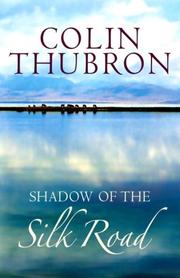
A journey along the whole route from China to the Mediterranean, which reconnects Central Asia to the wider world the first stages placed it in. The right note to end on.
Discussion
Keep reading
Paths that share books, cover the same subject, or open a related topic.