Most reading lists on global trade begin with the policy argument, and the policy argument is the last thing you should read. Tariffs, trade agreements and the backlash against them all presuppose a physical system — ships, ports, crews, standardised steel boxes — that made lengthening supply chains economically rational in the first place. Learn the machinery and the politics becomes legible. Do it the other way around and you are arguing about consequences whose causes you cannot picture.
This path therefore starts with a single object and widens outward: the box, then the working system that moves it, then the economics and the fight over both.
The box
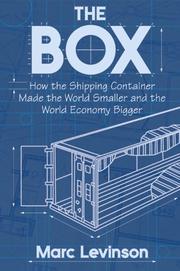
The Box is the definitive history of containerization: Malcom McLean, the longshoremen's unions, the port wars, and the standards fights that had to be settled before any of it could work. Everything else on this path either builds on it or reacts to it.
Outside the Box is Levinson's own follow-up and a useful check on treating containerization as a one-way ratchet. He argues that the great globalization wave has already crested and that value chains are reorganising rather than lengthening. Same author, opposite direction of travel; read it straight afterwards.
The working system
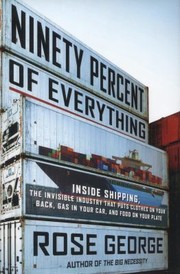
Ninety Percent Of Everything, published under a much longer subtitle about the invisible industry, is a reporter's voyage aboard a container ship — seafarer life, piracy, pollution, and the near-total invisibility of an industry that moves nearly everything. It is the best single account of the trade from inside it.
Down to the Sea in Ships covers two more voyages with more attention to crews and weather than to economics. Read it after George for texture; between them the labour side of shipping stops being abstract.
The Outlaw Ocean is the hardest book here and the necessary counterweight to reading shipping as pure logistics triumph: forced labour, illegal fishing, abandoned crews, and the jurisdictional void that permits all of it.
Arriving Today closes the stage by following one product from a Vietnamese factory to a doorstep, through ships, ports, trucks, warehouses and scheduling algorithms. It joins the ocean leg to the automated land-side system that now defines what delivery means.
The trade argument
The Silk Roads comes first here for perspective. A world history written outward from the trade routes resets the reflexive assumption that global exchange is a modern or a Western invention.
The great convergence is the analytical frame: Baldwin's account of why globalization changed character once moving ideas became cheap as well as moving goods, and why that unbundled production across borders. It is the most useful modern model for thinking about supply chains rather than trade in finished goods.
Free Trade under Fire is the clearest mainstream defence of openness, taking the standard objections one at a time and answering them with evidence. Straight talk on trade is deliberately last: Rodrik argues that trade agreements went considerably further than the economics justified and eroded domestic policy space in the process.
Irwin and Rodrik are both serious economists working from the same literature, and they reach different conclusions about how much of the backlash is warranted. The point of ending here is to finish holding both arguments rather than one. If you want to see how other readers have sequenced this material, browse the reading paths on /discover.
Work through the full path in order and trade policy stops being an opinion and starts being a set of tradeoffs you can name.
Follow the full ordered path here: Container Shipping and Global Trade: The Best Books, in Order.