Development economics does not have a settled story to teach, and reading lists that pretend otherwise are doing you a disservice. Thoughtful economists who have looked at the same countries and the same data reach opposite conclusions about whether aid helps, whether institutions or industrial policy drive growth, and whether the question is even answerable at the level people ask it. A reader who absorbs one side first and never meets the other ends up with a confident position and no idea what the objections are.
This order is built around the disagreements. First settle what development means and how much has already happened; then read the aid debate in the words of its principals; then descend to household-level evidence, which reframed the whole argument; then raise the altitude again to the dispute that is most alive now.
What development is, and what has already changed
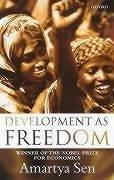
Development as Freedom defines the goal every later book proposes a means toward: development as the expansion of what people are able to do and be, rather than as growth in output. Read it first for that reason alone.
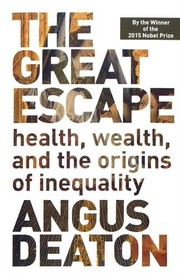
The Great Escape supplies the long-run data — two centuries of escaping poverty and disease, and the inequality that escape leaves behind. Deaton is sceptical about foreign aid, which sets up the next stage rather than pre-empting it.
The aid debate, from its principals
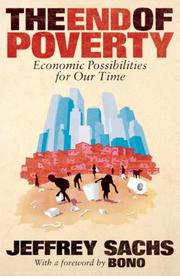
The End of Poverty is the clearest statement of the big-push position: extreme poverty is a trap, and a coordinated, well-funded intervention can break it. Read it first in this stage, because the next two books are substantially written against it.
The White Man's Burden is the direct rebuttal. Easterly distinguishes planners from searchers and argues that top-down aid lacks the feedback loops that make anything work. Sachs and Easterly are the field's famous opposing pair and reading them back to back is the entire point of the stage.
Dead aid puts the strongest version of the abolitionist case on the table: an African economist arguing that government-to-government aid entrenches bad governance and should be phased out in favour of capital markets and trade. It is a polemic, its empirics have been contested by other economists, and it is included because the position deserves its best advocate rather than a summary from opponents.
What poor households actually do
Poor Economics made randomised controlled trials the field's default tool by rebuilding development questions as small answerable ones. It belongs after the aid debate because its method is a refusal to answer the Sachs–Easterly question in the terms they posed it. That refusal is itself contested — critics argue the trials answer narrow questions well and the big ones not at all.
Portfolios of the poor is the most concrete book here: year-long financial diaries of households living on a few dollars a day, revealing sophisticated borrowing, saving and insurance behaviour. It is the best available corrective to abstractions about poverty.
The bottom billion bridges back up to country level, arguing that the remaining hard cases are trapped by conflict, landlocked geography, resource dependence or bad governance, and need different instruments from the rest of the developing world.
Institutions, or industrial policy
Why Nations Fail is the reference point for institutional explanations: inclusive political and economic institutions explain long-run prosperity, argued across an enormous historical sweep. Its critics say the framework is elastic enough to accommodate any outcome and therefore hard to falsify. Read it knowing that objection and it is still the book everyone else is arguing with.
Bad Samaritans is the most readable heterodox challenge, arguing that today's rich countries developed behind tariffs and subsidies and now deny that ladder to others. It is placed against the previous book rather than after it.
How Asia Works closes the path because it makes the most specific and testable claim in the field: land reform, export-disciplined manufacturing, subordinated finance, tested against which East Asian states succeeded and which did not. Finish here and you can check the recipe against every country the earlier books discussed — which is the closest thing to a resolution this subject offers, and it is not very close.
The staged version with study plans is on the full path; Discover has related paths in economics.
Follow the full ordered path here: Economic Development and Global Poverty: The Best Books to Read First.