Charcoal Drawing: Best Books to Master Value, Shading and Portraits
This curriculum takes a beginner from the absolute basics of charcoal handling all the way through expressive portraiture and dramatic lighting, building each skill on the last. The four stages move from material familiarity and mark-making, through value and shading fundamentals, into blending and tonal control, and finally into advanced portrait work and high-contrast, expressive light — the full arc of serious charcoal artistry.
Foundations: Materials, Marks & Seeing
BeginnerUnderstand charcoal types and tools, build confident mark-making habits, and learn to truly see tone before attempting to render it.
▸ Study plan for this stage
Pace: 4–5 weeks, ~25–30 pages/day, with 3–4 dedicated drawing sessions per week (60–90 minutes each)
- The R-mode (right-brain) way of seeing: shifting from symbolic, verbal thinking to direct visual perception of edges, spaces, and relationships
- Contour drawing as a foundational tool for training perception and hand-eye coordination without judgment
- Understanding tone as the foundation of form: learning to see and render the full range of values before attempting realistic representation
- Charcoal as a responsive medium: how different charcoal types (vine, compressed, pencils) create different marks and how to control them through pressure and technique
- Gesture and movement in mark-making: using loose, confident strokes to capture the essence of form rather than tight, hesitant lines
- The relationship between negative space and positive form: seeing what is NOT drawn as equally important to what is
- Building a daily seeing practice: training the eye to observe proportion, angle, and value relationships in everyday objects and scenes
- Overcoming the internal critic and perfectionism: establishing a non-judgmental, experimental approach to drawing
- What is the difference between L-mode and R-mode thinking, and how does Edwards argue that artists must shift between them?
- How does contour drawing train your perception, and why does Nicolaïdes emphasize drawing what you see rather than what you know?
- What are the main types of charcoal (vine, compressed, charcoal pencils), and what distinct marks and effects does each produce?
- How do you establish a tonal range in a drawing, and why is understanding value relationships more important than rendering realistic detail?
- What does Nicolaïdes mean by 'gesture' in drawing, and how does it differ from careful, outline-based representation?
- How can you use negative space as a tool for more accurate drawing, and what does Edwards teach about perceiving spaces between objects?
- Complete Edwards' 'vase/faces' exercise and other R-mode perception exercises from Part II of Drawing on the Right Side of the Brain; document how your perception shifts as you work
- Spend 15 minutes daily on contour drawing from objects around your home (fruit, hands, crumpled fabric, shoes) using only vine charcoal; focus on following edges with your eye, not your preconceptions
- Create a charcoal mark-making study: test vine charcoal, compressed charcoal (2B, 4B, 6B), and charcoal pencils on the same paper to understand their unique qualities and pressure sensitivity
- Draw a simple object (apple, egg, cylinder) five times, each time focusing solely on establishing accurate tonal values with a limited charcoal palette; do not attempt detail or texture
- Practice gesture drawing from life or reference images: 2-minute quick sketches using loose, confident strokes to capture movement and proportion rather than outline
- Execute a negative space study: draw a simple still life (two or three objects) by focusing entirely on the shapes of empty space around and between objects, not the objects themselves
Next up: This stage establishes the perceptual and technical foundation—learning to see tone accurately and make confident marks—that enables the next stage to tackle more complex subjects (still life, portraiture, anatomy) with genuine understanding rather than mechanical copying.
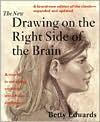
The essential first step for any drawing beginner — trains the eye to see shapes, edges, and negative space rather than symbols, giving the perceptual foundation every charcoal exercise depends on.
Introduces gesture, contour, and sustained observation through structured daily exercises; builds the hand-eye coordination and sensitivity to form that makes charcoal's expressive qualities accessible.
Value & Shading: The Language of Light
BeginnerMaster the value scale, understand how light describes form, and apply consistent, controlled shading in charcoal.
▸ Study plan for this stage
Pace: 2–3 weeks, ~20–25 pages/day with daily practice sessions
- The value scale as the foundation of tonal drawing—understanding the full range from pure white to pure black and how to identify mid-tones
- How light source direction and intensity create the illusion of three-dimensional form on a two-dimensional surface
- The relationship between value contrast and visual emphasis—using contrast to guide the viewer's eye and establish focal points
- Controlled shading techniques specific to charcoal: layering, blending, and maintaining consistency across large areas
- How to render different surface qualities (smooth, rough, reflective) using value and texture rather than line alone
- Translating observed light and shadow patterns into a deliberate value structure that enhances form and depth
- How do you construct and use a personal value scale, and why is it essential before beginning a charcoal drawing?
- Explain how a single light source creates highlights, mid-tones, and shadows on a simple form like a sphere or cylinder.
- What is the difference between local value (the object's inherent tone) and perceived value (how light affects it), and why does this distinction matter?
- Describe at least three charcoal shading techniques from Guptill's methods and when you would use each one.
- How do you use value contrast strategically to create depth, establish a focal point, and control viewer attention in a composition?
- What role does blending play in achieving smooth, convincing form in charcoal, and what are its potential pitfalls?
- Create a full value scale using charcoal pencils and sticks, from pure white paper to deepest black, with at least 10 distinct steps. Practice this multiple times until transitions are smooth and even.
- Draw five simple geometric forms (sphere, cube, cylinder, cone, pyramid) using a single consistent light source. Focus on accurately placing highlights, mid-tones, and shadows without using outlines.
- Render a still life of 3–4 simple objects (fruit, bottles, boxes) in charcoal, paying careful attention to how light describes each form. Establish a clear light direction and maintain it throughout.
- Practice Guptill's specific shading techniques in isolation: hatching, cross-hatching, stumping, and blending on separate studies. Label each technique and note the visual effect.
- Create a value study (small, monochromatic) of a photograph or reference image, reducing it to 5–7 distinct value zones without rendering detail. Focus on the overall light structure.
- Draw the same simple object (e.g., an apple or sphere) three times under different lighting conditions (front light, side light, backlighting), demonstrating how light direction changes the value structure.
Next up: Mastering value and shading in this stage equips you to convincingly render form and depth, preparing you to move forward into more complex compositions, multiple objects, and the integration of color or additional media while maintaining strong foundational tonal control.
A classic studio manual whose deep treatment of tone, hatching, and value structure translates directly to charcoal work and gives learners a rigorous vocabulary for describing light and shadow.
Portraits & Dramatic Light: Expressive Charcoal
ExpertDraw compelling charcoal portraits with accurate anatomy, expressive mark-making, and high-contrast dramatic lighting in the tradition of the Old Masters.
▸ Study plan for this stage
Pace: 6–8 weeks, ~40–50 pages/day with daily drawing practice (2–3 hours)
- Anatomical proportions and construction of the human head and figure using underlying geometric forms and skeletal landmarks
- Classical drawing methodology: establishing accurate proportions before refining surface details and values
- Tonal modeling with charcoal to create three-dimensional form, volume, and the illusion of depth
- High-contrast dramatic lighting (chiaroscuro) to enhance emotional expression and direct viewer attention
- Expressive mark-making and gestural charcoal application to convey character, mood, and personality in portraiture
- Value relationships and the strategic use of light, mid-tone, and shadow to create compelling visual hierarchy
- Integration of anatomical knowledge with observational drawing to achieve both accuracy and expressiveness
- How do you construct an accurate head using underlying geometric forms and proportional landmarks, and why is this foundation essential before rendering?
- What are the key anatomical differences in proportions between adult heads, children's heads, and heads in different poses or angles?
- How does the classical drawing method progress from initial construction to refined surface detail, and why is this sequence important for achieving accuracy?
- How do you use dramatic lighting (chiaroscuro) to create emotional impact and guide the viewer's eye in a charcoal portrait?
- What charcoal techniques and mark-making strategies allow you to convey personality, mood, and expressiveness while maintaining anatomical accuracy?
- How do you establish and control value relationships to create a compelling three-dimensional form and visual hierarchy in a portrait?
- Complete 10–15 head construction studies from Hamm's geometric method, focusing on proportions and landmarks in frontal, three-quarter, and profile views
- Draw 5–8 full-figure gesture and construction studies using Hamm's approach, establishing skeleton and basic forms before adding surface anatomy
- Execute 3–4 classical charcoal head studies following Aristides' methodology: light construction, accurate proportional blocking, then progressive value refinement
- Create 4–6 dramatic portrait studies using high-contrast lighting setups (photograph reference or live model), emphasizing chiaroscuro to convey mood and character
- Practice 8–10 focused charcoal mark-making studies exploring different techniques (hatching, blending, layering, directional strokes) to develop expressive gestural control
- Complete 2–3 full-length figure studies in dramatic lighting, integrating anatomical accuracy with expressive charcoal application and strong value contrast
Next up: This stage equips you with the anatomical precision, classical construction methodology, and dramatic lighting mastery needed to move into specialized portraiture contexts—such as capturing specific character types, narrative compositions, or working from memory and imagination rather than direct reference.
A thorough, accessible breakdown of facial proportions, head planes, and figure structure that gives the learner the anatomical confidence needed before tackling expressive portrait work.
The capstone of the curriculum — Aristides teaches the full Old Master approach to drawing, including dramatic chiaroscuro, expressive mark economy, and the kind of deeply considered tonal composition that defines powerful charcoal portraiture.
Discussion
Keep reading
Paths that share books, cover the same subject, or open a related topic.