Champagne and Sparkling Wine: The Best Books to Read, in Order
The literature on Champagne splits cleanly into three kinds of book, and mixing them up is why people find the subject confusing: producer-by-producer references you consult, technical accounts of how the second fermentation actually works, and narrative histories that are about brands and war rather than wine. This path takes them in that order — get the region and the growers straight first, then the method, then the story, then the arguments — and ends outside Champagne, in Crémant, Cava, Franciacorta and England. Two books here are both catalogued simply as Champagne; check the author.
Get the Region Straight
BeginnerLearn the villages, the crus, the grape mix and the difference between a grower's wine and a house blend — the reference layer everything else sits on.
▸ Study plan for this stage
Pace: 4–5 weeks, and none of these three is read cover to cover. Peter Liem's Champagne is 320 pages organised by village and terroir and issued with reproductions of the 1940s Larmat vineyard maps — read the essays, then work through the villages with the maps out. Michael Edwards's The Finest Wines of C
- The three main grapes — Chardonnay, Pinot Noir and Meunier — and what each contributes to a blend
- The village hierarchy: grand cru, premier cru and the échelle des crus system that ranked them, and what survives of it
- The five sub-regions — Montagne de Reims, Vallée de la Marne, Côte des Blancs, Côte de Sézanne, Côte des Bar — and their soils
- Grower Champagne versus the grande marque house model: who owns the fruit, who makes the blend, and why that distinction organises the modern conversation
- Non-vintage house style as a deliberate product built from reserve wines, not a lesser version of vintage
- Reading a Champagne label: the RM, NM and CM codes, the disgorgement date, the dosage
- Liem's shift from houses to villages as the change that reoriented English-language writing on the region
- What is the difference between an RM and an NM on a label, and why does it matter to what is in the bottle?
- Which villages are grand cru, and what do the soils of the Côte des Blancs and the Montagne de Reims each contribute?
- What is a house's non-vintage blend actually for, and how is consistency achieved across years?
- How do Liem and Edwards differ in what they think the useful unit of description is — village or producer?
- Given a wine you want to buy, which of these three books do you open first, and why?
- Take three bottles you can actually get — a large-house non-vintage, a grower wine, and a blanc de blancs — and look each one up in all three books before opening them. Write down what each book led you to expect, then taste and record which prediction held.
- Use Liem's Larmat map reproductions to locate the villages named on the labels of the last five Champagnes you have drunk. Most people find they have been drinking from three or four places without knowing it.
- Build your own one-page crib of the five sub-regions with soil, dominant grape and two representative villages each, sourced from Liem. Keep it — every later stage assumes it.
- Decode a full label using Liem and Stelzer together: producer code, dosage, disgorgement date, base vintage where stated. Then find the same wine in Stelzer and compare his note with yours.
Next up: You know the ground and the producers; the next stage explains what actually happens to the wine between the base vintage and the bottle you just decoded.

The current standard reference, published as Champagne: The Essential Guide to the Wines, Producers, and Terroirs of the Iconic Region and issued with reproductions of the 1940s Larmat vineyard maps. It is the book that moved the English-language conversation from houses to villages.
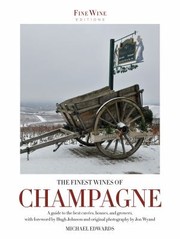
A reference organised as producer profiles, house by house and grower by grower, with tasting notes. Read it beside Liem: Edwards gives you the people, Liem gives you the ground.

A buying and vintage reference, revised in successive editions, and the most practical of the three. Use it to decide what to actually drink once the other two have told you why it tastes as it does.
How the Bubbles Get There
IntermediateUnderstand the traditional method properly — base wine, liqueur de tirage, autolysis, riddling, disgorgement and dosage.
▸ Study plan for this stage
Pace: 3–4 weeks. Be clear about what these two books are before you start: David Bird's Understanding Wine Technology is a genuine technical text on winemaking chemistry, written to be followed by non-chemists but assuming you will sit with diagrams and process descriptions rather than skim them — 307 pag
- The base wine and the assemblage: why the still wine that goes into the blend is deliberately high in acid and low in alcohol
- Liqueur de tirage, the second fermentation in bottle, and the pressure it generates
- Autolysis — yeast cells breaking down on the lees — and what extended lees ageing actually contributes to flavour and texture
- Riddling and disgorgement as mechanical problems and their modern solutions
- Dosage: the liqueur d'expédition, the residual-sugar categories from brut nature to doux, and what dosage is compensating for
- Malolactic fermentation as a stylistic choice, and which producers block it
- The traditional method against tank (Charmat) and transfer methods, and what each does differently to the wine
- The difference between a technical text (Bird) and an encyclopedia (the Companion) — one explains a process, the other defines a term
- What is autolysis chemically, and what does a wine that has spent six years on lees taste like that one with eighteen months does not?
- Why does a disgorgement date matter to a drinker, and what changes in the bottle after it?
- What is the dosage doing, and what happens to a wine bottled at zero dosage that would not at eight grams?
- How does the tank method differ from the traditional method in process and in result?
- Which terms did you have to look up in the Oxford Companion while reading Bird, and could you now define each without it?
- Work through Bird's account of the second fermentation and write out the process as a numbered sequence with the inputs and outputs at each step. If you cannot do it from memory afterwards, reread the chapter — this is the stage's core.
- Buy the same wine at two dosage levels if a producer offers it — many do, brut and extra brut — and taste them blind against each other. Then reread Bird's dosage section and see whether it accounts for what you tasted.
- Find a bottle with a disgorgement date on the back label, note it, and taste the wine. Record the age since disgorgement alongside the tasting note. Repeat with a second bottle a year older on lees.
- Keep a list of every term you look up in the Oxford Companion for a fortnight — assemblage, taille, prise de mousse, dosage, autolysis. That list is your working vocabulary, and it is more useful than any glossary you could copy out.
Next up: With the method understood, the popular histories in the next stage can be read for what they are — stories about brands and war rather than about wine.

A genuinely technical book written to be readable by non-chemists, and the clearest account here of what the second fermentation and extended lees ageing actually do. This is the one that makes dosage and disgorgement dates make sense.
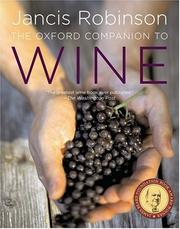
The standard reference work, and the fastest way to check a term — assemblage, tirage, taille, prise de mousse — as you meet it. Kept here as the encyclopedia you consult, not a book you read through.
The Story
IntermediateRead the narrative history of the region, which is largely a history of widows, marketing and invasion.
▸ Study plan for this stage
Pace: 3–4 weeks, and much easier reading than the last stage. The Widow Clicquot is 264 pages of narrative biography — popular history rather than scholarship, and readable in a few sittings. Don and Petie Kladstrup's Champagne is a 320-page narrative history of the region; note that this shares a display
- Barbe-Nicole Clicquot Ponsardin and the credit she is given for the riddling table and for the modern export trade
- The widows — Clicquot, Pommery, Bollinger — as a genuine pattern in the region's commercial history rather than a marketing motif
- Champagne as a brand-led business almost from the start, and how the houses built their markets
- The Russian and British export markets and what each demanded in style and sweetness
- The region as a battlefield in both world wars, and the effect on vineyards, cellars and the labour force
- Popular narrative history as a form: what it does well and where it stops citing
- Why an account of the trade is largely an account of marketing
- What is Madame Clicquot actually credited with inventing, and how confident is Mazzeo about the evidence?
- How did the houses build export markets, and what did the Russian market in particular ask for?
- What happened to Champagne's vineyards and cellars during the First World War, and how did the region recover?
- Where does the Kladstrups' account overlap with Wine and War, and does either add anything the other lacks?
- Which claims in these three books would you want to see a source for before repeating?
- Read Mazzeo, then look up Veuve Clicquot in Edwards's producer profiles from stage one and note how much of the narrative survives in a reference book's account. The difference is the measure of the popular history.
- Build a timeline of the region from 1800 to 1945 using all three books, marking which events each covers. The gaps are as informative as the overlaps.
- Taste a Veuve Clicquot and a grower wine from the same or a neighbouring village side by side, having read Mazzeo. Write down whether the story changed what you tasted — it usually does, and noticing that is the point.
- Pick one claim from the Kladstrups about wartime Champagne and check it against the scholarly account in the next stage when you get there. Note it down now.
Next up: Those histories tell the received story of the region; the next stage reads the two books that argue the received story is a construction.
A narrative biography of Barbe-Nicole Clicquot Ponsardin, who is credited with the riddling table and much of the modern trade. Popular history rather than scholarship, and the most enjoyable entry into how the houses were built.
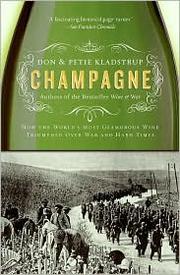
The Kladstrups' narrative history of the region, written with Petie Kladstrup and published as Champagne: How the World's Most Glamorous Wine Triumphed Over War and Hard Times. Note that this shares a display title with Liem's reference — they are entirely different books.
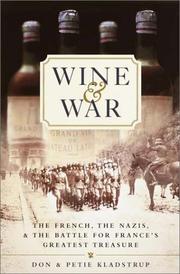
Their earlier book, on French wine under German occupation, with a long Champagne thread running through it. Read it after the history proper — it is the best single account of why the region's twentieth century looks the way it does.
The Arguments and the Scholarship
IntermediateMeet the two serious critiques of the received story — that the houses' style is a marketing artefact, and that the region's identity was constructed rather than inherited.
▸ Study plan for this stage
Pace: 3 weeks. Robert Walters's Bursting Bubbles is 240 pages and openly a polemic — Walters is an importer and an advocate for grower Champagne, and the book argues a position rather than surveying one; read it as a case for the prosecution. Kolleen Guy's When Champagne Became French is 263 pages of acad
- The grower position: that blending, heavy dosage and the grande marque model obscure terroir, argued by an interested party
- The 1911 riots and the delimitation dispute over which departments could call their wine Champagne
- Appellation as a legal and political construction rather than an inherited fact
- Champagne as a national symbol, and the process by which a regional product becomes one
- How to read a polemic: locate the claim, the evidence, and the commercial interest, and weigh all three
- Academic history versus trade advocacy versus popular narrative — three books on one region, three different standards of proof
- Why the received story of the houses needs the scholarship underneath it to be tested
- What exactly is Walters arguing against, and which of his claims are about taste and which about economics?
- What happened in 1911, who was fighting whom, and how was the dispute settled?
- How does Guy argue that Champagne's identity was constructed, and what evidence does she use?
- Where does Walters's account conflict with Edwards's or Stelzer's, and how would you decide between them?
- Having read Guy, which parts of Mazzeo and the Kladstrups now look like received trade narrative?
- Write out Walters's central argument in three sentences, then list the three strongest objections a house winemaker would make. Then find whether Edwards or Stelzer answers any of them.
- Take the claim you noted from the Kladstrups at the end of the last stage and check it against Guy. Record whether the scholarly account supports, qualifies or contradicts it.
- Blind-taste a grower wine and a large-house non-vintage with a third person pouring, and try to identify which is which. Do this after Walters and record the result honestly — his argument makes a testable prediction.
- Map the appellation boundary dispute from Guy onto Liem's village maps from stage one. The places that were fought over in 1911 are still on the label today.
Next up: You now know Champagne as a region, a method, a business and a contested construction — the last stage takes the method outside its borders.

A polemic, and openly so: Walters argues that blending, dosage and the grande marque model obscure terroir, and takes the grower position hard. Read it against Edwards and Stelzer rather than instead of them.
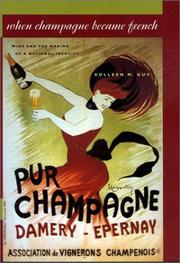
Academic history on how Champagne became a national symbol and how the appellation boundaries were fought over, including the 1911 riots. The scholarly foundation under every popular history in the previous stage.
The Rest of the Sparkling World
IntermediateExtend the method outward — Crémant, Cava, Franciacorta, English sparkling, Sekt, and the tank-method wines.
▸ Study plan for this stage
Pace: 4 weeks, all three used as references rather than read through. Christie's World Encyclopedia of Champagne and Sparkling Wine is 344 pages and the only book on this path that covers the whole category country by country, written by Tom Stevenson and with Essi Avellan in later editions. The World Atl
- Crémant as a French appellation category with its own rules, and how the seven crémant regions differ
- Cava: the Penedès, the Macabeo-Xarel·lo-Parellada blend, and the recent restructuring of its quality tiers
- Franciacorta, its satèn style, and the Italian traditional-method category as distinct from Prosecco
- English sparkling wine, the chalk it grows on, and the geological argument connecting it to Champagne
- Sekt, and the difference between the tank-method mass category and the traditional-method producers
- Tank-method wines including Prosecco as a legitimately different product rather than a cheaper one
- The four forgotten Champagne varieties — Arbane, Petit Meslier, Pinot Blanc and Pinot Gris — and where they still appear
- New World sparkling: Tasmania, South Africa's Cap Classique, California, and where the encyclopedia is your only source
- What legally distinguishes Crémant from Champagne, and does anything in the method differ?
- Why is Franciacorta's satèn style at lower pressure, and what does that do to the wine?
- What is the geological case for English sparkling wine, and how well does the Atlas actually support it?
- Which grapes are permitted in Champagne beyond the main three, and what does Wine Grapes say about each?
- Which sparkling regions could you now buy from with confidence, and which would you still need Stevenson to guide you through?
- Assemble a flight of four traditional-method wines from four countries — a Champagne, a Crémant, a Cava and an English sparkling — and taste them together, looking each up in Stevenson beforehand. Write down what you expected and what you got.
- Put the World Atlas maps for Champagne and southern England side by side and trace the chalk. Then taste an English sparkling wine against a Champagne from the Côte des Blancs and record whether the geology is audible in the glass.
- Look up Meunier in Wine Grapes and then find a Meunier-dominant Champagne to drink. It is the least-discussed of the three main grapes and the one most people have never tasted on its own.
- Add a tank-method wine to a flight of traditional-method ones and try to identify it blind. Bird's chapter from stage two predicts what should give it away; check whether it does.
- Using Stevenson, pick one sparkling region you had never considered and buy a bottle from it. That habit is what the encyclopedia is for.
Next up: You can now place any sparkling wine you are handed by region, method and producer type, and know which of these books answers the question you have.
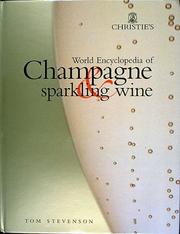
The reference that actually covers the whole category rather than just Champagne, written with Essi Avellan in later editions. Country by country, producer by producer — the only book on this path that will tell you about Tasmanian or South African sparkling.
The maps. Once you are comparing Champagne with Franciacorta and Sussex, you need the geography side by side, and this is where you get it. Consult the current edition; our catalogue record dates from an early one.

A varietal reference written with Julia Harding and José Vouillamoz, and the last word on Chardonnay, Pinot Noir, Meunier and the four forgotten Champagne varieties. A reference for looking things up, not for reading straight through.
Discussion
Keep reading
Paths that share books, cover the same subject, or open a related topic.