Best Books to Become a Sommelier (in Order)
This curriculum is designed for an intermediate learner — someone already curious about wine — who wants to build the structured knowledge needed to work as a sommelier and succeed in certification exams (WSET, Court of Master Sommeliers, etc.). The path moves from mastering the global wine map and grape varieties, through rigorous tasting technique and regional depth, to the professional service and business skills that define the sommelier role on the floor.
The Wine Map & Grape Foundations
IntermediateBuild a confident mental map of the world's major wine regions, key grape varieties, and the logic of how climate and soil shape style — the vocabulary every later book assumes.
▸ Study plan for this stage
Pace: 8–10 weeks, ~40–50 pages/day. Start with *The World Atlas of Wine* (4–5 weeks, ~30 pages/day to absorb maps and regional narratives), then *Wine Grapes* (3–4 weeks, ~50 pages/day as a reference-driven deep dive into varietal profiles).
- The six major wine-producing regions (Old World: France, Italy, Spain, Germany; New World: California, Australia, etc.) and their distinctive terroir signatures
- How climate zones (cool, moderate, warm) and soil types (limestone, clay, volcanic, alluvial) directly determine grape ripeness, acidity, and wine style
- The core noble grape varieties (Cabernet Sauvignon, Pinot Noir, Chardonnay, Sauvignon Blanc, Riesling, Syrah) and their flavor profiles across different regions
- The concept of terroir as the intersection of geography, climate, and winemaking tradition that defines regional identity
- Secondary and regional grape varieties and their role in blends and local wine traditions
- How to read a wine map: understanding latitude, elevation, proximity to water, and aspect as predictors of style
- The relationship between grape phenology (ripening patterns) and regional suitability
- How historical and regulatory frameworks (appellation systems) encode terroir knowledge into law
- Why does Pinot Noir thrive in Burgundy and California's Central Coast but struggle in warm regions like Barossa Valley, and what does this teach you about matching grapes to climate?
- Given a map showing latitude, elevation, and proximity to ocean, how would you predict whether a region would produce high-acidity whites or ripe reds?
- What are the defining terroir characteristics of three major regions you've studied (e.g., Bordeaux, Barossa, Marlborough), and how do they shape the wines produced there?
- Name five noble grape varieties, describe their flavor profiles, and identify at least two regions where each is grown—and explain why those regions suit that grape
- How do soil type and climate interact to influence a wine's alcohol level, acidity, and aromatic intensity?
- What is the difference between a regional variety (e.g., Nebbiolo in Piedmont) and a noble variety, and why does this distinction matter for a sommelier?
- Create a hand-drawn or digital map of the world's major wine regions, color-coded by climate zone (cool/moderate/warm). Annotate with 2–3 key grapes and a signature wine style for each region.
- Build a 'terroir comparison chart' for three regions producing the same grape (e.g., Chardonnay in Burgundy, California, and Australia). Document climate, soil, elevation, and resulting flavor differences. Taste examples if possible.
- For each of the 10–12 noble and secondary grapes in *Wine Grapes*, write a one-paragraph 'flavor profile passport' including ripening tendency, acidity range, typical alcohol, and three regions where it excels.
- Conduct a 'blind region tasting' with 4–6 wines from different regions. Before tasting, predict the region based on the grape variety and what you know about terroir. Taste and reflect on how climate and soil expressed themselves.
- Create a 'climate-to-style decoder': given a region's latitude, elevation, and distance from water, write down your prediction for wine style (alcohol, acidity, ripeness), then verify against *The World Atlas of Wine*.
- Sketch the 'flavor wheel' for one noble grape (e.g., Riesling) showing how its profile shifts across cool regions (Germany), moderate regions (Alsace), and warm regions (Australia). Use tasting notes from *Wine Grapes*.
Next up: This stage equips you with the geographic and varietal vocabulary—the "grammar" of wine—so that the next stage can layer on production techniques, aging potential, and food pairing logic without having to pause and explain where a wine comes from or why it tastes the way it does.
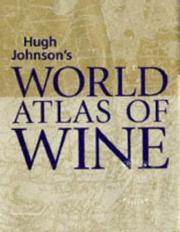
The canonical geographic reference for any serious wine student; its detailed maps and region-by-region breakdowns give you the spatial framework that all tasting and service knowledge hangs on. Read this first to anchor every region in your mind.

An authoritative A-to-Z of 1,368 grape varieties with synonyms, origins, and flavor profiles. After the atlas gives you places, this book gives you the varieties grown there — essential for exam-level variety identification.
Tasting Technique & Sensory Mastery
IntermediateDevelop a systematic, repeatable tasting methodology — the ability to analyze structure, identify faults, and articulate what is in the glass with precision.
▸ Study plan for this stage
Pace: 4–5 weeks, ~25–30 pages/day, with 2–3 dedicated tasting sessions per week
- The five senses in wine tasting: appearance, nose, palate, structure, and finish — and how to isolate each systematically
- Robinson's tasting framework: how to move from impression to analysis, building a repeatable methodology
- Identifying and articulating wine faults (cork taint, oxidation, volatile acidity, reduction) with confidence
- Understanding wine structure: tannins, acidity, alcohol, and body — and how they interact on the palate
- Sensory memory and calibration: developing a personal reference library of flavors and aromas to compare against
- The language of tasting: moving beyond vague descriptors to precise, communicable observations
- How pleasure and analysis coexist: balancing technical assessment with the hedonistic experience of wine
- What is Robinson's systematic approach to tasting, and how do you apply it consistently across different wine styles?
- How do you distinguish between a wine fault and an intentional stylistic choice, and what are the hallmark characteristics of common faults?
- What role do tannins, acidity, and alcohol play in wine structure, and how do you assess their balance in a given wine?
- How do you build and maintain a sensory reference library, and why is it essential for consistent tasting notes?
- What is the relationship between technical analysis and the pleasure of drinking wine, according to Robinson?
- How would you articulate the difference between appearance, nose, palate, and finish in a single wine, using precise language?
- Blind tasting: Conduct 6–8 blind tastings of wines from different regions and styles (2–3 per week), using Robinson's framework to write detailed notes on appearance, nose, palate, structure, and finish
- Fault identification drills: Taste 4–5 deliberately flawed wines (corked, oxidized, volatile, reduced) and practice identifying and articulating the specific fault; compare notes with a study partner or mentor
- Sensory calibration: Create a personal reference library by tasting and documenting 10–12 benchmark wines (e.g., a classic Burgundy, a Bordeaux, a Riesling, a Champagne) with detailed notes on their structure and flavor profile
- Comparative tasting: Taste 3–4 wines side-by-side from the same region or varietal but different vintages or producers, and articulate how structure and sensory characteristics differ
- Tasting note refinement: Write tasting notes for 8–10 wines, then revise them using Robinson's language and framework; compare your revised notes with published tasting notes to identify gaps
- Structured practice: Conduct 2–3 formal tasting sessions per week, timing yourself to complete appearance → nose → palate → finish analysis in 5–7 minutes per wine, building speed and consistency
Next up: This stage equips you with the technical vocabulary and analytical framework to confidently assess any wine's quality and character, preparing you to move into the next stage where you'll apply this methodology to regional styles, food pairing logic, and the commercial/service context of sommelier work.
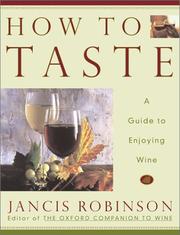
A concise, practical guide to building a disciplined tasting grid from one of the world's most respected palates. Start here to establish the analytical language before moving to more complex texts.
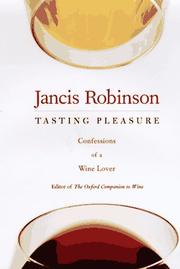
A narrative companion that shows how a master taster applies intuition and memory across decades of experience, bridging the gap between technical analysis and genuine sensory pleasure.
Regional Depth & Certification Core
IntermediateAchieve the regional and stylistic depth required by major certification bodies (CMS Certified/Advanced, WSET Diploma), with focused study on the benchmark regions examiners test most heavily.
▸ Study plan for this stage
Pace: 8–10 weeks, ~40–50 pages/day (Oxford Companion used as reference; Exploring Wine as primary text)
- Terroir as the foundation: how soil, climate, altitude, and aspect shape regional wine character and quality tiers
- Benchmark regions for certification: Bordeaux, Burgundy, Champagne, Rhône, Loire, Germany, Italy, Spain, and their AOC/DOCG classification systems
- Grape varieties as regional signatures: Cabernet Sauvignon, Pinot Noir, Chardonnay, Riesling, Nebbiolo, Tempranillo and their stylistic expressions across regions
- Certification-focused tasting profiles: how to identify regional markers, vintage variation, and quality indicators in blind tastings
- Wine law and labeling: understanding appellation hierarchies, legal minimum alcohol, aging requirements, and production rules that define regional identity
- Vintage variation and climate impact: reading vintage charts, understanding how weather shapes quality and style in key regions
- Pairing wine to region and food: matching regional wines to their traditional cuisines and modern applications
- Sensory evaluation frameworks: developing consistent tasting notes aligned with certification exam standards
- What are the key differences between Bordeaux Left Bank (Pauillac, Margaux) and Right Bank (Pomerol, Saint-Émilion) in terms of grape varieties, soil, and resulting wine style?
- How do the classification systems differ between Burgundy (Grand Cru/Premier Cru), Bordeaux (1855 Classification), and Champagne (cru rankings), and what do these tell you about quality expectations?
- Describe the terroir of three benchmark regions (e.g., Burgundy, Barossa Valley, Rioja) and explain how soil, climate, and tradition shape the wines produced there.
- What are the legal minimum alcohol levels, aging requirements, and production rules for Champagne, Chianti Classico, and German Riesling, and how do these regulations protect regional identity?
- How would you identify a blind wine sample as coming from Burgundy vs. Bordeaux, or Germany vs. Alsace, based on sensory characteristics and regional markers?
- Explain how vintage variation affects a specific benchmark region (e.g., why 2015 Burgundy differs from 2016 Burgundy in alcohol, acidity, and aging potential).
- Systematic regional tasting: Taste 3–4 wines from each of 8 benchmark regions (Bordeaux, Burgundy, Champagne, Rhône, Loire, Germany, Italy, Spain) at different price points; document terroir markers, grape variety signatures, and quality indicators in structured tasting notes.
- Blind tasting practice: Conduct weekly blind tastings (6–8 wines) focusing on regional identification; use Exploring Wine's tasting framework to develop consistent sensory vocabulary aligned with certification standards.
- Appellation deep-dive: Select one region per week (e.g., Burgundy, Barossa, Rioja); map its sub-regions, study its classification system using both books, taste 2–3 representative wines, and write a 1–2 page regional profile.
- Vintage chart analysis: Study vintage charts for Bordeaux, Burgundy, and Germany; compare 3 consecutive vintages from one region, taste them side-by-side if possible, and document how weather patterns affected alcohol, acidity, and aging potential.
- Wine law and labeling audit: Create a reference sheet for each benchmark region listing AOC/DOCG requirements, minimum alcohol, aging rules, and production restrictions; cross-reference with actual bottle labels from those regions.
- Food and wine pairing workshop: Pair 2–3 regional wines with their traditional cuisines (e.g., Chianti with Tuscan dishes, Riesling with German cuisine); then experiment with modern pairings and document how regional character influences the match.
Next up: This stage builds the regional mastery and sensory precision required for certification exams; the next stage will focus on advanced tasting technique, exam-format practice questions, and strategic review of weak regions to ensure exam readiness.
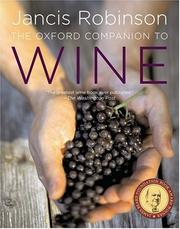
The definitive encyclopedic reference for wine — used by MW and Master Sommelier candidates alike. Read it selectively and repeatedly as a study companion alongside your exam syllabus to fill every knowledge gap.
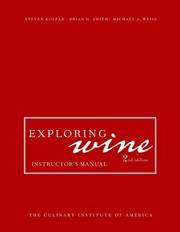
A comprehensive, exam-oriented textbook covering viticulture, vinification, and all major regions in structured chapters — widely used in sommelier programs and ideal for systematic certification prep.
Professional Service & the Sommelier's Role
ExpertMaster the hospitality, service, cellar management, and wine-list curation skills that define a working sommelier — the practical craft that exams test in their service components.
▸ Study plan for this stage
Pace: 8–10 weeks, ~40–50 pages/day with 2–3 days/week for service drills and cellar practice
- Wine service protocols: opening, decanting, pouring, temperature management, and glassware selection for different wine styles
- Cellar management: inventory systems, storage conditions, rotation, and organization for optimal wine preservation and accessibility
- Wine-list curation: balancing price points, regions, styles, and producer diversity to reflect restaurant identity and guest preferences
- Flavor profiling and sensory mapping: using Parr's taste atlases to connect geography, terroir, and production methods to specific flavor outcomes
- Guest interaction and recommendation: translating wine knowledge into personalized suggestions based on food pairings, budget, and preference discovery
- The sommelier's business acumen: understanding margins, cost-to-bottle ratios, upselling strategies, and wine program ROI
- Regional deep-dives: mastering key wine regions from Zraly (France, Italy, Spain, California, etc.) with tasting profiles and service considerations
- Terroir and production impact: recognizing how soil, climate, and winemaking choices shape flavor and inform pairing decisions
- What are the critical steps in proper wine service, and how do temperature, glassware, and opening technique vary by wine style?
- How would you design a balanced wine list for a 150-seat restaurant with a $45 average entrée price, and what regions and price points would you prioritize?
- Using Parr's taste atlas framework, explain how terroir (soil, climate, altitude) in a specific region (e.g., Burgundy, Barossa Valley) produces distinctive flavor profiles and how you'd communicate this to a guest
- Describe a complete cellar management system: inventory tracking, storage organization, rotation protocols, and how you'd handle a wine shortage or over-stock situation
- How do you approach a guest who says 'I don't know much about wine' or 'just bring me something red'? Walk through your discovery and recommendation process
- What is the relationship between wine cost, bottle price, and profit margin in a restaurant context, and how does this influence your list-building and upselling decisions?
- Complete Zraly's regional tasting exercises for at least 5 major wine regions (e.g., Bordeaux, Burgundy, Tuscany, Rioja, Napa Valley), taking detailed notes on flavor profiles, aging potential, and service temperatures
- Design a 40–60 bottle wine list for a hypothetical restaurant (specify cuisine type and price point), justifying each selection with region, producer, price, and food pairing rationale
- Practice wine service: open and pour at least 10 bottles (red, white, sparkling, fortified) using proper technique, including decanting decisions and temperature checks
- Create a cellar inventory spreadsheet for a 200-bottle collection, including SKU, quantity, location, par levels, reorder points, and rotation schedule; then simulate a stock count and variance analysis
- Conduct 5 mock sommelier-guest interactions: practice discovery questions, pairing recommendations, and upselling strategies with a partner or mentor, recording feedback
- Map out 3 regions using Parr's taste atlas method: identify key producers, flagship wines, flavor markers, and how you'd describe them to guests at different knowledge levels
Next up: This stage transforms you from a wine-knowledge generalist into a working sommelier who can execute service flawlessly, curate strategic wine programs, and guide guests with confidence—preparing you for the final stage of exam preparation, advanced tasting certification, and real-world sommelier role mastery.
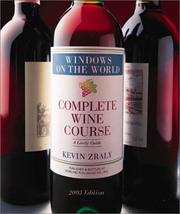
A perennial bestseller that bridges wine knowledge and restaurant service in an accessible, guest-facing voice — invaluable for understanding how to communicate wine to diners at every level.

Written by a celebrated working sommelier, this book focuses on Old World benchmark regions through a service and selection lens, teaching you how to think about wine lists, food pairing, and vintage selection the way a professional does.
Discussion
Keep reading
Paths that share books, cover the same subject, or open a related topic.