Understand wine: taste like a sommelier
This four-stage curriculum takes a complete beginner from "wine is just red or white" to confidently tasting, talking about, and cellaring wine like an enthusiast. Each stage builds directly on the last: you first gain a friendly conceptual map, then master the core grapes and regions, then sharpen your palate and vocabulary, and finally learn to buy, store, and drink strategically.
Foundations — The Big Picture
BeginnerUnderstand what wine is, how it is made, and why it tastes the way it does — without feeling overwhelmed by jargon.
▸ Study plan for this stage
Pace: 8–10 weeks total. Weeks 1–4: "Wine for Dummies" (~25–30 pages/day, reading in focused 30-minute sessions). Weeks 5–10: "The Wine Bible" (~20–25 pages/day; it is denser and more encyclopedic, so slow down and take notes by region). Read both books with a glass in hand whenever possible — tasting alon
- What wine actually is: fermented grape juice and how sugar is converted to alcohol by yeast (covered in the opening chapters of Wine for Dummies)
- The major grape varieties (Cabernet Sauvignon, Merlot, Pinot Noir, Chardonnay, Sauvignon Blanc, Riesling, etc.) and how variety drives flavor — a central thread in both books
- How winemaking decisions (oak aging, malolactic fermentation, skin contact, sweetness level) shape the final taste, as explained accessibly in Wine for Dummies
- The concept of terroir — how climate, soil, and geography imprint themselves on a wine — introduced in Wine for Dummies and richly expanded region-by-region in The Wine Bible
- Old World vs. New World wine philosophy: label-by-region (France, Italy, Spain) versus label-by-grape (USA, Australia, Chile), a distinction MacNeil uses as an organizing principle throughout The Wine Bible
- How to taste wine systematically: the see–swirl–sniff–sip–savor method and building a personal flavor vocabulary, practiced through the tasting exercises in Wine for Dummies
- Reading a wine label: understanding appellation, vintage, producer, and alcohol level so you can decode any bottle you pick up
- Why price, vintage, and storage matter — and why they sometimes matter less than beginners assume — a grounding perspective offered in Wine for Dummies
- In your own words, what happens chemically during fermentation, and why does the sugar content of the grape matter so much to the finished wine?
- Pick any three major grape varieties covered in both books — what are the signature aromas, typical body, and classic regions associated with each?
- What is terroir, and can you give two concrete examples from The Wine Bible where geography or climate produces a distinctly different style of the same grape?
- How does an Old World wine label differ from a New World wine label, and why does that difference exist historically?
- Walk through the systematic tasting method step by step — what are you looking for at each stage, and what does each observation tell you about the wine?
- What are two winemaking techniques (e.g., oak aging, malolactic fermentation) and how does each one change what ends up in your glass?
- 'Grape variety flight': Buy one bottle each of Cabernet Sauvignon, Pinot Noir, and Chardonnay from any accessible producer. Taste them side by side using the tasting method from Wine for Dummies, and write 3–5 tasting notes per wine before reading the back label or looking anything up.
- Label-decoding drill: Collect 5–6 empty bottles (or photograph labels at a wine shop) — mix Old World and New World. Practice identifying producer, region/appellation, grape (if stated), vintage, and alcohol level for each, using the label-reading chapters of Wine for Dummies as your guide.
- 'Terroir comparison' tasting: Choose one grape variety discussed in The Wine Bible that is grown in two very different regions (e.g., Sauvignon Blanc from the Loire Valley vs. New Zealand's Marlborough). Buy one bottle of each, taste blind if possible, and note every difference — then read MacNeil's descriptions of both regions to see how well your observations match.
- Region mapping exercise: After finishing each major regional chapter in The Wine Bible, sketch a simple hand-drawn map of that region from memory, marking the key appellations, dominant grapes, and one or two landmark producers mentioned. No artistic skill required — the act of drawing cements geography.
- Vocabulary building journal: Keep a running 'flavor word' list as you read both books. Each time you encounter a descriptor you cannot picture (e.g., 'minerality', 'grippy tannins', 'petrol notes'), find a wine that is described that way, taste it, and write one sentence in plain language about what you actually experienced.
- Host a 'beginner's tasting': Invite 2–3 friends, open 3 bottles covering different styles (e.g., a crisp white, a light red, a fuller red), and teach them the tasting method from Wine for Dummies out loud. Teaching forces you to consolidate everything you have read into clear, jargon-free language.
Next up: By the end of this stage you will have a confident mental map of grapes, regions, and winemaking basics — exactly the scaffolding needed to dive into intermediate study of specific Old World and New World regions, where the nuances of appellation law, producer styles, and food pairing demand the vocabulary and tasting instincts you have now built.

The single most approachable entry point: plain language, no assumptions, covers grapes, regions, labels, and buying in one friendly sweep. Read this first to build the vocabulary every later book relies on.
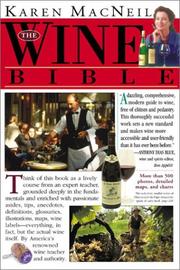
A comprehensive yet readable reference that tells the story of wine region by region. Reading it after Wine for Dummies lets you attach real places and producers to the concepts you just learned.
Grapes & Regions — The Core Curriculum
BeginnerRecognize the world's major grape varieties and wine regions, and understand how climate, soil, and tradition shape what's in the glass.
▸ Study plan for this stage
Pace: 8–10 weeks total. Weeks 1–6: "The World Atlas of Wine" — read region by region rather than cover-to-cover; aim for ~15–20 pages/day, pausing to study the maps carefully before reading the accompanying text. Weeks 7–10: "How to Love Wine" — a lighter, more reflective read at ~20–25 pages/day; read al
- Major noble grape varieties (Cabernet Sauvignon, Merlot, Pinot Noir, Syrah/Shiraz, Chardonnay, Sauvignon Blanc, Riesling, etc.) and their signature flavor profiles as mapped in The World Atlas of Wine
- How terroir — the combination of climate (macroclimate vs. mesoclimate vs. microclimate), soil type, and topography — shapes a wine's character, a framework Johnson builds region by region
- The Old World vs. New World distinction: how European appellations are defined by place and tradition (e.g., Burgundy, Bordeaux, Rioja) versus New World regions defined primarily by grape variety (e.g., Napa Valley, Barossa Valley)
- Reading and interpreting wine maps: understanding how Johnson uses cartography to show elevation, river systems, and appellation boundaries as predictors of wine style
- The concept of appellation and classification systems (Bordeaux's 1855 Classification, Burgundy's Premier/Grand Cru hierarchy, Italy's DOC/DOCG) as introduced in The World Atlas of Wine
- Asimov's philosophy that wine appreciation is personal and experiential — that pleasure and curiosity matter more than memorized facts or scores
- The role of producer and human decision-making (winemaking style, oak use, harvest timing) as a layer on top of terroir, a theme Asimov uses to demystify wine culture
- How to taste with intention: building a simple mental framework for describing what you smell and taste, grounded in Asimov's accessible, jargon-light approach
- After studying The World Atlas of Wine, can you name the primary grape varieties of Bordeaux's Left Bank vs. Right Bank, and explain why they differ?
- How does Johnson use maps to argue that geography is destiny in wine — what specific regional example (e.g., the Côte d'Or, the Mosel, Marlborough) best illustrates this for you?
- What is an appellation, and why do Old World wine regions regulate grape varieties and yields while most New World regions do not?
- According to Asimov in How to Love Wine, what is the biggest obstacle between most people and genuine wine enjoyment, and how does he suggest overcoming it?
- Can you describe the climate differences between a cool-climate wine region and a warm-climate one, and name one grape variety that thrives in each?
- Having read both books, how would you explain to a friend the difference between a 'place-first' and a 'grape-first' approach to choosing a wine?
- Map drill: Photocopy or print 3–4 blank regional maps from The World Atlas of Wine (e.g., Burgundy, Napa Valley, Rioja). Without looking, fill in major appellations, rivers, and key grapes. Check against Johnson's originals and repeat weekly.
- Parallel tasting — Old World vs. New World: Buy one Old World and one New World bottle of the same grape (e.g., a Burgundy Pinot Noir vs. a Willamette Valley Pinot Noir, or a Marlborough Sauvignon Blanc vs. a Sancerre). Taste them side by side and write 3–5 sentences on how terroir and tradition show up differently in each glass, using Johnson's regional notes as a reference.
- Region-of-the-week journal: Each week while reading The World Atlas of Wine, choose one region, buy an affordable representative bottle, and write a short tasting note before and after reading Johnson's chapter on that region. Note what surprised you.
- Asimov reflection exercise: After finishing How to Love Wine, write a one-page personal 'wine manifesto' — what do YOU actually enjoy, free of scores and critics? Use Asimov's argument that personal pleasure is the only valid metric as your prompt.
- Grape variety flash cards: Create a card for each major variety covered in The World Atlas of Wine. On the front: grape name. On the back: key regions, climate preference, and 3 flavor descriptors. Quiz yourself at the start of each reading session.
- Blind tasting attempt: Ask a friend to pour you two mystery glasses — one white, one red — from bottles you haven't seen. Using only what you've learned from both books, try to guess the grape and region. Write down your reasoning. The goal is not to be right, but to practice thinking in the language of terroir and variety.
Next up: By building a confident mental map of where grapes grow and why, and by internalizing Asimov's permission to trust personal taste over authority, the reader is now ready to move into deeper sensory and analytical territory — learning the formal language of tasting, wine structure, and food pairing in the next stage.
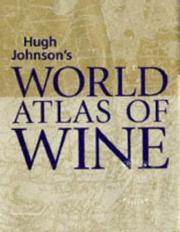
The definitive visual guide to every major wine region on earth. Its maps and region-by-region breakdowns cement the geographic intuition that separates a casual drinker from a true enthusiast.

A New York Times wine critic argues for pleasure over scores and rules. Reading it here resets any anxiety built up from memorizing regions, reminding you that enjoyment is always the point.
Tasting & Describing — Training the Palate
IntermediateTaste wine systematically, describe it with precision and confidence, and understand the sensory science behind what you perceive.
▸ Study plan for this stage
Pace: 4–5 weeks, ~20–25 pages/day; Zraly's book is richly illustrated and table-heavy, so budget extra time to pause and cross-reference tasting notes with a glass in hand — ideally 3 dedicated tasting sessions per week alongside the reading.
- The SPIT method (See, Smell, Taste, Spit/Swallow) and Zraly's structured approach to systematic tasting as taught throughout the Windows on the World course format
- The four objective components of wine — sweetness, acidity, tannin, and alcohol — and how Zraly trains readers to isolate and score each one independently
- The role of the nose: distinguishing primary aromas (fruit, floral, herbal from the grape) from secondary aromas (fermentation-derived) and tertiary aromas/bouquet (oak, age, oxidation)
- Color and appearance as diagnostic tools — using hue, depth, and clarity to infer grape variety, age, and winemaking style before the first sip
- Zraly's 'flavor grid' and wine-style spectrum: mapping wines from light/crisp to full/rich and dry to sweet, and placing major world wines within that grid
- The concept of balance and finish: how the interplay of fruit, acid, tannin, and alcohol determines quality, and how length of finish signals a wine's complexity
- Building a personal tasting vocabulary: moving from vague impressions ('nice,' 'fruity') to precise, communicable descriptors anchored in Zraly's reference examples
- Food and wine pairing logic as a sensory exercise: understanding how acidity, tannin, and sweetness in wine interact with fat, salt, and protein on the palate
- After working through Zraly's tasting framework, can you walk through each step of a systematic tasting — appearance, nose, palate, and conclusion — and explain what specific information each step is designed to reveal?
- Zraly emphasizes four structural components of wine. Can you define each one, describe how it feels physically on your palate, and name at least one grape variety or region associated with a high level of each?
- How does Zraly distinguish between a wine that is simply 'fruity' and one that is genuinely 'complex'? What sensory evidence would you cite to justify calling a wine complex?
- Using the wine-style spectrum Zraly presents, how would you place a Napa Valley Cabernet Sauvignon versus a Mosel Riesling Spätlese — and what tasting observations lead you to those placements?
- What does 'finish' mean in Zraly's framework, and why does he treat it as one of the most reliable indicators of a wine's quality and price-to-value ratio?
- How does Zraly's food-and-wine pairing guidance connect back to the structural components of wine? Give two concrete pairing examples and explain the sensory reasoning behind each.
- Structured Solo Tasting Log: Each week, taste 2–3 wines and complete a written tasting note using Zraly's four-component framework (appearance → nose → sweetness/acidity/tannin/alcohol → finish/conclusion). After 4 weeks you will have 8–12 annotated notes to compare and review.
- Component Isolation Drill: Prepare four 'reference' glasses — a very sweet wine (e.g., Sauternes or late-harvest Riesling), a high-acid wine (e.g., Muscadet or Champagne), a high-tannin wine (e.g., young Barolo or Cabernet), and a high-alcohol wine (e.g., Zinfandel or Amarone). Taste them back-to-back, focusing on only one component at a time to train your palate to isolate each sensation.
- Blind Tasting Practice: Have a friend pour two wines from different style quadrants of Zraly's flavor grid without revealing the labels. Write a full tasting note, then guess the style category. Check your notes against the bottle and identify where your perception was accurate or off.
- Aroma Identification Exercise: Using a set of common kitchen items (lemon zest, black pepper, dried herbs, vanilla, espresso, fresh berries), smell each item before opening a bottle, then try to identify those same aromas in the wine. This builds the concrete sensory anchors Zraly's descriptive language relies on.
- Food Pairing Experiment: Choose three wines Zraly discusses (one high-acid white, one tannic red, one off-dry wine) and pair each with two contrasting foods (e.g., fatty cheese vs. a green salad). Record how each pairing changes your perception of the wine's structure, using Zraly's pairing principles as your hypothesis to test.
- Vocabulary Upgrade Journal: After each reading session, write down five vague tasting words you have used in the past (e.g., 'smooth,' 'harsh,' 'nice') and replace each with two or three precise, component-based alternatives drawn directly from Zraly's descriptive examples. Review and expand this glossary weekly.
Next up: Mastering Zraly's systematic tasting framework and sensory vocabulary gives you the analytical lens needed to move from describing what is in the glass to understanding why it got there — making the next stage on viticulture, winemaking, and regional identity both more meaningful and more memorable.
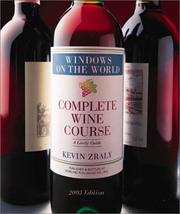
A structured, classroom-tested tasting course in book form. Its progressive exercises translate Peynaud's science into practical, repeatable tasting habits you can use every time you open a bottle.
Going Deeper — Cellar, Culture & Mastery
ExpertBuild and manage a smart personal cellar, understand how wine ages, and develop a connoisseur's perspective on quality, value, and the culture of wine.
▸ Study plan for this stage
Pace: 12–16 weeks total, divided across three books: "The Oxford Companion to Wine" (5–6 weeks, used as a reference spine — read thematic entries in clusters of 15–20 pages/day rather than cover-to-cover); "Adventures on the Wine Route" (2–3 weeks, ~25–30 pages/day, read linearly as a narrative); "Making
- Terroir as a living system: how Robinson's Oxford Companion defines and contextualizes soil, climate, and topography as interlocking forces — not mere buzzwords — that shape a wine's identity across regions and vintages
- Cellar management and aging potential: using the Oxford Companion's entries on maturation, storage conditions, and regional aging curves to build a principled framework for deciding what to buy, when to drink, and when to hold
- The importer's lens and regional authenticity: Lynch's 'Adventures on the Wine Route' reveals how distribution, négociant culture, and the search for 'real' wine from small French producers shapes what reaches consumers — and why provenance and producer integrity matter as much as appellation
- Sense of place vs. sense of fruit — Kramer's central argument in 'Making Sense of Wine' that great wine communicates 'somewhereness,' a specificity of origin that industrially produced wine cannot replicate, and how to train your palate to detect it
- Quality vs. value decoupling: synthesizing Robinson's encyclopedic objectivity, Lynch's market skepticism, and Kramer's philosophical framework to distinguish genuine quality from price, prestige, and marketing
- The culture and commerce of wine: Lynch's on-the-ground accounts of Burgundy, the Rhône, Provence, and Languedoc illuminate how tradition, economics, and personality collide in the production and sale of fine wine
- Developing a connoisseur's vocabulary and critical framework: Kramer's structured approach to tasting, judgment, and articulating why a wine is — or is not — great, moving beyond descriptors toward evaluative reasoning
- Vintage variation and the long view: integrating the Oxford Companion's vintage charts and regional profiles with Kramer's and Lynch's narrative examples to understand how time, weather, and patience are inseparable from mastery
- After reading Robinson's Oxford Companion entries on maturation and specific regions, can you articulate the aging potential of at least five major wine styles (e.g., Barolo, White Burgundy, Sauternes, Northern Rhône Syrah, Vintage Port) and the cellar conditions each requires?
- Kermit Lynch describes a recurring tension between the wines he discovers in French villages and what the market rewards commercially. What specific forces does he identify as threats to authentic, terroir-driven wine, and do you agree with his diagnosis?
- Matt Kramer argues that 'somewhereness' — not complexity or concentration — is the hallmark of truly great wine. How does he define this concept, and can you identify two or three wines (from any of the three books' discussions) that exemplify or contradict it?
- Using the Oxford Companion as your reference, how would you construct a personal cellar of 50–100 bottles that balances age-worthy reds, whites ready to drink now, and a range of price points — and what decision criteria would you apply?
- Lynch's travel narratives are as much about people as about wine. How do the producers he profiles in regions like Bandol, Gigondas, or the Loire shape your understanding of the relationship between a winemaker's philosophy and what ends up in the glass?
- Kramer distinguishes between wines that are merely 'good' and wines that are genuinely 'great.' What evaluative framework does he propose, and how does it challenge or complement the more encyclopedic, region-by-region approach Robinson takes in the Oxford Companion?
- Cellar audit and acquisition plan: Using the Oxford Companion's regional and maturation entries as your guide, draft a written 50-bottle 'dream cellar' plan. For each wine, note the producer/region, expected drinking window, required storage conditions, and your reasoning. Revisit and revise this plan after finishing Kramer.
- Vertical or horizontal tasting with notes: Organize or attend a tasting of at least one producer across multiple vintages (vertical) or several producers from the same appellation in the same vintage (horizontal). Before tasting, consult the Oxford Companion's vintage and regional entries; afterward, apply Kramer's evaluative language to write a 300-word critical assessment — not just a descriptio
- Lynch's itinerary as a reading map: As you read 'Adventures on the Wine Route,' mark every producer, village, and appellation Lynch mentions on a physical or digital wine map. Then seek out and taste at least two wines from producers or regions Lynch discusses, writing a short reflection on whether your experience matches his account.
- The 'somewhereness' blind tasting: Select three wines — one from a large commercial producer, one from a small artisan producer in a classic region, and one from a New World producer working in a traditional style. Taste blind and attempt to identify which, if any, expresses Kramer's 'somewhereness.' Document your reasoning in writing before revealing the labels.
- Oxford Companion deep-dive research project: Choose one wine region mentioned in both the Oxford Companion and at least one of the other two books (e.g., Burgundy, the Rhône Valley, or Provence). Write a 500-word synthesis that draws on Robinson's factual framework, Lynch's on-the-ground cultural observations, and Kramer's quality philosophy to produce your own rounded portrait of that region.
- Value vs. prestige experiment: Buy one bottle priced under $25 and one priced over $60 from the same grape variety and general region. Taste them side by side using Kramer's critical framework and Robinson's regional benchmarks. Write a verdict: does the price gap reflect a quality gap? What does this exercise reveal about your own palate and values as a wine consumer?
Next up: By internalizing Robinson's encyclopedic depth, Lynch's cultural and producer-focused perspective, and Kramer's philosophical framework for quality, the reader now has the critical vocabulary, cellar strategy, and connoisseur's mindset needed to engage with the most advanced dimensions of wine — whether that means formal study toward certification, serious collecting, or contributing meaningfully
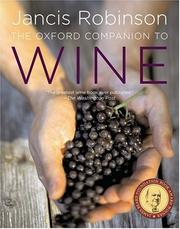
The authoritative encyclopedia of wine — every grape, region, term, and producer defined with scholarly rigor. At this stage you have the context to use it as a deep-dive reference rather than an overwhelming wall of text.
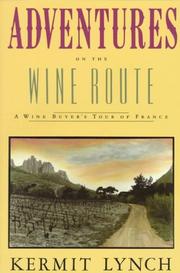
A celebrated importer's journey through France's wine villages reveals how terroir, tradition, and the human element create great wine. It gives your cellar choices a cultural and philosophical dimension that no textbook can.
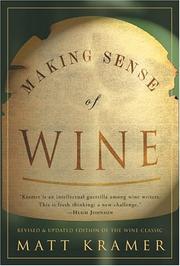
Kramer's essays on terroir, typicity, and what makes wine truly great push your thinking from 'I know what I like' to 'I understand why this is exceptional' — the final leap from enthusiast to connoisseur.
Discussion
Keep reading
Paths that share books, cover the same subject, or open a related topic.