Start with Isabelle Legeron's Natural Wine. It is the book that put a workable definition in print — Legeron is a Master of Wine and founded the RAW fair — and it is specific about farming, native yeast, sulphur additions and what she will not count. Everything else in this path either argues with it or extends it.
The single most important fact about the category is that it has no legal definition and no certification behind it. Organic and biodynamic certification exist and mean something specific about farming; "natural" does not, and there is no body that can stop a producer using the word. That is not a criticism of the wine, it is a description of the buying problem: the label cannot tell you anything, so you are effectively buying the importer, the shop and the grower. Reading is how you build the judgement the label will not give you.
What the category is, and how to buy
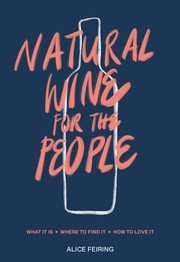
After Legeron, Alice Feiring's Natural Wine for the People is the practical handbook: 160 pages on what to order, how a fault tastes as against how a style tastes, and how to have the conversation in a shop. It is the least polemical of her books and the right one first. If you buy only one Feiring, buy this.
The movement's own story
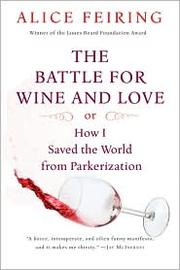
Feiring wrote four of the books in this path and they overlap, so choose deliberately. The Battle for Wine and Love is the founding polemic, aimed at the critic-driven, high-extraction, heavily oaked style of the 1990s; you need that opponent in view to understand why the movement's advocates argue the way they do. Naked wine is the reporting book — Feiring in cellars watching people make wine without additions, including the failures — and it is where the argument meets practical difficulty. For the love of wine goes to Georgia and the qvevri, which is the historical claim the movement leans on hardest. The dirty guide to wine organises wine by soil type rather than region and is the clearest expression of the terroir argument; it is useful as a tasting framework whether or not you accept the underlying claim. Read them in that order and skip whichever ones stop being useful — none is a prerequisite for the later stages.
The styles
Amber Revolution by Simon Woolf is the definitive book on skin-contact white wine: its Georgian and Friulian roots, the producers who revived it, and why it tastes as it does. Orange wine is the style most likely to confuse a newcomer, so read it before buying one. You Had Me at Pet-Nat is a memoir rather than a reference, and it is honest about the economics and the mess of small-scale winemaking; it is also the best entry point if the sparkling end of the category is what drew you in, alongside the more conventional sparkling wine literature.
The farming argument, and the case against
Nicolas Joly's Wine from sky to earth is biodynamics' fullest statement from its most prominent advocate in wine, and it should be read as advocacy: the Steinerian cosmology is presented as fact and the sceptical literature is not engaged. What is biodynamic wine is his shorter, more practical companion on the preparations and the calendar. Monty Waldin's Biodynamic Wine is the corrective from someone who has run biodynamic vineyards commercially and is far more measured about what is demonstrable.
Then the counterweight, which is not optional. Jamie Goode and Sam Harrop's Authentic Wine takes the movement's goals seriously and then asks which of its practices survive scrutiny; the chapters on brettanomyces, volatile acidity and reduction are the sharpest statement of the faults argument in print. Goode's The science of wine — published in the United Kingdom as Wine Science, which is how many catalogue records display it — supplies the underlying chemistry: what sulphur dioxide does, how oxidation works, what a native fermentation actually risks. Whether a given flavour is a fault or a style is a real disagreement between serious people, and reading only one side of it will make you a worse buyer.
One gap: the region-by-region grower directories that would let you turn all this into a shopping list are thin in our catalogue, so the path teaches criteria rather than names. Follow it through for the stage notes.
Follow the full ordered path here: Natural Wine Books: What to Read First, and in What Order.
Ready to learn something deeply?
Build a reading path — free