Two different books on this path are titled Champagne. Peter Liem's is a modern reference work on the region, its villages and its growers, published with facsimile reproductions of the Louis Larmat vineyard maps of the 1940s. Don and Petie Kladstrup's is a popular narrative history of the region through war, occupation and invention. They are both good and they are not remotely the same book, so this guide names the authors throughout.
Start with Liem. It is the book that reorganised English-language writing on the subject around place rather than around brand: village by village, with the geology, the growers, and a clear account of why a wine made from grapes bought across a whole region tastes different from one made in a single valley. It assumes you know what a base wine is but explains almost everything else.
The producer guides
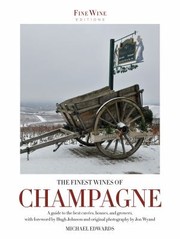
Michael Edwards's The Finest Wines Of Champagne is a producer-by-producer guide, the great houses alongside the smaller growers, with tasting notes and house histories. Tyson Stelzer's The Champagne Guide is the buyer's manual: comprehensive scored notes across current releases, revised on a regular cycle. That regularity is the caveat — a scored guide is only as current as its edition, and both books date faster than the history on this list. Check the year before you buy.
David Bird's Understanding wine technology is the odd one out and it is deliberately placed early. It is a plain-language technical primer on winemaking chemistry for non-scientists, and roughly forty pages of it will make the rest of the reading list legible: what secondary fermentation in bottle actually does, what dosage is, what disgorgement removes, why acidity matters more here than anywhere else. Jancis Robinson's The Oxford Companion to Wine is the general encyclopedia and the book to look things up in for the next twenty years.
The history
Tilar J. Mazzeo's The Widow Clicquot is a popular biography of Barbe-Nicole Ponsardin, who ran the house after her husband's death and is credited with the riddling table and with opening the Russian market. It reads novelistically, and where documentation is thin the reconstruction shows; take the atmosphere as atmosphere. Don and Petie Kladstrup's Champagne is the narrative regional history — the region sits on the invasion route into France, and the book is largely about what that did to the people making wine there. Their Wine and war covers French wine as a whole under German occupation, and it is the more focused and better-sourced of their two books.
Kolleen M. Guy's When champagne became French is the academic history on the list and the most intellectually interesting book here: how a regional product became a national symbol, how the appellation boundaries were fought over, and what the growers' riots of 1911 were actually about. It is a university-press monograph and reads like one.
The argument, and the reference shelf
Robert Walters's Bursting Bubbles is a polemic, and it should be read as one. Its argument is that the industry's own account of champagne — that blending across a wide region is the source of quality and consistency — is a commercial story rather than a viticultural truth, and that terroir and grower production deserve the primacy given to houses. Plenty of people in the trade disagree with it. Reading it against Liem is the most useful pairing on this path, because Liem shares much of the sympathy without the polemic.
Tom Stevenson's Christie's World Encyclopedia of Champagne and Sparkling Wine is the reference volume for everything outside Champagne itself — cava, prosecco, English sparkling wine, the traditional-method producers of the New World — and it is the only book here that treats the wider category properly. Finally, two general references: Hugh Johnson and Jancis Robinson's The World Atlas of Wine for the maps and the wider world of wine, and Wine Grapes by Robinson, Julia Harding and José Vouillamoz for the varieties, which is a large and expensive book and worth it only if the interest is serious.
More drinks and food paths sit on Discover.
Follow the full ordered path here: The Best Champagne and Sparkling Wine Books, in Reading Order.