Best Books on Central Banking and Monetary Policy, in Reading Order
Monetary policy is unusually hard to learn from a textbook because the institution keeps redefining what it does, so this path builds understanding historically. You start with the gold standard era and the classic account of what a central bank is for, move to how a modern one actually sets policy, then read the 2008 crisis from inside the room and from its critics. The last stage is deliberately argumentative: monetarist, post-crisis reformist and heterodox accounts of money placed side by side, because on this subject the disagreements go all the way down to what money is.
Before the modern Fed
BeginnerUnderstand the gold standard, the lender-of-last-resort idea, and how the interwar central bankers turned a downturn into a depression
▸ Study plan for this stage
Pace: 7-8 weeks. Lords of Finance is 564 pages of narrative and reads faster than its length suggests — five weeks at around 100 pages a week. Lombard Street is 359 pages of Victorian prose and should be sampled rather than ground through: read the chapters on the nature of the money market, on why Lombar
- The gold standard as a commitment device rather than a monetary technique: what it bought in credibility and what it took away in domestic policy freedom
- Ahamed's four governors — Norman at the Bank of England, Strong at the New York Fed, Schacht at the Reichsbank, Moreau at the Banque de France — and the fact that a handful of men with no formal mandate for it were effectively setting world policy
- Britain's 1925 return to gold at the pre-war parity, Keynes's objection in The Economic Consequences of Mr Churchill, and the deflation it imposed on British industry
- The transmission of the Depression through the gold standard: countries that left gold early recovered early, which is the single most cited piece of evidence in interwar monetary history
- The reparations and war-debt circuit and why the recycling of American lending held the whole system up until it stopped
- Bagehot's rule stated exactly — in a panic lend freely, at a high rate, on good collateral — and the fact that each of those three clauses is a separate policy choice that can be dropped independently
- Bagehot's real subject, which is the concentration of reserves in a single institution that never asked for the responsibility, and his insistence that the Bank must accept a duty it had spent decades denying
- The distinction Bagehot draws between illiquidity and insolvency, which is easy to state and, as 2008 will show, extremely difficult to apply in real time
- What did the gold standard actually constrain, and why would a country accept the constraint voluntarily?
- Why does Ahamed think the 1925 return to gold at the old parity was a mistake, and what were the arguments made for it at the time?
- State Bagehot's rule in his own three parts, then say what each part is for. Which is most often abandoned in practice, and why?
- How do you distinguish an illiquid bank from an insolvent one during a panic, with the information actually available? Bagehot assumes you can — can you?
- Ahamed's subtitle calls these men the bankers who broke the world. Is the personalised framing fair, or does it obscure structural constraints they could not have escaped?
- Build a timeline from 1918 to 1933 marking, for each major economy, when it returned to gold and when it left. Then mark the trough of its depression. The correlation is the finding.
- Write out Bagehot's rule from memory and then check it against his text. Note anything you added or dropped — most people quietly drop the penalty rate.
- Write 250 words on what a penalty rate is for, and on why lending at a penalty rate in a panic is more controversial than it sounds.
- Pick one of Ahamed's four governors and write half a page on the constraint they were operating under, distinguishing what they chose from what they inherited.
- Find Bagehot's discussion of the Bank's reserve and write a paragraph on why he thought a single reserve system was dangerous but irreversible.
Next up: You now know what a central bank was originally for and what it looked like when it failed; next you learn the mechanics of the institution as it exists now.
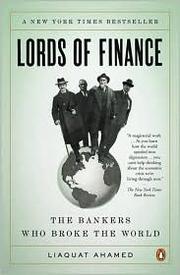
Narrative history at its best: four central bankers, the gold standard, and the road to 1929, told through people rather than models. Start here because it makes the stakes vivid and gives you the historical episode every later argument keeps returning to.
The 1873 book that produced the rule central banks still invoke in a panic — lend freely, at a penalty rate, against good collateral. It is short, and reading the original shows how much of modern crisis policy is a Victorian idea with new plumbing.
How a modern central bank works
IntermediateUnderstand the mechanics: the policy rate, the transmission channels, inflation targeting, independence, and what the institution can and cannot actually control
▸ Study plan for this stage
Pace: 8-9 weeks. Bernanke's 21st Century Monetary Policy is the more systematic of the two and should be read first over four to five weeks, chapter by chapter — it is organised chronologically by chairman and each era introduces a tool. The Alchemists is 448 pages of reported narrative and takes three to
- The policy rate and how it is actually implemented — open market operations historically, and interest on reserves in an ample-reserves regime — which are different mechanisms producing the same headline number
- The transmission channels: short rates to long rates via expectations, then to credit, asset prices, the exchange rate and finally to output and inflation, with long and variable lags at every step
- The Volcker disinflation as the institution's founding modern episode, and what it cost in unemployment to re-establish credibility
- Inflation targeting as a regime: a public numerical goal, published forecasts, and the theory that anchoring expectations is most of the job
- Central bank independence — why it was granted, the time-inconsistency argument that justifies it, and the democratic objection that never fully goes away
- Forward guidance and the balance sheet as the tools that appear once the policy rate hits zero, and the conceptual shift from setting a price to setting a quantity
- The dual mandate and the fact that the Fed has one while most peers do not, which is a political choice with real consequences for how it behaves
- Irwin's comparative point: the ECB's structure, with a single currency and no fiscal counterpart, gives Trichet and then Draghi a fundamentally different problem from Bernanke's, and the Bank of England a third
- Trace the transmission from a change in the policy rate to a change in inflation, naming each step. Where in that chain is the mechanism weakest?
- Why is central bank independence supposed to produce lower inflation? State the time-inconsistency argument, then state the strongest democratic objection to it.
- What does inflation targeting actually target — realised inflation or expected inflation — and why does the distinction matter so much?
- Bernanke has a professional stake in the institution he is describing. Where in this book can you detect that, and does it distort the account or simply inform it?
- The ECB faced a monetary union without a fiscal union. Using Irwin, name three concrete ways that changed what its policymakers could do.
- What can a central bank not do? Be specific, and distinguish legal limits from economic ones.
- Draw the transmission mechanism as a diagram with each channel labelled, and mark which channels you think were impaired in 2009.
- Write 300 words on the Volcker disinflation covering the rate path, the unemployment cost and the change in expectations. This episode is referenced by every later book.
- Make a comparison table of the Fed, ECB and Bank of England from Irwin: mandate, governance, relationship to a treasury, and crisis tools available. One page.
- Find a current central bank policy statement and annotate it, identifying the target, the tool, the forward guidance and the reasoning. You should now be able to read one line by line.
- Write a paragraph explaining interest on reserves to someone who learned open market operations from a textbook, and why the plumbing changed.
Next up: With the toolkit understood in normal times, you can watch it being pushed past its design limits — and read the argument about whether it should have been.

The clearest institutional history of the Fed from Burns to the present, written by someone who ran it, and effectively a course in how the toolkit evolved. Read it before the crisis books so you know what the tools are before you watch them being used.
A journalist's account of the Fed, ECB and Bank of England during the crisis years, which is the best way to see that central banking is a comparative subject and not just an American one. It supplies the European and British institutions the other books largely assume.
2008 and the age of unconventional policy
IntermediateFollow quantitative easing, emergency lending and the long zero-rate period through both an insider's defence and the critique of what cheap money did
▸ Study plan for this stage
Pace: 18-20 weeks for roughly 1,800 pages, and this stage is a debate rather than a sequence. Bernanke's memoir, which our catalogue lists under its Spanish-language edition title Valor de Actuar alongside the English The Courage to Act, is 704 pages of insider narrative; six to seven weeks. Tooze's Crash
- The sequence of 2007-09 as Bernanke lived it: the money-market seizure, Bear Stearns, the Lehman weekend, AIG, the alphabet soup of emergency facilities, and TARP
- The Lehman decision and Bernanke's own account of why it was not rescued — a legal-authority argument that has been contested ever since and that you should weigh rather than accept
- Quantitative easing explained mechanically: the central bank buys long-dated assets with newly created reserves, aiming at term premia and portfolio rebalancing rather than at the quantity of money as such
- The zero lower bound as the binding problem of the era, and forward guidance as the attempt to work around it by managing expectations
- Tooze's central reframing: the crisis was transatlantic and dollar-denominated, European banks were enormous holders of dollar assets, and the Fed's swap lines made it the world's lender of last resort by default
- The eurozone crisis in Tooze's telling as a political failure of the currency union rather than a fiscal morality tale, and Draghi's whatever it takes as an intervention whose power lay in never having to be used
- Leonard's thesis: that a decade of asset purchases and near-zero rates inflated financial asset prices, rewarded leveraged risk-taking and widened wealth inequality without delivering commensurate real investment
- The genuinely open question underneath all three books: whether the weak recovery shows that unconventional policy failed, or that it prevented something far worse than what happened
- Why was Lehman allowed to fail when Bear Stearns and AIG were not? State Bernanke's explanation, then state the strongest version of the objection to it.
- Explain quantitative easing mechanically and then explain what it is supposed to do. The two answers are further apart than most coverage implies.
- Tooze argues the crisis is misdescribed as an American event. What is his evidence, and how much does the dollar swap line network carry his case?
- Leonard says cheap money inflated assets rather than the real economy. Bernanke would say the counterfactual was a second Depression. What evidence bears on this, and does any of it discriminate between the two claims?
- Was the eurozone crisis a fiscal problem or a monetary-union design problem? Tooze has a clear view — what would the opposing view have to argue?
- All three authors write with a position: an architect defending his work, a historian with a strong thesis about American power, and a journalist writing an indictment. How should that change how you read each?
- Build a single crisis chronology from August 2007 to March 2009 with three columns: what happened in markets, what the Fed did, and what Congress did.
- Draw the Fed's balance sheet before and after each round of quantitative easing, assets on one side and liabilities on the other, so you can see exactly what was created and what was bought.
- Map the dollar swap lines from Tooze — which central banks, what volumes, at what dates — and write a paragraph on why this was not more widely reported at the time.
- Take one specific claim Leonard makes about asset prices and check it against publicly available data yourself. Write half a page on what you find.
- Write a 400-word defence of quantitative easing using only Bernanke, then a 400-word critique using only Leonard, then a third paragraph naming the point where they are genuinely arguing about facts rather than about values.
- Reconstruct Hoenig's dissent in his own terms from Leonard's account, and write a paragraph on whether it looks better or worse with hindsight.
Next up: The crisis books argue about whether policy was well conducted; the final stage argues about what money is, which is the disagreement underneath all of it.

The chairman's own account of the crisis response — necessarily a defence, and valuable precisely as the strongest version of it. Read it as primary source material rather than as settled history.

The global political history of the same decade, showing dollar swap lines and eurozone politics as the real theatre. Read after Bernanke: it reframes an American story as an argument about the international monetary system.
The sharpest popular critique of prolonged quantitative easing, arguing it inflated asset prices and inequality rather than the real economy. It is a polemic with a clear thesis, and it is the deliberate counterweight to reading Bernanke on his own terms.
The arguments about money itself
IntermediateEngage the live theoretical disputes — monetarist, structural-reformist and Modern Monetary Theory accounts — and be able to say where each locates the constraint on policy
▸ Study plan for this stage
Pace: 20-24 weeks, and this is the stage to pace rather than push. Friedman and Schwartz's A Monetary History of the United States is 860 pages of data-dense economic history — do not read it cover to cover on a first pass; read the introduction, the 1929-33 chapter known as the Great Contraction, and two
- The monetarist claim, argued by Friedman and Anna Schwartz over a century of data: that money supply movements drive nominal income, and that the Federal Reserve turned a recession into the Great Contraction by permitting the money stock to fall by roughly a third
- King's alchemy: the claim that banking's core function, funding illiquid long assets with liquid short liabilities, is a promise that cannot be kept in aggregate and that no amount of regulation makes safe
- King's radical uncertainty, distinguished from measurable risk, and his argument that models assuming known probability distributions cannot capture the situations that actually cause crises
- The pawnbroker for all seasons proposal — pre-positioned collateral with pre-agreed haircuts, replacing discretionary lender-of-last-resort improvisation — as King's structural alternative to better policy settings
- Kelton's core claims: that a currency-issuing government with debt in its own currency faces an inflation constraint rather than a financing constraint, that taxes do not fund spending in the way household analogies suggest, and that the deficit is the private sector's surplus by accounting identity
- The distinction, which matters when evaluating Modern Monetary Theory, between its accounting identities, which are largely uncontroversial, and its policy conclusions, which most mainstream economists dispute — including on inflation dynamics, the political feasibility of tax-based inflation contro
- Eichengreen's argument that international monetary arrangements depend on the domestic politics of the time: the gold standard worked partly because workers could not vote out the governments that imposed its costs, which is why it could not be restored
- The trilemma as the organising device — fixed exchange rates, free capital movement, independent monetary policy, pick two — which places every regime in the path, including the euro, as a choice among impossibilities
- State Friedman and Schwartz's Depression thesis and the main alternative explanations. What evidence would distinguish a monetary cause from a collapse in demand that the money data merely reflects?
- King argues the problem is structural rather than a matter of policy settings. If he is right, what does that imply about everything the previous stage was arguing over?
- Which of Kelton's claims are accounting identities and which are behavioural or political predictions? Sorting them is the whole exercise, and it is what most reviews of the book fail to do.
- Kelton says the constraint is inflation, not finance. Friedman would say that is the same constraint stated differently. Is it? Work out what each means precisely before answering.
- Use the trilemma to classify the gold standard, Bretton Woods, the post-1973 float and the eurozone. Which corner does each abandon, and who bears the cost of abandoning it?
- Friedman, King and Kelton locate the binding constraint on monetary policy in three different places. Name each location precisely. You are not being asked to choose.
- Read the Great Contraction chapter of Friedman and Schwartz and reproduce their central chart of the money stock from 1929 to 1933 by hand. Write 300 words on what they claim it shows and what a critic would say it shows.
- Write out the pawnbroker for all seasons proposal as an operating procedure — who pledges what, when, at what haircut — and note where you think it would fail.
- Take Kelton's sectoral balances identity and write it out algebraically, then verify it against actual national accounts data for one country and one year. Doing this yourself is the fastest way to see which part of Modern Monetary Theory is arithmetic.
- Find one substantive published critique of Modern Monetary Theory by a mainstream economist and write half a page on which of Kelton's claims it actually contests.
- Draw the trilemma as a triangle and place six historical regimes on it, with a sentence each on the cost of the corner they gave up.
- Finish with a two-page essay: what is a central bank for? Cite at least one book from each stage, and be explicit about which authors you are siding with and where you are simply unconvinced by everyone.
Next up: You end able to read a monetary policy statement, a crisis post-mortem and a radical reform proposal as moves in one long argument, and to say which assumption each of them is quietly holding fixed.

The monetarist landmark, whose claim that the Fed caused the Depression by letting the money supply collapse reshaped the entire field. Dense and data-heavy, so read it once you have the narrative history to hang it on.

A former Bank of England governor arguing that the problem is structural — banking's maturity mismatch — rather than a matter of better policy settings, and proposing radical reform. The insider making the case that insiders' tools are insufficient.
The most prominent statement of Modern Monetary Theory, which denies the framing that both Friedman and King take for granted. Included because it is now part of the real debate, and because reading it alongside the others is the fastest way to see which assumptions are load-bearing; mainstream economists dispute much of it, and you should read the disagreement rather than settle it.
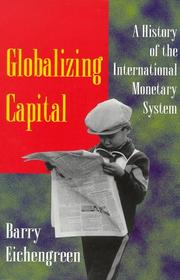
A compact history of the international monetary system from the gold standard through Bretton Woods to floating rates, which closes the loop back to stage one. End here: it shows every domestic policy regime in this path as one choice within a larger and still-changing system.
Discussion
Keep reading
Paths that share books, cover the same subject, or open a related topic.