Best Books on Antitrust and Competition Policy, in Reading Order
Antitrust is one of the few areas of economic law where the underlying question — what is competition policy actually for? — is genuinely unsettled, and this path is built to let you hear both live answers rather than one. You start with plain-language orientation, then read the Chicago School case that governed enforcement for forty years and the neo-Brandeisian case now challenging it, back to back and in the authors' own words. Only then do you turn to the empirical work on concentration and finally to the doctrine itself, by which point you can tell which disagreements are about facts and which are about values.
What antitrust is and why it is being fought over
BeginnerUnderstand what the antitrust laws say, what the consumer welfare standard is, and why a settled area of law suddenly became a political argument again
▸ Study plan for this stage
Pace: 3 weeks. Klobuchar's Antitrust is long (624 pages) but it is narrative history and moves fast — 40 pages a day gets you through it in a fortnight. Wu's The Curse of Bigness is 192 pages and can be read in two sittings; do it in one week and reread the closing chapter before moving on, because it is
- The three statutes everything runs on: Sherman (1890, restraints of trade and monopolization), Clayton (1914, mergers and exclusive dealing), FTC Act (1914, unfair methods of competition). Klobuchar walks through each; know which one a given complaint is brought under
- The consumer welfare standard — antitrust asks whether conduct raises prices or reduces output for consumers, not whether a firm is large. This is the pivot the whole path turns on, so be able to state it in one sentence before stage 2
- The distinction between per se illegality (price-fixing) and rule of reason (nearly everything else), and why moving conduct from one category to the other is the real fight
- Wu's 'curse of bigness' claim, inherited from Brandeis: that concentrated economic power is a threat to democratic self-government independently of whether it raises prices — a political argument, not a price argument
- Trust-busting as narrative history — Standard Oil, Northern Securities, the 1911 tobacco case — and the fact that this era's enforcement rested on premises the Chicago School would later call incoherent
- That both books in this stage are advocacy. Klobuchar is a sitting senator with pending legislation; Wu served in the Biden White House. Reading them as history is fine; reading them as neutral is not
- State the consumer welfare standard in one sentence, then state Wu's objection to it in one sentence. Which of the two is making a claim about facts and which about values?
- Klobuchar and Wu both treat the mid-century enforcement regime as a lost golden age. What would have to be true about prices and output in that period for that to be right — and does either book show it?
- Under which statute would you challenge a large tech acquisition of a small rival, and what would you have to prove?
- Wu argues that antitrust is a structural safeguard for democracy. What is the strongest objection to letting courts weigh political power alongside price effects?
- After both books, can you name a specific case where the two authors' framework would produce a different outcome from a price-focused one?
- Write a 300-word plain-English summary of the consumer welfare standard as Klobuchar describes it, using no legal terms she has not defined. You will check it against Bork's own statement in the next stage
- From Klobuchar's chapters, build a one-page timeline of American antitrust from 1890 to the present, marking each point where enforcement noticeably tightened or loosened. Keep it — you will annotate it in every remaining stage
- Take Wu's closing argument in The Curse of Bigness and write the single strongest counter-argument you can, in 200 words, before you read anyone else's. Seal it and compare it to Bork's actual reasoning in stage 2
- Find one live merger or monopolization case in current news coverage and identify which statute it is brought under and what harm the government alleges
Next up: You now know the vocabulary and the shape of the disagreement, which means you can read Bork's original argument as an argument rather than as the villain of Wu's and Klobuchar's story.

The most accessible way in: a sitting senator's history of American antitrust from the trust-busting era to Big Tech, written for readers with no legal background. Read it first for the vocabulary and chronology; note as you go that it is also an advocacy book with a clear position.

A short, forceful statement of the case that antitrust lost its way when it narrowed to consumer prices, and that concentrated economic power is a political problem. It is the best compact framing of the argument the rest of this path will test from both sides.
The Chicago School case
IntermediateUnderstand, in its strongest original form, the economic argument that reshaped antitrust enforcement from the 1970s onward — before reading anyone's rebuttal of it
▸ Study plan for this stage
Pace: 5-6 weeks. The Antitrust Paradox is 475 dense pages of economic reasoning applied to case law — budget 20-25 pages a day and expect to reread. Posner's Antitrust Law is shorter (272 pages) but more technical; give it two weeks and work through its examples with pen and paper rather than skimming.
- Bork's central move: that the Sherman Act's legislative history shows Congress aimed at consumer welfare (which he equates with allocative efficiency), so decades of case law protecting small competitors was a misreading of the statute
- The efficiency defense — that mergers and vertical restraints usually lower costs, and that antitrust intervention against them destroys value that consumers would otherwise capture
- Why Bork thinks vertical restraints (resale price maintenance, exclusive dealing, tying) are almost never anticompetitive: a monopolist has only one monopoly profit to extract, so leveraging into a second market gains nothing
- Posner's price-theory discipline: predatory pricing is irrational because losses must be recouped, entry barriers are usually overstated, and courts are poor at distinguishing aggressive competition from exclusion
- The error-cost framework — false positives (condemning efficient conduct) are more costly than false negatives, because markets self-correct monopoly but courts do not self-correct bad precedent. This is the load-bearing premise, and it is contestable
- That Bork's reading of the 1890 legislative history is disputed on its own terms by historians; note where he asserts congressional intent and how much of his argument would survive if that reading were wrong
- Reconstruct Bork's one-monopoly-profit argument. Under what specific assumptions does it hold, and can you name a market structure where it would not?
- Bork claims the antitrust cases of the 1960s protected competitors rather than competition. Pick one case he discusses and decide whether you find his characterization fair
- Posner argues predatory pricing is rarely rational. What would a market have to look like for predation to pay off, and does that description fit any market you know?
- The error-cost asymmetry says courts should err toward inaction. What empirical claim about how fast monopolies erode is that resting on — and how would you test it?
- Where does Bork make an economic argument and where does he make a claim about what Congress meant in 1890? Which parts of his conclusion survive if the historical claim is wrong?
- Compare your 300-word summary of the consumer welfare standard from stage 1 with Bork's own definition in The Antitrust Paradox. Note every place your paraphrase from Klobuchar and Wu differed from the original, and write down whether the difference was a simplification or a distortion
- Open the sealed counter-argument you wrote in stage 1 and mark which of your points Bork actually anticipates and answers, and which he does not address at all
- Work three of Posner's worked examples on paper — draw the demand and cost curves he is reasoning over rather than reading past them. If you cannot reproduce the diagram, you have not followed the argument
- Write a 400-word steelman of the Chicago position that Bork himself would sign, using only his premises. You will hand this to Stoller in the next stage
- Annotate your stage-1 timeline: mark where Bork says enforcement went wrong and where he says it was right
Next up: Having Bork's argument in its strongest original form is the only way to tell whether the neo-Brandeisian reply is refuting him or refuting a caricature.
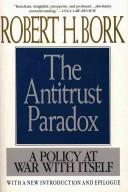
The single most consequential antitrust book ever written, and the source of the consumer welfare standard courts still apply. Read it directly rather than in summary: the caricature of Bork and the actual argument are different things, and you cannot evaluate the modern critique without it.
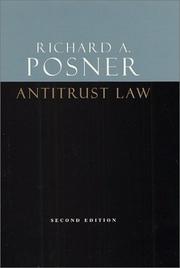
The more rigorous economic companion to Bork, working through how price theory should discipline antitrust doctrine. Read it second because it assumes the framework Bork argues for and shows what applying it looks like case by case.
The neo-Brandeisian reply
IntermediateUnderstand the structuralist counter-argument: that market structure and political power matter independently of consumer prices, and that enforcement was captured rather than corrected
▸ Study plan for this stage
Pace: 5 weeks. Goliath is 608 pages of political history and reads quickly but accumulates — 45 pages a day for three weeks. Cornered is 324 pages and denser per page; give it two weeks and take notes on the specific industries, because its detail is the point.
- Stoller's core historical claim: that the Chicago revolution was a political and ideological project rather than a technical correction, told through the mid-century populist tradition (Wright Patman above all) that it displaced
- The structuralist position — that market structure itself, not just measured price effects, is what antitrust should regulate, because concentration produces harms (to suppliers, workers, entrants, and democratic politics) that a consumer-price test cannot see
- Monopsony and buyer power: Lynn's argument that concentration in ordinary supply chains squeezes suppliers and workers while consumer prices stay flat or fall — precisely the case the consumer welfare standard is blind to
- Hidden concentration — Lynn traces how a shelf full of apparently competing brands routes back to a handful of firms, which is why casual observation of retail choice is a poor measure of competition
- The capture story: that lax enforcement reflects lobbying and revolving-door incentives rather than persuasion by better economics. Note that this is an argument about motives, and evaluate it separately from the argument about outcomes
- Both books are polemics and say so. Read Stoller as the strongest advocate for the structuralist case, not as an arbiter of it
- Take the 400-word Bork steelman you wrote in stage 2. Which of its claims does Stoller actually engage, and which does he treat as self-evidently wrong without argument?
- Lynn describes concentration that leaves consumer prices flat or falling. Does that count as an antitrust harm? Answer once under Bork's framework and once under Stoller's, and be clear about which premise the two answers turn on
- Stoller's account is a history of politics; Bork's is a work of economics. When the two disagree about the 1970s, what kind of evidence would settle it — and is that evidence available in either book?
- If the capture story is true, does that make the Chicago School's economics wrong, or only its adoption suspicious? Keep the two questions apart
- Which of the harms Lynn documents in Cornered could be reached by existing statutes under a different enforcement posture, and which would need new legislation?
- Build a two-column ledger — Bork/Posner on the left, Stoller/Lynn on the right — with a row for each of: what antitrust is for, what counts as harm, what the 1970s shift was, what courts are good at. Fill it from the texts, quoting a page for each cell. Keep it for stage 5
- Find the passage in Goliath where Stoller characterizes Bork's position, and set it beside Bork's own words. Write 200 words on whether the characterization is accurate, generous, or a caricature — and say which specific sentence decided it for you
- Pick one supply chain Lynn dissects in Cornered and check its current structure yourself: list the visible brands in that category at a local store and trace their parent companies. Note how far your finding matches Lynn's a decade and a half on
- Write the reply Bork would make to Stoller's central historical claim, in 250 words, using only arguments Bork actually makes in The Antitrust Paradox
Next up: You have now heard both sides in their own words, so the next stage's job is to work out how much of the disagreement is about the facts on the ground rather than about what antitrust is for.
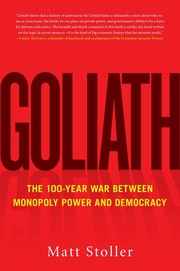
A political history of the hundred-year American fight over monopoly, arguing that the Chicago revolution was an ideological takeover rather than a technical improvement. It is a polemic and reads like one — take it as the argument's strongest advocate, not as a neutral account.
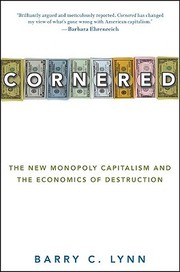
The book that seeded the modern anti-monopoly movement, tracing hidden concentration through ordinary supply chains years before it became a mainstream concern. Read it after Stoller for the concrete industry-level detail underneath the political story.
What the evidence actually shows
IntermediateMove from advocacy to measurement — assess how concentrated markets really are, what happened to margins and entry, and how much of the story survives careful data work
▸ Study plan for this stage
Pace: 4 weeks. The Great Reversal (352 pages) is the one to slow down for — read 20 pages a day and stop at each chart to state in words what it claims before reading Philippon's interpretation. The Myth of Capitalism (300 pages) is written for a general audience and goes faster; two weeks.
- Philippon's headline finding: that on measures of concentration, margins, and entry, US markets became less competitive than European ones over roughly two decades — a reversal of the historical pattern, and the empirical hinge of the whole debate
- His proposed mechanism: lobbying and regulatory capture, with EU institutions insulated from national lobbying precisely because member states would not trust each other's regulators. Note this is a comparative institutional argument, not just a data argument
- How concentration is measured, and why it is contested — HHI at the national level, industry definitions, and the fact that a firm can gain national share while local market competition intensifies. Understand this objection before deciding whether Philippon's numbers mean what he says
- Rising markups and falling business dynamism (entry and exit rates) as separate indicators that can move for reasons other than monopoly — technology, intangibles, superstar-firm effects
- Tepper's argument that concentration is a betrayal of capitalism rather than its natural end state, which places a pro-market case against monopoly on the board and shows the reform position is not confined to one political camp
- The difference between correlation in aggregate industry data and a causal claim about enforcement. Both books make causal claims; track which ones are supported by an identification strategy and which by narrative plausibility
- Which specific measurements in The Great Reversal would have to be wrong for Philippon's conclusion to fail — and is the objection about the data, the industry definitions, or the interpretation?
- Philippon blames lobbying; Bork's framework would predict that concentration reflects efficiency. What observable difference is there between a market concentrated because the best firm won and one concentrated because entry was foreclosed?
- Tepper and Stoller reach similar conclusions from different politics. Where do their arguments actually diverge, and does that convergence make the conclusion stronger or just more popular?
- Take three rows of the ledger you built in stage 3 and mark which are now settled by Philippon's evidence and which remain disagreements about values that no dataset could resolve
- If national concentration rose while local competition rose too, whose position does that support, and does either book address it?
- For five of Philippon's central charts, write one sentence stating what the chart shows and a second stating what it does not show. Doing this before reading his commentary is the exercise — the gap between the two sentences is the whole methodological lesson
- Return to your two-column ledger and add a third column: 'what the data says'. Fill in only the rows where Philippon or Tepper offers a measurement, and leave the value disputes visibly empty
- Pick one industry Tepper claims is concentrated and look up its current market shares from a public source. Write 200 words on whether the picture has changed since publication
- Write a 300-word memo arguing that the concentration data is consistent with the Chicago School story, using only facts from The Great Reversal. If you cannot make the memo honest, say exactly which finding blocks it
Next up: With the evidence sorted from the advocacy, you are ready to read the actual doctrine and judge which proposed reforms need new statutes and which only need different enforcement.

An economist's data-driven argument that American markets became less competitive than European ones, with the mechanism traced to lobbying and lax enforcement. This is the empirical hinge of the whole debate and the most cited quantitative case for the reformers.

Makes a market-friendly, pro-competition case against concentration — the argument that monopoly is a betrayal of capitalism rather than its outcome. Useful precisely because it shows the anti-monopoly position is not confined to one side of the political spectrum.
The doctrine itself
IntermediateRead antitrust as practitioners do — the statutes, the tests, the case law — so you can judge which proposed reforms would require new legislation and which only require different enforcement
▸ Study plan for this stage
Pace: 7-8 weeks, and treat it as reference reading rather than cover-to-cover. Hovenkamp's Federal Antitrust Policy is 820 pages of treatise — work through the mergers, monopolization, and restraints-of-trade sections properly (roughly half the book) at 15 pages a day, and consult the rest as questions ar
- The actual tests courts apply: market definition and the hypothetical monopolist, the structure of a Section 2 monopolization claim (monopoly power plus exclusionary conduct), the merger review framework, and where the burden shifts
- Why market definition decides most cases before the substantive argument begins — a narrow market makes almost any firm dominant, a broad one makes almost none. Hovenkamp is unsentimental about how much rests on this step
- The gap between what the statutes say and what the case law has made of them, which is the practical answer to the whole debate: most of what the reformers want turns on doctrine and enforcement discretion, not statutory text
- Wu's cycle in The Master Switch: information industries opening and then closing, from telephony and radio through film and cable, with a consolidating firm and a government accommodation at each turn
- Whether digital platforms are structurally different — network effects, zero marginal cost, data feedback, and free-to-consumer pricing that a price-based harm test cannot register. This is where the doctrine and the modern cases actually collide
- Remedies as their own problem: conduct remedies versus structural separation, and the historical record on whether breakups achieved what was claimed for them (AT&T is the case Wu keeps returning to)
- For a specific live platform case, work out the market definition each side would argue for and identify which one the outcome depends on
- Which of the reforms Klobuchar, Wu, and Stoller propose would require Congress to amend a statute, and which could be achieved by an agency changing its enforcement posture? Hovenkamp gives you enough to answer this precisely
- Wu argues information industries follow a recurring cycle. What would break the cycle, and does his own history show any instance where it was broken without government action?
- After Hovenkamp, is your view that the consumer welfare standard is the wrong test, or that it is the right test badly applied? Name the passage that moved you
- Where does Hovenkamp's treatise take a position of its own rather than reporting the law? Being able to spot that is the skill this stage is for
- Take one currently litigated monopolization case and draft both sides' market-definition arguments in one page each, using Hovenkamp's framework and no outside commentary
- Complete your ledger: for every row, write which side the current doctrine as Hovenkamp describes it actually favors — separately from which side you find persuasive
- Return to your stage-1 timeline and add a final layer marking, for each era, what the governing legal test was. You should now be able to see the 1970s shift as a change in doctrine rather than a change in statute
- Using The Master Switch, chart one information industry from open to closed and mark the specific moment government action either accelerated or arrested the consolidation. Then write 250 words on whether the same chart could be drawn for a platform operating today
- Write a 500-word answer to the question the path opened with — what is competition policy for — and mark every sentence that is a values claim rather than an empirical one. If fewer than half are values claims, you have probably smuggled a conclusion into a fact
Next up: This is the end of the path: you can now read a live antitrust case and tell which parts of the disagreement are about the evidence, which are about the doctrine, and which are about what competition is ultimately for.
The standard treatise, and deliberately the textbook rather than the polemic: it lays out mergers, monopolization, restraints of trade and the tests courts actually apply. Save it for last, when you know what is being argued about and want the law itself.
A history of information industries cycling between open and closed, which is the sharpest way to think about whether tech markets are structurally different from the industrial monopolies the statutes were written for. It closes the path by turning the doctrine forward onto the cases now being litigated.
Discussion
Keep reading
Paths that share books, cover the same subject, or open a related topic.