The Great Depression: where to start and what to read next
This curriculum takes a beginner from vivid human stories of the Depression all the way to sophisticated economic and political analysis, ensuring each stage builds the vocabulary and context needed for the next. It begins with narrative and memoir to make the era viscerally real, then moves through accessible history, policy deep-dives, and finally revisionist and comparative scholarship that challenges and enriches everything learned before.
The Human Face of the Depression
BeginnerBuild an emotional and sensory foundation for the era — who suffered, how they lived, and what the collapse felt like on the ground — before tackling causes and policy.
▸ Study plan for this stage
Pace: 6–7 weeks, ~40–50 pages/day. *The Grapes of Wrath* (470 pages, ~2 weeks) followed by *Hard Times* (400+ pages, ~2.5 weeks), with 1–2 weeks for reflection and integration exercises.
- Dispossession and migration: how the Dust Bowl and bank foreclosures forced families like the Joads to abandon their homes and search for survival elsewhere
- Class collapse and dignity: the psychological and social toll of poverty, unemployment, and the loss of status on individuals and families
- Oral testimony as historical evidence: how Terkel's first-person interviews capture lived experience that statistics and policy documents cannot convey
- Resilience and solidarity: how ordinary people endured hardship through family bonds, community support, and moments of collective action
- The gap between hope and reality: the contrast between promised opportunity (California as 'promised land') and the brutal conditions workers actually encountered
- Systemic inequality: how the Depression exposed and deepened existing inequalities based on race, class, and geography
- Sensory and emotional dimensions of poverty: hunger, exhaustion, shame, and fear as daily lived experiences, not abstract concepts
- What forces the Joad family to leave Oklahoma, and what do their experiences on Route 66 and in California reveal about the false promises of migration during the Depression?
- How do the characters in *The Grapes of Wrath* respond to their dispossession—through anger, resignation, hope, or solidarity—and what does Steinbeck suggest about human dignity under extreme hardship?
- What patterns emerge across Terkel's interviews about how different groups (farmers, factory workers, the unemployed, women, minorities) experienced the Depression differently?
- How do the first-person voices in *Hard Times* humanize or complicate the Depression in ways that statistics and economic data alone cannot?
- What role do family, community, and collective action play in helping people survive the Depression in both *The Grapes of Wrath* and *Hard Times*?
- How do Steinbeck's fictional narrative and Terkel's oral history approach work together to build a multi-dimensional picture of Depression-era suffering and resilience?
- Character mapping: Create a detailed profile of the Joad family members—their hopes, losses, and transformations—tracking how the Depression changes each person's sense of self and possibility.
- Sensory journal: As you read *The Grapes of Wrath*, keep a journal of vivid sensory details (hunger, dust, exhaustion, fear) and reflect on how Steinbeck uses physical experience to convey emotional and social collapse.
- Interview selection and analysis: Choose 3–4 interviews from *Hard Times* that represent different Depression experiences (e.g., a farmer, an urban worker, a woman, someone from a marginalized group). Annotate them for recurring themes of loss, survival, and resilience.
- Comparative testimony: Write a 2–3 page reflection comparing how a character from *The Grapes of Wrath* (e.g., Tom Joad, Rose of Sharon, Ma Joad) and a person from *Hard Times* describe similar experiences (hunger, homelessness, injustice, hope)—what does each form reveal?
- Dialogue reconstruction: Based on Terkel's interview techniques and the conversations in *The Grapes of Wrath*, write an imagined dialogue between a Steinbeck character and a real Depression-era person from *Hard Times*, exploring how they might recognize each other's struggles.
- Visual timeline: Create an annotated timeline of the Joad family's journey alongside key Depression events and locations mentioned in *Hard Times*, mapping the intersection of personal narrative and historical moment.
Next up: By grounding yourself in the human stories and emotional reality of the Depression through Steinbeck and Terkel, you'll be prepared to examine the economic and political causes—the structural failures and policy decisions—that created the conditions for such widespread suffering in the next stage.

Steinbeck's novel is the single most powerful entry point into Depression-era suffering, putting a human face on Dust Bowl migration and economic desperation. Reading it first ensures the statistics encountered later always carry human weight.
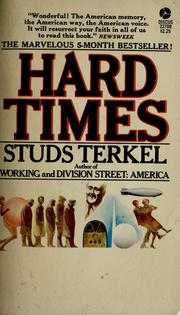
Terkel's oral history collects first-hand accounts from hundreds of Americans who lived through the Depression, giving beginners a panoramic, ground-level view of the era across class, race, and region. It perfectly complements Steinbeck by confirming that the novel's world was real.
Foundations — A Clear Narrative History
BeginnerUnderstand the chronological story of the Depression: the Roaring Twenties boom, the 1929 crash, the banking collapses, Hoover's failures, and the arrival of FDR and the New Deal.
▸ Study plan for this stage
Pace: 8–10 weeks, ~40–50 pages/day. Start with "The Forgotten Man" (4–5 weeks), then "Freedom from Fear" (4–5 weeks). This allows time for reflection between books and deeper engagement with Kennedy's denser narrative.
- The Roaring Twenties as a period of speculative excess, unequal wealth distribution, and fragile economic foundations beneath the boom
- The 1929 stock market crash as a symptom, not the sole cause, of deeper structural economic problems (overproduction, farm crisis, credit collapse)
- The banking system's vulnerability and the cascade of bank failures (1930–1933) that destroyed savings and credit
- Herbert Hoover's ideological commitment to limited government and his belief that intervention would worsen the Depression—and why these policies failed
- Franklin D. Roosevelt's political pragmatism and the New Deal as an experimental, often contradictory response combining relief, recovery, and reform
- The human cost of the Depression: unemployment, homelessness, psychological despair, and regional devastation (especially the Dust Bowl and industrial centers)
- The role of monetary policy, the gold standard, and international economic collapse in prolonging the crisis
- How the Depression reshaped American political culture, labor movements, and the social contract between government and citizens
- What were the main economic imbalances of the 1920s that made the economy vulnerable to collapse, according to Shlaes and Kennedy?
- Why did the stock market crash of 1929 lead to a prolonged depression rather than a quick recovery, as had happened in previous downturns?
- What was Hoover's economic philosophy, and why did his policies (such as maintaining the gold standard and resisting direct relief) fail to reverse the Depression?
- How did the New Deal differ from Hoover's approach, and what were its main goals and contradictions?
- What was the human experience of the Great Depression for ordinary Americans—workers, farmers, and the unemployed—as depicted in these books?
- How did the Depression change American attitudes toward the role of government in the economy and society?
- Create a timeline of major events from 1920–1939, marking the Roaring Twenties, the crash, banking crises, Hoover's key policies, and major New Deal legislation. Annotate with economic indicators (unemployment, GDP, stock prices).
- Write a 2–3 page comparison of Hoover's and FDR's responses to the Depression: their philosophies, specific policies, and outcomes. Use direct evidence from both books.
- Select one New Deal program (e.g., CCC, WPA, Social Security) and research its goals, implementation, and legacy. Write a brief case study explaining how it reflected the Depression-era debate between relief, recovery, and reform.
- Create character sketches of 3–4 key figures (e.g., Hoover, FDR, a banker, a worker or farmer) based on how they appear in the books. Describe their worldview, decisions, and the consequences of their actions.
- Collect 5–6 primary source documents (speeches, letters, photographs, statistics) from the Depression era and annotate them with observations about economic conditions, sentiment, or policy. Explain how they illustrate concepts from the books.
- Debate or write a position paper: "Was the New Deal an effective response to the Great Depression?" Use evidence from Kennedy and Shlaes to support your argument, acknowledging their different interpretations.
Next up: This stage establishes the narrative backbone and major actors of the Depression, preparing you to move deeper into specialized topics—whether examining specific New Deal programs in detail, exploring regional impacts and personal testimonies, analyzing economic theories and debates about what caused and prolonged the crisis, or investigating the Depression's long-term social and political legacie
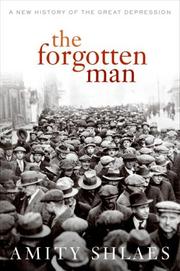
Shlaes provides a highly readable, character-driven narrative of the Depression decade that introduces key figures and policy debates without requiring prior economic knowledge. It gives beginners a strong chronological spine to hang everything else on.
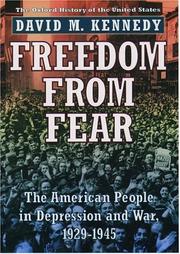
This Pulitzer Prize-winning history is the definitive single-volume account of America from the Depression through World War II, covering causes, politics, and the New Deal in authoritative but accessible prose. Reading it after Shlaes deepens and balances the narrative with richer scholarly context.
The Crash — Economics and Finance Explained
IntermediateUnderstand the financial and economic mechanics behind the 1929 crash and the subsequent slump — speculation, credit, bank failures, deflation, and the catastrophic policy mistakes that turned a recession into a decade-long depression.
▸ Study plan for this stage
Pace: 8–10 weeks, ~40–50 pages/day. Galbraith's *The Great Crash* (approximately 200 pages) over 4–5 weeks; Friedman's *A Monetary History* (approximately 860 pages, but focus on chapters 7–9 covering 1929–1939) over 4–5 weeks. Build in 1–2 weeks for review and synthesis.
- Speculation and irrational exuberance: how stock prices became detached from underlying asset values in the 1920s, and the psychology of bubble formation
- Margin buying and leverage: the mechanics of buying stocks on credit and how margin calls cascaded into forced selling
- The money supply contraction: how the Federal Reserve's passive stance allowed the money supply to collapse by one-third between 1929 and 1933
- Bank failures and financial contagion: how individual bank collapses triggered runs on other banks, destroying deposits and credit availability
- Deflation and debt dynamics: how falling prices increased the real burden of debt and discouraged spending and investment
- Policy errors and institutional failures: the Fed's failure to act as lender of last resort, the gold standard constraint, and contractionary fiscal responses
- The difference between a recession and a depression: how policy mistakes transformed a sharp but recoverable downturn into a decade-long catastrophe
- What were the main drivers of stock market speculation in the 1920s, and how did margin buying amplify the bubble?
- Explain the mechanism by which margin calls and forced selling turned the 1929 crash into a sustained collapse.
- How did the Federal Reserve's monetary policy (or lack thereof) between 1929 and 1933 contribute to the severity of the depression?
- What role did bank failures play in deepening the economic crisis, and how did they interact with the money supply contraction?
- How did deflation worsen the depression, and what is the relationship between falling prices and increased real debt burdens?
- What were the key policy mistakes made by the Federal Reserve and the government, and how might different policies have changed the outcome?
- Create a timeline of key events from 1920–1933 (stock prices, money supply, bank failures, policy decisions) and annotate how each event cascaded into the next.
- Build a simple spreadsheet model showing how margin buying works: assume a stock at $100, 50% margin requirement, and simulate what happens to a buyer's equity as the stock price falls to $50, $25, and $10.
- Chart the money supply, price level, and real debt burden from 1929–1933 using Friedman's data; write a one-page explanation of how these three variables reinforced each other.
- Compare two scenarios in a short essay: (a) what actually happened (Fed passivity, deflation, bank failures), and (b) a counterfactual where the Fed aggressively expanded the money supply—what would have been different?
- Identify three specific policy decisions (e.g., the Fed's tightening in 1928–1929, the failure to prevent bank runs, the Smoot-Hawley tariff) and for each, write a paragraph explaining the decision-maker's reasoning and why it backfired.
- Create a diagram or concept map showing the causal relationships between speculation, the crash, margin calls, bank failures, money supply contraction, deflation, and reduced spending—use both Galbraith and Friedman as sources.
Next up: Mastering the financial mechanics and policy failures of 1929–1933 provides the foundation to examine how ordinary people experienced the depression and what social, political, and cultural responses emerged in the subsequent stage.
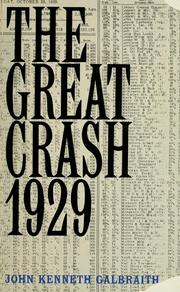
Galbraith's classic is the essential, elegantly written account of the stock market bubble and its collapse, accessible to non-economists. It should be read first in this stage because it establishes the financial vocabulary needed for Friedman's more demanding argument.

The landmark work arguing that the Federal Reserve's catastrophic contraction of the money supply turned a downturn into a catastrophe — the most influential economic thesis about the Depression. The relevant chapters are challenging but now readable after Galbraith has laid the groundwork.
The New Deal — Politics, Policy, and Debate
IntermediateCritically evaluate FDR's New Deal: what it attempted, what it achieved, where it fell short, and how it permanently reshaped the relationship between the American government and its citizens.
▸ Study plan for this stage
Pace: 6–7 weeks, ~40–50 pages/day. Start with "Nothing to Fear" (Week 1–3, ~400 pages), then "The New Deal" by Conkin (Week 4–7, ~350 pages). Allocate 1–2 days per book for review and synthesis.
- FDR's political philosophy and leadership style during crisis, as portrayed in Cohen's narrative biography
- The three phases of New Deal legislation: Relief, Recovery, and Reform (the 3 Rs) and their distinct policy goals
- Key New Deal agencies and programs (CCC, WPA, TVA, Social Security, etc.) and their intended impacts on employment, infrastructure, and social welfare
- The constitutional and ideological opposition to the New Deal: the Supreme Court's role, conservative critics, and the limits of executive power
- Regional and sectoral variations in New Deal success and failure, particularly in agriculture and the South
- The New Deal's permanent institutional legacy: the expansion of federal authority, the modern welfare state, and the redefined role of government in economic life
- Competing interpretations of New Deal effectiveness: did it end the Depression or merely manage it? Did it go too far or not far enough?
- The New Deal's uneven impact on different groups: racial discrimination, gender roles, and the exclusion of certain workers from key programs
- What were FDR's core political beliefs and how did they shape his approach to the Depression, according to Cohen?
- How did the three Rs (Relief, Recovery, Reform) structure New Deal policy, and what was the intended purpose of each?
- What were the major constitutional and political obstacles to the New Deal, and how did FDR attempt to overcome them?
- Which New Deal programs succeeded in their stated goals, and which fell short? What explains the variation?
- How did the New Deal permanently alter the relationship between the federal government and American citizens?
- What were the major criticisms of the New Deal from both the left and the right, and were they justified?
- How did the New Deal affect different regions, economic sectors, and demographic groups unequally?
- Create a detailed timeline of major New Deal legislation (1933–1939) with the problem each addressed and the agency/program created, using both Cohen and Conkin as sources.
- Write a comparative policy brief (2–3 pages) analyzing one program's intended design versus its actual outcomes (e.g., AAA's impact on tenant farmers, WPA's wage levels, Social Security's coverage gaps).
- Construct a debate outline: argue both 'the New Deal was essential and transformative' and 'the New Deal was inadequate and overreaching,' citing specific evidence from both books.
- Map the New Deal's regional impact: create a visual or written analysis of how the TVA, agricultural programs, and relief efforts affected the South, Midwest, and industrial Northeast differently.
- Analyze a primary source document (e.g., FDR's fireside chat, a Supreme Court decision, a contemporary critique) in light of Cohen's portrayal of FDR's character and Conkin's policy analysis.
- Write a 4–5 page synthesis essay: 'How did the New Deal reshape American federalism and the social contract between government and citizens?' Use specific programs and outcomes from both books to support your argument.
Next up: This stage equips you to understand how Depression-era policy choices and debates set the stage for post-WWII American political economy, Cold War liberalism, and the modern conservative critique of the welfare state—preparing you to examine the New Deal's legacy and contestation in subsequent decades.
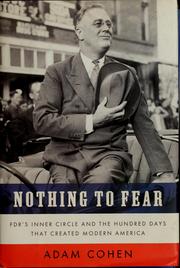
Cohen focuses on the pivotal first hundred days of FDR's presidency and the small group of advisers who designed the New Deal's core programs, making the policy-making process concrete and dramatic. It bridges the narrative history of Stage 2 with the deeper policy analysis that follows.

Conkin's concise but incisive critical assessment evaluates the New Deal's actual effectiveness and its ideological limits, introducing the scholarly debate about whether it prolonged or shortened the Depression. Reading it after Cohen ensures the reader has enough factual grounding to engage the critique.
Global Dimensions and Long Shadows
ExpertPlace the Depression in its full global context — how it spread worldwide, how other nations responded, how it gave rise to fascism and World War II, and what lasting lessons it holds for modern economic crises.
▸ Study plan for this stage
Pace: 8–10 weeks, ~40–50 pages/day (Kindleberger first 4–5 weeks; Krugman 3–4 weeks; final week for synthesis and review)
- International transmission mechanisms: how the Depression spread from the U.S. to Europe and beyond through trade collapse, capital flows, and the gold standard
- The gold standard as a constraint on policy: why adherence to gold limited nations' ability to respond flexibly and deepened the crisis
- Comparative national responses: how Britain, Germany, France, and other nations pursued different recovery strategies with varying success
- The political economy of the Depression: how economic catastrophe created conditions for the rise of fascism, militarism, and ultimately World War II
- Structural vulnerabilities of the 1920s: war debts, reparations, agricultural distress, and unequal wealth distribution that made the system fragile
- Modern parallels and policy lessons: how Krugman applies Depression-era insights to contemporary financial crises and the risks of repeating past mistakes
- The role of expectations and confidence: how pessimism became self-fulfilling and how policy credibility matters in crisis management
- How did the Depression spread from the United States to other countries, and what role did the gold standard play in preventing effective policy responses?
- Compare the economic policies and outcomes of at least three countries during the 1930s (e.g., Britain, Germany, France, Sweden). Which approaches were most effective and why?
- What structural weaknesses in the global economy of the 1920s made the system vulnerable to the shock of 1929?
- How did the economic crisis of the 1930s contribute to the rise of fascism and the outbreak of World War II?
- What are the main lessons Krugman draws from Depression economics, and how does he argue they apply to modern financial crises?
- Explain the concept of 'depression economics' as Krugman uses it—what conditions bring it back, and why is it different from normal economic policy?
- Create a timeline of major economic events 1929–1939 with annotations on how each event affected different regions (U.S., Europe, Asia, Latin America) using both Kindleberger and Krugman
- Build a comparative policy matrix: chart the monetary, fiscal, and trade policies of four countries (Britain, Germany, France, U.S.) and assess outcomes; explain why some worked better than others
- Write a 2–3 page analytical essay: 'How the Gold Standard Deepened the Depression' using specific examples from Kindleberger
- Trace the causal chain from Depression → political instability → fascism in one country (Germany or Japan); cite evidence from both books
- Identify three 'depression economics' scenarios Krugman discusses and create a one-page brief for each explaining the conditions, policy mistakes, and lessons
- Debate exercise: argue both sides of 'Could the Depression have been prevented or shortened by different policy choices?' using evidence from Kindleberger and Krugman
Next up: This stage establishes how global economic collapse destabilized the international order and enabled authoritarianism, setting the stage for the next phase—examining how World War II reshaped the world economy and what post-war institutions were designed to prevent another Depression.
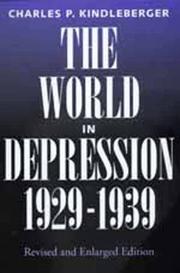
Kindleberger's masterwork is the definitive international account of how the Depression spread across the globe through trade collapse and currency crises, and why no nation could stop it alone. It reframes everything learned so far in a worldwide context.

Krugman draws direct lines from the 1930s to modern financial crises, showing why the lessons of the Depression remain urgently relevant. Reading it last allows the learner to synthesize the entire curriculum and see its contemporary stakes.
Discussion
Keep reading
Paths that share books, cover the same subject, or open a related topic.