The nature-nurture debate is not a settled question dressed up as a controversy, nor is it a symmetrical shouting match. It is an argument in which the empirical findings are broadly agreed and the interpretation, the causal language and the political implications are not. The productive way to read it is adversarially: take one author's case at full strength, then read the person who thinks that case is wrong, and notice exactly where they part company.
Where they part company is usually one of three places. Whether variance decomposition is a coherent way to describe development at all. Whether findings about populations license claims about individuals or groups. And whether a finding's history of political misuse is a reason to state it carefully or a reason not to state it. Each author below takes a position on those, and this article states each as that author's position rather than adjudicating between them.
The case against the blank slate
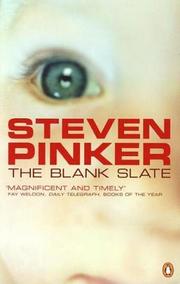
Steven Pinker's The Blank Slate is the most forceful statement that human nature is substantive and that denying it has had costs — in social science, in policy, and in the arts. Pinker argues the denial was motivated by fears about determinism that do not follow from the science. It is the book most people on both sides have read, and it is the natural opening move.
Matt Ridley's Nature Via Nurture is the conciliatory version of a similar view: genes, on his account, are not opposed to experience but are the mechanism through which experience acts, being switched on and off by it. Read the two together and you can see how much of the disagreement is about framing.
The environmentalist case, rebuilt
Judith Rich Harris took the environmental side and made it far more specific. The nurture assumption argues that the shared home environment leaves little lasting trace on adult personality and that peer groups do the socialising parents believe they are doing. Her follow-up, No Two Alike, tackles the harder question her first book raised: why identical twins raised together still differ so much.
The twin literature is where the evidence sits. Nancy Segal's Entwined lives is a researcher's survey of what twin studies have found and how the designs work, and William Wright's Born that way is the journalist's account of the Minnesota reared-apart study for a general audience. Tim Spector's Identically Different comes at twin discordance from epigenetics and argues that the environment leaves molecular marks the classical designs were not built to detect.
The strong hereditarian position, and its recent restatement
Robert Plomin's Blueprint argues that inherited DNA differences are the dominant systematic source of psychological differences between people and that polygenic scores will make this practically consequential. Stuart Ritchie's Intelligence is the compact defence of intelligence research itself — what IQ measures, what it predicts, what the criticisms get right and wrong.
Kathryn Paige Harden's The Genetic Lottery is the position that complicates the usual alignment: she accepts the behavioural-genetic findings and argues from the political left that egalitarians should engage with them rather than reject them, treating genetic luck as morally arbitrary in the way inherited wealth is. Her argument has been contested by hereditarian and environmentalist critics alike.
The critical tradition
Richard Lewontin, Steven Rose and Leon Kamin's Not in our genes is the classic attack on the whole programme as biological determinism in the service of a political order; Lewontin's Biology as Ideology is the shorter, more essayistic version of the same case. Stephen Jay Gould's The Mismeasure of Man is the best-known history of how intelligence measurement has been used to rank races and classes, and it remains widely assigned. It has also itself been contested: a 2011 re-measurement of Samuel Morton's skull collection disputed Gould's specific charge of unconscious bias, and that exchange has continued. Read Gould for the history of the misuse, which is not in doubt, while knowing that part of his own case is under dispute.
Read all four groups and you will hold the argument rather than a side of it. For the research methods behind the claims, the companion path on behavioral genetics covers the designs themselves.
Follow the full ordered path here: The Nature-Nurture Debate: Books on Both Sides, in Reading Order.