The Best Evolutionary Psychology Books to Read
This curriculum takes a beginner from the core logic of evolution and human nature all the way to cutting-edge debates about cooperation, culture, and the adapted mind. Each stage builds the conceptual vocabulary needed for the next, moving from "why evolution shapes behavior at all" to "how specific domains like mating, morality, and tribalism play out in modern humans."
Foundations: Evolution & Human Nature
BeginnerUnderstand natural selection, gene-centered thinking, and why evolution is the essential lens for understanding behavior — before diving into specifically human psychology.
▸ Study plan for this stage
Pace: 6–8 weeks, ~25–30 pages/day (approximately 3–4 hours/week of focused reading)
- Gene-centered view of evolution: genes, not organisms, are the primary units of selection and replication
- Natural selection as a mechanism: differential survival and reproduction of heritable traits across generations
- Replicators and vehicles: how genes (replicators) build bodies (vehicles) to ensure their own propagation
- Kin selection and inclusive fitness: how altruism and cooperation evolve through genetic relatedness
- Group selection and eusociality: how social insects and humans evolved through multi-level selection pressures
- The evolutionary origins of human sociality: why humans are uniquely cooperative and group-oriented
- Adaptationism and evolutionary constraints: understanding behavior as shaped by ancestral selection pressures, not just current environment
- What is the central argument of the gene-centered view, and how does it differ from organism-centered thinking about evolution?
- How does natural selection operate on genes, and what does it mean for a gene to be 'selfish'?
- Explain the distinction between replicators and vehicles, and give examples from both books.
- How do kin selection and inclusive fitness explain the evolution of altruistic behavior?
- What role did group selection and eusocial organization play in human evolution according to Wilson?
- Why does Wilson argue that humans are fundamentally different from other primates in their capacity for cooperation and group identity?
- Map out a trait (e.g., parental investment, aggression, cooperation) and trace how it could have spread through a population via natural selection using gene-centered logic from Dawkins.
- Analyze a social behavior (e.g., sibling rivalry, in-group favoritism) through the lens of kin selection and inclusive fitness; calculate or estimate relatedness coefficients.
- Compare and contrast Dawkins' replicator-centered framework with Wilson's group-selection emphasis by creating a two-column chart of their key disagreements.
- Read a contemporary news story or observe a social behavior and explain it using the evolutionary principles from both books; identify which author's framework (gene-centered vs. group-centered) better accounts for it.
- Create a visual diagram showing how a hypothetical 'cooperation gene' might spread through a population under kin selection, group selection, and individual selection—and predict which would be most effective.
- Write a 500-word reflection on how the gene-centered view changes your understanding of human motivation, morality, or social bonds.
Next up: This stage grounds you in the evolutionary mechanisms and gene-centered logic that explain *why* humans have the psychological traits and social instincts we do, preparing you to explore specific domains like mating, kinship, cooperation, and conflict in the next stage.
The essential starting point: Dawkins makes gene-level selection intuitive and introduces key concepts like inclusive fitness and memes that every later book assumes you know.

Bridges evolutionary biology and human social behavior, showing how eusociality and group living shaped our species — a natural next step after grasping selfish-gene logic.
The Adapted Mind: Core Evolutionary Psychology
BeginnerGrasp the central framework of evolutionary psychology — that the mind is a collection of evolved mechanisms — and apply it to emotion, perception, and social life.
▸ Study plan for this stage
Pace: 8–10 weeks, ~40–50 pages/day. Start with Buss's "Evolutionary Psychology" (weeks 1–5, ~350 pages), then move to Pinker's "The Blank Slate" (weeks 6–10, ~400 pages). Allocate 2–3 days per week for review and exercises.
- The mind as a collection of domain-specific evolved mechanisms shaped by natural selection, not a general-purpose blank slate
- Adaptation and fitness: how traits persist because they solved recurrent ancestral problems and enhanced reproductive success
- The logic of natural selection applied to psychological mechanisms: variation, inheritance, and differential reproduction
- Emotion as an evolved system: fear, anger, jealousy, and other emotions as functional responses to ancestral challenges
- Social psychology through an evolutionary lens: mating strategies, kinship, cooperation, and competition as products of selection
- Perception and cognition as specialized modules designed to extract information relevant to survival and reproduction
- The critique of the Standard Social Science Model (SSSM) and the case against pure environmental determinism
- Gene-environment interaction: how evolved mechanisms develop and express themselves in response to environmental inputs
- What is the core claim of evolutionary psychology, and how does it differ from the idea that the mind is a blank slate?
- Explain the logic of natural selection as it applies to psychological traits. What conditions must be met for a mental mechanism to evolve?
- How does Buss explain the evolution of emotion? Give examples of at least three emotions and the ancestral problems they helped solve.
- What are domain-specific mechanisms, and why does evolutionary psychology argue the mind contains many of them rather than general-purpose learning systems?
- How does Pinker use evidence from development, genetics, and neuroscience to argue against the Standard Social Science Model?
- Describe one example of an evolved social mechanism (e.g., mating preferences, kin recognition, or cooperation). What ancestral problem did it solve?
- What is the relationship between genes and environment in evolutionary psychology? Can a trait be both 'evolved' and shaped by culture?
- After reading Buss's chapters on emotion, map out one emotion (e.g., jealousy or disgust) by identifying: the ancestral problem it addressed, the cues that trigger it, and the behavioral response it motivates. Write a one-page analysis.
- Select a social behavior you observe in everyday life (e.g., attraction, friendship formation, or status-seeking). Analyze it through an evolutionary lens using concepts from Buss: What adaptive problem might it solve? What evidence would support or challenge an evolutionary explanation?
- Read Pinker's critique of the SSSM and create a two-column chart: 'SSSM Claims' vs. 'Evolutionary Psychology Evidence.' Include at least 5 major points of disagreement with specific examples from the text.
- Conduct a thought experiment: Design a hypothetical ancestral environment and identify three psychological mechanisms that would be adaptive in that setting. Explain why each would enhance fitness.
- Debate exercise (solo or with a partner): Take a controversial trait (e.g., sex differences in mate preferences, aggression, or parenting). Construct an evolutionary argument for it using Buss's framework, then construct a counter-argument emphasizing culture and learning using Pinker's nuance on gene-environment interaction.
- Create a concept map connecting the following terms from both books: natural selection, adaptation, domain-specific mechanisms, emotion, social behavior, genes, environment, and development. Show how each relates to the central claim that the mind is a product of evolution.
Next up: This stage establishes the foundational logic that the mind is composed of evolved mechanisms solving ancestral problems, preparing you to examine specific domains—such as mating, parenting, aggression, and culture—in deeper detail in the next stage.

The field's leading textbook, written accessibly enough for beginners; it systematically covers every major domain (mating, kinship, cooperation, aggression) and is the backbone of the curriculum.

Dismantles the idea that the mind is infinitely malleable and makes a rigorous case for human nature — essential for understanding what evolutionary psychology is actually claiming and why it matters.
Mating, Sex & Desire
IntermediateUnderstand the evolutionary logic of sexual selection, mate preferences, jealousy, and conflict between the sexes in rich empirical detail.
▸ Study plan for this stage
Pace: 8–10 weeks, ~40–50 pages/day. Allocate 4–5 weeks to Symons (estimated 350 pages), then 4–5 weeks to Buss (estimated 400 pages). Read 5–6 days per week with one review day weekly.
- Sexual dimorphism and parental investment theory: how differential reproductive costs between males and females shape mating strategies and sex differences in mate choice
- Male and female sexual selection pressures: how females invest heavily in offspring (gestation, lactation) while males can reproduce with minimal investment, driving divergent evolved preferences
- Ancestral mating environments and reproductive constraints: understanding how Pleistocene ecology and paternity uncertainty shaped modern sexual psychology
- Mate preferences as adaptive solutions: why humans evolved specific criteria for choosing partners (status, fertility, commitment, resources) and how these vary by sex and context
- Sexual jealousy and mate guarding: the evolved mechanisms men and women use to detect infidelity and retain mates, reflecting different threats to reproductive success
- Intrasexual competition and conflict: how males compete for mates through dominance and resource acquisition, while females compete through attractiveness and mate quality discrimination
- Conflict between the sexes: mismatched interests in commitment, fidelity, and parental investment that generate strategic deception, manipulation, and negotiation in mating
- Empirical evidence from cross-cultural studies: how universal patterns in mate preferences, sexual jealousy, and mating behavior across diverse societies support evolutionary predictions
- How does parental investment theory explain sex differences in mating strategies, and what evidence does Symons provide for this framework?
- What are the key differences between male and female sexual selection pressures, and how do these shape preferences for traits like status, fertility, and commitment?
- Why is paternity uncertainty a critical factor in male sexual psychology, and how does it differ from female concerns about mate investment?
- What specific mate preferences does Buss identify as universal across cultures, and what evolutionary logic explains each preference?
- How do the mechanisms of sexual jealousy differ between men and women, and what reproductive threats do these differences reflect?
- What evidence suggests that conflict between the sexes is an evolved feature of human mating rather than a cultural artifact?
- How do Symons and Buss explain the gap between ancestral mating environments and modern sexual behavior?
- Create a comparative table mapping male vs. female mate preferences from Buss's cross-cultural data; for each preference, write a one-sentence evolutionary explanation grounded in parental investment theory
- Analyze a contemporary dating app or personal ad dataset (or use examples from the books): identify which traits are emphasized by men vs. women and explain deviations from Buss's predictions
- Design a thought experiment: describe a hypothetical ancestral environment with different parental investment ratios (e.g., males invest heavily in offspring) and predict how mating strategies would differ; compare to actual human patterns
- Read Symons's discussion of sexual fantasies and Buss's data on infidelity; write a 2–3 page analysis of how these phenomena reveal underlying reproductive conflicts
- Conduct informal interviews (3–5 people) asking about jealousy triggers and mate preferences; code responses against Symons and Buss's predictions and note where they align or diverge
- Create a visual timeline showing how ancestral selection pressures (from Symons) map onto modern mate preferences (from Buss); annotate with specific examples from both texts
Next up: This stage establishes the foundational logic of sexual selection and mating conflict, preparing you to examine how these pressures shape broader social structures, parenting behavior, and cultural institutions in subsequent stages.
The classic foundational text on human sexual psychology; reading it here gives historical depth and shows where modern findings on mate preferences originated.
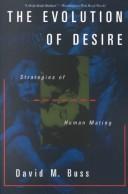
Buss's landmark research on universal mate preferences across 37 cultures, making the case for evolved sex differences in desire — a direct, data-rich complement to Symons.
Cooperation, Morality & the Social Mind
IntermediateExplain how altruism, fairness, tribalism, and moral intuitions evolved, and how they shape modern politics, religion, and group conflict.
▸ Study plan for this stage
Pace: 6–8 weeks, ~25–30 pages/day (approximately 40–50 pages per session, 4–5 sessions per week)
- Moral foundations theory: how humans have evolved multiple independent moral systems (care, fairness, loyalty, authority, sanctity, liberty) that vary across individuals and cultures
- The rider and the elephant: moral intuitions arise first (emotional, automatic), and reasoning comes second to justify them—not the reverse
- Tribalism and in-group bias: how our evolved psychology creates strong group loyalty, making us prone to seeing our tribe as virtuous and outgroups as threatening or immoral
- The role of gossip and language in group bonding: how language evolved partly to enable social bonding, reputation management, and group coordination at scale
- Dunbar's number and group size constraints: how cognitive limits shape the size of stable social groups and the mechanisms (grooming, gossip, ritual) needed to maintain them
- The mismatch between ancestral and modern environments: how moral intuitions and tribal instincts, adaptive in small groups, create dysfunction in large, diverse, anonymous societies
- Moral disagreement as a feature, not a bug: understanding why people with different moral foundations talk past each other and how to bridge ideological divides
- The evolution of fairness and reciprocity: how fairness norms and punishment of cheaters became central to human cooperation and moral judgment
- What are the six (or five) moral foundations Haidt identifies, and how do liberals, conservatives, and libertarians weight them differently?
- Why does Haidt argue that moral reasoning is often post-hoc justification rather than the primary driver of moral judgment? What evidence supports this?
- How does tribalism shape moral perception, and what examples does Haidt give of how the same action is judged differently depending on which group performs it?
- What is Dunbar's number, why does it exist, and what social mechanisms (grooming, gossip, language) maintain group cohesion at different scales?
- How did language evolve according to Dunbar, and what role does gossip play in human social bonding and group functioning?
- How do the moral intuitions and tribal instincts described in both books create problems in modern pluralistic societies, and what does this suggest about political and religious conflict?
- Moral Foundations Self-Assessment: Take the Moral Foundations Questionnaire (available online) and map your own moral profile. Then identify which foundations are strongest in your political tribe and which are undervalued. Reflect on how this shapes your judgments of outgroups.
- Tribal Bias Case Study: Choose a contemporary political or religious controversy. Analyze how each side frames the same event or action through different moral foundations. Write a 1–2 page analysis showing how tribalism and different moral weightings explain the disagreement.
- Gossip and Reputation Mapping: For one week, track instances of gossip in your own social circles (or in media/social media). Categorize each instance: Is it reputation management? Group bonding? Norm enforcement? How does it relate to Dunbar's theory of language evolution?
- Dunbar's Number Experiment: Map your own social network into concentric circles (intimate, close friends, friends, acquaintances). Count how many people fall into each layer. Does it match Dunbar's predictions? Reflect on which mechanisms (in-person contact, gossip, shared ritual) maintain each layer.
- Moral Intuition vs. Reasoning Exercise: Present yourself with a moral dilemma (e.g., a trolley problem variant, or a real-world policy question). Write down your immediate intuitive judgment, then try to reason your way to a different conclusion. Notice where reasoning fails to override intuition. How does this illustrate Haidt's rider-and-elephant model?
- Cross-Tribal Dialogue: Engage in a structured conversation with someone from a different political or religious tribe. Before the conversation, predict which moral foundations they prioritize. During the conversation, listen for which foundations they appeal to. Afterward, reflect on whether understanding their moral foundations made the disagreement feel more or less resolvable.
Next up: This stage establishes how evolved moral and social psychology shapes human group behavior and conflict; the next stage will likely examine how these same mechanisms operate in specific domains like religion, politics, sexuality, or parenting—or how they interact with culture and institutions to produce larger-scale social phenomena.

Shows how moral intuitions are evolutionary adaptations, not rational conclusions — a pivotal book for understanding why humans cooperate within groups but clash between them.

Argues that language and social bonding co-evolved, introducing Dunbar's Number and the idea that our cognitive limits are social in origin — deepens the picture of the cooperative mind.
Advanced Synthesis: Origins, Culture & Controversy
ExpertIntegrate evolutionary psychology with archaeology, cultural evolution, and behavioral economics, and engage critically with the field's open debates and limits.
▸ Study plan for this stage
Pace: 8–10 weeks, ~40–50 pages/day. "The Goodness Paradox" (~400 pages) over 4–5 weeks, then "Blueprint" (~600 pages) over 4–5 weeks. Allocate 1–2 weeks for synthesis and critical reflection across both texts.
- Self-domestication and the evolution of human prosociality: how selection against aggression shaped cooperation, empathy, and moral intuitions
- The role of capital punishment and coalitional killing in enforcing group norms and enabling large-scale cooperation
- Evolutionary origins of human goodness: reconciling our capacity for altruism with our capacity for violence
- Blueprint's core thesis: human social networks and institutions are shaped by evolved psychological predispositions for kinship, reciprocity, and hierarchy
- Cultural evolution as an extension of biological evolution: how memes, institutions, and practices spread and persist through selection mechanisms
- The interaction between evolved psychology and cultural variation: why universal human traits coexist with cultural diversity
- Behavioral economics and evolutionary mismatch: how ancestral psychological adaptations produce systematic biases in modern economic decision-making
- Limits and controversies in evolutionary psychology: just-so stories, reductionism, gene-culture interaction, and the role of contingency in human history
- What is self-domestication, and how does Wrangham argue it explains the evolution of human goodness and reduced aggression compared to other primates?
- How do capital punishment and coalitional killing function as mechanisms for enforcing cooperation and enabling the growth of human societies, according to Wrangham?
- What is the 'goodness paradox,' and how does Wrangham resolve the tension between human capacity for altruism and our capacity for organized violence?
- What are the core components of Christakis's 'blueprint'—the evolved social instincts that shape human networks and institutions?
- How do kinship, reciprocity, and hierarchy operate as universal organizing principles in human societies, and what evidence does Christakis provide from archaeology and anthropology?
- How do Wrangham and Christakis each explain the relationship between evolved psychology and cultural diversity? Where do they agree or diverge?
- What are the main criticisms of evolutionary psychology as a field, and how do these two books either address or exemplify those critiques?
- How might evolutionary psychology inform our understanding of modern behavioral economics, institutional design, and social policy—and what are the ethical pitfalls of such applications?
- Create a detailed timeline of human social evolution (last 300,000 years) based on Wrangham's self-domestication framework: identify key selection pressures, behavioral shifts, and archaeological markers. Compare your timeline to Christakis's account of how blueprints emerged.
- Analyze a historical case of capital punishment or norm enforcement (e.g., witch trials, honor killings, or modern legal systems) through Wrangham's lens: identify how coalitional killing or threat of punishment enforces group norms. Critically assess whether this framework oversimplifies or illuminates.
- Map the 'blueprint' components (kinship, reciprocity, hierarchy, mate choice, friendship, conflict resolution) onto three different modern institutions (e.g., a corporation, a university, a political party). Identify which components are most salient and where cultural variation overrides evolved predispositions.
- Conduct a comparative reading exercise: select 3–4 key passages from Wrangham on goodness and 3–4 from Christakis on blueprints. Synthesize them into a coherent argument about how evolved psychology enables both cooperation and conflict.
- Identify and critique one 'just-so story' in each book—a claim that seems to assume evolutionary causation without sufficient evidence. Propose alternative explanations (cultural, institutional, contingent historical) and discuss how you would test the competing hypotheses.
- Apply evolutionary psychology to a behavioral economics phenomenon (e.g., loss aversion, present bias, tribal signaling in consumer choice). Use Wrangham and Christakis to explain the ancestral logic, then discuss how modern environments create mismatch and whether policy interventions are justified.
Next up: This stage equips you to recognize both the explanatory power and the limits of evolutionary psychology, positioning you to evaluate how evolutionary insights integrate with (or compete against) cultural, institutional, and historical explanations—a foundation for critically assessing evolutionary approaches to specific domains like morality, politics, or technology in subsequent stages.

Wrangham's 'self-domestication' hypothesis explains how humans became less reactive but more coalitionally violent — a sophisticated, evidence-rich synthesis of aggression and cooperation.
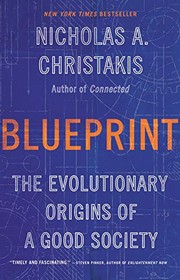
Closes the curriculum by arguing that evolution has embedded prosocial tendencies in human nature, offering an optimistic but rigorous capstone that ties biology, culture, and society together.
Discussion
Keep reading
Paths that share books, cover the same subject, or open a related topic.