Behavioral Genetics: The Best Books on Nature, Nurture and Heritability, in Order
Behavioral genetics is the empirical study of how much of the variation in psychological traits within a population tracks genetic variation, and it has produced three findings that replicate almost everywhere: nearly everything is somewhat heritable, no single gene does much, and the environmental effects that matter are mostly not the ones families share. This path takes the science first and the politics last, because the arguments are impossible to judge without knowing what a heritability estimate is and how it was computed. Expect no mathematics beyond understanding variance, but expect the field's own textbook in stage two — it is where the terms are defined properly, and everything popular written about this subject is a compression of it.
What the Field Claims
BeginnerGet the headline findings and the modern genomic apparatus — polygenic scores, genome-wide association studies — in accessible form, before evaluating any of it.
▸ Study plan for this stage
Pace: 2-3 weeks. Blueprint is a short book — around 280 pages of large-print trade non-fiction — and can be read in a week. Ridley's Genome is 340 pages in 23 self-contained chapters, one per chromosome, so it can be read in parallel a chapter at a time whenever Plomin uses a molecular term you do not hav
- Plomin's three headline findings: substantial heritability for essentially every psychological trait, weak effects of shared family environment, and a large unexplained residual
- Polygenic score: what it is, how it is computed from a genome-wide association study, and the difference between predicting a population mean and predicting one person
- The molecular vocabulary Blueprint assumes — allele, locus, SNP, expression, chromosome — which is exactly what Ridley's chapters supply
- The shift from anonymous variance components (twin studies) to measured DNA (GWAS), and why Plomin treats it as the field's turning point
- Why heritability is a statement about variance in a population, not about an individual's development
- The specific predictive claims Plomin makes about education and psychopathology, and the effect sizes attached to them
- State Plomin's three laws in his own words, and give the approximate heritability figure he reports for one trait
- How does a polygenic score get built, and what does it currently predict for educational attainment?
- What is a SNP, and why do behavioural traits involve thousands of them rather than a few?
- What does Plomin mean when he says DNA is the only thing that makes us who we are, and what does that claim exclude?
- Which chapter of Genome gives you the mechanism behind a claim Plomin states without explaining?
- For every technical term in the first fifty pages of Blueprint, write a one-line definition; where you cannot, find the chapter of Genome that covers it and read that chapter before continuing
- Take Plomin's reported heritability figures and tabulate them by trait, noting for each whether he sources it to a twin study, an adoption study, or a GWAS — the sources are not interchangeable and the table makes that visible
- Write out the strongest version of Plomin's argument in 300 words, as he would want it stated; you will test it against the textbook in the next stage
- Pick one Ridley chapter about a single-gene condition and one Plomin claim about a polygenic trait, and write down what the two cases have in common and what they do not
Next up: Blueprint is a popularisation of a textbook Plomin co-wrote, so the next stage goes to the textbook itself and to the study the popular claims rest on.

The field's most prominent researcher summarising fifty years of work for a general reader: heritability is everywhere, shared family environment is weak, and DNA now allows prediction at the individual level. Start here because it is the clearest statement of the position the rest of the path tests.

One chromosome per chapter, and the fastest way to acquire the molecular vocabulary — allele, locus, expression — that Plomin uses without defining. Read it alongside Blueprint if any of the genetics is unfamiliar.
The Evidence Base
IntermediateLearn the actual research designs — twin, adoption and family studies, then GWAS — and be able to compute and interpret a heritability estimate rather than quote one.
▸ Study plan for this stage
Pace: 8-10 weeks, and this is the long stage. Plomin, DeFries, McClearn and McGuffin's Behavioral Genetics is a 500-page university textbook with exercises, statistics and a genuine mathematical spine — treat it as a semester course at two to three chapters a week, not as reading. It assumes comfort with
- Variance decomposition: additive genetic (A), shared environment (C) and non-shared environment plus error (E), and what each component is defined to contain
- The classical twin design and Falconer's estimate — twice the difference between monozygotic and dizygotic correlations — worked from the textbook's own tables
- Adoption designs, and how comparing adoptee-to-biological-parent with adoptee-to-adoptive-parent separates transmission from rearing
- The equal-environments assumption and the tests the textbook offers for it, including misclassified-zygosity studies
- Model-fitting: how ACE models are estimated and compared, and what a fit statistic is telling you
- Genome-wide association studies: sample sizes required, genome-wide significance thresholds, and the missing-heritability problem
- Gene-environment correlation (passive, evocative, active) and gene-environment interaction, and how each distorts a naive component estimate
- The Minnesota reared-apart study as Segal describes it: recruitment, media exposure of participants, and the amount of pre-testing contact between pairs
- Given monozygotic and dizygotic correlations from a table in the textbook, can you compute A, C and E and say what each number means?
- What is the equal-environments assumption, and what empirical tests does the textbook offer for it?
- What is missing heritability, and what explanations does the textbook give for the gap between twin-study and GWAS estimates?
- Distinguish the three kinds of gene-environment correlation and give an example of each from the text
- What features of the Minnesota study's recruitment does Segal describe that would inflate the similarity of the pairs studied?
- What sample size does a GWAS need to detect the effect sizes typical of behavioural traits, and why?
- Work at least one Falconer estimate per chapter from the textbook's own reported correlations, by hand, and check your answer against the text's stated heritability
- Fit or hand-compute an ACE decomposition for one trait using the textbook's tables, then recompute it dropping the C term and note what changes — this is the model comparison the field runs constantly
- Redraw one GWAS Manhattan plot from the textbook and annotate the significance threshold, the number of hits, and the variance those hits explain; the gap between the last two is the missing-heritability problem in one picture
- Take Segal's account of one reared-apart pair and list every feature of their history that violates the assumption of independent environments
- Compare a claim you wrote down in stage one from Blueprint against the corresponding textbook section, and record every qualification the textbook adds that the trade book drops
Next up: Having established what the estimates are and how they are produced, the next stage asks what a heritable trait actually implies about development.
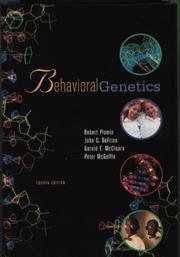
The standard textbook, by Plomin, DeFries, McClearn and McGuffin, and the book Blueprint is a popularisation of. This is where heritability, shared and non-shared environment, and the equal-environments assumption are defined precisely. Work through the quantitative chapters rather than skimming them.

The full account of the Minnesota Study of Twins Reared Apart by a researcher who worked on it — the design, the recruitment problems, the results and the criticisms. Read it after the textbook so you can see a real study against its idealised description.
What a Gene Actually Does
IntermediateUnderstand development — why a heritable trait is not a genetically specified one, and why 'gene for X' is almost always the wrong phrase.
▸ Study plan for this stage
Pace: 6 weeks. Kampourakis's Making Sense of Genes is a 314-page book by a philosopher and historian of biology written for a general reader but argued carefully — allow two weeks. Moore's The Dependent Gene is around 320 pages and is the developmental-systems case at full length. Mitchell's Innate is 300
- The distinction between a heritable trait and a genetically specified one, which is the central move of this stage
- Why 'a gene for X' is almost always the wrong phrase: genes specify products, not traits, and the route from one to the other runs through development
- Gene expression and regulation: the same genome producing different outcomes depending on cellular and environmental context
- Developmental systems theory in Moore's version: the trait as constructed by an interaction that cannot be partitioned into percentages after the fact
- Kampourakis's account of what a gene is at the molecular level, and why the folk concept and the technical concept have drifted apart
- Mitchell's third factor — developmental variation, or noise — as a source of difference that is neither genetic nor environmental
- Why genetically identical organisms in matched environments still differ, and what that residual does to the E component of an ACE model
- Canalisation and reaction norms as the developmental vocabulary the statistical models leave out
- What is the difference between saying a trait is heritable and saying it is genetically determined?
- In Kampourakis's account, what does a gene actually specify, and where does the trait come from?
- What is Moore's argument against partitioning causes into percentages, and does it deny that heritability can be measured?
- What is developmental noise in Mitchell's sense, and which component of an ACE model absorbs it?
- How do these three books differ from each other, given that all three reject genetic determinism?
- Take one trait for which you computed a heritability estimate in stage two and write out the developmental account Moore would give of the same trait — the two descriptions should be compatible, and being able to hold both is the point of the stage
- List five 'gene for X' phrases from popular coverage and rewrite each in Kampourakis's terms, naming what the gene actually specifies
- From Mitchell's Innate, take his account of discordant identical twins and work out numerically where that variation lands in the ACE decomposition; note that non-shared environment is a residual category, not a measurement
- Diagram a reaction norm for one trait Mitchell or Moore discusses, plotting outcome against environment for two genotypes, and show what a single heritability figure discards
- Reread the textbook's definition of non-shared environment from stage two and rewrite it to include developmental noise; the fact that this changes nothing arithmetically and everything interpretively is the lesson
Next up: If the residual is not just noise, the next stage asks what non-genetic factors actually produce it and how far behaviour can be traced without invoking heredity.

A philosopher of biology dismantling the deterministic gene concept carefully rather than polemically. The best single antidote to misreading stage one, and it does not require you to reject any of stage two's data.
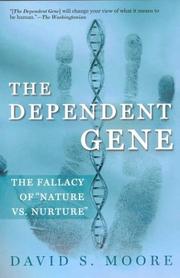
The developmental-systems argument at book length: traits are constructed through gene-environment interaction at every timescale, so partitioning their causes into percentages misdescribes the process. Read it second — it is the technical version of what Kampourakis sets up.

A neurogeneticist's account of the third factor the debate keeps omitting: developmental noise. Brain wiring is variable even between genetically identical individuals in identical environments, which explains variation that neither genes nor environment can. The most useful new idea on this path.
The Environments That Matter
IntermediateTake seriously the non-shared environment — the large residual that twin studies attribute to neither genes nor family — and see how far biology can be traced to behaviour without invoking heredity at all.
▸ Study plan for this stage
Pace: 8-10 weeks, because two of these are very long. Harris's The Nurture Assumption is around 460 pages with substantial notes and takes two to three weeks; she is an advocate for a specific and contested position and says so. Sapolsky's Behave is nearly 800 pages, organised as a countdown of timescales
- The non-shared environment as a residual: everything not shared by siblings, plus measurement error, which is why it is hard to identify
- Harris's group socialisation theory — peers rather than parents as the socialising environment — as one candidate content for that residual
- The distinction Harris draws between parental effects on the relationship and parental effects on adult personality
- Sapolsky's timescale structure: the same behaviour explained at the level of neurons, hormones, development, culture and evolution, with genes as one layer among several
- Gene-environment interaction as Sapolsky presents it, including his repeated point that a gene's effect is often only statable relative to a context
- Zimmer's expansion of heredity beyond nuclear DNA: mosaicism, chimerism, the microbiome, epigenetic marks and cultural transmission
- Why several of Zimmer's channels of inheritance are invisible to the twin design entirely
- The gap between a variance component and a mechanism, which all three books close from different directions
- Why is the non-shared environment hard to identify empirically, and what does Harris propose fills it?
- Which parental effects does Harris concede, and how does she separate them from her main claim?
- Take one behaviour Sapolsky analyses and reconstruct his chain of explanations from seconds before to evolutionary time — where do genes enter?
- What forms of inheritance does Zimmer describe that a classical twin study cannot see?
- Given all three books, what would you now say the E component of an ACE model actually contains?
- Take Harris's list of proposed non-shared environmental influences and mark each one according to whether it could in principle be measured in a twin study; the unmeasurable ones are why the residual has stayed a residual
- Pick one behaviour from Behave and write Sapolsky's layered explanation as a single timeline, then place the heritability estimate for that behaviour on it — this shows what proportion of the explanation a variance component is
- For three of Zimmer's non-genetic inheritance channels, state whether each would be counted in a twin study as A, as C, as E, or not at all
- Return to the ACE numbers you computed in stage two and write a paragraph, using all three books, on what a large E term is actually describing
- Find a place where Harris and Sapolsky make claims about the same phenomenon and set them side by side; note which is arguing a thesis and which is surveying a literature
Next up: With mechanism and environment in hand, the final stage takes up what the field's findings imply in practice, which is where the argument stops being empirical.

The best-known attempt to say what the non-shared environment consists of: peer groups rather than parents. Read it here rather than earlier, because the argument only makes sense once you know that shared-environment estimates come out near zero and why.
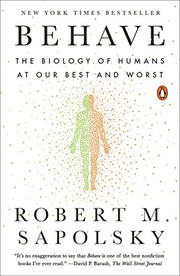
A biology of behaviour organised by timescale, from the second before an act back through hormones, development, and finally genes and evolution. Its treatment of gene-environment interaction is the most concrete you will find, and it puts behavioral genetics in proportion to everything else acting on behaviour.
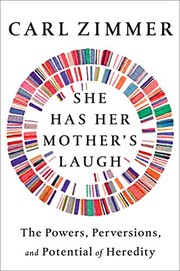
Heredity in the widest sense — chromosomes, but also mosaicism, microbes and culture. Read it for the argument that inheritance has several channels, only one of which this field measures.
Prediction and Politics
IntermediateDecide what follows practically from polygenic prediction, and be able to defend a position on whether the science can be separated from its uses.
▸ Study plan for this stage
Pace: 6 weeks. Harden's The Genetic Lottery is around 310 pages and is written by a working behavioural geneticist arguing an explicitly political thesis; give it two weeks and read it slowly. Lewontin, Rose and Kamin's Not in Our Genes is 320 pages, was published in 1984, and takes aim at 1980s sociobiol
- Harden's central move: accepting the empirical findings of stages one and two while denying that they support hierarchy, on the grounds that unchosen endowment is an arbitrary basis for reward
- The portability problem — polygenic scores predict poorly outside the ancestry group they were derived in — and what it forbids in practice
- The distinction between prediction and causation in polygenic scores, and why a score that predicts can still be capturing social sorting
- Lewontin's objection: heritability is defined within one population in one range of environments and licenses no claim about a changed environment
- The norm of reaction as the thing a single heritability figure discards
- The gap between a group difference and a within-group heritability estimate, which neither licenses the other
- Mitchell's argument that organisms are genuine causal agents, and what he takes that to add beyond the genetic and environmental accounts
- The practical uses now on the table — embryo screening, educational sorting, psychiatric risk stratification — and what each requires of the evidence
- What does Harden concede to Plomin, and where exactly does she stop agreeing with him?
- State Lewontin's objection precisely, and say whether it is answered by a larger sample or a better estimate
- Why does within-group heritability tell you nothing about the cause of a between-group difference?
- What does the portability problem imply for the use of polygenic scores in a diverse population?
- What does Mitchell mean by agency, and does it require rejecting anything in stages one to three?
- Which specific application of polygenic prediction would you defend, and on what evidence?
- Take one policy proposal from The Genetic Lottery and write out the full chain from the evidence in stage two to the recommendation, marking every step that is a value judgement rather than an inference from data
- Apply Lewontin's objection to one specific claim in Blueprint from stage one and write the corrected version of the claim — the exercise is to state Plomin's finding in a form Lewontin could not object to, and to see how much survives
- For each of the three named applications — embryo screening, educational sorting, psychiatric risk — write down what the current predictive accuracy would have to be for the use to be defensible, then compare that to the figures reported in stages one and two
- Read the passages where Harden and Lewontin each address the misuse of genetics in the twentieth century and note how the two books differ in what they conclude should be done about it
- Write a page stating the strongest form of Plomin's, Harden's and Lewontin's positions, each as its author would state it and none adjudicated; if any of the three sounds weak, you have not yet understood it
Next up: This closes the path: you can compute a heritability estimate, say what it does and does not describe developmentally, and set out the competing accounts of what should follow from it.

The most careful attempt to hold both halves: the evidence in stage two is real, and it supports egalitarian rather than hierarchical conclusions because genetic endowment is unearned. Read it against Blueprint, which uses the same data to argue almost the opposite.
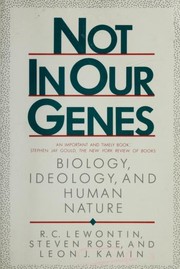
The standing objection from a population geneticist: that heritability estimates are specific to a population and an environment, and carry no implication for what would happen if the environment changed. Dated in its targets, undefeated in its statistics.

The last question the field cannot avoid — if behaviour is substantially heritable, what is left of agency. Mitchell argues from neurobiology that organisms are genuine causes rather than passive outputs. A good place to end because it makes the whole path a question about persons rather than about statistics.
Discussion
Keep reading
Paths that share books, cover the same subject, or open a related topic.