E.O. Wilson in Order: Where to Start with the Ant Man of Harvard
Wilson published more than thirty books across sixty years, ranging from a two-inch technical monograph on ant taxonomy to grand claims about human nature, and Sociobiology — the famous one — is a reference work that will bury a general reader on page forty. This path starts with the memoir, moves out through the conservation books that are his most readable, then reaches the arguments about human nature that made him the most fought-over biologist of his generation, and finishes with the technical work and the sharpest published attack on it.
The naturalist first
BeginnerUnderstand where the ideas came from — a half-blind boy collecting ants in Alabama who ended up running an argument about everything.
▸ Study plan for this stage
Pace: Three to four weeks. Naturalist runs to about 380 pages of unusually pleasant prose and goes quickly at 25 pages a sitting; Biophilia is a short book of essays and can be read in two or three evenings. Read them in this order, and do not skip the memoir on the grounds that it is not one of the argum
- Wilson lost the sight in one eye in a childhood fishing accident and had limited hearing for high frequencies, which pushed him toward small organisms he could hold close. The methodological consequence is real: an entomologist's habit of looking at colonies rather than individuals runs through ever
- Naturalist narrates the sociobiology controversy from inside it and while it was still raw, including the Harvard faculty opposition and the physical protest at a scientific meeting. Every later book on this path arrives with that context already attached.
- The book is also a straightforward account of how field biology actually gets done — collecting trips, museum drawers, taxonomy, the slow accumulation of specimens — which is the unglamorous base of his reputation.
- Watch the recurring habit of moving from a particular observation to a general claim. That move is Wilson's signature and it is what his critics object to; seeing it in a memoir, where the stakes are low, makes it recognisable later.
- Biophilia proposes an innate human affiliation with other living things. It is a hypothesis and Wilson presents it as one — it has not been established as a finding, and the conservation half of his career quietly rests on it.
- Biophilia is essayistic rather than argumentative, and it is the closest Wilson comes to writing about why any of this should matter to someone who is not a biologist.
- The two books together establish the pattern of his career: technical competence in a very narrow domain, then an attempt to extend it as far as it will go.
- How does Wilson's account of the sociobiology fight in Naturalist differ from what you would expect a neutral history to say? Note where he is a participant rather than a witness.
- What does an entomologist's training make easy to see about human society, and what does it make easy to miss?
- Biophilia is offered as a hypothesis. What evidence would confirm it, and does Wilson supply any of that kind?
- Where in Naturalist does he first move from a specific observation to a claim about life in general? Mark it; the move recurs on every later stage.
- How much of Wilson's confidence in synthesis is temperament and how much is argument, on the evidence of the memoir?
- Build a one-page timeline of Wilson's career from Naturalist alone — degrees, expeditions, books, controversies. Keep it beside you for the rest of the path.
- Mark every passage in Naturalist about the sociobiology controversy and write 300 words summarising his account of what happened and why. You will test it against Not in Our Genes at the end.
- Write a 200-word statement of the biophilia hypothesis in your own words, in a form precise enough to be falsified. Note how much precision you had to add.
- List the specific research programmes Naturalist describes — island biogeography, chemical communication in ants, taxonomy — and which later book each one underwrites.
Next up: You now know where the ideas came from and how their author narrates himself; the next stage takes the least contested part of his work, the biology of biodiversity, on its own terms.
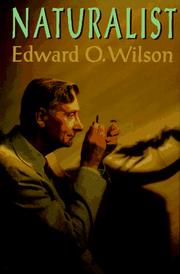
His autobiography, and the correct starting point because it narrates the sociobiology fight from inside while it was still raw, so every later book arrives with its context attached. It is also simply his best-written book.

Short, essayistic, and the origin of his term for an innate human affiliation with living things. Read it second: it is the hypothesis that quietly underwrites the whole conservation half of his career, and it is a hypothesis, not a finding.
The living world
BeginnerGet his account of biodiversity — what it is, how it is measured, and what its loss means — from the books that made the case to the public.
▸ Study plan for this stage
Pace: Seven to eight weeks for roughly 950 pages. The Diversity of Life is the substantial one at about 425 pages and deserves three to four weeks, taken slowly enough to follow the island biogeography material. The Future of Life is around 255 pages and Half-Earth about 265; two weeks each is comfortable
- The Diversity of Life is the best general book Wilson wrote: speciation, extinction, the structure of ecosystems and the theory of island biogeography he developed with Robert MacArthur, all explained without condescension.
- Island biogeography is the load-bearing idea of the whole stage. The relationship between habitat area and species number is what converts habitat loss into a predicted extinction number, and it is why Half-Earth has a figure in its title at all.
- Habitat fragmentation turns continuous landscape into effective islands, which is how a theory built on real islands becomes a claim about a continent. Follow that step carefully; a lot rides on it.
- The Future of Life is the turn from description to advocacy. The biology is the same; the register changes to what should be done, and the reader should notice the join.
- Half-Earth proposes setting aside half the planet's surface for the rest of life. Conservation biologists and social scientists have argued hard over whether the target is achievable, how it would be measured, and what it would mean for people living in and around the areas concerned.
- Treat Half-Earth as a manifesto with a live debate around it rather than as a plan. Wilson's case and the objections to it are both serious, and this path does not settle between them.
- Across the three books the same evidence is used for three different purposes — explanation, warning, and a policy target — and watching the identical facts get progressively more load to carry is the most useful thing this stage teaches.
- Wilson's estimates of extinction rates were contested at the time and the methods have been refined since. Read the numbers as of their moment, and note how he states his uncertainty.
- State the species-area relationship in your own words. What does it license you to predict, and what does it not?
- Where exactly does The Future of Life stop describing and start advocating? Does the biology change at that point, or only the tone?
- Half-Earth sets a numerical target. What is the argument that produces that particular number, and how sensitive is it to the assumptions behind it?
- Critics of Half-Earth have raised questions about the people living in the areas concerned. What does Wilson say about that in the book, and what does he leave unaddressed?
- How does Wilson handle uncertainty in extinction estimates — does he state ranges, hedge, or assert? Find an example either way.
- Which of these three books would survive if the biophilia hypothesis turned out to be false, and which depend on it?
- Work through the island biogeography chapter of The Diversity of Life with a pencil and reproduce its central relationship as a sketch graph. Everything downstream depends on your having done this.
- Trace one claim about extinction rates from The Diversity of Life through to how it is used in Half-Earth, and note at each step what has been added.
- Write 400 words stating the case for the Half-Earth proposal and 400 stating the strongest objections you can construct from within the book itself, without concluding.
- List the specific conservation actions The Future of Life recommends, and mark each as following directly from the biology, or as a policy judgement laid on top of it.
- Summarise The Diversity of Life's account of what a species is in 200 words. Wilson is a taxonomist and his definition is doing quiet work throughout the stage.
Next up: With the uncontested biology in hand, you are equipped to read the books where Wilson extends the same reasoning to humans — and to see precisely where the extension is made.
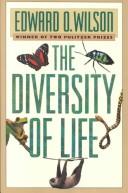
The best general book he wrote: island biogeography, speciation, extinction and the structure of ecosystems, explained without condescension. It supplies the biology that the advocacy books later assume.
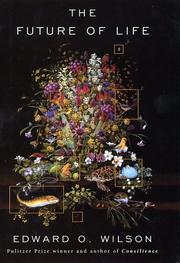
The turn from description to advocacy, laying out the extinction crisis and what he thinks can be done. Read after The Diversity of Life, whose framework it applies.
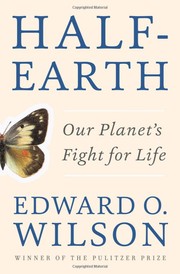
His late and deliberately provocative proposal to set aside half the planet's surface for the rest of life. Conservation biologists and social scientists have argued hard about whether the target is achievable and about what it would mean for people living in the areas concerned; treat it as a manifesto with a live debate around it, not a plan.
Human nature — the fight
IntermediateRead the books that argue biology constrains human behaviour and culture, and understand exactly what was being claimed and what was not.
▸ Study plan for this stage
Pace: Eight to ten weeks for around 980 pages, read considerably more slowly than the conservation books. On Human Nature is about 260 pages and repays two to three weeks; Consilience about 375 and needs three to four; The Social Conquest of Earth about 340 and another three. Keep notes — the last stage w
- On Human Nature is where Wilson actually defends the human claims in prose, chapter by chapter: aggression, sex, altruism, religion. If you want the sociobiology argument about people, this is the book, not the technical synthesis.
- The claim being made is about constraint and predisposition, not determination. Wilson's own formulations are more qualified than the slogans on either side of the controversy, and reading the qualifications is the point of reading the book rather than summaries of it.
- The altruism chapters are the technical heart: how behaviour that costs an individual can be favoured if it benefits relatives who share genes. That mechanism is what the later reversal is about.
- Consilience argues that the natural sciences, social sciences and humanities can and should be unified under one causal framework. Wilson presents it as a proposal rather than a result, and he is explicit about that.
- Consilience has been admired and rejected in roughly equal measure; philosophers and scholars in the humanities have argued that the programme is reductive and that it mistakes explanation at one level for explanation at all levels. The disagreement is about what counts as an explanation, which is w
- The Social Conquest of Earth is a genuine late reversal: Wilson abandons the kin-selection account of eusociality he had helped popularise, in favour of multilevel selection acting on groups.
- That reversal was rejected by a large part of his field — a rebuttal signed by well over a hundred evolutionary biologists, Richard Dawkins prominent among the critics, followed publication. The dispute is unresolved and this path does not adjudicate it; read Wilson's case and know that most of his
- Reading the three in order lets you watch a single scientist change his mind on a central mechanism late in life while keeping the overall programme intact — which is itself worth thinking about.
- Quote a passage from On Human Nature where Wilson states the strength of his claim precisely. How far is it from the version his critics attribute to him, and how far from the version his supporters cite?
- What is the kin-selection explanation of altruism as Wilson gives it in On Human Nature, and what specifically does he reject about it in The Social Conquest of Earth?
- Consilience proposes unification. What would count as success — and is that criterion something the book supplies?
- The objections to Consilience are largely about levels of explanation rather than about facts. Reconstruct the strongest version of that objection and Wilson's best reply.
- The multilevel-selection dispute divided the field. What evidence do the two sides appeal to, and why has it not settled the question?
- Across these three books, where does Wilson argue and where does he assert? The proportion changes; say where.
- Extract every explicit claim about human behaviour in On Human Nature into a numbered list, each stated with the qualifier Wilson attaches. The list is shorter and more hedged than the reputation suggests.
- Write 300 words setting out the kin-selection account and 300 setting out multilevel selection, using only what is in these books, then a third paragraph on what an experiment distinguishing them would need to show.
- Take one chapter of Consilience and write a page-long objection to it from the point of view of a historian or literary scholar, using the book's own examples.
- Find three places where Wilson anticipates an objection and answers it. Judge each answer on whether it engages the objection or restates the position.
- Keep a running two-column note across all three books: claims that follow from the ant work, and claims that do not. You will need it for the final stage.
Next up: You now know what Wilson claimed about humans and where the disputes lie; the last stage takes you to the technical evidence underneath and to the strongest book-length case that the whole programme was mistaken.
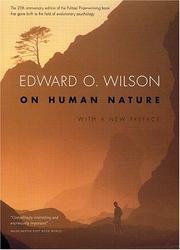
The Pulitzer winner, and the readable version of the sociobiology argument applied to humans — aggression, sex, altruism, religion. Read this rather than Sociobiology if you want the human claims: it is where he actually defends them in prose.

The most ambitious book here: an argument that the sciences, social sciences and humanities can and should be unified under one causal explanation. Widely admired and widely rejected — philosophers and humanists have called the programme reductive, and Wilson does not conceal that this is a proposal rather than a result.

His late reversal: he abandons the kin-selection account of social insects he had helped popularise in favour of multilevel selection. This is a genuine and unresolved scientific dispute — a rebuttal signed by well over a hundred evolutionary biologists, Richard Dawkins prominent among them, followed publication. Read Wilson's case here and know that most of his field did not accept it.
The technical Wilson, and the case against him
IntermediateRead the specialist works themselves, and the strongest book-length attack on the sociobiology programme.
▸ Study plan for this stage
Pace: Three to four months, and this stage is read selectively rather than cover to cover. Sociobiology runs past 700 pages of textbook density and The Ants past 730 — both are reference works to be worked through by chapter with a purpose, not read straight. Not in Our Genes is about 320 pages and should
- Sociobiology is a 1975 synthesis of animal social behaviour, and the structural fact worth knowing before opening it is that twenty-six of its twenty-seven chapters concern non-human animals. The final chapter, on humans, is what started the controversy.
- Reading the human chapter alongside the technical survey that precedes it is the single most clarifying thing you can do on this path: it shows exactly how much of the book the fight was actually about.
- The book is a reference work of textbook density, best entered with a specific question — how a particular argument in On Human Nature is grounded, say — rather than read front to back.
- The Ants, with Bert Hölldobler, is the monograph Wilson himself regarded as his most important work: enormous, illustrated, technical, and the concrete evidence base under every general claim he made about social evolution.
- Working through even a few chapters of The Ants changes how the popular books read, because you can see the density of observation that the one-paragraph generalisations in them are compressing.
- Not in Our Genes, by Lewontin, Rose and Kamin, is the sustained opposing case: that biological determinism is bad science serving political ends, and that the sociobiological programme cannot support the weight placed on it.
- Wilson's defenders regard Not in Our Genes as a caricature of what he claimed; its authors regard his qualifications as cover for a stronger position. Both books remain in print and the argument was never settled — the point of reading them together is to judge for yourself whether the criticism hit
- The most useful test available to you is textual: take a claim Not in Our Genes attributes to Wilson, find the passage it is drawn from, and decide whether the attribution is fair. That is a check you can actually perform.
- Having read the technical chapters of Sociobiology, does the final chapter on humans follow from them, extend them, or depart from them?
- Which specific claims in On Human Nature can you ground in a chapter of Sociobiology or The Ants, and which have no technical counterpart?
- What does Not in Our Genes accuse Wilson of, precisely — a factual error, an unjustified inference, or a political function? The three charges need different answers.
- Pick two claims Not in Our Genes attributes to Wilson and check them against his text. Are the attributions accurate?
- The Ants is the work Wilson valued most and the one fewest readers open. Does reading it change your assessment of the popular books, and how?
- After the whole path: which parts of Wilson's programme rest on the entomology, and which rest on an argument that the entomology does not supply?
- Read the final chapter of Sociobiology first, then choose three technical chapters it draws on and read those. Write 400 words on whether the human chapter is supported by what precedes it.
- Pick one phenomenon from The Ants — caste determination, chemical trail communication, colony founding — and read its full treatment. Then find every place a Wilson popular book compresses it into a sentence.
- Take five claims from Not in Our Genes about what sociobiology asserts, locate the corresponding passage in Wilson, and record for each whether the characterisation is fair, partial or wrong.
- Write 500 words stating the strongest case for the sociobiological programme and 500 stating the strongest case against, each using only primary text, and stop without a verdict.
- Return to the two-column note from the previous stage and revise it now that you have seen the technical base. Note which entries moved.
- Reread the sociobiology chapters of Naturalist last of all, now that you have read both sides, and write a paragraph on how his account of the controversy reads differently.
Next up: This closes the path: you have read Wilson from the memoir to the monograph and the strongest published case against him, and can assess any new claim about his legacy against the primary text rather than the reputation.

The 1975 synthesis, and the reason it comes last: twenty-six of its twenty-seven chapters are a technical survey of animal social behaviour, and it was the final chapter on humans that started the fight. It is a reference work of textbook density, best read selectively once you know which argument you are looking for.
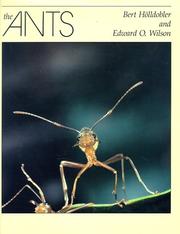
The Pulitzer-winning monograph with Bert Holldobler, and the work Wilson himself considered his most important. Enormous, illustrated, technical, and the concrete evidence base underneath every general claim he ever made about social evolution.
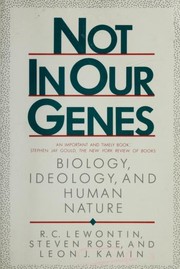
By Lewontin, Steven Rose and Leon Kamin, and the sustained opposing case: that biological determinism is bad science serving political ends. Wilson's defenders regard it as a caricature of what he claimed. Both books are in print and the argument was never settled — read them together and decide for yourself.
Discussion
Keep reading
Paths that share books, cover the same subject, or open a related topic.