Steven Pinker Reading Order: Where to Start
Pinker has written two very different kinds of book: technical popularisations of how language and the mind work, and sweeping data-driven arguments about human progress. The order that works is not chronological but structural — start where his expertise is deepest and least contested, move outward through the cognitive science, and only then take on the big progress books, where you will be better equipped to judge the argument rather than just absorb it.
Start here: the book he is actually an expert in
BeginnerUnderstand Pinker's core claim that language is a biological instinct rather than a cultural invention, and get used to his method of stacking evidence from many fields at once.
▸ Study plan for this stage
Pace: Three weeks at around 25 pages a day. The Language Instinct runs to roughly 500 pages and the middle chapters on syntax and morphology are genuinely technical — the tree diagrams are not decorative and skipping them costs you the argument. Read the first two chapters and the last two even if you tak
- Language as a biological adaptation rather than a cultural invention — the core claim, and the one place on this path where Pinker is writing from his own research field rather than synthesising other people's
- The poverty of the stimulus argument: children hear finite, error-strewn speech and converge on a rule system nobody taught them, which is the observation the whole nativist case rests on
- Mentalese, the idea that thought is not conducted in English or Japanese, which quietly disposes of linguistic determinism and does most of the book's philosophical work
- Creolisation as the strongest single piece of evidence — pidgin-speaking parents, and children who invent grammar the parents did not have
- The prescriptivism chapter, where Pinker attacks language mavens on the grounds that grammar is discovered rather than legislated, which is the seed of the last book on this path
- The evidence-stacking method: Pinker builds a case from linguistics, child development, neurology, genetics and sign language at once, and learning to notice when a stack is load-bearing versus decorative is the skill this path is really teaching
- The state of the argument, worth knowing rather than assuming settled — a substantial school of usage-based and constructionist linguists rejects the innate-grammar model, and the debate has not been closed in either direction
- State the poverty of the stimulus argument in three sentences. What would it take to refute it?
- Why do creole languages matter more to Pinker's case than any laboratory experiment?
- What is mentalese, and what does accepting it commit you to about the relationship between language and thought?
- Sign languages appear repeatedly. What specifically do they demonstrate that spoken languages cannot?
- Where does Pinker rely on evidence from a field he does not work in, and does he flag the difference?
- Work through two of the syntax tree diagrams by hand rather than reading past them. Twenty minutes here makes the next three books substantially easier.
- Listen to a small child speak and write down one error that is clearly rule-governed rather than random — an overregularised past tense is the classic. This is the book's central evidence, available for free.
- After finishing, read a short summary of the usage-based critique of universal grammar. You do not need to adjudicate it; you need to know the argument is live before you read three more books that assume it is not.
- Note every time Pinker uses humour to move past a difficulty. He is a very funny writer and the jokes cluster at the joints of the argument.
Next up: You now have the nativist template in the domain where it is strongest, which is exactly what the next stage needs, because it applies the same template to everything else the mind does.

His first popular book and still his best. Psycholinguistics is Pinker's own research field, so this is the one place he is writing from primary expertise rather than synthesising others' work, and it establishes the evolutionary-psychology framework everything later depends on.
The mind books
IntermediateExtend the argument from language to cognition generally, and see how Pinker handles the political objections it provokes.
▸ Study plan for this stage
Pace: Two months for the three, and do not rush. How the Mind Works is 600-plus pages and The Blank Slate is nearly as long; both are chapter-independent enough that you can read a chapter a night without losing the thread. Take Words and Rules in the middle as a deliberate palate cleanser — it is short,
- The computational theory of mind: mental states are information-processing states, and the brain is doing something a machine could in principle do
- Reverse engineering as method — asking what problem a mental faculty was built to solve, and the standing objection that such stories are hard to falsify
- Evolutionary psychology's adaptationism, and the long-running dispute with Gould and Lewontin about spandrels and just-so stories, which Pinker addresses directly and which readers should know is not resolved by his addressing it
- The three doctrines The Blank Slate attacks — the blank slate, the noble savage, the ghost in the machine — and the rhetorical decision to give the opposition names before arguing with it
- Behavioural genetics and the shared-environment finding, which is the empirical heart of The Blank Slate and the part critics have engaged with most seriously
- Words and Rules as the cleanest demonstration on the whole path of how a hypothesis is actually tested — the regular and irregular verb split as evidence for two distinct mental systems
- The politics of human nature: Pinker argues that the moral objections to innateness are non sequiturs, and whether the argument succeeds is a large part of why this book is still fought over
- What does reverse engineering a mental faculty involve, and what distinguishes a good adaptationist story from a just-so story?
- How the Mind Works ends by admitting the theory cannot explain consciousness, music or humour. Does that concession weaken the book or strengthen it?
- What is the single strongest empirical finding in The Blank Slate, and what is the single weakest chapter?
- Why do irregular verbs make a better test case for dual-system theories than regular ones?
- Pinker argues that fearing the political consequences of a finding is not an argument against the finding. Is that always true, and does he apply it consistently?
- Pick one faculty from How the Mind Works — vision, disgust, kin detection — and write the adaptationist argument for it in a paragraph, then write the strongest objection. Doing this once makes you a much better reader of the rest.
- In Words and Rules, try the past-tense test yourself on a made-up verb. The result is the experiment, and it takes ten seconds.
- For The Blank Slate, read at least one substantive published critique alongside it. The book is a polemic and reading a polemic unopposed is a poor use of it.
- Keep a list of claims Pinker presents as settled that you suspect are contested. You will be checking that list against the next stage, where the ratio changes.
Next up: Having watched Pinker build arguments from experimental evidence he understands intimately, you are equipped for the second half of his career, where the evidence is aggregate statistics and the standard of scrutiny has to change with it.
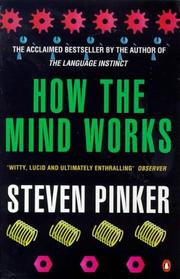
The computational theory of mind applied to vision, emotion, reasoning and why we like music. Read it second because it generalises The Language Instinct's method to everything else the brain does, and it is the book his critics most often argue with.
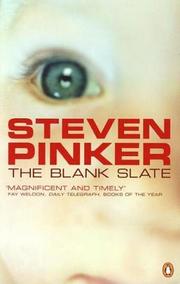
The explicitly combative one: a case against the doctrine that human nature is infinitely malleable. It only makes sense after the first two books have shown you what a nativist account of mind looks like, and it is where Pinker starts writing polemic as well as science.

A whole book about irregular verbs, which sounds unpromising and is in fact the clearest demonstration of how a linguist actually tests a hypothesis. Slot it in here as a palate cleanser between the two most argumentative books.
The progress argument
IntermediateWork through Pinker's second career as a statistician of human improvement, and learn to interrogate the datasets rather than take the trend lines on trust.
▸ Study plan for this stage
Pace: Three months, and treat this as the hard stage of the path even though the prose is easier than the linguistics. Better Angels alone is around 800 pages and is dense with graphs; 20 pages a day is realistic. Read it before Enlightenment Now, which depends on it, and take Rationality last — it is sho
- The per-capita denominator, which is the pivot of the entire argument — Better Angels measures violence as a rate rather than a body count, and almost every serious objection to the book is ultimately about that choice
- The six trends and five inner demons framework, and the civilising process borrowed from Norbert Elias that supplies the historical mechanism
- The quality of pre-modern data: estimating homicide rates for prehistoric or medieval populations requires heroic assumptions, and how much weight those estimates can bear is precisely where the fight is
- Fat-tailed distributions and the statistical objection — the argument, made most prominently by Nassim Taleb, that rare enormous wars make trend claims over a few decades unreliable, which Pinker disputes
- Enlightenment Now widening the same method from violence to health, wealth, safety, environment and happiness, and attaching an explicit values argument that Better Angels mostly kept implicit
- Where the two books differ in exposure: Better Angels is a historical claim with an argued mechanism, Enlightenment Now is a broader defence in which the data is doing rhetorical as well as evidential work, which is why it is the more quotable and the more criticised of the two
- Rationality as a toolkit — Bayes, expected utility, signal detection, the classic biases — deliberately placed last so it can be used on the books before it
- Why does the per-capita framing matter so much, and what does the absolute-numbers view of the twentieth century look like instead?
- Which of Pinker's six trends rests on the weakest data, and how does he handle the weakness?
- State the fat-tail objection to Better Angels in your own words, and state Pinker's reply. Can you say what evidence would settle it?
- Enlightenment Now treats climate change and nuclear risk within a framework of measured improvement. Is that treatment consistent with the book's own method?
- Apply one tool from Rationality — base rates, or the distinction between correlation and causation — to a specific claim in Better Angels. What does it show?
- Pick three graphs from Better Angels and check what each is actually measuring, over what period, from what source. Doing this three times changes how you read every popular data book afterwards.
- Read one substantive critique of each big book alongside it — there are well-known published exchanges — and write two sentences on where you think each side is strongest. The point is calibration, not a verdict.
- Before starting Enlightenment Now, write down what you expect it to say. Its argument is highly predictable from Better Angels, and noticing that tells you something about what the second book adds.
- After Rationality, go back to one claim you accepted uncritically in stage two. Being able to audit an author you like is the real payoff of reading a whole body of work in order.
Next up: With the contested material behind you and the reasoning toolkit in hand, the last stage returns to language, where Pinker is on home ground and where the two specialist books repay a reader who now knows the whole framework.
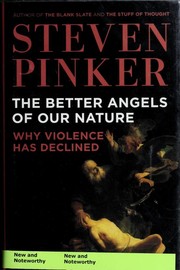
The claim that violence has declined across every measurable timescale. It is long and heavily quantitative, and it is the foundation for everything that follows, so read it before the shorter books that assume its conclusions.

Better Angels widened from violence to health, wealth, safety and happiness, with an explicit defence of Enlightenment values attached. It is the more quotable book and the weaker one, which is exactly why it should come after you have seen the method done carefully.
A primer on logic, probability, Bayesian reasoning and the classic cognitive biases. Placed last in this stage because it functions as the toolkit for auditing the two books before it.
The deeper cuts
IntermediatePick up the two specialist books that regular readers skip, one on the semantics of everyday speech and one on writing.
▸ Study plan for this stage
Pace: Six weeks. The Stuff of Thought is around 500 pages and is the densest book on the path after Better Angels — semantics, verb argument structure and conceptual metaphor, with a long chapter on swearing that is both the funniest thing Pinker wrote and a serious piece of analysis. The Sense of Style i
- Word choice as evidence about concepts — the claim that how a verb takes its arguments reveals the underlying model of causation, space and time in the mind
- The dative alternation and the container-versus-content distinction, which sound like grammar trivia and are the book's central demonstration
- Conceptual metaphor handled critically: Pinker accepts that metaphor structures thought and rejects the strong version of the claim, and the disagreement with Lakoff is worth understanding as a live one
- The taxonomy of swearing, which is genuinely explanatory about why particular words carry force and why the force decays
- Classic style in The Sense of Style — prose as a window onto the world, the writer showing the reader something rather than performing — and its cognitive justification
- The curse of knowledge as the diagnosis of most bad writing: the writer cannot reconstruct not knowing what they know, which connects the style book directly to the theory of mind in stage two
- Grammar rules that are real versus rules that were invented by nineteenth-century prescriptivists, which closes the loop with The Language Instinct's maven chapter
- What does the dative alternation reveal about how speakers conceptualise transfer? Give the example that convinced you.
- Where exactly does Pinker part company with the strong conceptual-metaphor position, and what evidence does he use?
- Why do swear words lose their power over time, and what does that say about where the power came from?
- What is classic style, and what does The Sense of Style claim it is good for that other styles are not?
- The curse of knowledge is a cognitive claim being used as writing advice. Having read the mind books, do you think the bridge holds?
- Take a paragraph of your own writing and revise it using the curse-of-knowledge diagnosis specifically. It is the single most useful exercise on this path.
- Test one of the argument-structure alternations on yourself with novel verbs, as The Stuff of Thought suggests. The intuitions are sharp and immediate and they are the evidence.
- Go back to the maven chapter of The Language Instinct and read it beside the corresponding section of The Sense of Style. Twenty years apart, the same author is both more permissive and more useful, and the change is instructive.
- Rank all nine books and write two sentences on where you think Pinker is most and least reliable. After a whole body of work in order, you are in a position to say so with evidence rather than impression.
Next up: This is the end of the path. The natural next step is not more Pinker but the arguments on the other side — a usage-based linguist on grammar, or one of the sustained critical responses to the progress books — because the value of having read a single thinker in order is that you can finally read his opponents properly.

What word choice reveals about the concepts underneath it — causation, space, time, obscenity. Denser than the earlier language books and best read once you already accept the framework it works inside.

A style guide built from cognitive science rather than tradition, arguing that most bad writing is a failure to model the reader's mind. It is the practical payoff of everything above and a genuinely useful book on its own terms.
Discussion
Keep reading
Paths that share books, cover the same subject, or open a related topic.