Siddhartha Mukherjee Reading Order: The Emperor, the Gene and the Cell
Mukherjee's three long books were conceived as a sequence and work best read as one — disease, then heredity, then the unit both are made of — with each opening where the last closed. This path uses his short book on medical reasoning as the door in, walks the trilogy in its intended order, and then turns to the books alongside it: the reporting he draws on, the rival popular accounts of the same science, and the oncologist who ran the war on cancer from the inside.
A hundred pages on how doctors think
BeginnerUnderstand Mukherjee's central preoccupation — that medicine is a science of uncertainty — before committing to six hundred pages of it.
▸ Study plan for this stage
Pace: One evening, or two at most. The Laws of Medicine is a TED book of under a hundred pages and it is deliberately the cheapest possible commitment on this path — the point of putting it first is to let you find out in ninety minutes whether Mukherjee's voice, which is essayistic and patient-centred an
- Medicine as a science of uncertainty rather than a science of certainty — the framing sentence the entire trilogy operates under
- The first law: a strong intuition is much more powerful than a weak test. What this means for how a doctor weighs prior probability against a result
- The second law: normals teach us rules, outliers teach us laws. Mukherjee's argument that the exceptional case is the informative one, which is exactly how the long books are structured — each is built around anomalies
- The third law: for every perfect medical experiment there is a perfect human bias. The acknowledgement that the observer is inside the system being observed
- The physician-essayist mode itself: a single patient's case opened, held, and used to carry an abstract point. Watch how he does it here at small scale before he does it at book scale
- Why he chose laws rather than heuristics or rules of thumb — and whether the borrowed vocabulary of physics is doing honest work
- State the three laws in your own words. Which of them is genuinely a law, and which is a well-phrased observation dressed as one?
- Mukherjee builds the first law around a patient case from his residency. What does the case establish that a statistical statement of the same point would not?
- If the third law is right and every experiment carries a human bias, what does that do to the historical accounts of trials you are about to read in the next stage?
- The book is a manifesto for uncertainty written by someone who treats cancer. Why might that specialty in particular produce this argument?
- Having read a hundred pages of him, what do you expect his weaknesses as a writer to be? Note the answer down and check it against the trilogy.
- Write each law on a card in your own words. Keep them beside you through the next three books and mark, chapter by chapter, where an episode in the long books is an instance of one of them. The trilogy is far more systematic about this than it first appears.
- Take the outlier principle in the second law and apply it to something you know well — a field, a job, a hobby. Write 200 words on a case where the exception taught you the rule. This is the reading posture the whole path rewards.
- Note the moment in the book where Mukherjee shifts from narrating a patient to arguing a point. Mark the sentence. Being able to spot that pivot is the single most useful skill for reading the next 1,700 pages critically rather than passively.
Next up: The laws are stated abstractly here and enacted at length in the trilogy, so going straight into The Emperor of All Maladies lets you watch the epistemology you have just been handed being used on the hardest case he has.

A short TED book, barely a hundred pages, proposing three laws of clinical reasoning drawn from his own training. It is the cheapest possible test of whether his voice works for you, and it states the epistemology the long books enact.
Disease
IntermediateFollow four thousand years of cancer as a biography — the treatments, the patients, the politics of the war on it — and see how he builds a history around a single antagonist.
▸ Study plan for this stage
Pace: Six to eight weeks. The Emperor of All Maladies runs about 580 pages and is genuinely a long read, but the structure helps: it is built as a chronological biography in six parts, and the parts are self-contained enough that 25 to 30 pages an evening never leaves you stranded mid-argument. The middle
- Cancer written as a biography — the conceit that the disease is the subject with a life story, and what that framing lets him do that a straight history of oncology could not
- The radical surgery era and Halsted's logic: the reasoning that more cutting must mean more cure, why it persisted for decades, and how it was eventually dismantled by trial evidence rather than by argument
- Farber, Lasker and the political construction of the war on cancer — the book's account of how a research programme became a public campaign and what that cost as well as bought
- Combination chemotherapy as the conceptual breakthrough: attacking on several fronts at once so resistance cannot emerge on one, and the brutality of the early protocols
- The oncogene and the tumour-suppressor gene — the shift from treating cancer as a foreign invader to understanding it as a corruption of the cell's own machinery. This is precisely where The Gene will pick up
- The braiding technique: Mukherjee's own patients, above all Carla Reed, interleaved with the historical chapters, and what the alternation does to the pace
- Clinical trial design as the book's real hero — randomisation, controls and the slow institutional learning of how to know whether a treatment works
- Why does Mukherjee choose biography as the form? Name one thing the choice reveals and one thing it obscures about a disease that is really a family of diseases.
- Trace the radical mastectomy from its rationale to its abandonment. What kind of evidence finally moved the profession, and how long did it take after the first doubts were raised?
- What did the war-on-cancer framing win, and what did it distort? The book has a view — can you state the opposing case as well?
- At what point in the narrative does cancer stop being described as an invader and start being described as us? Find the chapter and say what changed scientifically to allow it.
- How do the Carla Reed chapters change how you read the historical ones? Would the book work with the history alone?
- The book won a Pulitzer as biography and history, not as science writing. Reading it, do you see why that classification is defensible?
- Build a single-page timeline as you read: era, dominant theory of what cancer is, dominant treatment, and the specific finding that ended each era. Five or six rows. It becomes the spine you hang the next two books on.
- Take one treatment episode — Halsted's radical mastectomy, the early VAMP protocol, the tamoxifen story — and write 300 words on what the practitioners believed and what evidence they actually had. This is the second law from the previous stage applied to real cases.
- Mark every place Mukherjee names a bias, an incentive or an institutional pressure shaping a scientific result. There are more than you expect, and the list is the honest core of the book.
- Read the final chapters on oncogenes twice, and write down the questions they leave open. The Gene opens on exactly those questions and the handover is much clearer if you have written them out first.
- Note where the book uses a patient's story to make a point you could not have been argued into. Then ask yourself whether you agree with the point on its merits — the strongest test of a rhetorically powerful book.
Next up: The Emperor closes on the discovery that cancer is a disease of our own genes, which is the exact sentence The Gene opens by unpacking — read them consecutively and the trilogy behaves like one book with a chapter break.

The Pulitzer winner and the first panel of the trilogy: cancer told as a biography from ancient surgery to targeted therapy, braided with his own patients. Read it first because The Gene begins exactly where its account of oncogenes leaves off. Nothing here is treatment guidance; it is history.
Heredity
IntermediateTrace the gene from Mendel to gene editing, including the eugenic history and his own family's inheritance of mental illness.
▸ Study plan for this stage
Pace: Seven to eight weeks. The Gene is the longest of the three at around 600 pages and the widest in range — Mendel to CRISPR, with a long central section on eugenics that is history rather than science and reads differently. Around 25 pages a day. Budget one extra evening for the epigenetics material a
- The gene as an idea with a history — Mukherjee's insistence that the concept was constructed and repeatedly redefined, from Mendel's factor to a DNA sequence to something considerably messier
- The eugenics chapters as the book's moral centre: the American sterilisation laws, Buck v. Bell, and the Nazi programme, presented as what happens when the science of heredity meets a political appetite for improvement
- His own family history of schizophrenia and bipolar disorder, threaded through as the personal case — the same braiding technique as the Carla Reed chapters, applied to himself
- Penetrance, expressivity and the gap between carrying a variant and having a condition. This is the concept the book most wants a general reader to leave holding
- Gene editing and the germline question — where the book lands on what should be done, and the fact that it is arguing rather than reporting when it gets there
- The epigenetics dispute: a 2016 essay adapted from the book drew a public rebuttal from a number of geneticists who argued it overweighted chromatin modification relative to transcription factors. The disagreement is about emphasis in that chapter, and it is a live scientific argument rather than a
- The recurring structural rhyme with The Emperor: a unit of biology, a century of misunderstanding it, a technology that suddenly makes it manipulable
- How many distinct definitions of the word gene does the book supply between Mendel and the present? Why does Mukherjee think the instability of the term is important rather than embarrassing?
- The eugenics section is the longest non-scientific stretch in the trilogy. What is it doing there, and is the placement in the middle of the book rather than at the end a deliberate argument?
- Read the epigenetics chapter and then the published criticism of it. What exactly is claimed on each side, and can you identify the point where they are disagreeing about evidence rather than about emphasis?
- Mukherjee writes about his own family's inheritance of mental illness. Does the personal material strengthen the scientific argument, complicate it, or sit alongside it?
- Where does the book stop describing and start advocating on germline editing? Mark the transition and decide whether it announces itself honestly.
- Compare the war-on-cancer politics of the previous book with the eugenics politics of this one. Is Mukherjee making the same argument about science and power twice?
- Find the geneticists' 2016 rebuttal and Mukherjee's context for the chapter, read them in one sitting, and write 250 words stating each position fairly without declaring a winner. This is the single most instructive exercise on the path for learning to read a live scientific disagreement.
- Extend the timeline you built in the previous stage with a second row per era: what was believed about inheritance at the same moment. Where the two rows interact — oncogenes, the Human Genome Project — is where the trilogy's argument lives.
- Take one condition the book discusses and write out, in plain language, what it means that a variant is associated with it. Then write what it does not mean. Penetrance is the concept most often lost between a book and a reader.
- Mark every passage where Mukherjee moves between the gene as a molecule, the gene as an inheritance unit and the gene as a metaphor. He shifts registers often and mostly deliberately; a few of the shifts are where readers report getting confused.
- Write down what you expect the third book to be about, given how this one ends. Then check yourself — the handover to The Song of the Cell is less obvious than the first one, and noticing that is part of judging whether the trilogy really is a sequence.
Next up: Both previous books end by pointing at the same object — a single cell doing something it should not, or doing something new — and The Song of the Cell is the volume that finally puts that object at the centre rather than at the edge.
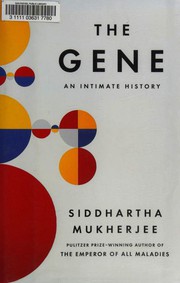
The second panel, and the widest in scope. Worth knowing before you start: a 2016 New Yorker essay he adapted from this book drew a public rebuttal from a number of geneticists who said his treatment of epigenetics overstated its role relative to transcription factors. The dispute is about emphasis in that chapter, not about the book's spine, and the criticism is easy to find and worth reading alongside.
The cell
IntermediateArrive at the unit underneath the previous two books, and at the cell-therapy medicine the trilogy has been building toward.
▸ Study plan for this stage
Pace: Five to six weeks. The Song of the Cell is around 500 pages, the shortest of the three, and the most fragmented — it moves through cell types in short thematic sections rather than as one chronological sweep, so it takes to being read in twenty-page pieces better than the other two. The chapters on
- Cell theory as the foundational idea of modern medicine, and Mukherjee's claim that it is under-celebrated relative to the gene and the germ
- Hooke and Leeuwenhoek's microscopes, and Virchow's omnis cellula e cellula — every cell from a cell — as the sentence that ends spontaneous generation and starts pathology
- The cell as the unit at which both previous books resolve: cancer is a cell doing the wrong thing, inheritance is a cell copying itself. This is the trilogy's closing argument
- Cell therapy as a distinct therapeutic mode — transplantation, stem cells, and engineered immune cells — rather than a drug that acts on a body
- CAR-T and engineered immunity, presented as the point where the three books converge: a genetic modification, made in a cell, to treat a cancer
- The organised-society metaphor Mukherjee uses for tissues and organs, and where it helps and where it flatters
- The book's honest register about limits — what cell therapy currently does and does not do, which is worth reading as history and current science rather than as any guide to a course of treatment
- Why does Mukherjee argue that cell theory belongs alongside the gene and the germ as a foundational idea? Is the case as strong as the other two?
- Trace one cell type through the book — the neuron, the T cell, the stem cell — and describe how his treatment of it differs from a textbook's.
- The book is structured thematically rather than chronologically, unlike the two before it. What does that gain, and where do you lose the sense of an argument accumulating?
- How exactly does CAR-T draw on both of the earlier books? Name the specific ideas from each that it requires.
- Where does the book's optimism about cell therapy outrun what it has shown? Mark the passages and decide whether the enthusiasm is earned.
- Read the three books as one arc. Is the sequence disease, heredity, cell genuinely progressive, or is the third book a companion rather than a conclusion?
- Write a 400-word summary of the whole trilogy as one argument, in the order you read it. If the third book does not fit, say so — that is a legitimate finding and several readers have reached it.
- Complete the timeline you have been building with a third row for cell biology. The three rows should now converge visibly in the last twenty years, which is the trilogy's implicit thesis rendered as a diagram.
- Take the CAR-T chapters and write out the process step by step in plain language, naming which step comes from oncology, which from genetics and which from cell biology.
- Go back to your three law cards from the first stage. Find one episode in this book that instantiates each. If one of the laws has no instance across 1,700 pages, that is worth noting too.
- Note every place where Mukherjee is describing an experimental therapy rather than an established one. The distinction matters and the book generally marks it; practising the reading habit is the point.
Next up: You now have Mukherjee's whole synthesis, which is exactly the wrong moment to stop — the final stage puts the same material in the hands of a reporter, a participant, a rival and a predecessor, and the differences are what tell you how much of the trilogy is synthesis and how much is argument.
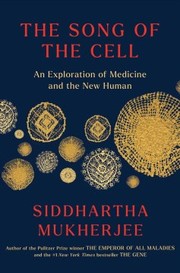
The third panel: cell theory from Hooke's microscope to CAR-T and stem-cell transplantation. It reads as the natural terminus of the other two — the reason cancer and inheritance both come down to what a single cell does — and assumes the vocabulary they built.
The shelf around the trilogy
IntermediateRead the reporting, the rival popular treatments and the insider account that let you judge where Mukherjee is synthesising and where he is arguing.
▸ Study plan for this stage
Pace: Three to four months if you read all five, and there is no reason to. Each book answers a different question about the trilogy, so pick by what you want to test. The most useful pairs: Skloot against The Song of the Cell for consent and for what deep reporting buys; Zimmer against The Gene for the m
- Depth reporting versus survey history — Skloot spends a whole book on the Lacks family and the HeLa line where Mukherjee gives them pages, and the comparison shows what each mode can and cannot deliver
- Consent and the ownership of tissue: the questions sitting under every laboratory in The Song of the Cell, which that book raises and Skloot's book is about
- The participant's account versus the historian's — DeVita helped develop combination chemotherapy and ran the National Cancer Institute, and he is considerably more combative about the FDA and about named colleagues than Mukherjee's telling of the same events
- Two organising principles for the same history: Ridley's one-story-per-chromosome structure against Mukherjee's chronological one, and how much the structure determines what you come away believing
- Zimmer's wider definition of heredity — mosaicism, microbiomes, cultural transmission — and his notably greater scepticism about how much a gene explains. This is the strongest available corrective to the material The Gene compresses
- The physician-essayist tradition: Thomas's 1974 collection is the model of the form Mukherjee works in, and The Song of the Cell's title deliberately echoes it
- How much popular science ages: Ridley wrote before the genome was finished, Thomas before recombinant DNA was routine, and reading them now is a lesson in which claims survive
- Where does DeVita's account of an episode differ from Mukherjee's? Take one — a trial, an institutional fight, a named figure — and set the two versions side by side. What kind of evidence would settle it, and is any available?
- Zimmer and Mukherjee disagree about how much explanatory weight a gene carries. State each position at its strongest. What would each need to show to move the other?
- After Skloot, reread Mukherjee's pages on HeLa. Is his compression fair, or does the survey form make the ethical problem look smaller than it is?
- Ridley organises by chromosome, Mukherjee by chronology. Which structure made you understand more, and which made you feel you understood more?
- Thomas is writing fifty years before the trilogy about many of the same organisms and mechanisms. What has he got right that the intervening science confirmed, and where is he clearly of his moment?
- Having read outside the trilogy, where do you now think Mukherjee is synthesising a consensus and where is he arguing a position of his own?
- Take the HeLa story and write two accounts of it, 250 words each: one in the survey mode of The Song of the Cell and one in the reported mode of The Immortal Life. Doing it yourself is the fastest way to feel what each form costs.
- Build a disagreement table with four rows — a claim about cancer politics, a claim about what genes explain, a claim about a named scientist, a claim about the future of therapy — and a column for each author who addresses it. Leave cells blank where a book is silent; the silences are informative.
- Read Thomas's title essay and then the opening of The Song of the Cell back to back. Write two sentences on what Mukherjee took from him and one on what he did not.
- Pick the single sharpest thing DeVita says about the received history and check it against The Emperor's account of the same events. Do not try to adjudicate it — write down what each man is in a position to know, which is the more useful exercise.
- Return one last time to the three law cards. Which of the five books on this shelf would Mukherjee's second law — outliers teach us laws — best describe? That is likely the one you should have read first.
Next up: This is the end of the path. The natural continuation is to follow one strand out of the trilogy rather than to read more surveys — the trial-design history, the ethics of tissue and consent, or the immunology behind cell therapy — now that you can tell a consensus account from an argued one.
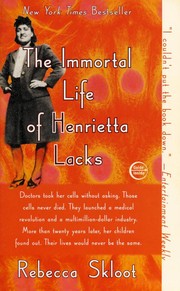
The HeLa cell line, the family who were never told, and the consent questions that sit under every laboratory in The Song of the Cell. Skloot reports one case in depth where Mukherjee surveys; the pairing shows what each mode buys.

By the oncologist who directed the National Cancer Institute and co-developed combination chemotherapy — a participant's account of episodes Mukherjee narrates as a historian, and considerably more combative about the FDA and about his colleagues. Useful precisely because it does not agree with the received version.

The best-known popular predecessor to The Gene, structured as one story per chromosome, and written before the human genome was finished. Reading it after Mukherjee shows how much the field moved and how differently the same history can be organised.
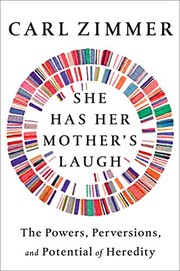
The strongest contemporary alternative account of heredity, and notably more sceptical than Mukherjee about how much a gene explains — Zimmer gives real space to mosaicism, microbiomes and cultural inheritance. Good corrective reading on exactly the questions The Gene compresses.
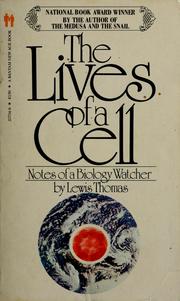
Thomas's 1974 essays, the National Book Award winner whose title The Song of the Cell deliberately echoes. Short, and the model for the whole genre of the physician-essayist that Mukherjee works in.
Discussion
Keep reading
Paths that share books, cover the same subject, or open a related topic.