Anthropology is unusual among the social sciences in that its foundational texts are still assigned and still attacked. The classic ethnographies are read both as achievements and as evidence — of colonial entanglement, of methodological naivety, of authorial invention. If you read the critiques first, the classics arrive pre-discredited and you never learn what made them powerful. If you read only the classics, you get a discipline that no longer exists.
So the order below is chronological and argumentative at once: the founding fieldwork, then the interpretive turn, then the evolutionary and comparative wing, then the critiques that reshaped everything, then the contemporary subject matter.
Begin with the founding fieldwork
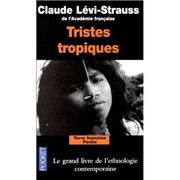
Tristes Tropiques by Claude Lévi-Strauss is the best first book in anthropology because it is a travel memoir, a professional autobiography and a theoretical statement at once, and it is beautifully written. It shows you what fieldwork felt like and what the young discipline hoped to achieve.
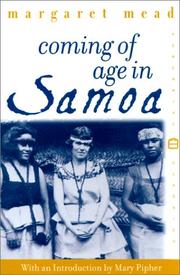
Then the ethnographies. Coming of age in Samoa by Margaret Mead is the most famous and the most contested book on this list: Derek Freeman's later attack on Mead's fieldwork triggered a decades-long dispute over whether her informants misled her and how much her conclusions reflected her own cultural agenda. Anthropologists remain divided; read it as a document of the nature-versus-nurture argument rather than as settled ethnography. Kinship and marriage among the Nuer by E. E. Evans-Pritchard is the rigorous counterweight, and Argonauts of the western Pacific by Bronisław Malinowski is the book that defined participant observation and produced the kula ring, still the standard example of exchange as social structure. Add Patterns of culture by Ruth Benedict for the configurational approach that made cultural relativism a public idea.
Take the interpretive turn
Interpretation of Cultures by Clifford Geertz is the pivot of the twentieth-century discipline. Geertz argued that culture is a text to be read rather than a system to be diagrammed, and thick description became the dominant method for a generation. The Balinese cockfight essay alone justifies the book.
Bring in the comparative and evolutionary wing
Anthropology also has a biological and evolutionary side that the cultural literature often brackets. The Third Chimpanzee by Jared Diamond situates human behaviour within primate evolution, and Grooming, Gossip and the Evolution of Language by Robin Dunbar makes the specific and testable argument that language evolved as a social bonding mechanism scaling beyond what physical grooming allows. Diamond's broad-brush comparative history is criticised by specialists for compressing complexity; read him for the questions rather than the verdicts.
Read the critiques that changed the field
Orientalism by Edward Said is not written by an anthropologist and is nonetheless one of the most consequential books for anthropology, arguing that Western scholarship on the East constituted a form of power rather than neutral description. Writing Culture, edited by James Clifford and George Marcus, turned that lens on ethnography itself: who authorises the ethnographer, what rhetorical devices produce the effect of objectivity, and whose voice is edited out. After these two, the classics read differently, which is the point of reading them in this order.
Finish with structure and the present
The savage mind by Lévi-Strauss gives the structuralist argument in its stronger form — that so-called primitive thought is a rigorous system of classification rather than a lesser stage of reasoning. Close with The anthropology of globalization, edited by Jonathan Xavier Inda and Renato Rosaldo, which shows the discipline working on migration, media, markets and transnational flows rather than bounded villages.
Follow the full path in order and you will see how a discipline built a method, doubted it, and rebuilt it. If material culture interests you more than kinship, archaeology is the natural next path.
Follow the full ordered path here: Best Books on Anthropology, in Reading Order.
Ready to learn something deeply?
Build a reading path — free