Population is a subject where confident books contradict each other while citing the same data. One argues the world is about to shrink dramatically; another that the real crisis is still overcrowding; a third that ageing societies will reorganize geopolitics within thirty years. They are frequently working from the same UN projections and differing on the fertility assumptions buried in them.
That is the reason to read demography in a particular order: get the popular arguments early so you know what is being claimed, then learn how fertility, mortality and migration rates are actually constructed, then read the historical and geopolitical books with the equipment to check them.
The popular argument, both directions
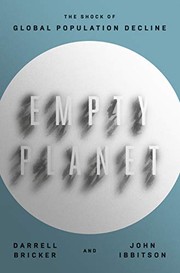
Empty Planet by Darrell Bricker and John Ibbitson makes the depopulation case: that fertility is falling faster than official projections assume, largely because urbanization and women's education drive it down and nothing has reversed it anywhere. It is readable and it is a strong-form argument — the authors are explicit that they think the UN medium variant is too high.
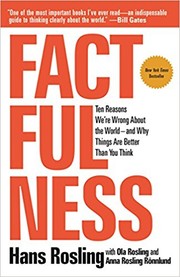
Set it against The coming population crash by Fred Pearce, which reaches a broadly similar conclusion by a different route and spends more time on the environmental consequences of a peaking and then declining population. Then read Factfulness by Hans Rosling, which is not primarily a demography book but teaches the habit these debates most need: check the actual numbers, notice that the trend is often better and slower than the headline, and distrust the dramatic instinct.
Learn how the numbers are made
Now the technical core. Demography by Samuel Preston, Patrick Heuveline and Michel Guillot is the standard graduate text on measurement and modelling — life tables, age structure, cohort versus period fertility, population projection. It is a textbook and you do not have to read it cover to cover, but working through the life-table and projection chapters will permanently change how you read a forecast. The distinction between period and cohort fertility alone resolves half the arguments in the popular books.
History, migration and consequences
With the mechanics in hand, the interpretive books get more useful. The Fate of Rome by Kyle Harper argues that disease and climate shocks shaped the Roman empire's trajectory — a case study in demography as historical force, and one that has drawn debate over how strongly the climate proxies support the causal story.
Move by Parag Khanna projects large-scale climate and economic migration reshaping where people live; it is speculative by design. The Son Also Rises by Gregory Clark uses surname data to argue that social mobility is far slower and more heritable than conventional estimates suggest, a conclusion many economists and sociologists contest on methodological grounds. Read it as a provocation with an unusual dataset.
What to expect when no one's expecting by Jonathan Last argues the American fertility decline from an explicitly conservative position, and The age of aging by George Magnus works through the economic and fiscal consequences of older societies. The demographic cliff by Harry Dent extends demographic reasoning into market forecasting, which is where this literature is at its weakest — Dent's specific market calls have repeatedly not come true, so read the demographic reasoning and discount the predictions.
Close with two synthesizers. Human Tide by Paul Morland is the best narrative history of how population change drove the last two centuries of politics and empire. End of the World Is Just the Beginning by Peter Zeihan folds demographics into a sweeping argument about deglobalization; it is engaging and confidently stated, and its confidence outruns its evidence in places.
The sociology hub covers the adjacent methods if you want more on how this data is collected.
Read them in this order and the forecasts stop being scary and start being checkable.
Follow the full ordered path here: Best Books on Demography and Population, in Order.