Cardiology has a strict dependency chain, and skipping a link does not work. You cannot interpret an ECG without understanding the conduction system; you cannot understand the conduction system without cardiac anatomy; and heart failure management makes no sense without pressure-volume relationships and the Frank-Starling mechanism. People who try to start with a clinical reference find themselves memorising algorithms they cannot reason about.
This is a clinically oriented path built around textbooks used in medical training. It is reading for understanding, not a route to practice — cardiology is a licensed specialty, and nothing here substitutes for supervised clinical training or for the care of a qualified clinician if you are reading about your own heart.
Structure and function
Start with Cardiac anatomy by Robert Anderson and colleagues. Anderson is the authority on cardiac morphology, and his work is the reason modern descriptions use attitudinally appropriate orientation rather than the older, misleading conventions. Get the chambers, valves, coronary distribution and conduction pathways solid here, because everything downstream references them.
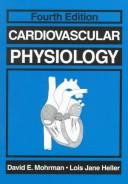
Then Cardiovascular physiology by David Mohrman and Lois Heller, a compact and well-regarded text covering the electrical and mechanical events of the cardiac cycle, cardiac output determinants, vascular resistance and the reflexes that regulate blood pressure. It is deliberately short. Work the problems rather than skimming — the pressure-volume loop is the single most useful mental model in the whole field.
The trace
Now the electrocardiogram. Marriott's Practical Electrocardiography is the classic instructional text, built around recognising patterns from first principles rather than memorising rules: axis, hypertrophy, blocks, ischaemia and infarction localisation, and the arrhythmias. ECG competence comes from volume — read the chapter, then read hundreds of tracings. No book substitutes for that repetition.
The clinical references
The last stage is where the field's two great reference works sit. Braunwald's Heart Disease is the standard textbook of cardiovascular medicine, and it is enormous. Nobody reads it front to back; you read the chapter you need, and its chapters are the best available synthesis of evidence in most areas. Hurst The Heart, edited in recent editions by Valentin Fuster and colleagues, is its principal counterpart, organised somewhat differently and often clearer on certain topics.
These two overlap heavily. Choose one as your primary reference — most trainees pick Braunwald and consult Hurst for a second opinion on a topic — rather than buying both.
Finish with Heart failure by Douglas Mann, a focused subspecialty companion on the syndrome that accounts for an enormous share of cardiology practice: pathophysiology of remodelling, neurohormonal activation, and the drug and device therapies that follow from it. It is the natural first deep dive after the general references.
How to use this list
Guideline-directed therapy changes faster than textbooks are revised. Use these books for mechanism and framework, and read current society guidelines for management specifics. Pair each stage with cases — a physiology chapter followed by a matching clinical vignette sticks far better than either alone.
Follow the full path for the stage-by-stage plan.
Follow the full ordered path here: Best Books on Cardiology and the Heart, in Order.