Zora Neale Hurston Reading Order: Where to Start
Hurston was a novelist and a trained anthropologist at the same time, and the two halves of her work explain each other — the dialect in the fiction is field-collected, and the folklore books read like novels. This path starts with Their Eyes Were Watching God because it is the reason she was rediscovered, then goes into the folklore collecting that came first chronologically, then the other novels, and finally the autobiography and the Barracoon manuscript that sat unpublished for nearly ninety years.
Start with the novel
BeginnerRead the book that returned Hurston to print and learn to hear her free-indirect voice moving in and out of Eatonville speech
▸ Study plan for this stage
Pace: 1–2 weeks. Their Eyes Were Watching God is 231 pages, and only the first twenty are difficult — read those slowly and out loud until the dialect stops being an obstacle, after which the rest goes at 30–40 pages a night.
- The frame: Janie tells her story to her friend on the porch, so the whole novel is reported speech — a woman claiming the right to narrate herself
- Two voices held apart on purpose — narration in high lyrical English, dialogue in Eatonville speech, and free indirect passages where the two blend. That blend is the achievement
- The pear tree as the novel's governing image and the standard against which all three marriages are measured
- Eatonville as a real all-Black town where Hurston grew up: the setting is field observation as much as invention
- The porch as chorus — the talking, the signifying, the community judging Janie. This speech was collected, not imagined
- The hurricane and the trial as the two set pieces where the private story collides with public force
- The contemporary attacks on the book as pandering. Knowing that fight is part of knowing why the novel dropped out of print and came back
- Why is the story told to a friend rather than directly to the reader, and what does the frame let Janie keep from the town?
- What does the pear tree stand for, and how does each of the three marriages fail against it?
- Where does the narration slip into Janie's idiom, and what does the slippage accomplish?
- What does the porch community actually do to Janie, and how does the novel judge them for it?
- What was the substance of the 1937 criticism, and is any of it fair?
- Read the first two pages aloud twice. Dialect is a sound problem before it is a reading problem, and reading aloud solves it faster than any glossary.
- Mark three passages where the narrator's language is nothing like the characters' and ask what Hurston gains by keeping them apart.
- Write down what Janie wants after each marriage ends. The three answers are not the same, which is the novel's point.
- Note every proverb or turn of phrase that sounds collected rather than invented, and keep the list — you will meet several of them again in the next stage.
Next up: The speech that makes this novel work was gathered in the field first, and the folklore books are the record of that gathering.

Janie Crawford's story, written in seven weeks in Haiti, and one of the most loved American novels of the century. Start here without hesitation — it is short, warm, and the dialect stops feeling like an obstacle within twenty pages.
The folklore
BeginnerSee where the novel's language actually came from, and read Hurston as a collector working in Florida and the Caribbean
▸ Study plan for this stage
Pace: 3–4 weeks. Mules and Men is 342 pages but reads as a sequence of tales with Hurston's own narrative between them — 25 a night for two weeks, and it is genuinely enjoyable rather than dutiful. Tell My Horse is 301 pages, stranger and more uneven; give it ten days and read the Haiti material in longer
- Hurston trained as an anthropologist under Franz Boas: this is professional fieldwork, and the participant-observer framing is a deliberate methodological choice
- The tale-telling contests of Eatonville and the Florida work camps — and how unmistakably they sound like the porch talk in the novel you have just read
- Her decision to keep informants' speech untranslated, against the conventions of the discipline and the expectations of her publishers
- The hoodoo chapters of Mules and Men, where she stops observing and gets initiated — a methodological line crossed on purpose
- Tell My Horse's firsthand reporting on Vodou, unsettling and in places openly beyond her competence, which she says outright — more than most of her contemporaries would
- The political material on Haiti and Jamaica dates badly in places; read it as a document of the late 1930s rather than as current ethnography
- Fieldwork as the source of the fiction: sermons, courtship exchanges and tall tales that reappear across every novel in this path
- How does Hurston position herself in Mules and Men — insider, outsider, or both — and where does the framing acknowledge the difficulty?
- What does she gain by refusing to render dialect into standard English, and what did the refusal cost her professionally?
- Which of the collected tales echo speech you recognise from the novel?
- What happens to her method once the hoodoo chapters begin?
- Where in Tell My Horse is she plainly out of her depth, and how does she handle it?
- Read three of the Eatonville tales aloud to somebody. They were performed rather than printed, and they only work at speed.
- Take one collected sermon or courtship exchange and find its cousin in Their Eyes Were Watching God.
- Note every point in Tell My Horse where Hurston's own reaction interrupts the reporting. Those interruptions are the book's real subject.
- Write a paragraph on the question the two books raise: can a person collect the culture they came from, and what changes when they try?
Next up: With the field material in view, the three remaining novels stop looking like separate experiments and start looking like different uses of one archive.
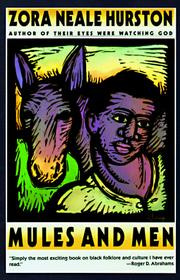
Folktales, lies, sermons, and hoodoo gathered in Florida and Louisiana, framed by her own account of the collecting. Read it right after the novel to see the raw material the fiction was built from.
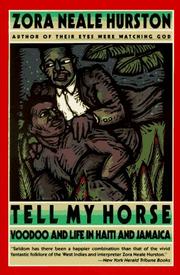
Her firsthand reporting on Vodou in Jamaica and Haiti, stranger and more unsettling than Mules and Men. Second because it extends the same method into territory where Hurston is more clearly out of her depth, and says so.
The other novels
IntermediateRead the three novels outside Their Eyes and understand the range Hurston attempted, including the book that cost her readers
▸ Study plan for this stage
Pace: 5–6 weeks. Jonah's Gourd Vine is 302 pages and moves quickly once the idiom is familiar — about ten days. Moses, Man of the Mountain is 351 pages and the most demanding of the three, because you are holding two stories at once; give it two weeks. Seraph on the Suwanee's 343 pages are the least rewar
- John Pearson in Jonah's Gourd Vine drawn from Hurston's own father, and the great funeral sermon in it, which is transcribed field material set into fiction
- Their Eyes as a rewrite: the same marriage material told the second time from the wife's side. Reading the first novel makes the second one's choices visible
- Moses, Man of the Mountain retelling Exodus with Moses as a conjure man — the folklore books' magic applied to scripture, and Egypt read through American slavery
- The risk in that book: comedy and dialect applied to sacred material, which offended readers then and still splits them
- Seraph on the Suwanee puts the idiom Hurston collected from Black informants into the mouths of poor white Floridians — her explicit claim that the speech was regional rather than racial
- Why Seraph failed: it satisfied nobody, and its sexual politics are genuinely hard to defend. A real book and a real misstep at the same time
- The late-career problem underneath all three: a Black woman writer in the 1930s and 1940s trying not to be confined to one subject, and losing her audience for the attempt
- What does Jonah's Gourd Vine do with John Pearson that Their Eyes does with Janie, and which is the better book?
- Where does the sermon material in Jonah's Gourd Vine come from, and how do you know?
- What does making Moses a conjure man change about the Exodus story?
- What is Hurston claiming about dialect by putting it in white mouths in Seraph on the Suwanee?
- Which of the three would you defend to a sceptical reader, and on what grounds?
- Read the funeral sermon in Jonah's Gourd Vine aloud, then find the collected version in the folklore. Watch exactly what she changed for the novel.
- Read the first chapter of Moses beside the opening of Exodus. The distance between them is the book's whole method.
- Mark five passages of Seraph that would be unremarkable in Their Eyes, and work out what makes them uncomfortable here.
- Rank the four novels you have now read, with a sentence justifying each position. You will test the ranking against the biography.
Next up: Four novels and two folklore books in, you are ready for the account Hurston gave of herself — and for the two books that show how much of it she left out.

Her first novel, drawn from her parents' marriage, and the earliest full display of her preacher's ear for language. Read it first here because Their Eyes is in many ways its rewrite.
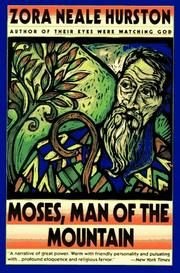
Exodus retold as African American folklore, with Moses as a hoodoo man. Placed second because it only fully lands once you have read the folklore volumes and can hear what she is borrowing.
Her last published novel, about poor white Floridians, and the one that puzzled or annoyed nearly everyone. Read it last among the fiction; it is a real book and a genuine misstep at the same time.
The life, in her words and others'
IntermediateRead Hurston's own self-account alongside the manuscript she could not publish and the modern biography that reassembles the record
▸ Study plan for this stage
Pace: 5–6 weeks. Dust Tracks on a Road is 320 pages and charming enough to finish in ten days, which is part of the problem — read it slowly enough to notice the evasions. Barracoon is 208 pages and should be taken in one or two sittings, with the introductory material read first. Valerie Boyd's Wrapped i
- Dust Tracks was cut by its publisher in 1942, with anti-colonial and anti-war material removed; restored editions differ, so check which one you have
- The autobiography is unreliable by choice and by pressure — wonderful on the Eatonville childhood, evasive about marriages, money, politics and even her own age
- How to read against a memoir: attend to what a chapter is doing, not only to what it says
- Barracoon's origin — 1931 interviews with one of the last survivors of the last slave ship — and its suppression for nearly ninety years because she would not put his speech into standard English
- That refusal as principle rather than style: it is the same decision as in the folklore and in the novel, and it cost her publication every time
- Boyd reassembles the record Hurston deliberately blurred: the anthropology, the fellowships, the collapse into obscurity, the work as a maid, the unmarked grave
- The 1970s recovery of her reputation, and what it did to the canon — a case study in how literary standing is made and unmade
- What does Dust Tracks avoid, and what does the pattern of the avoidances suggest?
- What was removed from the original edition, and how does restoring it change the book?
- Why did publishers refuse Barracoon, and what does that refusal tell you about her whole career?
- Where does Boyd correct Hurston's own account, and on what evidence?
- Having read the life, does the ranking of the novels you made last stage still hold?
- Read the Middle Passage section of Barracoon aloud and slowly. The refusal to smooth its speaker's speech is the point of the book, and it can only be heard.
- Pick three factual claims from Dust Tracks and check them against Boyd, then decide in each case whether the discrepancy is self-protection, self-mythology or publisher pressure.
- Read Boyd's chapters on the last decade — the Florida years, the maid's job, the final illness — immediately after the memoir's cheerfulness.
- Write the reading order you would now give a friend, in your own words, and say where it differs from this one.
Next up: The whole shape is now visible — collector, novelist, and an unreliable witness to her own life — which is the best possible ground for rereading Their Eyes Were Watching God.

The autobiography, wonderful on the childhood and evasive on the adulthood — an unreliable narrator writing about herself. Read it once you know the work well enough to notice what she leaves out.

Her 1931 interviews with Cudjo Lewis, one of the last survivors of the last slave ship, unpublished until 2018 because she refused to translate his speech out of dialect. The clearest proof that her linguistic stubbornness was a principle, not a style.
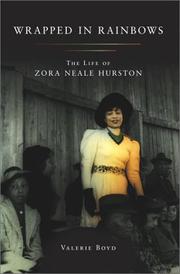
The major biography, careful with the gaps Hurston herself created and good on the poverty of her last years. Read it last, when you have the books in view and want the life that produced them.
Discussion
Keep reading
Paths that share books, cover the same subject, or open a related topic.