William Gibson Reading Order: Where to Start
William Gibson's novels come in explicit trilogies, and that is the whole answer to "what order do I read him in" — each set of three shares a cast and a world, and each was written roughly a decade after the last, so reading them as trilogies also walks you forward through Gibson's own change of mind about the future. Start with the Sprawl books, which invented the vocabulary everything else assumes, then take the Bridge and Blue Ant trilogies in turn as the future he was describing arrives and stops being science fiction. The last stage collects the Jackpot novels and the two books that sit outside the sequence entirely.
Start Here: The Sprawl Trilogy
BeginnerRead the three novels that founded cyberpunk, and learn to read Gibson's deliberately unexplained future without reaching for a glossary.
▸ Study plan for this stage
Pace: Five to six weeks for about 950 pages. Neuromancer is only 317 pages but budget two weeks for it and read the first forty pages slowly, twice if necessary — that opening is where readers give up. Once the vocabulary lands the book accelerates sharply. Count Zero and Mona Lisa Overdrive are a fortnig
- Start here rather than anywhere else because these three books invented the language everything after them assumes. Cyberspace, the matrix, the console cowboy, ICE, the idea of the net as a place you go rather than a service you use — all of it is here first, and every later Gibson is written by a m
- Gibson's defining technique is refusal to explain. He introduces slang, brand names and technologies mid-sentence and never defines them; you learn the world the way you would learn a foreign city, by inference. Reaching for a glossary short-circuits the effect the prose is built on.
- Neuromancer follows Case, a burned-out data thief in Chiba City, hired by a crew he does not understand for a job he is not told the purpose of. The unexplained-employer structure is deliberate: he knows as little as you do, which is why the disorientation is characterisation rather than obscurity.
- The books are simultaneously prescient and visibly dated, and it is worth expecting both. Prescient: multinationals more powerful than states, identity as data, hacking as an economy, bodies modified as a matter of course, celebrity manufactured from media. Dated: no mobile phones, payphones in the
- The datedness is not a flaw to apologise for; it is what a 1984 novel looks like when its author extrapolated everything except the one thing nobody extrapolated. Reading it as an artefact of 1984 and a prophecy at once is more interesting than either alone.
- Count Zero is set seven years later, splits into three strands that converge — a corporate mercenary, an art dealer chasing the maker of a set of boxes, and a young hacker — and shifts the register from heist to art and religion. The matrix has changed, and the entities now living in it behave like
- Mona Lisa Overdrive braids four storylines and characters from both earlier books. It only pays off in sequence, which is why the Sprawl is the one place in Gibson where reading order is genuinely non-negotiable.
- The style is the reason these lasted. Gibson writes noir prose with the sentimentality removed — flat, sensory, brand-saturated — and the imitators who took the leather jackets and not the sentences are why cyberpunk got a bad name.
- What is Case hired to do in Neuromancer, and at what point in the book do you actually find out? What does that delay do to the reading experience?
- What is Wintermute, and what does it want? Be precise, because the answer is the trilogy's engine.
- List five terms Gibson never defines and write your own definition from context. How close can you get without looking anything up?
- What has happened to the matrix by the time of Count Zero, and how does the change alter what a hacker is for?
- Which characters recur from Neuromancer into Count Zero and Mona Lisa Overdrive, and what does the trilogy gain from the convergence?
- Name three things Gibson got right about the future and three he got wrong. What kind of thing is he consistently good at predicting, and what kind does he miss?
- Read the first page of Neuromancer aloud. The famous opening line is doing a specific job — a simile that has since inverted, because the sky it describes now means something different — and hearing it is the fastest way into his prose.
- Keep a running vocabulary list for the first fifty pages, defining each term from context alone. Then stop keeping it; by page sixty you will not need it, and that transition is the book working as designed.
- Note every piece of technology that has dated and ask what Gibson substituted for the thing he missed. He almost always has something in the slot, and the substitution is more interesting than the miss.
- After Count Zero, sketch the three storylines and mark where each learns something the others do not. Gibson's convergent structure is a craft object and it is worth seeing the joins.
- Before starting Mona Lisa Overdrive, write down what you remember about Angie and about the Tessier-Ashpools. The third book assumes both and rewards a refresher.
Next up: With the invented vocabulary behind you and Gibson's no-explanations method now readable, the Bridge books can pull the timeline in from decades away to a handful of years without ever slowing down to describe anything.
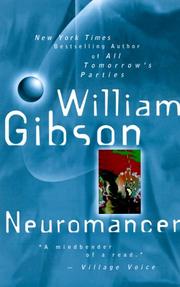
The correct first Gibson, full stop. It is where cyberspace, the matrix and the console cowboy come from, and the first forty pages are famously disorienting on purpose — Gibson never explains his slang, he just uses it until you learn it.
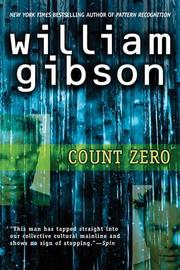
Set seven years later in the same world, told in three separate strands that converge. Read it second: it assumes you already accept how the matrix works, and it is where Gibson starts caring about art and religion rather than heists.
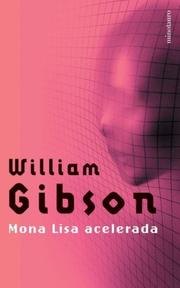
Closes the trilogy by braiding characters from both earlier books. It only pays off if you have read them in order, which is why the Sprawl books are the one place in Gibson where sequence is genuinely non-negotiable.
The Bridge Trilogy: The Near Future
IntermediateFollow Gibson pulling the timeline in from decades away to a handful of years out, and see the prose loosen as the futurism tightens.
▸ Study plan for this stage
Pace: Four to five weeks for about 915 pages. These are more relaxed books than the Sprawl and read faster — 35 pages an evening is easy. Virtual Light and Idoru have almost independent plots, so a gap between them is fine; read All Tomorrow's Parties within a week or two of Idoru, since it converges the
- The Bridge trilogy pulls the future in close. Where the Sprawl was set decades out, these are set a handful of years ahead, and the effect is a world that is recognisably ours with two or three things changed.
- The prose loosens as the futurism tightens. Gibson relaxes into humour, minor characters and texture, and the sentences are less compressed than in Neuromancer — a real change of gear that some readers prefer.
- Virtual Light is a clean entry point if the Sprawl's density put you off: a bike messenger steals a pair of glasses, an ex-cop is hired to retrieve them, and neither of them knows what the glasses contain.
- The San Francisco Bay Bridge, closed by an earthquake and colonised by squatters into an improvised vertical city, is the trilogy's central image and its argument — that people build culture in the gaps institutions abandon.
- Idoru is about a rock musician announcing his engagement to a synthetic media personality, and a man who can see meaning in the shape of data. It is the Gibson novel that reads most like prophecy from here, and the one to hand someone who thinks he only wrote about hacking.
- Colin Laney's talent — spotting nodal points, the places where a mass of information is about to change shape — is Gibson describing his own method, and it recurs across the rest of his career.
- All Tomorrow's Parties brings the casts of both earlier books onto the bridge together and ends the trilogy. Like Mona Lisa Overdrive it is a convergence rather than a fresh start, so it goes third.
- Read against the Sprawl, the change is philosophical rather than cosmetic: Gibson has stopped believing the future arrives all at once and started believing it arrives unevenly, in patches, mostly to people with no money.
- What is on the glasses in Virtual Light, and why does everyone want them before anyone knows?
- What kind of society has formed on the bridge, and what is Gibson claiming about how culture gets made?
- What exactly does Colin Laney do, and why is that ability more valuable than hacking in this trilogy?
- Idoru was published in 1996. Which of its predictions about celebrity and synthetic performers have arrived, and in what altered form?
- How has Gibson's idea of where the future first appears changed between the Sprawl and the Bridge?
- Which of these three works least well on its own terms, and is that because it is a middle book, a convergence, or something else?
- Read Idoru and then look up what virtual performers exist now. The gap between his version and the real one is the most instructive thing in the trilogy.
- Note every instance of improvised infrastructure — the bridge, the hotels, the market stalls. Gibson's central aesthetic claim is here and it recurs in every book afterwards.
- Compare a paragraph of Virtual Light with a paragraph of Neuromancer. Measure sentence length. The loosening is objectively visible and it explains why readers who bounce off one often like the other.
- Before All Tomorrow's Parties, list the surviving characters from the previous two books. It converges without reintroducing anyone.
- Write one sentence on what the bridge is a metaphor for. There is more than one defensible answer and the trilogy is better for the ambiguity.
Next up: Gibson has now moved the future close enough to touch, and the next trilogy takes the last step by setting the science fiction in the year it was published.

The start of the second trilogy and a clean entry point if the Sprawl's density put you off. A bike messenger, a stolen pair of glasses, and a squatter community on the ruined Bay Bridge — recognisably our world, tilted.
The middle book, about a rock star engaged to a synthetic media personality. Read it after Virtual Light for the shared world, though the plots are almost independent; this is the novel that reads most like prophecy today.
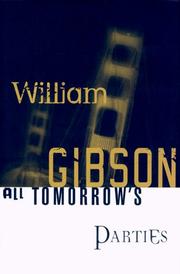
Brings the casts of the previous two novels onto the bridge together and ends the trilogy. Third and last, for the same reason Mona Lisa Overdrive is: it is a convergence, not a fresh start.
The Blue Ant Trilogy: Science Fiction About the Present
IntermediateRead the three novels set in the years they were published, and understand Gibson's argument that the present has become too strange to need a future.
▸ Study plan for this stage
Pace: Six weeks for about 1,220 pages. Pattern Recognition is 368 pages and can be read quickly; Zero History at 466 is the longest and the most digressive. These are novels of texture rather than incident, so resist speed-reading — the pleasure is in the observation and it disappears at pace. Roughly 30
- This is the pivot of Gibson's career: three novels with no invented technology at all, set in the years they were published, arguing that the present has become too strange to need a future.
- Pattern Recognition follows Cayce Pollard, a consultant with a physical allergy to branding, hired to find the maker of anonymous film fragments being released online. It is set in a post-September-2001 present and the grief in it is specific and unresolved.
- It is a legitimate alternative starting point for a reader who does not read science fiction. If someone would enjoy Gibson's eye and not his genre, hand them this rather than Neuromancer.
- Hubertus Bigend, the marketing svengali who runs the Blue Ant agency, is what links the three books rather than any plot. He funds curiosity because information is the only commodity he respects, and he is the trilogy's most enjoyable invention.
- Spook Country is looser: locative art anchored to GPS coordinates, a shipping container moving through the system, freelance intelligence people who no longer know who employs them. It shares Bigend with the first book but not much else.
- Zero History directly continues Spook Country's characters, Hollis Henry and Milgrim, which makes it the one Blue Ant book that genuinely requires its predecessor. Its subject is a secret denim brand functioning as a front for military procurement, and it is the funniest thing Gibson has written.
- The trilogy's real subject is how meaning gets manufactured — brands, marketing, viral distribution, and the professionals who turn subculture into product. Gibson is describing the machinery he was himself processed by.
- Reading these after two trilogies of futurism is the point. The same eye that extrapolated the Sprawl is now aimed at a Tokyo hotel lobby or a pair of trousers, and it turns out to have been an eye for the present all along.
- What are the footage and its fragments in Pattern Recognition, and what does the online community around them want from it?
- What is Cayce's allergy actually a metaphor for, and how does Gibson keep it from being merely a gimmick?
- What does Bigend want in each of the three books, and does he ever want anything other than to know?
- How does Spook Country connect locative art to intelligence work? Is the connection argued or atmospheric?
- What is the Gabriel Hounds brand in Zero History, and what does its secrecy have to do with military contracting?
- Do these count as science fiction? Make the case both ways — the answer tells you what you think the genre is for.
- Read the opening chapter of Pattern Recognition with attention to how many brand names appear and what each one is doing. Gibson uses trademarks the way other novelists use adjectives.
- Look up locative art after Spook Country. It existed, it was marginal, and seeing the real thing sharpens what Gibson does with it.
- Track Bigend's suit across the three books. It is a running joke and also a precise piece of characterisation about a man who wants to be maximally visible.
- Write a paragraph on whether Pattern Recognition would work as a first Gibson for someone you know. Deciding that is a good test of whether you have understood what makes his work distinctive independent of genre.
- Compare the last page of Zero History with the last page of Mona Lisa Overdrive. Twenty-two years apart, and the difference in what counts as an ending is the whole story of his development.
Next up: Having watched Gibson conclude that the present is strange enough, the last stage is where he changes his mind and goes back to the far future — plus the two books that belong to none of the trilogies.
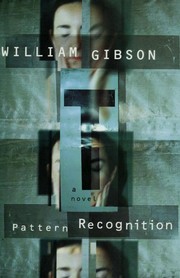
The pivot of his whole career: a novel with no invented technology, set in a post-9/11 present, about a woman allergic to branding chasing anonymous film footage online. Many readers' favourite Gibson, and a legitimate alternative starting point if you do not read science fiction.

Second in the loose Blue Ant sequence, sharing the marketing svengali Hubertus Bigend rather than a plot. Locative art, shipping containers and intelligence freelancers; read after Pattern Recognition so Bigend arrives already characterised.
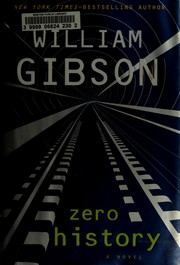
Closes the trilogy and directly continues Spook Country's characters, so this is the one Blue Ant book that genuinely needs its predecessor. Secret denim brands as a front for military procurement — the funniest thing he has written.
The Jackpot Books and the Deeper Cuts
IntermediateFinish the current sequence and pick up the two books that stand outside all the trilogies.
▸ Study plan for this stage
Pace: Seven to eight weeks for about 1,540 pages. The Peripheral is 504 pages and is structurally his hardest book — the first hundred pages withhold almost everything, so read them slowly and do not look anything up. Agency should follow immediately. Burning Chrome at 224 pages is a story collection you
- The Peripheral cuts between two times: a poor American town in the near future and a depopulated London decades later, connected by a data link nobody in the book fully explains. The far future has passed through the jackpot — not a single apocalypse but a slow multi-causal collapse of climate, pand
- The jackpot is Gibson's most important late idea and the clearest instance of him being right early. It is an apocalypse without an event, which is what makes it plausible.
- The opening hundred pages are deliberately opaque even by his standards — two vocabularies, two economies, no exposition. Save this book for when you trust him to withhold, which is exactly why it sits in the last stage.
- Agency is set in an alternate 2017 branch — a stub, a forked timeline created by contact from the future — and follows a woman evaluating a prototype AI. Read it immediately after The Peripheral: the stub mechanism is explained there and simply assumed here.
- Burning Chrome is the collection where the Sprawl and the word cyberspace were actually invented, in the title story. It also contains Johnny Mnemonic, New Rose Hotel and The Gernsback Continuum, which is a joke at the expense of the futurism Gibson was replacing.
- Read Burning Chrome after Neuromancer rather than before. The stories are sketches for the novel, and encountering them second lets you watch the trilogy's world being assembled rather than spoiling it.
- The Difference Engine, co-written with Bruce Sterling in 1990, is the outlier: an 1855 Britain in which Babbage's mechanical computers were actually built, with Byron as prime minister. It more or less founded steampunk and reads nothing like the rest of his catalogue.
- Its collaborative prose is a genuinely different instrument — denser, more Victorian, more historically loaded — which is precisely why it belongs at the end rather than in the middle of a trilogy sequence.
- What is the jackpot, and why does describing it as a process rather than an event make it more frightening?
- What is a stub, who creates them, and what is the moral position of people in the far future who use one?
- What is Flynne actually witnessing at the start of The Peripheral, and how long does the book take to tell you?
- How does Agency depend on The Peripheral? Name two things it does not explain because the earlier book did.
- Reading Burning Chrome after the novels, what can you see the stories working out that Neuromancer then does at length?
- What does The Difference Engine change about the nineteenth century, and what is the argument that change is making about information and power?
- Read the first fifty pages of The Peripheral without looking anything up or consulting a summary, even if you are lost. That disorientation is the same technique as Neuromancer's opening and giving in to it ruins the book.
- Keep two columns while reading The Peripheral, one per timeline, noting what each side knows about the other. The information asymmetry is the plot.
- Read the story Burning Chrome and mark the sentence where cyberspace is coined. It is a small pleasure and it is also literary history.
- After The Difference Engine, write a paragraph on what it shares with the Sprawl books despite the costume. There is a continuity of preoccupation and finding it is the point of reading the outlier last.
- Write a final page ranking the three trilogies and saying which Gibson you would recommend to which reader. Having read all four stages, you can give genuinely different advice to a science-fiction reader and to someone who only reads literary fiction — and that is the most useful thing this path leaves you with.
Next up: This completes the published sequence across all three trilogies plus the outliers, leaving you ready for the next Jackpot novel with the stub mechanism and the whole thirty-year arc already in place.
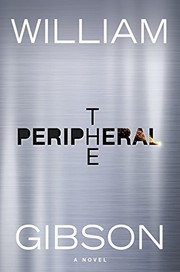
Gibson's return to the far future, cutting between a poor American town and a depopulated London decades after a slow-motion apocalypse he calls the jackpot. Structurally his hardest book — save it until you trust him to withhold explanations.

The second Jackpot novel, set in an alternate 2017 branch of the same multiverse. Read immediately after The Peripheral; the mechanism of the stubs is explained there and simply assumed here.
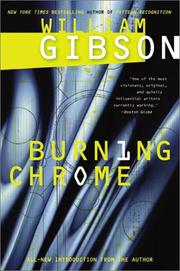
The short-story collection where the Sprawl and the word cyberspace were actually invented, including Johnny Mnemonic and the title story. Best read after Neuromancer rather than before, as a set of sketches for it.
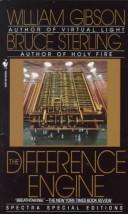
The outlier: a Victorian alternate history co-written with Bruce Sterling that more or less founded steampunk. Nothing else in Gibson prepares you for it, which is exactly why it belongs at the end rather than in the middle.
Discussion
Keep reading
Paths that share books, cover the same subject, or open a related topic.