William Trevor Reading Order: Where to Start
William Trevor wrote for more than fifty years and was, by common agreement, the finest short-story writer in English of his generation — which is the single most useful fact for a new reader, because it means the novels are not where to begin. Start with the stories, where his method is undiluted: a small Irish or English life, observed without judgement, altered permanently by something that would look trivial in summary. Then take the late, spare novels, and only afterwards the bigger historical books, which are the ones most likely to be handed to you first and least likely to hook you.
Start Here: The Stories
BeginnerMeet Trevor in the form he mastered, and learn to notice how much he withholds — the crucial event is almost always just outside the frame.
▸ Study plan for this stage
Pace: Ten to twelve weeks, but not the way that number suggests. The Collected Stories runs to about 1,260 pages and roughly eighty-five stories; do not attempt it front to back. Read one story a night for a month — twenty-five or so — then move to After Rain and The Hill Bachelors, which are 212 and 244
- The single most useful fact about Trevor is that he was, by wide agreement, the finest short-story writer in English of his generation, and that the novels — good as several are — are not the achievement. Beginning with the stories is not a warm-up; it is going straight to the best of him.
- He called the short story an art of the glimpse, and meant it literally. A Trevor story shows you a small piece of a life at the moment it changes, and declines to show you the rest.
- The method: a small Irish or English life, observed without judgement, altered permanently by something that would sound trivial in summary. A remark at a wedding, a lie told once, a marriage proposal not made.
- The crucial event is almost always just outside the frame — before the story opens, or after it closes, or narrated in a subordinate clause. Learning to notice what he has withheld is the whole skill this stage teaches.
- There are no villains and no rescues. Even the cruellest characters are given a plausible interior, and nobody arrives to fix anything. This is the quality most often mistaken for gentleness, and it is not gentleness.
- The endings arrive about two sentences before you expect them. Trevor stops at the point of change rather than after it, and readers new to him routinely turn the page looking for a paragraph that is not there.
- After Rain, from 1996, is twelve stories and by common consent the single best collection he published — the concentrated version of the Collected, and the right book if a thousand-page volume is daunting. The Hill Bachelors, which won the PEN/Macmillan Silver Pen Award, follows it and is mostly abo
- Trevor was a Cork-born Protestant who spent most of his adult life in England, and the stories move between the two countries all through. That doubleness — belonging fully to neither — is the position the whole body of work is written from.
- Take any three stories and identify, for each, the decisive event and where it sits relative to the text. How often is it actually on the page?
- What does Trevor do instead of judging his characters, and how does he make a reader condemn someone he never condemns?
- How do his endings work? Find one that stops earlier than you wanted and say what a further page would have cost.
- What is different about the Irish stories and the English ones — in class, in setting, in the kind of disappointment on offer?
- Why do Trevor's stories about failure to speak — a thing unsaid, a question not asked — recur so often? What does that particular failure allow him to do?
- After twenty-five stories, can you describe a Trevor plot in the abstract? The difficulty of doing so is itself informative.
- Read one story a night, and then sit for two minutes without picking anything else up. These do their work in the gap afterwards, and reading three in a row demonstrably flattens all three.
- After each story, write one sentence naming the thing that happened offstage. This is the single most effective exercise for reading Trevor and it takes thirty seconds.
- Reread one story a week later without rereading anything in between. His stories change more on second reading than almost any others, because the withheld information is visible once you know it exists.
- Keep a list of the stories that stopped you, with the collection each came from. It becomes the map of which Trevor you personally respond to, and it guides which novels in the later stages will suit you.
- Read one story aloud. The sentences are plainer than they look and the plainness is deliberate; hearing it is the fastest way to stop mistaking restraint for flatness.
Next up: With his method learned in its purest form, the late novels become legible as stories that were allowed to keep going rather than as a different kind of book.
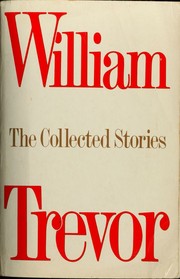
The right first Trevor. Do not read it front to back like a novel — dip in, one story a night. Within a dozen you will have the whole method: no villains, no rescue, and an ending that arrives two sentences before you expect it.
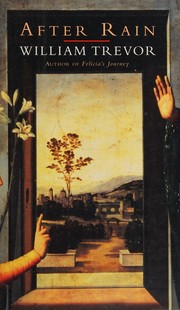
If a thousand-page collection is daunting, this twelve-story volume from 1996 is the single best gathering he published. Read it as the concentrated version of the above, then go back to the Collected for more.
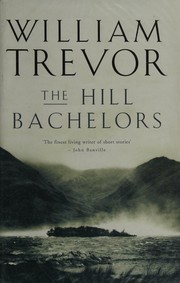
The Irish collection that won the PEN/Macmillan prize, mostly about people staying put when leaving was the obvious choice. Read it after After Rain to see how far into rural Ireland he retreats as he ages.
The Late Novels: Short, Quiet, Devastating
IntermediateMove to the novels through the ones that are closest to the stories in scale and restraint.
▸ Study plan for this stage
Pace: Six to seven weeks for about 845 pages. The Story of Lucy Gault and Love and Summer are 240 and 221 pages and are best read slowly — a fortnight each, 20 pages a sitting — because both are almost plotless by design and speed makes them seem thin. Two Lives is 384 pages containing two separate short
- These are the novels closest to the stories in scale and restraint, which is why they come first among the novels. Everything you learned about withheld information applies directly.
- The Story of Lucy Gault opens in 1921: a child hides in the woods to stop her Anglo-Irish family leaving their house after her father shoots at arsonists, and she is presumed drowned. Everything afterwards is eighty years of consequence.
- It is the purest demonstration of Trevor's central belief — that a single misunderstanding, uncorrected at the moment it could have been, can consume several lives. Nobody in the book is wicked and the damage is total.
- Love and Summer was his last novel and his gentlest. A photographer arrives in a small town, a young married woman notices him, and almost nothing happens. Read it after Lucy Gault as the same technique turned toward mercy rather than ruin.
- The near-absence of event in Love and Summer is the point, not a failure of nerve. Readers who find it slight are usually reading for plot in a book about the choice not to have one.
- Two Lives is two short novels published together. Reading Turgenev follows a woman in rural Ireland who invents and then sustains an inner life to survive a loveless marriage; My House in Umbria is narrated by a romantic novelist in Italy after a train bombing, and is the more unreliable of the two.
- Two Lives is the best bridge between the stories and the full-length books, because each half is really a story that was allowed to keep going and neither acquires novelistic machinery in the process.
- Note what these three share: a woman whose life is decided by an event she did not choose, a long aftermath, and a narration that refuses to console. That is Trevor's late novel form.
- At what point in The Story of Lucy Gault could the misunderstanding have been corrected, and why is it not? Name the specific missed moment.
- What does Lucy do with the rest of her life, and how does the novel present that choice — as penance, as inertia, or as something the book declines to name?
- In Love and Summer, what does Ellie stand to gain and lose, and how does Trevor keep the outcome from feeling like either tragedy or relief?
- What is Mary Louise doing in Reading Turgenev, and does the novel treat it as delusion or as a legitimate strategy for survival?
- How reliable is the narrator of My House in Umbria, and where can you catch her shaping the account?
- Which of these three is closest in feel to the stories you read in the first stage, and what specifically makes it so?
- Read the first chapter of The Story of Lucy Gault twice before continuing. The whole novel turns on a few pages of 1921 and the details are easy to read past.
- For Love and Summer, keep a list of what each character knows about the others. The book is built almost entirely out of information asymmetry between neighbours.
- After Reading Turgenev, write down whether Mary Louise's inner life is madness. The novel is engineered so that both answers are defensible and settling on one is the reading.
- Compare a paragraph from Two Lives with a paragraph from After Rain. The sentence rhythms are near-identical, which is the evidence that his novels are stories at length rather than a different mode.
- Look up the Anglo-Irish position after 1921 in one short encyclopaedia entry. Lucy Gault assumes it entirely and ten minutes of context makes the first act far sharper.
Next up: You have now seen Trevor's restraint used for grief and for mercy, which is the necessary preparation for the books where he turns exactly the same restraint on people who intend harm.
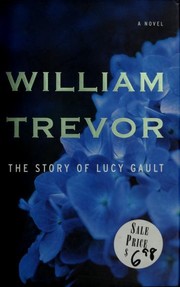
A child hides to stop her family leaving their burned Anglo-Irish house in 1921, and is presumed drowned. Everything that follows is eighty years of consequence — the purest demonstration of his belief that a single misunderstanding can consume a life.
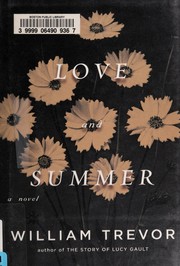
His last novel and his gentlest: a photographer arrives in a small town, a young married woman notices him, and almost nothing happens. Read it after Lucy Gault as the same technique turned toward mercy rather than ruin.
Two short novels published together, one about a woman who invents an affair and one about an Englishwoman among expatriates in Italy. The best bridge between the stories and the full-length books, because each half is really a story that kept going.
The Dark Ones
IntermediateRead the novels where Trevor's calm surface covers genuine menace, and see the range beneath the reputation for gentleness.
▸ Study plan for this stage
Pace: Five to six weeks for about 655 pages across three novels of roughly 215 pages each. A fortnight each, 20 to 25 pages a sitting. Felicia's Journey and The Children of Dynmouth are best read as a pair with only a short gap; leave slightly longer before Death in Summer, which is the most conventional
- This stage is where the reputation for gentleness collapses. Trevor's calm surface is used here to cover genuine predation, and the restraint that read as compassion in the stories reads as something colder.
- Felicia's Journey follows a pregnant Irish girl who crosses to the English Midlands looking for the boyfriend who left, and meets a mild, fussy, obliging catering manager who offers to help her. It won the Whitbread Book of the Year.
- Mr Hilditch is the achievement of the book. Trevor gives him a full interior — his routines, his self-pity, his sincere belief in his own kindness — and never once uses the vocabulary of horror. That is why he is frightening.
- It is his most frightening book and the one that proves the restraint is a weapon rather than a temperament. Nothing in it is graphic and it is more disturbing than most fiction that is.
- The Children of Dynmouth, from 1976, is earlier, funnier and nastier: a fifteen-year-old boy in an English seaside town collects other people's secrets and quietly extorts them. It also won a Whitbread.
- Timothy Gedge is not a monster but a neglected child with too much time, which is the more disturbing proposition. Read as a pair with Felicia's Journey, the two books make a single argument about ordinary English malevolence and about who is left alone long enough to develop it.
- Death in Summer is a widower interviewing nannies after his wife's death, and one applicant who will not let the matter drop. It is the most conventionally plotted of the three and the best test of whether you want Trevor's suspense mode at all.
- Across all three, the menace comes from loneliness rather than from evil. Trevor's predators are people nobody has spoken to properly in years, which is a considerably bleaker diagnosis than villainy.
- How does Trevor build sympathy for Mr Hilditch, and at what point in the novel does that sympathy become uncomfortable?
- What does Felicia want, and how does the book use her ordinary, reasonable goals to move her toward danger?
- What is Timothy Gedge actually after in The Children of Dynmouth — money, attention, or something the novel leaves unnamed?
- How does the comedy in The Children of Dynmouth function? Does it soften the book or make it worse?
- In Death in Summer, where does the novel become conventional, and does that make it more or less effective than the other two?
- What do these three books say about the conditions that produce a predator? Is Trevor arguing anything, or observing?
- Mark the passages written from Hilditch's point of view and read them consecutively, out of order. The book's technique is fully visible in that sequence and it is a small masterclass in how sympathy is manufactured.
- After Felicia's Journey, write a paragraph on what the novel would lose if a single act of violence were shown on the page. Answering that is the best way to understand what restraint is doing here.
- Keep track of every adult in The Children of Dynmouth who could have intervened and does not. The list is the book's actual indictment.
- Read one story from the first stage immediately after finishing Felicia's Journey. The identical technique aimed at a smaller target is startling and it confirms that the dark novels are not a departure.
- Decide whether you want Death in Summer. It is the least essential of the three and skipping it is a defensible choice, which is better made in advance than abandoned halfway.
Next up: Having seen his restraint used on private malevolence, the last stage puts the same method on public history — where the violence is real, documented, and still handled almost entirely offstage.
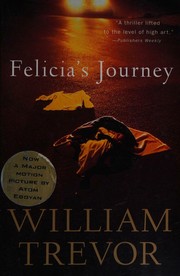
A pregnant Irish girl crosses to the English Midlands looking for her boyfriend and meets a mild, fussy catering manager. His most frightening book, and the one that proves the restraint is a weapon rather than a temperament.

A fifteen-year-old boy in a seaside town collects other people's secrets and quietly extorts them. Earlier, funnier and nastier than Felicia's Journey — read the two together as a pair on ordinary English malevolence.

A widower interviewing nannies, and one applicant who does not let the matter drop. The most conventionally plotted of the three and the best test of whether you want his suspense mode at all.
The Irish Histories and the Last Word
IntermediateFinish with the books where private grief and Irish political history are the same story, and with the final collection.
▸ Study plan for this stage
Pace: Five to six weeks for about 635 pages. Fools of Fortune at 224 pages is dense with a shifting narration and deserves a fortnight. The Old Boys at 188 pages is the fastest thing in this path and reads in a week. Save Last Stories for the end and go back to one story a night, as in the first stage — i
- Fools of Fortune, which won a Whitbread, follows a Cork family destroyed by a Black and Tan reprisal during the Irish War of Independence, across three generations and two countries. It is his most direct treatment of Irish political violence.
- The central atrocity is handled almost entirely offstage. Trevor gives you the before and the fifty years after, and trusts the technique you have been learning since the first stage — which is exactly why this book is placed last rather than first.
- The narration passes between characters and across decades without announcement, so the novel demands more attention than the late books do. Slow down when the voice changes.
- Its argument is that political violence does not end when the war does; it is inherited, and the third generation pays for something it did not witness. That is Trevor's story method applied to a country.
- The Old Boys, from 1964, is his first mature novel and nothing like the rest of this path: elderly men still prosecuting the feuds of their public school, played as black comedy. It won the Hawthornden Prize.
- Read it last as evidence of how far he travelled. The cruelty is already there and the compassion is not yet; watching a writer acquire the second across fifty years is the point of ending here.
- Last Stories, published posthumously in 2018, is ten stories written in his late eighties and as controlled as anything in the Collected. He was working at full strength to the end, which is uncommon enough to be worth stating.
- Ending on the stories rather than on a novel is deliberate. It closes the path where it opened, on the form he actually mastered, and lets you judge the fifty-year span from the same vantage at both ends.
- What happens at Kilneagh in Fools of Fortune, and how much of it does Trevor put on the page? What does he give you instead?
- How does the inheritance of that violence work across the three generations — what does each generation actually receive?
- Where does the narration change hands in Fools of Fortune, and how does Trevor signal it? What does the technique cost a careless reader?
- What is funny about The Old Boys, and what is Trevor already doing in 1964 that he does better forty years later?
- Compare a story from Last Stories with one from the Collected. What, if anything, has changed in the technique across five decades?
- Having read across the whole path, would you now recommend a new reader start with the stories or with a novel — and what would you say to justify it?
- Read one short account of the Irish War of Independence and the Black and Tans before starting Fools of Fortune. The novel assumes it fully and the reprisal only lands with the context in place.
- Keep a family tree while reading Fools of Fortune. The generational structure is the argument and losing track of who is whose child dissolves it.
- Read The Old Boys immediately after Fools of Fortune, deliberately. The tonal whiplash between the two is the clearest possible measure of his range.
- Return to one story a night for Last Stories, as in the first stage, and stop after each. Finishing him the way you started him is the right close.
- Write one page ranking everything you have read — stories and novels together — and note where the stories fall. Almost every reader who does this ends with the stories on top, which is the claim this path has been making since the first line.
Next up: This closes the path where it began, on the stories, with the whole fifty-year span in view — and with the Collected Stories still unfinished on the bedside table, which is the correct permanent state for a reader of Trevor.

A Cork family destroyed by a Black and Tan reprisal in 1918, followed across three generations and two countries. Save it until you trust his indirection, because the central atrocity is handled almost entirely offstage.

His first mature novel, from 1964, about elderly men still fighting the feuds of their public school. Comic, cruel and formally nothing like the late work — worth reading last as evidence of how far he travelled.
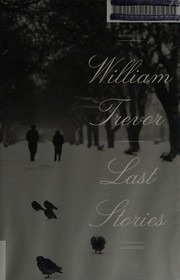
The posthumous collection published in 2018. Ten late stories written by a man in his late eighties, and they are as controlled as anything in the Collected — the right place to stop.
Discussion
Keep reading
Paths that share books, cover the same subject, or open a related topic.