Ghost in the Shell Reading Order: Which Manga to Read and in What Order
Masamune Shirow only ever wrote three Ghost in the Shell volumes, and they are the first three stages here: the original, the 1.5 side stories, and the notoriously dense volume 2. Because the manga is that short, the path then widens into the cyberpunk manga around it — Shirow's other work, Akira, and the successors that inherited the questions Ghost in the Shell asked. The films and TV series are a separate continuity and are deliberately not part of this reading order.
Shirow's three volumes, in order
IntermediateRead the entire Ghost in the Shell manga as Shirow wrote it, and understand why the numbering is 1, 1.5, 2 rather than 1, 2, 3
▸ Study plan for this stage
Pace: 4-5 weeks for 872 pages, which sounds slow for three comics and is not. Volume 1 (368 pages) needs two weeks because the marginal footnotes are load-bearing and the page layouts assume rereading. Ghost in the Shell 1.5 (192 pages) is the most conventionally readable and takes a few days. Volume 2, p
- That this is the entire Ghost in the Shell manga — three volumes numbered 1, 1.5 and 2, with 1.5 collecting side stories set between the other two, which is why the sequence is not 1, 2, 3
- The ghost as Shirow uses it: the residue of individual identity in a body and brain that are almost entirely manufactured
- Section 9 as a bureaucracy first and an action unit second — most of volume 1 is jurisdiction, budget and inter-agency politics
- The Puppet Master arc and the question the whole franchise runs on: whether a program that claims personhood has one
- Shirow's footnote apparatus as part of the text, not an appendix — the technical margins carry premises the panels assume
- Volume 2's shift into a network interior, where the protagonist is distributed and the page has to depict parallel selves at once
- The manga continuity versus the films and television series, which diverge from these books and are not part of this reading order
- What is Section 9's actual remit in volume 1, and which of its cases are police work rather than counter-terrorism?
- What does the Puppet Master want, and what is Shirow's own answer — if he gives one — to whether it is a person?
- Why is 1.5 numbered as it is, and what specifically does it establish that volume 2 assumes?
- In Man-Machine Interface, how does the art distinguish between Motoko's parallel instances, and where does that system break down?
- Which of Shirow's footnotes turn out to matter to the plot, and which are worldbuilding you can ignore?
- Read the first chapter of volume 1 twice — once ignoring the margins entirely, once reading every footnote as you reach its panel — and write down what the second pass added.
- Map Section 9 as an org chart from volume 1 alone: who reports to whom, which ministry funds it, which agencies it fights with.
- Take the three or four densest pages of Man-Machine Interface and transcribe the dialogue into linear order with a note on who is speaking and from which body; the exposition becomes tractable and the difficulty becomes visible as a design choice.
- List the events of 1.5 in the order they occur and slot them between the endings of volume 1 and the opening of volume 2 — the bridge is the point of that book.
Next up: That is all the Ghost in the Shell there is, so the path widens outward to the rest of Shirow's work, where the same preoccupations are worked out at lower difficulty.

The original 1989-91 serial and the only correct entry point. Read it slowly: Shirow packs the margins with technical footnotes and the page layouts assume you will re-read, which is exactly why people bounce off it after seeing the film first.

Side stories set between volumes 1 and 2, following Section 9 after Motoko's departure. Read it here rather than last — it is the bridge that makes volume 2's opening comprehensible, and it is the most conventionally readable Ghost in the Shell book.
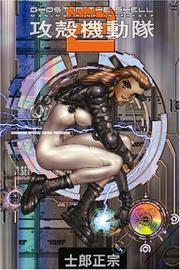
Published as Man-Machine Interface and catalogued under both names; this is the same work. It is the hardest comic in this path — dense digital art, near-continuous exposition, and a plot that mostly happens inside a network. Attempt it only after 1 and 1.5.
The rest of Shirow
IntermediateSee the same preoccupations — cyborg bodies, police procedure, political machinery — worked out in Shirow's other series
▸ Study plan for this stage
Pace: 3 weeks. Appleseed Book 1 is 184 pages, Dominion Tank Police 232 and Orion 244 — one a week is comfortable, and Appleseed in particular reads far faster than volume 2 did. Appleseed is set after a global war and contains combat and civilian casualties; Orion is dense with Buddhist and Shinto cosmolo
- Shirow's real subject across all his books: what a functioning state does with the manufactured people it depends on
- Olympus in Appleseed as a designed utopia with an explicit governing problem, versus Section 9's much messier polity
- Deunan and Briareos as a partnership of a human and a full cyborg, which is the Ghost in the Shell question posed at the level of a relationship
- Register as a deliberate variable — Dominion Tank Police takes the same materials as farce, which shows that Ghost in the Shell's tone is a choice
- Orion's transposition of the engineering approach onto religious cosmology: karma and spiritual bureaucracy handled as systems with specifications
- How much of Shirow's difficulty is density of information rather than complexity of story
- What is Olympus's founding problem in Appleseed, and how does it differ from the political problem driving Section 9?
- What does Briareos's body allow the story to say about prosthesis that Motoko's does not?
- In Dominion Tank Police, which conventions of the police procedural is Shirow parodying, and are they the same ones he plays straight elsewhere?
- What is Orion actually about, once the terminology is decoded, and does the engineering framing help or obscure?
- After these three, what would you say Shirow is consistently interested in, independent of genre?
- Read the opening twenty pages of Appleseed Book 1 immediately after the opening of Ghost in the Shell volume 1 and note every difference in how much the reader is expected to already know.
- Take one action sequence from Dominion Tank Police and one from Ghost in the Shell volume 1 and compare panel counts, sound effects and page rhythm; the comic register is a formal difference, not just a tonal one.
- Build a short glossary of Orion's cosmological terms from context as you read, then check it against a reference; the gap between the two is where Shirow is inventing.
- Write a paragraph identifying the one governing question shared by Appleseed and Ghost in the Shell, phrased so that both books are recognisably answering it.
Next up: Shirow did not arrive from nowhere — the next stage reads the book that made an adult, technically ambitious Japanese science-fiction comic possible in English.
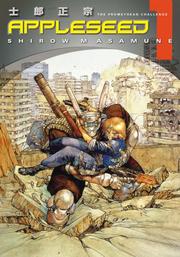
Shirow's earlier and more approachable series, and the clearest statement of his real subject: what a functioning post-catastrophe state does with its cyborg soldiers. Start here if Ghost in the Shell's footnotes defeated you.
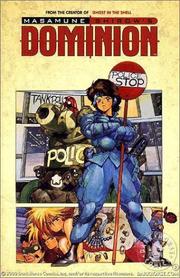
Catalogued as Dominion Tank Police, which is the published title. The comic register of Shirow's work, and worth reading precisely because it shows how much of Ghost in the Shell's tone is a deliberate choice rather than a default.
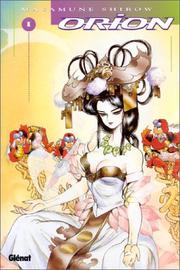
Shirow's oddest book — Buddhist and Shinto cosmology handled with the same engineering seriousness he brings to cyberbrains. Read last of the three because it makes the least sense without knowing his habits.
The Akira lineage
BeginnerRead the work that made an adult, technically ambitious Japanese science-fiction comic possible in English
▸ Study plan for this stage
Pace: 4 weeks for roughly 950 pages, but Akira reads much faster than its length suggests because Otomo gives action whole pages. Volume 1 is 361 pages, volume 2 is 303 and volume 3 is 288 — one volume a week with a week to reread the volume 3 set pieces. Akira depicts the destruction of a city with mass
- Otomo's Neo-Tokyo as the visual grammar Shirow inherited: the scale of the ruins, the density of the architecture, the draughtsmanship of debris
- Motion on the page — Otomo's action drawing as the thing everyone in the medium had to answer after 1984
- The structural difference: Akira's power is psychic and unexplainable, Shirow's is engineered and footnoted, and the two books read their respective apocalypses accordingly
- Volume 2's turn from street gangs to state apparatus — the military, the ministries, the cult — which is the closest Akira gets to Shirow's institutional interest
- The child test subjects as the book's moral centre and the source of its politics
- Why these three volumes are a complete arc even though the series runs to six
- What does volume 1 explain about the 1982 destruction of Tokyo, and how much is deliberately withheld?
- At what point does the political apparatus take over the narrative from Kaneda and Tetsuo, and what changes about the pacing when it does?
- How does Otomo draw an explosion differently from how Shirow draws a firefight — panel size, viewpoint, use of black?
- Is Akira interested in institutions the way Ghost in the Shell is, or only in their collapse?
- What did Shirow take from Otomo, and what did he explicitly refuse?
- Find the largest action sequence in Akira volume 3 and count panels per page across it, then do the same for the densest action in Ghost in the Shell volume 1; the two books are solving opposite problems.
- Trace Tetsuo's power across the three volumes and mark every point at which Otomo offers an explanation; the list will be short, and that is the argument.
- Choose one crowd scene from Akira and one from Appleseed and compare how each artist handles background figures — Otomo individuates, Shirow diagrams.
- Write half a page on what Neo-Tokyo has that Shirow's Niihama does not, using specific images from both.
Next up: With the ancestor read, the last stage takes the descendants and the prose novel that seeded the whole genre.
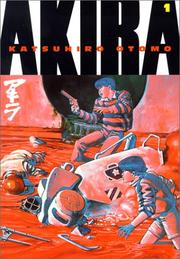
The book Ghost in the Shell is answering. Otomo's Neo-Tokyo established the visual grammar — the scale, the draughtsmanship, the ruined city — that Shirow then pointed at policework and networks instead of psychic children.
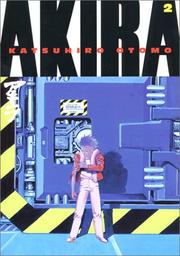
Where the political apparatus takes over from the street-gang opening; the closest Akira gets to Shirow's interest in institutions. Read straight on from volume 1.
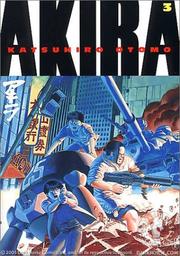
The volume where Otomo's action drawing becomes something no one had done before. Stop here or continue through volume 6 — the path holds three because that is the arc, not because the rest is unavailable.
What came after, and where the ideas came from
BeginnerPlace Ghost in the Shell in the cyberpunk lineage it belongs to, both the manga that followed it and the novel that seeded the whole genre
▸ Study plan for this stage
Pace: 4-5 weeks. BLAME! Volume 1 (245 pages) is nearly wordless and can be read in an hour, then should be reread slowly for the architecture. Eden Volume 1: It's an Endless World! is 216 pages, Pluto Vol. 1 is 192, and Neuromancer is a 317-page prose novel that will take a week on its own because Gibson
- Nihei's formal extreme in BLAME!: remove dialogue and plot scaffolding and the cyberpunk city becomes pure architecture and scale
- Eden as the direct heir — prosthetic bodies plus geopolitics, with the consequences Shirow tends to keep offstage brought forward
- Pluto approaching the question from the opposite side: not what a human loses by becoming machine, but what a machine acquires — Urasawa reworking Tezuka's Astro Boy story as a detective novel about grief
- Neuromancer as the shared source: the corporate espionage plot, the console cowboy, the AI seeking its own completion, all of which Shirow retains and rewires
- What Shirow replaced Gibson's outlaw framing with — a functioning state, a legal remit, and a bureaucracy
- The genre's two lineages side by side: the body-horror strand and the institutional strand, and where each of these four books sits
- How does BLAME! convey scale without narration, and what does it lose by refusing dialogue?
- What does Eden show about a cyborg body's political situation that Ghost in the Shell declines to show?
- In Pluto, what is the evidence that the robots grieve, and does Urasawa ever settle it?
- Which elements of Neuromancer appear in Ghost in the Shell almost unchanged, and which does Shirow invert?
- Reading Gibson last rather than first: what did that ordering make visible that reading him first would have hidden?
- Read twenty consecutive pages of BLAME! and write the scene as prose; the length of what you produce measures how much Nihei is carrying in the drawing alone.
- List every prosthetic body in Eden Volume 1 and what was done to the person to produce it, then do the same for Ghost in the Shell volume 1 — the difference in emphasis is the whole comparison.
- Take the Puppet Master's speech about personhood from Shirow's volume 1 and the corresponding claims in Pluto Vol. 1, and set them beside each other line by line.
- Go through Neuromancer marking every piece of technology and note which has a Ghost in the Shell counterpart; then note the three or four things Shirow has that Gibson does not — most of them will be forms of paperwork.
- Write a final page placing Ghost in the Shell in this lineage: what it took from Gibson and Otomo, what BLAME! and Eden took from it, and what Pluto answers.
Next up: This closes the path; if the films and the Stand Alone Complex series interest you now, approach them as a separate continuity rather than a continuation of what you have read.
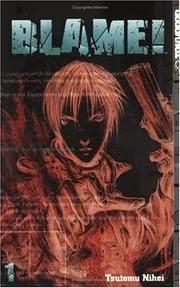
Catalogued as BLAME! Volume 1. Nihei strips Shirow's premise of all dialogue and leaves the architecture: a body walking through an infinite machine city. The purest formal experiment the genre has produced.
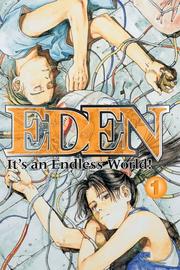
The most direct heir to Ghost in the Shell's combination of prosthetic bodies and geopolitics, and considerably more brutal about the consequences. Read after Shirow because it assumes you already accept the premises.
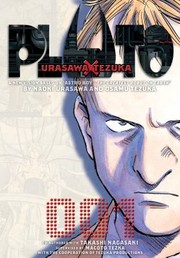
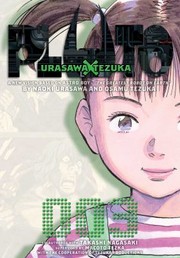
Urasawa reworking Tezuka's Astro Boy as a detective story about whether a machine can grieve. It approaches Ghost in the Shell's question from the opposite direction — not what a human loses by becoming a machine, but what a machine gains.
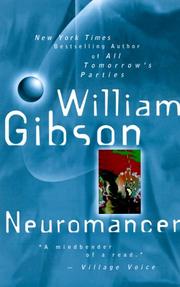
The prose novel Shirow is in conversation with throughout. Read it last: coming to it after the manga makes visible how much Shirow kept — the corporate espionage, the deck jockeys — and how much he replaced with something more bureaucratic and stranger.
Discussion
Keep reading
Paths that share books, cover the same subject, or open a related topic.