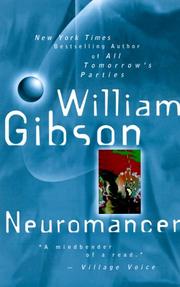
Start with Neuromancer. It beats every alternative for one reason: the Sprawl trilogy invented the language everything after it assumes — cyberspace, the matrix, the console cowboy, the net as a place you go rather than a service you use. Every later Gibson novel is written by a man reacting to having done this, and reading them first flattens the reaction into background.
There is one honest exception. If you do not read science fiction and never will, start with Pattern Recognition instead. It contains no invented technology, it is set in the year it was published, and it is the book to hand someone who would enjoy Gibson's eye but not his genre.
Whichever you pick, know the technique before page one. Gibson refuses to explain. Slang, brands and technologies arrive mid-sentence and are never defined, and you learn the world by inference the way you would learn a foreign city. Reaching for a glossary short-circuits the effect the prose is built on. Read the first forty pages of Neuromancer slowly, twice if necessary — that opening is where readers give up, and the book accelerates sharply once the vocabulary lands.
The Sprawl trilogy
Neuromancer follows Case, a burned-out data thief hired by a crew he does not understand for a job whose purpose he is not told. He knows as little as you do, which makes the disorientation characterisation rather than obscurity.
The book is prescient and visibly dated at once, and it is worth expecting both. Prescient: multinationals more powerful than states, identity as data, hacking as an economy, manufactured celebrity. Dated: payphones in the street, memory measured in megabytes as an enormous quantity, physical media that must be carried. That is what a 1984 novel looks like when its author extrapolated everything except the one thing nobody extrapolated.
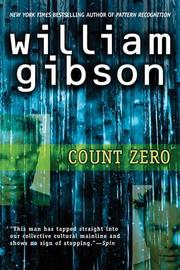
Count Zero is set seven years later and shifts the register from heist to art and religion; the entities now living in the matrix behave like loa. Mona Lisa Overdrive braids four storylines and characters from both earlier books, and only pays off in sequence. The Sprawl is the one place in Gibson where reading order is genuinely non-negotiable.
The Bridge trilogy
Virtual light pulls the future in close — a handful of years ahead rather than decades — and is a clean entry point if the Sprawl's density put you off. The prose loosens as the futurism tightens. The San Francisco Bay Bridge, closed by an earthquake and colonised by squatters into an improvised vertical city, is the trilogy's central image and its argument: people build culture in the gaps institutions abandon.
Idoru concerns a rock musician announcing his engagement to a synthetic media personality, and is the Gibson novel that reads most like prophecy from here. All Tomorrow's Parties brings both casts onto the bridge and ends the trilogy, so it goes third. Read against the Sprawl, the change is philosophical: Gibson has stopped believing the future arrives all at once and started believing it arrives unevenly, mostly to people with no money.
The Blue Ant trilogy
Three novels with no invented technology, set in the years they were published, arguing that the present has become too strange to need a future. Pattern Recognition follows a consultant with a physical allergy to branding, hired to find the maker of anonymous film fragments released online; its post-2001 grief is specific and unresolved.
Spook Country is looser — locative art anchored to GPS coordinates, a shipping container moving through the system — and shares only Hubertus Bigend with the first. Zero History directly continues its characters, which makes it the one Blue Ant book that requires its predecessor, and it is the funniest thing Gibson has written. These are novels of texture rather than incident; the pleasure disappears at speed.
The Jackpot books and the deeper cuts
The Peripheral is structurally his hardest book. It cuts between a poor American town in the near future and a depopulated London decades later, connected by a data link nobody fully explains. The far future has passed through the jackpot — not a single apocalypse but a slow multi-causal collapse over decades — which is his most important late idea and the clearest case of him being right early. The first hundred pages withhold almost everything; save this until you trust him to withhold. Agency assumes the stub mechanism explained there, so read it immediately after.
Burning Chrome is the collection where the Sprawl and the word cyberspace were actually invented, in the title story. Read it after Neuromancer rather than before — the stories are sketches for the novel, and encountering them second lets you watch the world being assembled. The Difference Engine, co-written with Bruce Sterling, is the outlier: an 1855 Britain in which Babbage's mechanical computers were built. It more or less founded steampunk and reads nothing like the rest of his work, which is why it belongs at the end. More science fiction is on Discover.
Follow the full ordered path here: William Gibson Reading Order: Where to Start.