Best Books on Wildflower Meadows, in Order
This curriculum takes an intermediate gardener from a solid understanding of wildflower meadow ecology through to confident, hands-on mastery of every stage of meadow creation and long-term management. Each stage builds directly on the last: first sharpening ecological intuition, then tackling seed mixes and establishment, and finally refining the cutting regime and ongoing stewardship that keeps a meadow thriving for decades.
Ecological Foundations
IntermediateUnderstand why wildflower meadows work the way they do — the relationship between soil fertility, plant competition, and species diversity — so that every practical decision later has a firm ecological rationale.
▸ Study plan for this stage
Pace: 4–5 weeks, ~25–30 pages/day, with 2–3 days per week for reflection and exercises
- Soil fertility as the primary driver of plant competition and species diversity in meadows
- The inverse relationship between soil nutrient levels and wildflower diversity
- How nutrient cycling and organic matter accumulation shape meadow composition over time
- The role of disturbance (mowing, grazing) in maintaining species diversity and preventing competitive dominance
- Plant functional groups and their ecological strategies in nutrient-poor versus nutrient-rich environments
- Succession pathways in meadows and how management interrupts or redirects them
- Why do wildflower meadows typically have higher species diversity in nutrient-poor soils than in nutrient-rich soils?
- How does soil fertility influence plant competition, and what ecological mechanisms explain this relationship?
- What role does disturbance (mowing, grazing) play in maintaining meadow diversity, and why is timing critical?
- How do different plant functional groups respond to changes in soil nutrient levels, and what does this tell us about meadow management?
- What is ecological succession in meadows, and how can management practices interrupt or redirect it?
- How do nutrient cycling and organic matter accumulation affect long-term meadow composition?
- Soil nutrient analysis: Collect soil samples from a local meadow (or reference site) and compare nutrient levels to species richness data; map the relationship between soil N, P, K and wildflower diversity
- Sketch a succession timeline: Draw how a meadow transitions from early colonization through competitive dominance, labeling the soil and species changes at each stage
- Disturbance simulation: Document a small unmown patch versus a regularly mowed patch in the same meadow over 4–6 weeks; record species present, growth rates, and competitive interactions
- Functional group sorting: Collect or photograph 10–15 meadow plants and classify them by functional strategy (e.g., deep-rooted, nitrogen-fixing, early-flowering); predict how each would respond to nutrient enrichment
- Nutrient budget calculation: Estimate the annual nutrient input and removal in a meadow (via hay removal, atmospheric deposition, etc.); discuss implications for long-term diversity
- Management scenario planning: Write a 1–2 page analysis of how three different management regimes (annual mowing, bi-annual mowing, grazing) would affect soil fertility and species composition over 10 years
Next up: This stage equips you with the ecological reasoning needed to evaluate and design practical management interventions—you'll now move to hands-on techniques for meadow creation, restoration, and ongoing stewardship grounded in these soil-diversity-disturbance principles.
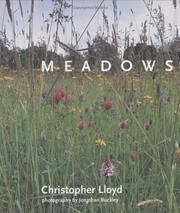
A classic, readable account of meadow gardening from one of Britain's most respected plantsmen; it frames the core tension between fertility and floristic richness that underpins every later technique.
Seed Mixes, Yellow Rattle & Establishment
IntermediateConfidently select and source appropriate regional seed mixes, understand the pivotal role of yellow rattle (Rhinanthus minor) as a grass suppressant, and successfully establish a meadow from scratch.
▸ Study plan for this stage
Pace: 4–5 weeks, ~40–50 pages/day, focusing on wildflower identification chapters and regional distribution sections
- Regional wildflower distribution patterns across Britain and Ireland—which species thrive in which geographic zones and soil conditions
- Identification of native wildflower species suitable for seed mixes, including morphological features and habitat preferences
- Yellow rattle (Rhinanthus minor) as a semi-parasitic grass suppressant—its lifecycle, growing requirements, and mechanism of action in meadow preparation
- Sourcing and selecting appropriate regional seed mixes based on local ecology, soil type, and existing flora
- Establishment protocols for wildflower meadows—timing, soil preparation, and integration of yellow rattle into the first-year cycle
- Distinction between native and non-native wildflowers, and why regional provenance matters for meadow authenticity and ecological function
- How do wildflower species distributions differ across Britain and Ireland, and what environmental factors determine which species are appropriate for your specific region?
- What is the lifecycle of yellow rattle, and how does its semi-parasitic nature suppress grasses to create space for wildflower establishment?
- How would you select a regional seed mix for a meadow project, and what criteria should guide your sourcing decisions?
- What are the key steps in preparing soil and establishing a meadow using yellow rattle in the first year?
- How do you identify the native wildflower species featured in Blamey's guide, and why is correct identification important for regional seed mix selection?
- What is the difference between native wildflowers and introduced species, and why does regional provenance matter for meadow ecology?
- Create a regional wildflower species checklist for your area using Blamey's distribution maps and descriptions; identify 10–15 native species suitable for a seed mix
- Research and compare 3–4 commercial seed mix suppliers, documenting which species they include and whether they offer region-specific variants; cross-reference against Blamey's guide
- Conduct a yellow rattle lifecycle study: obtain seeds, grow a small batch indoors or outdoors, document germination timing, flowering, and seed maturation over 12–16 weeks
- Visit a local wildflower meadow or nature reserve; use Blamey's guide to identify at least 15 species in situ, noting soil conditions, aspect, and companion plants
- Design a meadow establishment plan for a hypothetical 100 m² plot: specify regional seed mix composition, yellow rattle sowing date, soil preparation steps, and a 12-month timeline
- Photograph or sketch 8–10 wildflower species from Blamey's guide; label key identification features (leaf shape, flower structure, height) to build visual recognition skills
Next up: This stage equips you with the knowledge to select, source, and establish a meadow using yellow rattle; the next stage will deepen your understanding of ongoing meadow management, succession, and long-term maintenance to sustain flowering diversity year after year.

An authoritative field reference that lets you identify and understand the species in any seed mix, including yellow rattle, so you can make informed sourcing and sowing decisions.
Cutting Regimes & Long-Term Management
ExpertDesign and execute a year-round cutting and management calendar — knowing when to cut, when to leave, how to remove arisings, and how to adapt the regime as the meadow matures.
▸ Study plan for this stage
Pace: 8–10 weeks, ~25–30 pages/day. Start with Whitefield's systems-based chapters (weeks 1–4), then transition to Tree's case study and practical implementation (weeks 5–8), with 2 weeks for integration exercises and calendar design.
- Succession dynamics and why cutting regimes interrupt or reset plant communities to favour wildflowers over competitive grasses and woody species
- Timing of cuts: late summer/autumn cutting to allow spring bulbs and early flowers to set seed, and winter/early spring cuts to prevent regrowth and manage thatch
- Removal of arisings (cuttings) as essential nutrient depletion—why leaving cuttings defeats the purpose of meadow restoration
- Rotational and mosaic cutting patterns that create structural diversity, refuge for invertebrates, and staggered flowering across the meadow
- Adaptation of cutting regimes as meadow matures: moving from intensive establishment cuts to lighter maintenance as soil fertility declines and wildflower density increases
- Integration of grazing, mulching, and other disturbance tools alongside cutting to manage specific problem species and soil conditions
- Monitoring and adaptive management: reading the meadow's response to cuts and adjusting timing, frequency, and intensity year-on-year
- Why is removal of arisings critical to long-term meadow success, and what happens if cuttings are left on the ground?
- How should cutting timing differ between a newly established meadow and a mature wildflower meadow, and why?
- Design a year-round cutting calendar for a 2-hectare meadow: when would you cut, how much of the meadow, and what would you do with the arisings?
- What is a mosaic or rotational cutting pattern, and how does it benefit both wildflowers and invertebrate populations?
- How do you recognize when a meadow is ready to transition from establishment management to long-term maintenance cutting?
- Describe how Whitefield's systems thinking and Tree's Knepp case study inform different approaches to cutting regimes in different contexts.
- Map a real or hypothetical meadow site: sketch its boundaries, identify problem areas (rank dominance, wet patches, compacted zones), and note existing vegetation. Use this as your baseline for designing a cutting calendar.
- Create a detailed 12-month cutting calendar for your mapped meadow, specifying: cut dates, percentage of meadow to cut, cutting height, equipment, and disposal method for arisings. Justify each decision with reference to Whitefield's principles or Tree's experience.
- Visit a local meadow or grassland (or study photos/videos if unavailable) and assess its current management: identify signs of recent cutting, thatch accumulation, dominant species, and wildflower presence. Hypothesize what cutting regime produced this state.
- Conduct a simple nutrient depletion experiment: collect arisings from a cut area, weigh them, and research their nutrient content (nitrogen, phosphorus, potassium). Calculate the annual nutrient removal from your hypothetical meadow.
- Design a mosaic cutting plan for a 5-hectare meadow: divide it into 5 sections and create a 5-year rotation schedule. Explain how this pattern maintains invertebrate habitat and extends flowering.
- Read and annotate Whitefield's chapters on perennial polycultures and succession (likely chapters 4–6) and Tree's Knepp narrative on grazing and cutting integration (likely chapters 7–9), mapping how their frameworks align or diverge on disturbance timing and intensity.
Next up: This stage equips you with the practical calendar and adaptive reasoning to manage a living meadow; the next stage will likely deepen your understanding of species-specific management, soil restoration, or scaling these principles across larger landscapes.

Zooms out to whole-landscape ecology and succession, giving the reader the advanced framework needed to adapt management as the meadow ages and to integrate it with surrounding habitats.

A landmark account of large-scale habitat restoration at Knepp that deepens understanding of how reduced intervention and carefully timed cutting interact with grazing, seed dispersal, and long-term meadow resilience.
Discussion
Keep reading
Paths that share books, cover the same subject, or open a related topic.

