Best Books on Rewilding, in Reading Order
This curriculum takes you from the core ecological argument for rewilding, through landmark real-world projects and the science of keystone species and trophic cascades, to the practical scale of land and garden rewilding. Each stage builds the conceptual vocabulary and emotional conviction needed to go deeper in the next, ending with hands-on knowledge you can apply at any scale.
The Case for Rewilding
BeginnerUnderstand what rewilding is, why it matters ecologically, and feel the urgency and possibility of restoring wild nature — building the foundational vocabulary and vision.
▸ Study plan for this stage
Pace: 4–5 weeks, ~40–50 pages/day. Week 1–2: "Feral" (approx. 400 pages); Week 3–4: "Wilding" (approx. 400 pages); Week 5: Review, reflection, and synthesis exercises.
- Rewilding as ecological restoration: the deliberate process of allowing nature to reclaim degraded landscapes and restore ecological complexity
- Trophic cascades and keystone species: how the presence or absence of top predators fundamentally restructures entire ecosystems from the ground up
- The poverty of modern nature: how industrial agriculture, monoculture, and human management have stripped landscapes of biodiversity and ecological function
- Rewilding as a vision of possibility: evidence that damaged ecosystems can recover rapidly and dramatically when given the chance, challenging the narrative of inevitable decline
- From theory to practice: how rewilding principles translate into real land management decisions, as demonstrated through the Knepp Estate case study
- The role of large herbivores and predators in shaping landscapes: how grazing animals and natural predation patterns create habitat diversity and ecological resilience
- Rewilding as a cultural and psychological shift: moving from the idea of nature as a resource to be managed toward nature as a dynamic, autonomous force to be released
- What is rewilding, and how does it differ from traditional conservation and land management approaches described in these books?
- Explain the concept of trophic cascades using specific examples from 'Feral' (such as the Yellowstone wolves case). How do these cascades demonstrate the interconnectedness of ecosystems?
- What evidence do Monbiot and Tree present that degraded ecosystems can recover? What does this suggest about the possibility of restoring wild nature?
- How did the Knepp Estate transform, and what specific rewilding practices did Isabella Tree and her team implement? What were the ecological results?
- What role do large herbivores and predators play in creating and maintaining biodiverse landscapes, according to these two books?
- What are the main barriers to rewilding that Monbiot and Tree identify, and what counterarguments or solutions do they propose?
- Create a 'trophic cascade map' for a local or regional ecosystem: identify the top predators, herbivores, and plants, then hypothesize how removing or restoring a keystone species would ripple through the system.
- Read and annotate one chapter from 'Feral' (e.g., the Yellowstone wolves chapter) and one section from 'Wilding' (e.g., the early transformation of Knepp), then write a 500-word comparison of how theory and practice intersect.
- Visit or research a local degraded habitat (abandoned field, former industrial site, etc.) and write a 'rewilding proposal' outlining what species might naturally return and what conditions would need to be created.
- Create a visual timeline or infographic showing the ecological recovery of the Knepp Estate over the years described in 'Wilding,' highlighting key species arrivals and habitat changes.
- Conduct a 'rewilding debate' with a peer or study group: one person argues Monbiot's case for large-scale rewilding, the other raises practical objections, using specific examples from both books.
- Keep a 'rewilding journal' while reading: after each major section, write one paragraph reflecting on how the ideas challenge your assumptions about nature, management, and human responsibility.
Next up: This stage establishes the foundational vision and evidence for rewilding—what it is and why it works—preparing you to explore the practical, political, and ethical complexities of implementing rewilding at scale in the next stage.

The essential starting point: Monbiot makes the ecological and emotional case for rewilding in vivid, accessible prose, introducing trophic cascades, ecological boredom, and the transformative potential of letting nature return.

Read second to ground Monbiot's arguments in a real, deeply personal landmark project — the Knepp Estate in England — showing exactly what rewilding looks like on the ground over two decades.
The Science of Trophic Cascades & Keystone Species
BeginnerGrasp the ecological science behind rewilding — how apex predators, keystone species, and herbivores restructure entire ecosystems — with concrete, world-famous examples.
▸ Study plan for this stage
Pace: 4–5 weeks, ~25–30 pages/day. Start with "The Wolf's Tooth" (2 weeks), then "A Sand County Almanac" (2–3 weeks). Allocate 2–3 days per book for reflection and note-taking.
- Trophic cascades: how apex predators regulate entire food webs from the top down (Yellowstone wolf reintroduction as primary case study)
- Keystone species: organisms whose ecological impact is disproportionate to their abundance (starfish, wolves, beavers)
- Bottom-up vs. top-down ecosystem control: herbivores shape vegetation, but predators regulate herbivore populations
- Ecological relationships across scales: how predator-prey dynamics ripple through soil, water, and plant communities
- Leopold's land ethic: the philosophical foundation for understanding humans as part of ecological communities, not separate from them
- Rewilding as ecological restoration: reintroducing apex predators and keystone species to restore ecosystem function
- Predator-induced behavioral changes: how prey alter behavior and habitat use when predators return, reshaping landscapes
- Ecosystem resilience and complexity: diverse, intact food webs are more stable and adaptive than simplified ones
- What is a trophic cascade, and how did the reintroduction of wolves to Yellowstone demonstrate this concept?
- How do keystone species differ from other species in their ecological role, and what examples does Eisenberg provide?
- Explain the difference between top-down and bottom-up ecosystem control. Which does Eisenberg emphasize in 'The Wolf's Tooth'?
- What is Leopold's land ethic, and how does it reframe humanity's relationship with nature compared to earlier conservation approaches?
- How do predator-induced behavioral changes (fear effects) reshape ecosystems beyond simple predation?
- Why is ecosystem complexity and diversity important for resilience, according to both authors?
- Create a detailed food web diagram for Yellowstone before and after wolf reintroduction, labeling trophic levels and showing cascade pathways.
- Write a 2–3 page case study comparing two keystone species from 'The Wolf's Tooth' (e.g., wolves vs. beavers), analyzing their ecological roles and impacts.
- Map Leopold's ethical progression in 'A Sand County Almanac': identify 3–4 key essays and explain how his thinking evolves toward the land ethic.
- Conduct a local ecosystem audit: identify one keystone species in your region and research how its presence/absence affects the broader community.
- Debate exercise: argue both 'top-down control' and 'bottom-up control' using evidence from the books; identify which is more dominant in different ecosystems.
- Design a rewilding proposal for a degraded ecosystem: specify which apex predator or keystone species you'd reintroduce, predict trophic cascades, and address potential human conflicts.
Next up: This stage establishes the scientific and ethical foundation for understanding *how* rewilding works; the next stage will explore the *practical challenges* of implementing rewilding—including human-wildlife conflict, policy frameworks, and real-world restoration projects.

A clear, well-structured introduction to trophic cascades science, explaining how wolves and other apex predators trigger top-down effects that reshape landscapes — essential science for understanding why keystone species matter.

A canonical ecological classic that introduces the 'thinking like a mountain' insight — the foundational text on predator-prey dynamics and land health that underpins all modern rewilding science.
Landmark Projects & Large-Scale Rewilding
IntermediateExplore major real-world rewilding initiatives across continents, understanding the challenges, politics, and ecological outcomes of large-scale restoration efforts.
▸ Study plan for this stage
Pace: 4–5 weeks, ~40–50 pages/day
- Large-scale rewilding corridors and transnational conservation networks (e.g., Yellowstone to Yukon, Mesoamerican Biological Corridor)
- The role of apex predators and keystone species in ecosystem restoration and trophic cascades
- Political, economic, and social barriers to rewilding—land ownership, indigenous rights, local livelihoods, and stakeholder conflicts
- Measuring ecological success: biodiversity metrics, population recovery, habitat connectivity, and long-term monitoring
- Rewilding as a tool for climate adaptation and carbon sequestration in large landscapes
- Case studies of rewilding successes and failures across continents—what made them work or fail
- The tension between preservation (protected areas) and restoration (active rewilding) in conservation strategy
- Community engagement and benefit-sharing as essential components of large-scale rewilding projects
- What are the defining characteristics of large-scale rewilding corridors, and how do they differ from traditional protected areas?
- How do apex predators and keystone species drive ecosystem recovery, and what examples does Fraser provide from different continents?
- What are the major political and social obstacles to implementing rewilding at landscape scales, and how have successful projects navigated them?
- How do rewilding initiatives measure ecological success, and what metrics indicate that a large-scale project is achieving its restoration goals?
- What role do indigenous communities and local stakeholders play in the success or failure of rewilding projects?
- How does rewilding contribute to climate resilience and carbon storage, and what are the limitations of this approach?
- Map and compare 3–4 major rewilding corridors mentioned in Fraser's book (e.g., Y2Y, Mesoamerican Biological Corridor, European Green Belt). Identify their geographic scope, target species, and key stakeholders.
- Create a case study analysis of one rewilding project from the book: document its goals, ecological outcomes, political challenges, and lessons learned.
- Research and debate: select a rewilding project Fraser discusses and argue both for and against its implementation from the perspective of different stakeholders (conservationists, ranchers, indigenous groups, governments).
- Design a hypothetical large-scale rewilding corridor for a region you know well. Identify keystone species, connectivity requirements, stakeholder conflicts, and strategies to address them.
- Track a specific species' recovery trajectory mentioned in the book (e.g., wolves, jaguars, lynx). Graph population trends, habitat expansion, and human-wildlife conflict incidents over time.
- Interview or survey a local conservationist, land manager, or indigenous representative about rewilding efforts in your region. Compare their perspective to Fraser's framing of challenges and opportunities.
Next up: This stage grounds you in the real-world complexity of large-scale rewilding—its ecological logic, political realities, and mixed outcomes—preparing you to examine either the scientific mechanisms underlying restoration (how ecosystems actually recover) or the emerging innovations and future directions that could overcome the barriers Fraser documents.
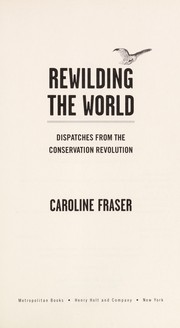
A comprehensive global survey of landmark rewilding projects — from Yellowstone to Patagonia to Africa — giving you the breadth to see rewilding as a worldwide movement with documented results.
Grazing, Herbivores & the Shifting Baselines Debate
IntermediateUnderstand the contested but crucial role of large herbivores and natural grazing processes in rewilding, and grapple with what 'natural' actually means in a post-megafauna world.
▸ Study plan for this stage
Pace: 4–5 weeks, ~25–30 pages/day (approximately 150–180 pages total for "Rebirding")
- Shifting baselines: how our perception of 'natural' is anchored to a particular historical moment, not an objective ecological state
- The megafauna extinction and its cascading effects on vegetation structure, landscape mosaics, and ecosystem function
- Rewilding through herbivory: using large grazers (domestic and proxy species) to recreate missing ecological processes rather than restore a fixed 'pristine' past
- The role of grazing in maintaining open habitats, preventing woodland encroachment, and creating habitat diversity for birds and other species
- Trophic rewilding: how herbivores structure ecosystems from the bottom-up through vegetation management
- The distinction between 'restoration' (returning to a known past state) and 'rewilding' (restoring processes and resilience in a novel context)
- Proxy species and ecological surrogates: using available herbivores (cattle, horses, deer) to approximate lost megafauna functions
- The tension between preserving current 'cultural landscapes' and allowing dynamic, process-driven ecological change
- What is a 'shifting baseline' and how does it shape our understanding of what 'natural' means in rewilding projects?
- How did the extinction of megafauna alter vegetation structure and landscape mosaics, and why does this matter for modern rewilding?
- What role do large herbivores play in rewilding, and how can grazing processes restore ecosystem function without returning to a literal prehistoric state?
- What are proxy species and ecological surrogates, and what are the limitations of using them in rewilding?
- How does Macdonald argue that rewilding through herbivory can benefit bird populations and biodiversity more broadly?
- What is the difference between restoration ecology and rewilding, and why does Macdonald emphasize process over historical fidelity?
- Map a local or regional landscape: identify current vegetation patterns, land use, and habitat types. Then research what that landscape might have looked like 5,000 years ago (pre-megafauna extinction). Write a 500-word reflection on how your baseline has shifted and what 'natural' means in that context.
- Visit or research a rewilding project that uses herbivory (e.g., a nature reserve with grazing cattle or horses). Document the vegetation structure, habitat mosaics, and wildlife present. Compare it to an adjacent area without active grazing management and note the differences.
- Create a simple food web or trophic diagram showing how the loss of megafauna altered vegetation and downstream ecological effects. Then add modern proxy species (e.g., cattle, horses) and trace how their grazing might restore similar functions.
- Read a case study from "Rebirding" in detail (e.g., a specific rewilding project Macdonald describes). Write a critical analysis: What herbivores are being used? What ecological processes are they meant to restore? What are the trade-offs or tensions with local land use or conservation goals?
- Conduct a thought experiment: Choose a degraded or overgrown habitat near you. Design a rewilding intervention using herbivory. What species would you introduce? What baseline are you aiming for, and why? How would you measure success?
- Debate or discuss: Is it ethical or ecologically sound to use non-native or domestic herbivores as proxies for extinct megafauna? What are the arguments for and against, as presented in Macdonald's work?
Next up: This stage establishes that rewilding is fundamentally about restoring ecological *processes* (especially herbivory) rather than recreating a fixed past, setting up the next stage to explore how other trophic levels, predators, and ecosystem engineers further reshape landscapes and challenge our assumptions about what 'natural' systems should look like.

Focuses on Britain as a case study for ecological restoration through the lens of birds, weaving in grazing, scrub, and predator dynamics — a bridge between large-scale rewilding science and practical habitat thinking.
Rewilding at Garden & Local Scale
IntermediateTranslate the big ecological ideas into practical action at the garden, farm, and local landscape scale — what you can actually do wherever you are.
▸ Study plan for this stage
Pace: 5–6 weeks, ~25–30 pages/day. Read "The Garden Jungle" (weeks 1–3, ~200 pages), then "Rewild Your Garden" (weeks 4–6, ~150 pages). Allocate 1–2 days between books for reflection and planning.
- Gardens as ecosystems: how domestic gardens function as interconnected habitats for pollinators, predators, and decomposers
- The decline of garden insects and invertebrates: causes (pesticides, monoculture, habitat fragmentation) and why it matters for food webs
- Native plants and local ecology: selecting plants that support local wildlife and fit your regional ecosystem
- Practical habitat creation: building structures (bug hotels, log piles, water features) that provide shelter, breeding, and feeding sites
- Reducing chemical inputs: moving away from pesticides and fertilizers to restore natural pest control and soil health
- Garden design for biodiversity: layout principles that connect habitats, create corridors, and maximize species diversity at small scales
- Scaling up: how individual garden actions contribute to landscape-level conservation and community resilience
- What are the main threats to insect populations in gardens, and how does Goulson explain their cascading effects on the wider food web?
- How do native plants support local wildlife differently than ornamental or non-native species?
- What are five practical structures or features you can add to a garden to create habitat for pollinators, predators, and decomposers?
- How would you design a garden layout to maximize biodiversity and create wildlife corridors within a small space?
- What are the key differences between chemical pest control and ecological pest management, and why does Tophill advocate for the latter?
- How can individual garden rewilding efforts contribute to broader landscape conservation and community action?
- Conduct a garden audit: map your current garden, identify existing habitats, and list all plants and structures present. Note which areas lack diversity or connectivity.
- Build or install at least one habitat structure (bug hotel, log pile, bee house, or shallow water feature) and document its placement and materials.
- Select and plant 5–10 native plants suited to your region and soil type. Research why each supports local wildlife and track their establishment.
- Create a 'before and after' photo journal of your garden over 4–6 weeks, noting changes in insect activity, plant growth, and perceived biodiversity.
- Design a garden rewilding plan on paper: sketch your space, identify areas for native planting, habitat structures, and chemical-free zones. Include a 12-month timeline.
- Observe and identify insects in your garden weekly using Tophill's identification tips; keep a species log and note which plants or structures attract which insects.
Next up: This stage grounds rewilding in tangible, personal action—building the confidence and ecological literacy needed to scale up to landscape and community-level conservation strategies in the next stage.

A joyful, science-rich guide to transforming your garden into a biodiverse habitat, grounding the grand rewilding vision in the small-scale actions available to every reader.

A practical, step-by-step handbook for garden-scale rewilding — the ideal final book to convert everything you have learned into concrete, achievable projects at home.
Discussion
Keep reading
Paths that share books, cover the same subject, or open a related topic.