Agroforestry is easy to admire and hard to start, because the literature is split down the middle. On one side sit research volumes describing systems at the landscape scale over decades. On the other sit practitioner manuals about this year's sheep, this year's mushroom logs, this year's cash flow. Read only the first and you will design something beautiful you cannot fund; read only the second and you will plant trees in the wrong place.
The sequence below deliberately alternates. Get the taxonomy of systems first so you know what you are choosing between, then get the operational and financial reality, then commit to the long-horizon design decisions that are expensive to reverse.
Get the systems taxonomy first
Start with the field's own textbook. An Introduction to Agroforestry by P. K. R. Nair is the standard academic introduction, written by the researcher who did more than anyone to turn a set of traditional practices into a named discipline. It gives you the classification logic — alley cropping, windbreaks, riparian buffers, silvopasture, forest farming — so you stop using the word agroforestry as a loose synonym for planting trees on a farm.
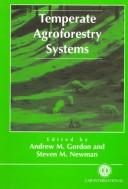
Then narrow by climate. Temperate Agroforestry Systems (Cabi), edited by Andrew Gordon and Steve Newman, does the same job for cool-climate systems with the research behind each one. If you want only one of these two and you farm in North America or Europe, take the temperate volume; Nair's introduction is broader and draws most of its examples from the tropics. Agroforestry for Natural Resource Management by Ian Nuberg approaches the subject from the land-management side instead — water, salinity, shelter, biodiversity — and it is the most useful of the three academic books if your starting problem is a degraded landscape rather than a business plan.
One of the academic titles here is genuinely optional for most readers. Directions in Tropical Agroforestry Research, also edited by Nair, is a research-agenda collection aimed at scientists working in the tropics. If you farm in a temperate climate it is the one book on this path you can skip without losing anything; if you work in the tropics it is the clearest statement of what the field knows and does not know.
Then get to the system most temperate landowners actually adopt. Silvopasture by Steve Gabriel is the best practical treatment of grazing livestock under managed trees: stocking rates, tree protection, shade physiology, and the honest failure modes. Gabriel writes from working farms in the northeastern United States, so the numbers are real rather than illustrative.
Learn the economics before you plant
This is the step most people skip. The lean farm by Ben Hartman applies manufacturing lean principles to small-farm work — eliminating motion, inventory and overproduction — and it will reshape how you lay out any planting. Pair it with The market gardener by Jean-Martin Fortier, which documents a profitable sub-two-acre vegetable operation in detail, including tools, bed sizes and gross margins. Neither is an agroforestry book. Both exist on this path because trees take years to pay and something has to fund the waiting.
Commit to the long horizon
Now the ambitious books earn their place. Tree Crops, a Permanent Agriculture by J. Russell Smith, first published in 1929, is the founding argument that tree crops can replace annual grain agriculture on sloping land. It is dated in its botany and prescient in its thesis, and it remains the intellectual root of the whole field.
Edible forest gardens vol. 2 by Dave Jacke and Eric Toensmeier is the design-and-practice half of the two-volume set; volume one is theory, and volume two is where you find the species matrices, patterns and installation guidance. If you buy only one volume, buy this one. Farming the Woods by Ken Mudge and Steve Gabriel then covers the specific business of producing under an existing forest canopy — mushrooms, ginseng, ramps, maple, nursery stock — which is a genuinely different discipline from planting a new system.
Close with The carbon farming solution by Eric Toensmeier, a reference-scale survey of perennial crops and practices assessed for sequestration potential. Treat it as a catalogue to browse rather than a book to read straight through, and treat its carbon numbers as contested — the sequestration literature is actively argued over, and Toensmeier says so himself.
Two authors who appear twice
Nair wrote both the introduction and the tropical research volume; read the introduction, and only add the research collection if the tropics are your working climate. Gabriel wrote Silvopasture and co-wrote Farming the Woods, and the material barely repeats: one is about opening a canopy for livestock, the other about working under a canopy you keep. Read both if you own woodland. If you own open pasture, Silvopasture alone is enough.
Follow the whole path in order and you will make the irreversible decisions — species, spacing, aspect — after you understand both the ecology and the cash flow.
Follow the full ordered path here: Best Books on Agroforestry, in Reading Order.