There are two distinct skills sold under the word tracking. One is identification: matching a print to a species using measurements, gait patterns and substrate. The other is interpretation: reading a sequence of sign to work out what an animal was doing, how fast, how long ago, and what happened next. Field guides teach the first. Only a few books teach the second, and it is the one that makes tracking worth doing.
Order matters because identification without interpretation becomes a naming hobby, and interpretation without identification becomes storytelling. This path alternates deliberately, and it front-loads the observational habits that determine whether you see sign at all.
Learn to see before you learn to name
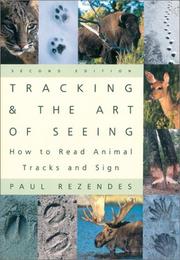
Begin with Tracking & the art of seeing by Paul Rezendes. It is the best-written entry point on this list: excellent photographs of real sign in real conditions, and a consistent emphasis on habitat, behaviour and the ecological context around a track. Rezendes teaches you to ask why an animal was where it was.
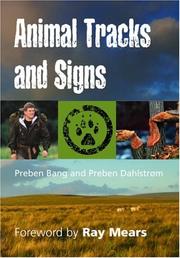
Pair it with Animal Tracks and Signs by Preben Bang, a European-focused guide that is unusually strong on non-track sign — feeding remains, droppings, nests, browse lines, hair and bark damage. Reading a European and a North American guide side by side is useful early, because it stops you memorising a regional list instead of learning a method.
Get the field guides in your pocket
A field guide to animal tracks by Olaus Murie is the historic Peterson guide, full of Murie's own sketches and field observations, and still a pleasure. Be aware that Mammal Tracks & Sign by Mark Elbroch has largely superseded it for North American identification work: Elbroch is photographic, vastly more comprehensive, and far more rigorous on measurements and gait analysis. If you buy one reference for the shelf, buy Elbroch; keep Murie for the writing and the drawings.
Scats and Tracks of North America by James Halfpenny is the compact carry-in-the-pack option, organised for quick roadside checks rather than deep study. And Bird Tracks & Sign by Elbroch and Eleanor Marks covers ground the mammal guides skip entirely — bird tracks, feather remains, pellets, kill sites and nests — which is where a surprising share of the sign in any landscape comes from.
Go deeper on interpretation
Tom Brown's Field guide to nature observation and tracking and The science and art of tracking push hardest on interpretation: pressure releases, the fine deformations in a track that indicate an animal's speed, weight shift and attention. Brown's claims about how much can be read from a single print are debated among trackers, and his framing is more mystical than the scientific literature supports. Read him for the interpretive ambition and hold the strongest claims lightly.
Add the specialist references
Tracks & sign of insects & other invertebrates by Charley Eiseman and Noah Charney is the outstanding specialist volume on this path and a genuinely original reference — leaf mines, galls, borings, egg cases and webs. Once you have it, you stop walking past ninety percent of the sign in front of you. Close with Animal tracking basics by Jon Young and Tiffany Morgan, which returns to fundamentals with a strong emphasis on routine practice, sit spots and building a baseline awareness of one small area over time.
Practical advice
Tracking is learned in the substrate, not the armchair. Work one patch of mud, sand or snow repeatedly, photograph with a scale in frame, and keep a notebook of your wrong calls. Follow the full path in order and use the guides to check your field judgement rather than to replace it.
Follow the full ordered path here: How to Learn Animal Tracking From Books, in Order.