The mistake most people make moving out of bounds is assuming the hard part is the skiing. It is not. Strong resort skiers are routinely humbled by the actual demands of touring: reading terrain, managing an uphill pace, choosing a route that avoids overhead hazard, dealing with variable snow on tired legs, and above all making avalanche decisions in a group that wants to keep going.
So the reading is weighted accordingly. Roughly one book here is about ski touring craft, three are about avalanches, and one is about general mountain travel. That ratio is not an accident, and if it looks skewed, that is the point.
The essential caveat first: none of this replaces a recognised avalanche field course and regular companion-rescue practice with a beacon, probe and shovel. Book knowledge without practised rescue skills is worse than useless, because it produces confidence without capability. Take the course, then use these books to keep the knowledge alive between seasons.
Learn the touring craft
Start with Backcountry skiing by Martin Volken, Scott Schell and Margaret Wheeler, the most complete instructional book on the actual activity: equipment and how it differs from alpine gear, skinning technique and kick turns, uphill pacing, transitions, route planning, navigation, glacier and rope basics, and skiing variable snow. It is written by guides and it is systematic, which makes it the right first purchase.
For a lighter and funnier companion, Allen & Mike's Really Cool Backcountry Ski Book covers similar practical ground with cartoons and a strong emphasis on winter camping and telemark-era fieldcraft. It is a good trailhead-bag book and no substitute for Volken.
Then the avalanche core
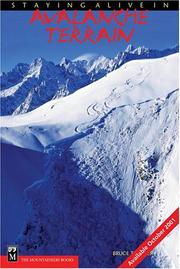
Staying Alive in Avalanche Terrain by Bruce Tremper is the most important book on this path. Tremper focuses on the decisions and the human factors that produce the great majority of accidents — terrain selection, red flags, heuristic traps, group dynamics — rather than on snow crystals. Read it before your first tour and again every autumn.
Snow sense by Jill Fredston and Doug Fesler is the compact field-oriented companion, short enough to actually reread, and organised around the practical assessment sequence you run in the field. Then The avalanche handbook by David McClung and Peter Schaerer is the technical reference: snow metamorphism, weak layers, slab mechanics, weather inputs and forecasting. Read it when the practical books have given you questions that need real snow science to answer.
Note the overlap: if you have already worked the avalanche safety path on this site, these three will be familiar, and you can skip straight from Volken to the mountaineering material.
Add the general mountain skills
Finish with Mountaineering The Freedom of the Hills, the standard reference for mountain travel generally — navigation, weather, glacier travel, crevasse rescue, first aid, self-rescue and the rest. Ski touring shades into ski mountaineering the moment your objectives get bigger, and this is the book that covers the ground the ski-specific titles do not.
What the books cannot give you
Fitness, uphill pacing and the ability to ski badly-consolidated snow on tired legs are all built in the field, and so is the willingness to turn around. Start on low-angle terrain in stable conditions with partners who are more experienced than you, read the forecast every day of the season, and practise beacon searches until they are boring. Follow the full path in order and let the field course carry the part reading cannot reach.
Follow the full ordered path here: Best Books on Backcountry Skiing, in Order.