Almost everyone approaches rock gardening backwards. They fall for the plants first — a cushion saxifrage, a gentian, a tiny dianthus in a nursery pot — then build somewhere to put them. The result is usually a decorative pile of stone with sodden soil underneath, and the plants are dead within two winters.
Alpines are not killed by cold. Most of the classic subjects are perfectly hardy well below what a temperate garden delivers. They are killed by winter wet at the crown, by shade, and by rich soil that makes them soft and floppy. Which means construction, drainage and aspect are the actual subject, and the plant lists are the reward for getting those right. Read in that order.
Learn the culture and the construction
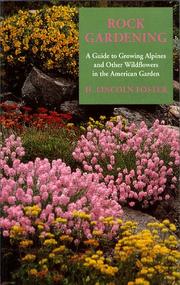
Start with Rock gardening by H. Lincoln Foster. It is the standard American introduction and it is unusually good at the parts other books rush: how to build a bed that drains, what scree and moraine conditions actually mean, how to raise alpines from seed, and how to match a plant's mountain habitat to a place in your garden. Foster writes as a working gardener, so the advice is testable.
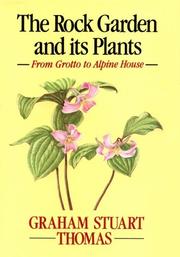
Follow it with The rock garden and its plants by Graham Stuart Thomas. Thomas brings the design eye — how a rock garden reads as a landscape rather than as an outcrop dropped on a lawn, how stone should be bedded to look geologically plausible, and how planting should be massed. He is also candid about which plants are worth the effort for the ordinary garden and which are for specialists only.
Move to practical growing at scale
Alpines in the Open Garden by Jack Elliott is the bridge between the specialist and the ordinary border. Elliott addresses the gardener who wants alpines outside a purpose-built rock garden — in raised beds, troughs, gravel gardens, walls and paving — which is how most people will realistically grow them. If your site has no slope and no rock, this is the most immediately useful book on the path.
Then keep the reference to hand
Finish with Encyclopaedia of alpines by Kenneth Beckett, the plant-by-plant reference. This is not a book to read through; it is the one you consult when you have a name from a seed exchange or a nursery list and need to know the genus, its habitat, its hardiness and whether it wants sun and sharp drainage or a cool north-facing crevice. Coming to it last means you can read its cultural notes with a builder's eye rather than a shopper's.
Two honest notes on this list
First, these are established rather than recent books, and nomenclature has shifted since several were written — plant names change with the taxonomy, so cross-check any genus against a current source before you order. Second, alpine gardening is a society-supported hobby: the seed exchanges and journals of the alpine garden societies will teach you more about specific species than any book can, and they are how most rare material actually circulates.
If your site is shaded or damp rather than sunny and sharp, read shade gardening alongside this path before committing to a build. Otherwise, follow the full path in order and construct before you collect.
Follow the full ordered path here: The Best Alpine and Rock Garden Books to Read First.
Ready to learn something deeply?
Build a reading path — free