Start with the non-negotiable. No book on this list, or any other, qualifies you to travel in avalanche terrain. Avalanche education is hands-on: a recognised field course, companion rescue practice with a beacon, probe and shovel until it is automatic, and time out with people more experienced than you. Reading is what makes the course stick and what keeps the knowledge alive between seasons. It is not a substitute, and treating it as one is how people die.
The other thing worth knowing before you open any of these is what the accident data actually says. The large majority of avalanche fatalities involve people who had some training, and who triggered the slide themselves. The failure mode is rarely ignorance of snow science. It is human factors — familiarity with the terrain, commitment to a plan, group dynamics, the pull of good conditions. That is why this reading order puts decision-making before crystallography.
Begin with decision-making
Staying Alive in Avalanche Terrain by Bruce Tremper is the book to read first and to re-read every autumn. Tremper worked as a forecaster and survived being caught himself, and the book is built around the practical question of how to make good choices with incomplete information: terrain selection, red flags, the heuristic traps that catch trained parties, and how to travel as a group. It is readable, honest about uncertainty, and the single best value on this path.
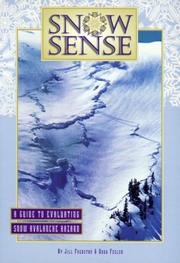
Pair it with Snow sense by Jill Fredston and Doug Fesler, a compact field-focused guide organised around the same practical logic — terrain, snowpack, weather, and the human element. It is short enough to actually revisit at the trailhead, which is the point.
Add the technical grounding
The avalanche handbook by David McClung and Peter Schaerer is the reference text of the field: snow metamorphism, weak layer formation, slab mechanics, weather inputs, forecasting methods and control work. It is technical and it is the book that turns rules of thumb into understanding — why a persistent weak layer behaves as it does, why aspect and elevation matter the way they do. Read it after Tremper, when you have the questions it answers.
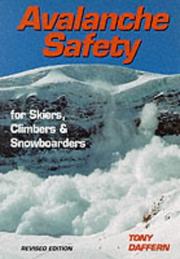
Avalanche Safety for Skiers, Climbers and Snowboarders by Tony Daffern sits between the two: more detailed than Snow sense, more approachable than the handbook, and written for recreational users planning their own trips. Note that gear and rescue-technique chapters in the older avalanche literature date quickly — beacon technology and recommended search methods have both changed — so cross-check any equipment or search procedure against current guidance from your national avalanche centre.
Learn from the case histories
The last two books do something the instructional titles cannot. Snowstruck by Jill Fredston is a collection of accident narratives written by someone who spent decades doing avalanche forecasting and body recovery, and it is the most affecting book here: the accidents are specific, the decisions are recognisable, and the pattern of ordinary competent people making ordinary small errors is the lesson. The avalanche enigma by Colin Fraser is the older historical survey, covering the long European experience of avalanche disaster and the development of control and defence work. It is dated as instruction and valuable as perspective.
What to do alongside the books
Read your regional avalanche forecast daily through the season even on days you are not going out, take a recognised course, practise beacon searches until you can run one under pressure, and debrief your own trips honestly. Follow the full path in order — decisions, then science, then the case histories — and let the field course do the part reading cannot.
Follow the full ordered path here: Best Books on Avalanche Safety, in Reading Order.