Best Books on Whitewater Rafting and Kayaking
This curriculum is built for an intermediate paddler who already has time on the water and wants to go deeper — reading water with precision, mastering technique in both kayak and raft, handling emergencies, and experiencing the sport's greatest rivers through literature. The four stages move from sharpening foundational river-reading and technique, through advanced skills and rescue, to the classic runs and the adventurous spirit that defines the sport.
Reading Rivers & Rapid Classification
IntermediateDevelop a precise, systematic vocabulary for reading whitewater — hydraulics, eddies, waves, holes, and the International Scale of River Difficulty — so every subsequent technique and safety concept has a solid mental framework.
▸ Study plan for this stage
Pace: 4–5 weeks, ~25–30 pages/day, focusing on Chapters 2–4 and reference sections on river classification and hydraulics
- The International Scale of River Difficulty (Class I–VI): what defines each class and why classification matters for trip planning
- Hydraulic fundamentals: how gradient, volume, and obstacles create current, waves, and holes
- Eddies: formation, location, and how to identify them as safe zones and strategic paddling features
- Holes and hydraulics: what causes them, why they recirculate water, and how they differ from waves
- Reading water: visual cues (color, texture, sound, spray) that indicate depth, speed, and hazards
- Waves: formation types (standing waves, haystacks, diagonal waves) and what they reveal about river structure
- Scouting technique: how to assess unfamiliar rapids safely before running them
- What are the defining characteristics of each class on the International Scale of River Difficulty, and how would you classify a rapid you encounter for the first time?
- How do gradient, water volume, and obstacles interact to create the hydraulic features you see on a river?
- What visual and auditory cues help you identify eddies, holes, waves, and other hazards from the water or shore?
- Why do holes recirculate water, and how is this different from the behavior of a standing wave?
- What is the systematic process for scouting an unfamiliar rapid, and what specific features should you look for?
- How would you explain river hydraulics to a beginner so they understand why certain techniques work in specific features?
- Create a detailed glossary of 20+ hydraulic and river-reading terms from Bennett, with sketches or photos of each feature
- Watch 3–4 video clips of real rapids (Class II–IV) and annotate them, labeling eddies, holes, waves, and hazards using Bennett's vocabulary
- Visit a local river or rapid (safe Class I–II section) and sketch the hydraulic features you observe; compare your sketch to Bennett's diagrams
- Write a one-page rapid classification guide: given a description of gradient, obstacles, and water volume, determine the likely International Scale class
- Practice scouting: photograph or video an unfamiliar rapid and write a detailed scout report covering hazards, eddies, and recommended line
- Create a visual reference card (laminated, waterproof) with the International Scale classes, key hydraulic terms, and common hazard symbols for river use
Next up: This stage establishes the shared language and visual literacy you need to understand paddling techniques and safety protocols in the next stage—without this precise vocabulary for reading water, you cannot reliably identify where and how to execute strokes or avoid hazards.
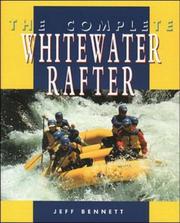
Bennett's comprehensive overview covers river classification, hydrology, and raft-specific water reading in one volume, bridging the gap between casual paddler and informed river traveler.
Paddle & Raft Technique
IntermediateBuild efficient, biomechanically sound strokes and boat-handling skills for both kayak and raft, moving from core mechanics to dynamic maneuvering in moving water.
▸ Study plan for this stage
Pace: 4–5 weeks, ~20–25 pages/day with 2–3 practice sessions per week on water
- The biomechanics of the forward stroke: torso rotation, blade angle, and power transfer from core to paddle
- Roll mechanics and the sequence of hip snap, blade placement, and body rotation for reliable recovery
- The bombproof roll as a foundational skill: why it works, how to diagnose failures, and progressions from pool to moving water
- Boat control and edge awareness: how to use edge, weight distribution, and subtle paddle inputs to steer and maintain stability
- Adaptive rolling techniques for different water conditions, boat types, and scenarios (rough water, current, obstacles)
- The relationship between paddle technique and boat response: how efficient strokes translate to predictable handling
- Troubleshooting common stroke and roll failures through video analysis and kinesthetic feedback
- What is the sequence of movements in a bombproof roll, and why is hip snap the critical initiating action?
- How does torso rotation in the forward stroke improve power and reduce injury risk compared to arm-dominant paddling?
- What are the most common reasons a roll fails, and how do you diagnose and correct each one?
- How do you adjust your stroke technique and boat edge when paddling in moving water versus flat water?
- What is the relationship between blade angle, catch, and power phase in an efficient forward stroke?
- How do you progress from practicing rolls in a pool to executing them reliably in moving water and rough conditions?
- Practice the forward stroke on flat water, focusing on torso rotation and blade angle; video record yourself and compare to Dutky's biomechanical cues
- Perform 20–30 bombproof rolls in a pool, working on consistency and speed; film each set to identify hip snap timing and blade placement errors
- Practice rolls in moving water (gentle current) and note how technique must adapt; repeat 3–4 times per week
- Perform edge control drills on flat water: practice tilting the boat and using subtle paddle strokes to maintain or recover edge without rolling
- Practice the roll progression sequence from the book: sculling, hip snap without paddle, then full roll with eyes closed to build kinesthetic awareness
- Conduct a stroke analysis session: paddle at different speeds and water conditions while a partner observes and provides feedback on torso rotation, blade path, and catch timing
- Practice rolling in rough water or with obstacles nearby to build confidence and adaptability in realistic conditions
Next up: Mastering the bombproof roll and efficient paddle technique establishes the reliable recovery and boat control foundation needed to progress to advanced maneuvering, river reading, and tactical decision-making in whitewater environments.
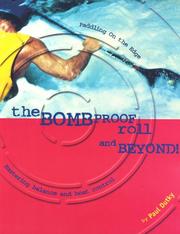
The definitive text on the kayak roll — the single most critical whitewater skill — presented with clear progressions that an intermediate paddler can immediately apply and refine.
Swiftwater Rescue & Safety
ExpertUnderstand and internalize swiftwater rescue principles, risk management, and self-rescue techniques so you can lead or participate in trips on serious whitewater with genuine safety competence.
▸ Study plan for this stage
Pace: 8–10 weeks total. Weeks 1–4: "River Rescue" by Les Bechdel (~20–25 pages/day, 3–4 days/week) — read sequentially, pausing after each chapter to review diagrams and self-quiz. Weeks 5–10: "Swiftwater Rescue" by Slim Ray (~25–30 pages/day, 3–4 days/week) — treat as a technical deepening of Bechdel's f
- The Swimmer's Priority hierarchy: self-rescue first, then assisted rescue, then boat-based rescue — introduced in Bechdel and expanded in Ray
- Reading moving water: identifying hydraulics, strainers, undercut rocks, holes, and eddies as hazards or assets, as covered in both books
- Throw-bag technique and rope rescue mechanics: body position, coiling, throwing, and belaying a swimmer, detailed in Bechdel and reinforced with scenarios in Ray
- Swiftwater hydrology fundamentals: how current speed, volume (CFS), gradient, and water temperature combine to create risk — foundational in Bechdel
- Self-rescue skills: aggressive swimming posture, defensive vs. offensive swimming, eddy catching, and how to escape a hydraulic, as taught in Bechdel
- Risk management and trip leadership: pre-trip hazard assessment, scouting protocols, group communication, and go/no-go decision-making, emphasized in Ray
- Mechanical advantage systems and technical rope work: Z-drag, C-drag, and vector pulls for pinned boat extraction, covered in depth in Ray
- Incident command and rescue organization: how to manage a multi-rescuer scene, assign roles, and avoid 'hero rescuer' accidents — a core theme in Ray
- According to Bechdel's swimmer's priority model, in what order should rescue options be attempted, and why does self-rescue come first?
- How do you identify a recirculating hydraulic (hole) versus a safe eddy using the water-reading principles in Bechdel, and what makes a hole 'keeper'?
- Walk through the correct throw-bag sequence from Bechdel: what are the critical body mechanics, what do you do if you miss, and how do you belay the rope once the swimmer grabs it?
- Using Ray's risk-management framework, what factors would cause you to make a 'no-go' decision for a rapid, and how should that decision be communicated to a group?
- Describe the Z-drag system as presented in Ray: what equipment is needed, how is mechanical advantage calculated, and what are the most common rigging errors?
- How does Ray's incident command model prevent secondary accidents during a live rescue, and what specific roles does he recommend assigning at a rescue scene?
- Throw-bag drill on flat water: practice throwing to a moving target (a friend wading or floating) 10 times per session, focusing on Bechdel's footwork, arm swing, and follow-through; log accuracy and adjust grip/coil method
- Defensive and offensive swimming practice: in a safe, supervised pool or calm river section, rehearse the defensive (feet-up, toes-up, on-back) and offensive (aggressive front-crawl to eddy) postures described by Bechdel until transitions feel automatic
- Hydraulic and current feature identification walk: visit a local river access point and verbally identify every feature visible from the bank — eddies, pillows, pour-overs, strainers — using Bechdel's terminology; photograph and label them in a field notebook
- Z-drag rigging on land: using a tree anchor, set up a full Z-drag system from Ray's instructions with a partner timing you; aim to have a functional system rigged in under 5 minutes, then dismantle and repeat
- Tabletop rescue scenario planning: using Ray's incident command framework, write out a full rescue plan for two hypothetical scenarios (e.g., swimmer pinned against a strainer; boat wrapped on a rock) — assign roles, list equipment, and identify secondary hazards
- First-aid integration drill: combine a throw-bag rescue drill with a post-rescue scenario (simulated hypothermia or spinal injury) so that the transition from water rescue to patient care — a gap Ray explicitly warns about — becomes a practiced habit
Next up: Mastering the rescue principles, hazard recognition, and risk-management frameworks in Bechdel and Ray gives the reader the safety literacy needed to confidently progress into technical paddling skills and advanced whitewater technique, where the consequences of errors are fully understood and managed.

The canonical swiftwater rescue text used by instructors worldwide; it systematically covers self-rescue, throw bags, pin extraction, and group management — read first to establish the safety framework.
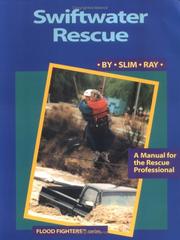
A deeper, more technical companion to River Rescue that addresses professional-level rescue systems, hydraulics of entrapment, and incident command — essential for anyone leading trips on Class IV–V water.
Classic Runs & the Literature of the River
ExpertExperience the world's great whitewater rivers through the eyes of expert paddlers and adventurers, absorbing route knowledge, expedition planning wisdom, and the cultural and historical depth of the sport.
▸ Study plan for this stage
Pace: 6–7 weeks, ~40–50 pages/day. Week 1–2: "A River Runs Through It" (~100 pages); Week 3–4: "The Emerald Mile" (~400 pages); Week 5–7: Review, reflection essays, and integration exercises.
- Fly fishing as a metaphor for life's rhythm and family bonds (Maclean): understanding how technical skill, patience, and personal philosophy intertwine in river pursuits
- The Blackfoot River as a character: how geography, ecology, and personal history shape the paddler's relationship with a specific waterway
- The Grand Canyon's human and natural history: the collision between conservation, recreation, and industrial development as told through the Emerald Mile expedition
- Expedition planning and risk management: how Fedarko documents the logistics, decision-making, and unforeseeable challenges of major whitewater runs
- The cultural mythology of rivers in American identity: how both authors use rivers as vessels for exploring masculinity, freedom, mortality, and belonging
- Narrative technique in adventure literature: how Maclean's lyrical prose and Fedarko's historical research create immersive, multi-layered accounts of river experience
- Environmental ethics and the politics of water: understanding competing claims on rivers (dams, recreation, indigenous rights, scientific study) through Fedarko's lens
- Personal transformation through paddling: how both texts portray rivers as spaces where character is tested, revealed, and sometimes fundamentally altered
- How does Maclean use fly fishing and the Blackfoot River to explore the relationship between the narrator and his brother Paul, and what does the river ultimately reveal about their family?
- What is the historical significance of the Emerald Mile expedition in Fedarko's account, and how does it connect to the broader story of the Grand Canyon's damming and management?
- Identify three major challenges or risks that Fedarko describes in planning and executing the Emerald Mile run. How did the expedition team prepare for or respond to each?
- Compare the role of the river in Maclean's narrative versus Fedarko's: how does each author use the river as both a literal setting and a symbolic space?
- What competing interests and stakeholders does Fedarko present regarding the Grand Canyon and its rivers? How do these tensions shape the narrative?
- How do both authors use technical detail (fly-fishing technique, whitewater classification, river hydrology) to build credibility and immerse the reader in their worlds?
- Close-read the climactic fishing scenes in 'A River Runs Through It' (the final outing with Paul). Annotate for imagery, dialogue, and emotional subtext; write a 500-word reflection on what the river reveals about the brothers' bond.
- Create a detailed expedition plan for a hypothetical multi-day Grand Canyon run, using Fedarko's descriptions of logistics, safety protocols, and resource management as your model. Include timeline, gear, contingencies, and risk assessment.
- Map the Blackfoot River (Maclean) and the Colorado River through the Grand Canyon (Fedarko) using historical and contemporary sources. Annotate key locations mentioned in each text and note how geography shapes the narrative.
- Write a comparative essay (1,000–1,200 words) analyzing how Maclean and Fedarko each construct the river as a character. Use at least three specific passages from each book.
- Interview a local paddler, guide, or river conservationist about a river they know intimately. Ask them how their relationship with that river mirrors or diverges from the experiences described in these two texts. Summarize findings in 600 words.
- Create an annotated timeline of the Grand Canyon's human and environmental history as presented in 'The Emerald Mile.' Include major dams, expeditions, policy shifts, and ecological changes; explain how each event shapes the Emerald Mile story.
Next up: This stage establishes the literary and historical foundations of whitewater culture—the emotional, philosophical, and logistical dimensions of river travel—preparing you to move into the next stage's focus on technical skill development, modern expedition narratives, or specialized paddling disciplines.
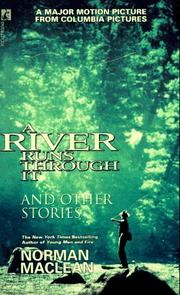
The literary cornerstone of river culture; reading Maclean instills the philosophical and aesthetic relationship with moving water that separates a technician from a true river person.
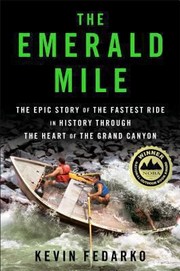
A gripping account of the fastest dory run through the Grand Canyon during the 1983 flood — packed with Colorado River history, rapid-by-rapid detail, and the highest-stakes whitewater decision-making imaginable.
Discussion
Keep reading
Paths that share books, cover the same subject, or open a related topic.