Learn to fly fish
This four-stage curriculum takes a complete beginner from their very first cast to confidently reading water, selecting flies, and finishing a full season on the river. Each stage builds directly on the last — vocabulary and mechanics come first, then water-reading and entomology, then technique refinement, and finally the reflective, experiential wisdom that turns a novice into a thinking angler.
Foundations — Gear, Casting & First Steps
BeginnerUnderstand fly-fishing equipment, learn the basic mechanics of casting, and feel comfortable wading into the sport for the first time.
A clear, illustrated primer covering gear selection, knots, and the first day on the water. Read after Wulff to reinforce casting concepts and add practical setup knowledge.
This beloved illustrated handbook distills the entire beginner experience into a fun, memorable format. Its cartoons and plain language lock in the vocabulary and mindset needed before moving to more technical reading.
Reading Water & Understanding Trout
BeginnerLearn to look at a river and identify where trout hold, feed, and move — the single most important skill for consistent success.
▸ Study plan for this stage
Pace: 6–8 weeks total. Week 1–4: Read "Reading Trout Streams" by Rosenbauer at ~20–25 pages/day (the book is dense with diagrams and field detail — slow down at chapters on current seams, eddies, and structure). Week 5–8: Read "Trout" by Bergman at ~15–20 pages/day, pausing after each species or habitat c
- Current seams and hydraulics: Rosenbauer's core teaching that trout hold where fast and slow water meet, minimizing energy expenditure while maximizing food delivery
- The three trout needs — food, shelter, and oxygenated water — as the universal lens for evaluating any piece of river (Rosenbauer, Chapter 1)
- Primary lies vs. feeding lies vs. sheltering lies: understanding that a trout's location shifts with season, time of day, and water temperature (Rosenbauer)
- Reading surface clues — riffles, runs, pools, and pocket water — and what each habitat type tells you about depth, current speed, and likely trout position (Rosenbauer, habitat chapters)
- Bottom structure and its influence on trout holding: boulders, ledges, undercut banks, and log jams as mapped in Rosenbauer's stream cross-section diagrams
- Trout behavior and species-specific preferences: Bergman's detailed observations on how brown, brook, and rainbow trout use habitat differently across seasons
- Water temperature as a behavioral trigger: Bergman's field notes on how trout activity, feeding depth, and holding position shift with temperature windows
- The influence of season and water level on where trout are found — Bergman's seasonal chapters ground Rosenbauer's structural theory in real-world observation
- Standing at the bank of an unfamiliar river, what three physical features would you look for first to locate a likely trout lie, and why — drawing on Rosenbauer's framework?
- What is a current seam, and why does Rosenbauer identify it as one of the most reliable trout-holding features in moving water?
- How does Bergman describe the behavioral differences between brown trout and rainbow trout in their use of pools versus riffles, and how would that change where you cast?
- According to Rosenbauer, how does a pool's anatomy (head, belly, tail) change in importance depending on the time of day and season?
- Bergman emphasizes water temperature repeatedly — at what approximate temperature range does he describe trout as most actively feeding, and what happens to their lies above and below that range?
- How would you adjust your reading of the water during a summer low-water period versus a spring high-water period, synthesizing lessons from both Rosenbauer and Bergman?
- Stream mapping exercise (Rosenbauer-based): Visit a local stream and hand-draw a 50-yard section. Mark every feature Rosenbauer names — seams, eddies, pools, riffles, pocket water, undercut banks — then predict where you'd find trout in each. Return after reading Bergman and revise your predictions.
- The 10-minute observation drill: Before making a single cast, stand at the water for 10 minutes and silently identify at least five distinct holding lies using only Rosenbauer's visual cues (surface turbulence, color changes, foam lines). Write them in a field notebook.
- Temperature log: Over four consecutive visits, measure water temperature at arrival and note where you observe trout activity (rises, holding fish, caught fish). Compare your log against Bergman's temperature-behavior descriptions.
- Species habitat comparison chart: After finishing Bergman, build a one-page reference table listing brown trout, rainbow trout, and brook trout side by side — preferred current speed, depth, structure, and season — sourced directly from Bergman's observations.
- Photo annotation: Take 10 photos of different water types on a single stream visit. Print or display them and annotate each with Rosenbauer's terminology, identifying the lie type, likely trout position, and the reason a trout would hold there.
- Re-read one chapter from Rosenbauer after finishing Bergman: Choose the chapter on pools or pocket water and re-read it with Bergman's species-behavior notes fresh in mind. Write a one-paragraph synthesis of how the two authors' perspectives reinforce or complicate each other.
Next up: Mastering where trout live and why sets the essential foundation for the next stage — once you can reliably find fish, you are ready to learn how to approach them without spooking them and how to present a fly drag-free in the specific currents Rosenbauer and Bergman have taught you to identify.
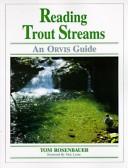
The canonical text on reading moving water. Rosenbauer breaks down riffles, pools, runs, and edges with clear diagrams, building the spatial intuition a beginner needs before approaching any river.
A classic that weaves trout behavior, habitat, and angling strategy together in an accessible narrative. Reading it after Rosenbauer adds the 'why trout are there' biological context to the 'where' already learned.
Flies, Entomology & Presentation
IntermediateUnderstand the insect life cycle that drives trout feeding, match the hatch with confidence, and refine presentation skills beyond the basic cast.
▸ Study plan for this stage
Pace: 6–8 weeks total: Weeks 1–5 devoted to "Matching the Hatch" (~20–25 pages/day, including time to pause and study the hatch charts and illustrations); Weeks 6–8 devoted to "The Orvis Guide to Family Friendly Fly Fishing" (~15–20 pages/day, with a lighter pace to reflect and apply presentation concepts
- Insect life cycles: the four stages (egg, larva/nymph, pupa, adult) of mayflies, caddisflies, stoneflies, and midges, and how each stage triggers distinct trout feeding behavior as detailed in Schwiebert's hatch-by-hatch breakdowns
- Matching the hatch: selecting fly patterns that imitate the size, shape, color, and silhouette of the naturals on the water at a given moment, using Schwiebert's regional and seasonal hatch charts as a reference framework
- Reading the water through an entomological lens: understanding how current seams, eddies, and substrate type correlate with specific insect populations and therefore with where trout will be feeding
- Drift and drag: recognizing what a drag-free drift looks like, why drag spooks fish, and the mending and line-management techniques needed to achieve a natural presentation
- Presentation refinement: adapting cast angle, reach casts, slack-line casts, and approach position to the feeding lane and the insect being imitated, as reinforced in the Orvis guide's accessible, scenario-based instruction
- Fly pattern anatomy: understanding how hook size, body material, hackle, wing style, and tailing combine to produce the triggering characteristics that fool selective trout
- Observation before casting: developing the habit of watching the water for rises, identifying the naturals in the air and on the surface, and forming a hypothesis about what the trout are eating before selecting a fly
- Inclusive and adaptive fishing mindset: drawing from the Orvis guide's philosophy of making the experience accessible and enjoyable, which reinforces patient, methodical streamside habits that also sharpen technical skill
- After studying Schwiebert's hatch charts, can you identify the three or four most important hatches for your local region by month, and name the fly pattern(s) he recommends for each?
- What are the key physical differences between a mayfly dun and a caddisfly adult on the water, and how does each difference inform your fly selection and presentation angle?
- How does Schwiebert distinguish between a trout taking emergers just below the surface versus fully hatched duns on top, and what adjustments in fly choice and depth does he prescribe?
- Using the presentation principles in the Orvis guide, how would you adjust your position, cast direction, and mend to achieve a drag-free drift to a trout rising in a slow eddy on the far side of a fast current seam?
- What streamside observation routine — drawing from both books — would you follow in the first ten minutes of arriving at a new stretch of water before making your first cast?
- How do the accessibility and patience-focused lessons in the Orvis guide reinforce (or complement) the technical depth of Schwiebert's entomological approach when fishing with less-experienced companions?
- Hatch journal: For every outing during this stage, collect or closely photograph insects from the streamside (or use a small aquarium net in the shallows), identify them to order and life stage using Schwiebert's descriptions, and record date, time, water temperature, and which fly pattern you matched them with — then note whether trout confirmed your hypothesis.
- Fly-box audit: Lay out your entire fly box and cross-reference each pattern against Schwiebert's hatch charts for your region. Label gaps (hatches you have no imitation for) and tie or purchase at least two flies for each gap before your next session on the water.
- Drag detection drill: On a slow, clear pool, cast a dry fly without any mend and watch carefully for the first moment drag begins. Then repeat the cast with a reach mend, then an S-curve cast. Compare how long each achieves a natural drift and log the difference — use the Orvis guide's mending descriptions as your technique checklist.
- Rise-form identification exercise: Spend 20 minutes at the water's edge without casting. Sketch or photograph rise forms (sipping rings, splashy rises, bulges) and use Schwiebert's rise-form descriptions to hypothesize what stage of insect the trout are taking. Only then select a fly and test your hypothesis.
- Scenario role-play (Orvis guide application): Mentally (or physically, with a friend or family member new to fly fishing) walk through three different water scenarios from the Orvis guide — a riffle, a flat, and an eddy — and verbally explain the correct approach angle, fly choice, and presentation technique for each, as if teaching a beginner. Teaching forces mastery.
- Tying or comparative study session: Choose one major hatch from Schwiebert (e.g., the Hendrickson or a regional equivalent) and tie or closely examine three different imitations at different life stages — nymph, emerger, and dun. Compare them side by side against Schwiebert's illustrations and written descriptions, noting which triggering features each pattern prioritizes.
Next up: Mastering insect identification, hatch matching, and drag-free presentation creates the entomological and technical foundation needed to tackle the next stage's focus on advanced tactics — such as streamer fishing, nymphing rigs, and reading complex or pressured water — where pattern selection and presentation become even more situationally nuanced.

The foundational text of American fly-fishing entomology. Now that the learner has basic hatch awareness, Schwiebert's deeper treatment of aquatic insects and their imitations elevates fly selection from guesswork to strategy.

A comprehensive technique manual covering presentation, mending, nymphing, and dry-fly fishing. Placed here so the learner can apply newly acquired entomology knowledge directly to refined on-water technique.
A Season on the River — Experience & Wisdom
IntermediateAbsorb the lived experience of a full season through master anglers' eyes, consolidating all prior knowledge into a personal, reflective approach to fly fishing.
▸ Study plan for this stage
Pace: 4–5 weeks total: Week 1–2 — Read "A River Runs Through It" (~110 pages) at a leisurely pace of ~15–20 pages/day, pausing to journal after each chapter. Week 3–5 — Read "Trout Bum" (~220 pages) at ~20–25 pages/day, treating each essay as a standalone meditation to reflect on before moving to the next
- Fly fishing as art and spiritual practice: Maclean's vision that casting is a form of grace — precise, rhythmic, and deeply personal — elevates technique into philosophy.
- Family, mentorship, and the limits of teaching: 'A River Runs Through It' explores how fly fishing knowledge can be modeled and shared but ultimately not forced — each angler must find their own way.
- The river as a living text: Maclean's famous line that 'the river was cut by the world's great flood and runs over rocks from the basement of time' frames reading water not just as skill but as humility before nature.
- The 'trout bum' ethos: Gierach's essays define a countercultural lifestyle built around prioritizing fishing over career and comfort — fishing as a deliberate, values-driven life choice.
- Seasonal rhythm and patience: Both books unfold across seasons, teaching the reader that mastery is accumulated over years of return visits, not single outings.
- Observation over action: Gierach repeatedly demonstrates that the best fishing hours are often spent watching — water temperature, insect activity, fish behavior — before a single cast is made.
- Simplicity and minimalism in gear and approach: Gierach advocates stripping away unnecessary equipment and ego, echoing Maclean's focus on pure, unadorned technique.
- Reflective practice — turning experience into wisdom: Both authors model how journaling, storytelling, and honest self-assessment after each trip transform raw experience into lasting angling knowledge.
- According to Maclean, what is the relationship between the rhythm of fly casting and the deeper meaning he finds in the sport — and how does this change how you think about your own casting practice?
- How does 'A River Runs Through It' use the contrast between Norman and his brother Paul to illustrate two different philosophies of fishing, and which resonates more with your current approach?
- What does Gierach mean by the 'trout bum' lifestyle, and what trade-offs does he acknowledge in choosing fishing as a central organizing principle of one's life?
- Across both books, how do the authors 'read' a river differently from a beginner — what specific environmental and behavioral cues do they describe noticing?
- Both Maclean and Gierach write about failure and frustration on the water. How do their responses to difficult days differ, and what does each author suggest those hard days are actually teaching the angler?
- After reading both books, how would you describe your own emerging personal philosophy of fly fishing — what do you value most, and why?
- Reflective fishing journal: After every outing during this stage, write a 1–2 page entry in the style of Gierach's essays — describe not just what happened, but what you noticed, what puzzled you, and what you felt. Review all entries at the end of the stage.
- The 'Paul Maclean drill': Pick one pool or run you know well and fish it with radical intentionality — study it for 15 minutes before casting, then focus exclusively on presentation and line control, stripping away any rushed or mechanical habits.
- Gear audit (Gierach-style): Lay out all your fly fishing gear and remove anything you haven't used in the last season or that you carry out of habit rather than need. Fish one full trip with only what remains.
- Seasonal observation log: Inspired by both authors' attention to seasonal change, keep a one-month log of a single stretch of water — note water temperature, insect hatches, fish rises, and weather. Look for patterns that inform when and how you fish.
- Essay imitation: Write a short personal essay (500–800 words) in Gierach's conversational style about a single memorable fishing moment — a big catch, a big loss, or an unexpectedly perfect day. Focus on voice, humor, and honest self-reflection.
- Mentor or partner debrief: Fish with a more experienced angler and, drawing on Maclean's theme of mentorship, ask them to observe your casting and presentation and give unfiltered feedback. Reflect on how it felt to receive that guidance.
Next up: By internalizing the lived philosophies of Maclean and Gierach, the reader has developed a personal angling identity and reflective mindset that provides the emotional and experiential foundation needed to tackle more advanced technical or ecological study with genuine curiosity rather than mere obligation.
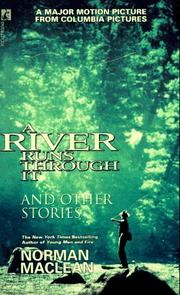
The most celebrated piece of fly-fishing literature ever written. Reading it now — after building real skill — unlocks its deeper meditations on craft, patience, and the river as a way of life.
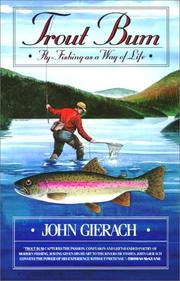
Gierach's essays capture the rhythms of a full angling life with humor and hard-won insight. This book rewards the learner who has now spent time on the water and can recognize every situation he describes.
Discussion
Keep reading
Paths that share books, cover the same subject, or open a related topic.