Learn kayaking: paddle with skill & safety
This curriculum takes a complete beginner from their very first paddle stroke all the way to confident whitewater and expedition paddling. Each stage builds directly on the last — starting with core technique and gear literacy, moving through water-reading and safety skills, then into whitewater-specific craft, and finally into the mindset and planning needed for real multi-day adventures.
Foundations: First Strokes & Gear Literacy
BeginnerUnderstand the essential vocabulary of paddling, choose appropriate gear, and develop correct basic technique on flatwater for both kayaking and canoeing.
▸ Study plan for this stage
Pace: 6–8 weeks total. Week 1–3: Read "Canoeing" by Laurie Gullion (~20–25 pages/day), pausing after each chapter to review diagrams and terminology. Week 4–8: Read "Canoeing and Kayaking" by Laurie Gullion (~15–20 pages/day), cross-referencing kayak-specific sections against what you already learned abou
- Paddling terminology: parts of the paddle (blade, shaft, grip/T-grip), parts of the boat (bow, stern, hull, gunwale, thwart, seat, keel), and on-water directional language (upstream, downstream, ferry angle)
- Gear selection criteria: how to size a canoe or kayak for body type and intended use (flatwater vs. moving water), paddle length and blade shape for each discipline, and essential safety equipment (PFD fit, helmet use, throw bag)
- Body positioning and trim: proper seated and kneeling posture in a canoe, cockpit fit in a kayak, and how weight distribution affects boat stability and maneuverability
- The four foundational canoe strokes as taught in Gullion's 'Canoeing': forward stroke, back stroke, draw stroke, and pry stroke — including correct torso rotation and blade angle
- Kayak-specific technique introduced in 'Canoeing and Kayaking': the forward stroke with torso rotation, sweep stroke for turning, and low brace for initial stability
- Solo vs. tandem paddling dynamics: communication, synchronized timing, and the distinct roles of bow and stern paddlers in a tandem canoe
- Reading flatwater: identifying current, eddies, and wind effect on an open boat, and how to plan a simple flatwater route safely
- Self-rescue and safety basics: wet exit from a kayak cockpit, assisted canoe rescue (T-rescue concept), and the non-negotiable habit of wearing a PFD at all times on the water
- After reading Gullion's 'Canoeing', can you name and describe the function of at least six structural parts of a canoe and explain how each affects performance?
- What are the key differences in paddle design between a canoe paddle and a kayak paddle, and how does each design relate to the stroke mechanics described in 'Canoeing and Kayaking'?
- Walk through the correct body mechanics of the forward stroke for both a canoe and a kayak as Gullion presents them — where does the power come from, and what common errors should you avoid?
- How do you select an appropriately sized canoe or kayak for a beginner paddler heading out on calm flatwater, based on the criteria outlined across both books?
- What is the purpose of the draw stroke and the sweep stroke, and in what on-water situations would you use each one?
- What safety steps and equipment checks should a beginner complete before launching, according to the guidance in these two books?
- Gear audit & sizing drill: Visit a local outfitter or paddle club and physically handle canoe and kayak paddles of different lengths. Use the sizing guidelines from both Gullion books to select the correct paddle for your height and boat width, and write a one-page justification for your choice.
- Terminology flashcards: After finishing 'Canoeing', create a two-sided flashcard deck (physical or digital) covering every labeled part in Gullion's diagrams. Quiz yourself until you can identify all parts cold, then extend the deck with kayak-specific terms from 'Canoeing and Kayaking'.
- Dry-land stroke practice: On a stable surface (dock, lawn, or living room), practice the forward stroke, back stroke, draw, and sweep with a paddle or broomstick, focusing on torso rotation rather than arm pulling. Record yourself and compare your posture to the technique photos in the books.
- First flatwater paddle session (canoe): Rent or borrow a canoe and spend 60–90 minutes on calm water executing only the four strokes from Gullion's 'Canoeing'. Have a partner call out a stroke name at random; your goal is to execute it cleanly within two paddle cycles.
- First flatwater paddle session (kayak): Repeat the on-water session in a sit-in or sit-on-top kayak, focusing on the forward stroke and low brace from 'Canoeing and Kayaking'. Practice a deliberate wet exit and re-entry at least twice in shallow, supervised water.
- Comparative reflection journal: After both on-water sessions, write a one-to-two page entry comparing the feel of canoe vs. kayak paddling — stability, stroke efficiency, turning response — and map your observations back to specific passages or diagrams in each Gullion book.
Next up: Mastering flatwater vocabulary, gear selection, and basic stroke mechanics from both Gullion books gives you the stable technical foundation needed to safely progress into moving water, reading river features, and learning more advanced maneuvering strokes in the next stage of the curriculum.
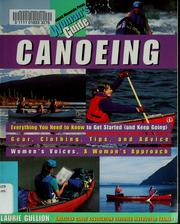
Published by the American Canoe Association, this is the definitive beginner's primer — it introduces boat parts, paddle types, basic strokes, and safety habits in plain language, giving you the vocabulary every later book assumes you have.

The companion ACA kayaking volume mirrors the canoe book's structure, so reading it second lets you directly compare the two disciplines and understand how hull design and paddle geometry differ between them.
Technique & Water Reading
BeginnerRefine stroke mechanics, learn to read moving water features (eddies, currents, waves), and begin applying technique in real on-water situations beyond a calm pond.
▸ Study plan for this stage
Pace: 3–4 weeks, ~20–25 pages/day; Mason's book is richly illustrated so budget extra time to study the photo sequences and diagrams alongside the text — treat each stroke chapter as a mini-unit before moving to the water
- Paddle anatomy and correct grip — blade angle, shaft grip, and body posture as the foundation for every stroke described by Mason
- The forward and back stroke family — Mason's detailed breakdown of the forward stroke, J-stroke, and stern pry as the core propulsion and correction toolkit
- Draw strokes and braces — the cross-draw, sculling draw, and low/high brace as balance-saving and lateral-movement tools Mason illustrates in sequence
- Eddy turns and peel-outs — using the eddy line as a pivot point; Mason's explanation of leaning into the turn and timing the stroke at the eddy line
- Reading moving water — identifying eddies, downstream Vs, upstream Vs, hydraulics, and pillow water as Mason presents them in the context of river travel
- Boat lean vs. body lean — Mason's critical distinction between edging the hull and tilting the torso, and why confusing the two causes capsizes
- Trim and boat control — how passenger/gear placement affects how the canoe tracks and responds, a practical concern Mason returns to throughout
- The 'quiet water' to 'moving water' progression — Mason's philosophy of mastering strokes in calm conditions before applying them to current, mirroring the stage's own learning arc
- According to Mason, what are the three most common posture errors that undermine an otherwise correct forward stroke, and how does each error waste power or cause the boat to veer?
- How does Mason describe the mechanics of an eddy turn — what is the paddler doing with lean, stroke, and timing at the moment the bow crosses the eddy line?
- What visual cues does Mason say a paddler should look for on the surface of moving water to identify a safe downstream route versus a hazard?
- What is the difference between a low brace and a high brace as Mason explains them, and in what on-water situations is each one appropriate?
- How does Mason explain the role of the J-stroke in keeping a solo canoe tracking straight, and why does he consider it essential rather than optional for river travel?
- In Mason's view, why is boat lean so important when executing draw strokes and eddy turns, and what happens to stability if the paddler leans the body instead of edging the hull?
- Stroke isolation on flat water: Spend 20–30 minutes per session practicing one stroke family at a time (forward/J-stroke, then draw/cross-draw, then braces) exactly as Mason illustrates them — film yourself from the bank and compare your blade angle and body posture to his photo sequences
- Eddy-line drills: Find a gentle river with a clear eddy behind a rock or bank point; practice entering and exiting the eddy 10 times in each direction, focusing on the lean-and-stroke timing Mason describes — count how many times you stay dry vs. get wet
- Water-reading walk: Before paddling any moving-water section, walk the bank and verbally identify every feature (eddy, downstream V, upstream V, wave, hydraulic) using Mason's terminology — sketch a simple map of the line you plan to take, then compare it to what you actually paddled
- Brace practice in shallow water: In knee-deep water with a partner spotting, deliberately tip the boat to the point of near-capsize and recover with a low brace, then a high brace — repeat until the recovery feels instinctive rather than panicked
- Trim experiment: Load your canoe with gear or a partner in three different configurations (bow-heavy, stern-heavy, balanced) and paddle the same 100-meter course each time, noting how tracking and turning effort change — relate your observations back to Mason's trim discussion
- Slow-motion J-stroke repetition: Paddle a straight 200-meter course on flat water using only the J-stroke on one side; count how many strokes it takes to stay within a 1-meter-wide imaginary lane — repeat weekly to track improvement as your technique refines
Next up: Mastering Mason's stroke mechanics and water-reading vocabulary gives the paddler the physical toolkit and perceptual language needed to tackle more demanding whitewater or multi-day tripping environments, where the next stage's material on river safety, rescue, and expedition planning will build directly on these foundations.

A beloved Canadian classic that treats the canoe paddle as an art form; Mason's meticulous breakdown of every stroke and his philosophy of reading water build the intuition that separates a competent paddler from a merely functional one.
Safety, Rescue & River Skills
IntermediateDevelop a comprehensive safety mindset, master self-rescue and assisted rescue techniques, and gain the river-reading skills needed to paddle moving water responsibly.
▸ Study plan for this stage
Pace: 4–5 weeks, ~20–25 pages/day; plan for 3–4 reading sessions per week, reserving at least one session per week for on-water or poolside practice to immediately apply what was read in "River Rescue"
- The 'Swift Water Safety' mindset: proactive hazard recognition and risk management before entering any moving water
- River hydrology fundamentals: reading current, eddies, hydraulics, holes, strainers, and undercut rocks as described in River Rescue
- The hierarchy of rescue: self-rescue first, then assisted rescue, then mechanical systems — and why that order matters
- Swimming techniques in moving water: aggressive defensive swimming, ferry angles, and catching eddies on foot
- Throw-bag deployment: proper coiling, targeting a swimmer, and managing a live-bait rescue from shore
- Boat-based rescues: the T-rescue, tow systems, and how to approach a pinned or swamped boat safely
- Mechanical advantage systems: Z-drag and C-drag setups for unpinning boats using ropes and carabiners
- Group management and communication: signaling conventions, scouting protocols, and setting safety before running a rapid
- According to River Rescue, what is the correct priority order for rescue response, and why is self-rescue always addressed first?
- How do you identify a hydraulic (hole) versus a pillow versus a strainer, and what makes each uniquely dangerous?
- What are the key steps for a successful throw-bag rescue, and what common errors does Bechdel warn against?
- Describe the setup of a Z-drag mechanical advantage system: what components are needed and in what configuration?
- What swimming posture and body position does River Rescue recommend when caught in a rapid, and when should you switch from defensive to aggressive swimming?
- What pre-trip group management practices does Bechdel recommend to minimize the need for rescue in the first place?
- Throw-bag practice (dry land): Coil and throw a throw-bag at a target (a cone, bucket, or marked spot) from 30–40 feet repeatedly until you can land it accurately 8 out of 10 times, then practice re-coiling quickly for a second throw.
- Pool or flatwater swim drill: Enter the water and practice both defensive swimming posture (feet up, toes downstream) and aggressive swimming (rolling to your stomach, ferrying toward a target) so the body positions become automatic.
- River-reading walk: Visit a local river or creek and, without getting in, identify and label at least five features from River Rescue — eddies, the eddy line, a hydraulic or recirculating hole, a strainer hazard, and the downstream V of a clean channel.
- Z-drag setup on land: Using a rope, two carabiners, and a prusik loop, rig a complete Z-drag mechanical advantage system around a tree or fixed anchor and practice applying tension until the setup is second nature.
- Rescue scenario role-play: With a paddling partner, take turns acting as the 'swimmer' and the 'rescuer' in a controlled flatwater environment — practice throw-bag deployment, live-bait rescue entry, and verbal communication using the signal conventions from River Rescue.
- Personal float plan & safety checklist: Draft a written pre-trip safety checklist based on Bechdel's group management principles, covering gear, communication signals, scouting criteria, and swim-out plans for each paddler in a hypothetical group of four.
Next up: Mastering the safety, rescue, and river-reading framework in River Rescue gives the paddler the risk-management foundation and moving-water awareness needed to confidently pursue advanced paddling technique and whitewater progression in the next stage.

The canonical text on swiftwater rescue used by guides and instructors worldwide; reading it now — after you can handle a boat — lets you apply every scenario to real situations you have already encountered on the water.
Advanced Whitewater & Expedition Planning
ExpertHandle demanding whitewater with confidence, understand expedition logistics and wilderness travel by water, and develop the judgment needed for independent multi-day paddling adventures.
▸ Study plan for this stage
Pace: 10–13 weeks total. Week 1–3: "The Bombproof Roll and Beyond" (~20–25 pages/day, including re-reading technical sections); Week 4–8: "Derek C. Hutchinson's Expedition Kayaking" (~25–30 pages/day, pausing to map routes and review gear lists); Week 9–13: "Paddle Your Own Canoe" (~20 pages/day, with fie
- Bombproof roll mechanics — Dutky's systematic breakdown of setup, catch, sweep, and hip snap phases, and how to diagnose and self-correct roll failures in dynamic water
- Beyond-the-roll recovery toolkit — bracing (low and high), sculling draws, and re-entry techniques (paddle-float, cowboy scramble, Eskimo rescue) as a layered safety system
- Reading whitewater at the advanced level — identifying hydraulics, holes, pourover features, eddy lines, and pillow water, and translating that reading into confident line selection
- Expedition kayaking logistics (Hutchinson) — load planning, waterproof packing systems, deck rigging, and trim management for fully laden sea and touring kayaks
- Navigation and route planning on open and coastal water — chart reading, tidal calculations, weather windows, and contingency routing as taught through Hutchinson's real expedition examples
- Wilderness travel by canoe (McGuffin) — multi-day river and lake travel, portaging strategy, campsite selection, Leave No Trace ethics, and self-sufficiency in remote environments
- Risk management and judgment — developing a personal decision-making framework that integrates skill assessment, group dynamics, environmental conditions, and go/no-go criteria across all three books
- Expedition mindset and leadership — pacing, morale, communication, and the mental resilience required for extended wilderness paddling journeys
- After working through Dutky's breakdown, can you identify the specific mechanical failure point in a missed roll and describe the drill you would use to fix it?
- What layered rescue hierarchy does Dutky advocate beyond the roll itself, and in what order should a paddler attempt each recovery option in a real swim situation?
- Using Hutchinson's framework, how would you plan a 7-day coastal kayak expedition — including load distribution, daily mileage targets, tidal windows, and at least two contingency routes?
- What are the key differences in packing philosophy, portaging technique, and campsite ethics between a canoe expedition (McGuffin) and a sea-kayak expedition (Hutchinson)?
- How do you assess whether a whitewater feature or open-water crossing is within your current skill margin, and what specific factors from all three books inform that go/no-go decision?
- What wilderness navigation and weather-reading skills does Hutchinson identify as non-negotiable for independent expedition travel, and how do McGuffin's canoe-country experiences reinforce or extend those skills?
- Roll clinic sessions: Using Dutky's phase-by-phase checklist, video-record your roll from underwater and above the surface, then self-diagnose against his failure-mode descriptions; repeat weekly until the roll is consistent in moving water and on both sides.
- Simulated swim drill: Deliberately wet-exit in a controlled environment and practice every recovery method Dutky covers — paddle-float re-entry, cowboy scramble, and assisted rescues — timing each and noting which conditions favor which method.
- Whitewater scouting journal: Visit a Class III–IV rapid, sketch the hydraulics and eddy lines, write your intended line and why, run it, then debrief against your plan; repeat on three different features to build pattern recognition.
- Expedition load-out exercise (Hutchinson): Pack a fully loaded kayak for a hypothetical 5-day trip using Hutchinson's trim and rigging principles, then paddle it for at least 90 minutes, noting how load affects handling, bracing, and rolling.
- Route-planning project: Using topographic maps, nautical charts (for Hutchinson's coastal model) and river guides (for McGuffin's canoe model), plan two complete multi-day itineraries — one coastal kayak, one wilderness canoe — including daily mileage, portages, campsites, resupply, and two contingency options each.
- Judgment scenario workshop: Write out three realistic go/no-go scenarios (e.g., rising water levels, unexpected coastal fog, a group member's fatigue) and apply a structured decision matrix drawn from all three books; discuss with a paddling partner or club to stress-test your reasoning.
Next up: Mastering demanding whitewater, expedition logistics, and wilderness judgment through these three books gives the reader the technical depth and self-reliance needed to pursue specialized disciplines — such as sea kayak touring, open-canoe tripping in remote wilderness, or advanced swiftwater rescue — which form the natural focus of any subsequent advanced or leadership-level stage.
Takes rolling and bracing to an advanced level, addressing failure modes and mental blocks that intermediate paddlers hit — essential reading before committing to serious whitewater or remote trips.
Hutchinson is a founding figure of sea and expedition kayaking; this book covers multi-day route planning, load management, navigation, and coastal hazards, translating all your accumulated skills into real adventure.
A practical and inspiring guide to canoe tripping and wilderness travel that closes the curriculum by showing how everything — technique, safety, gear, and water-reading — comes together on a genuine expedition.
Discussion
Keep reading
Paths that share books, cover the same subject, or open a related topic.