Best Books on Water and Hydrology, in Order
This curriculum builds from a solid grounding in the physical science of water — the cycle, rivers, and groundwater — through the engineering and ecological consequences of floods and drought, and finally into the geopolitical and policy battles over freshwater scarcity. Starting at an intermediate level, each stage assumes the vocabulary and intuition built in the one before, creating a coherent arc from hydrology as a natural science to water as a civilizational challenge.
The Water Cycle & Hydrological Foundations
IntermediateUnderstand how water moves through the Earth system — precipitation, evaporation, infiltration, runoff — and develop the scientific vocabulary needed for every subsequent stage.
▸ Study plan for this stage
Pace: 4–5 weeks, ~25–30 pages/day, focusing on Chapters 1–6 of Brutsaert's "Hydrology"
- The complete water cycle: precipitation, evaporation, transpiration, infiltration, percolation, and runoff as interconnected processes
- Energy balance and water balance equations as the mathematical foundation for understanding hydrological processes
- Soil water dynamics: capillary rise, water retention, and the vadose zone's role in water movement
- Groundwater flow principles: Darcy's law, hydraulic conductivity, and aquifer characteristics
- Streamflow generation mechanisms: how precipitation becomes runoff through surface and subsurface pathways
- Evapotranspiration as a critical component linking atmospheric and terrestrial water systems
- Describe the complete water cycle and explain how energy drives each major phase (evaporation, precipitation, infiltration, runoff)
- What is the water balance equation and how do you apply it to a watershed or region?
- Explain Darcy's law and describe how hydraulic conductivity affects groundwater movement through different soil types
- How does soil water potential influence water movement in the vadose zone, and what is capillary rise?
- What are the primary mechanisms by which precipitation becomes streamflow, and how do infiltration rates affect this process?
- How is evapotranspiration measured or estimated, and why is it essential for water balance calculations?
- Create a detailed water balance diagram for a small watershed, labeling all inputs, outputs, and storage changes over a year
- Collect soil samples from different depths and measure their water retention curves; plot the relationship between water potential and water content
- Calculate infiltration rates using a simple double-ring infiltrometer or cylinder method in different soil types and compare results
- Solve Darcy's law problems: calculate groundwater flow rates given hydraulic conductivity, gradient, and cross-sectional area
- Trace a water molecule's path through the complete cycle using Brutsaert's framework—from precipitation through evapotranspiration—and identify energy transformations at each step
- Estimate evapotranspiration for your region using the Penman equation or similar method from Brutsaert, and compare with measured streamflow data to validate water balance
Next up: This stage establishes the quantitative language and physical principles (water and energy balance, Darcy's law, evapotranspiration) that are essential for analyzing specific hydrological systems—groundwater aquifers, surface water bodies, and watershed processes—in subsequent stages.
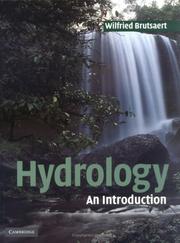
A rigorous but accessible university-level text that deepens the quantitative understanding of the cycle — evapotranspiration, streamflow, and soil-water dynamics — building on the conceptual base of the first book.
Rivers, Groundwater & the Living Landscape
IntermediateUnderstand how surface water and groundwater behave, interact, and shape landscapes, and appreciate rivers as dynamic ecological and geomorphic systems.
▸ Study plan for this stage
Pace: 12–14 weeks, ~40–50 pages/day. Week 1–3: "A River Runs Through It" (280 pages); Week 4–7: "The Control of Nature" (272 pages); Week 8–14: "Groundwater" (604 pages, denser technical content)
- Rivers as dynamic systems shaped by geology, climate, and time—not static features
- How surface water and groundwater interact through infiltration, seepage, and baseflow to sustain river systems
- Geomorphic processes: erosion, deposition, and channel evolution driven by water flow and sediment transport
- Human attempts to control water (dams, levees, diversions) and their unintended ecological and landscape consequences
- Groundwater flow principles: hydraulic conductivity, gradients, and aquifer behavior that sustain baseflow and ecosystems
- Rivers as living ecosystems where hydrology, geomorphology, and biology are inseparable
- Landscape memory: how past hydrologic and geomorphic events shape present conditions and future vulnerability
- How does Maclean's narrative about fly-fishing reveal the relationship between a river's physical character and its ecological vitality?
- What are the major human interventions in river systems described in McPhee's essays, and what unintended consequences did they produce?
- Explain the connection between groundwater flow, hydraulic conductivity, and the baseflow that sustains rivers during dry periods.
- How do erosion and deposition processes shape river channels over time, and why do rivers resist human control?
- What is the role of infiltration and recharge in connecting surface water systems to groundwater aquifers?
- How do the three books together illustrate that rivers cannot be understood or managed in isolation from their groundwater systems and broader landscapes?
- Read 'A River Runs Through It' and map the Blackfoot River's physical characteristics (gradient, substrate, flow patterns) as described; then research its actual hydrology and compare your inferences to reality
- After 'The Control of Nature,' select one major water-control project (Aswan Dam, Three Gorges, or a local example) and trace its hydrologic and ecological consequences using peer-reviewed sources
- Create a cross-section diagram of an aquifer system showing recharge zones, water table, confined/unconfined layers, and groundwater flow paths based on Freeze's principles
- Conduct a local stream walk: measure channel width/depth, observe substrate, identify seepage zones, and sketch a simple groundwater-surface water interaction diagram for your site
- Write a comparative analysis: how would McPhee's examples of failed river control differ if groundwater dynamics (from Freeze) had been considered in the original design?
- Develop a conceptual model of a river system integrating Maclean's narrative observations, McPhee's engineering failures, and Freeze's groundwater flow equations to show how all three perspectives are necessary
Next up: This stage establishes the foundational understanding that rivers and groundwater are coupled, dynamic systems shaped by geology and human action—preparing you to examine how human water use, climate change, and watershed management challenge these systems at scales from local to global.
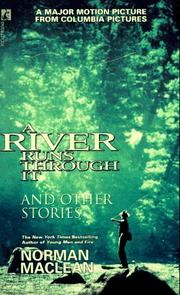
A beautifully observed literary lens on rivers that builds intuitive feel for river character and rhythm — an ideal bridge between science and the deeper reading ahead.

McPhee's vivid narrative journalism on human attempts to manage rivers and sediment makes geomorphic and hydrological processes viscerally real before tackling technical texts.
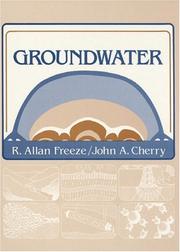
The canonical English-language text on groundwater hydrology — aquifer dynamics, recharge, and flow — providing the subsurface counterpart to the surface-water knowledge built so far.
Floods, Drought & Hydrological Extremes
IntermediateUnderstand the science, history, and human consequences of hydrological extremes — both too much and too little water — and how societies have tried (and failed) to manage them.
▸ Study plan for this stage
Pace: 10–12 weeks, ~40–50 pages/day (mix of narrative and technical sections; allow extra time for Cadillac Desert's dense policy chapters)
- The engineering hubris of large-scale water management projects (dams, canals, diversions) and their unintended ecological and social consequences, as detailed in Cadillac Desert
- How infrastructure failures and poor planning compound natural hazards into human catastrophes, exemplified by the Johnstown disaster
- The distinction between flood and drought as opposite extremes of the hydrological cycle, and how both reflect human vulnerability to water variability
- Climate change as a multiplier of hydrological extremes, altering precipitation patterns, snowmelt timing, and the frequency/intensity of droughts and floods
- The tension between short-term human needs (water supply, irrigation, hydropower) and long-term watershed health and resilience
- Historical patterns of societal adaptation and maladaptation to water scarcity and excess across different regions and time periods
- The role of data, monitoring, and early warning systems in reducing disaster risk, and the limits of prediction
- Water law, rights allocation, and political conflict as drivers of both water management decisions and vulnerability to extremes
- What were the primary engineering goals of the Bureau of Reclamation's dam-building program in the American West, and what ecological and social costs did Reisner argue were overlooked or ignored?
- How did the design and maintenance failures of the South Fork Dam directly lead to the Johnstown flood, and what does McCullough's account reveal about the relationship between wealth, class, and disaster vulnerability?
- Compare the mechanisms and human impacts of floods versus droughts as presented across the three books. How do they differ in their onset, duration, and recovery timescales?
- According to Collier, how is climate change expected to alter the frequency and intensity of hydrological extremes, and what evidence does he present from recent decades?
- What examples from these books illustrate the principle that 'you can't engineer your way out of a hydrological problem'? What are the limits of infrastructure-based solutions?
- How do water rights, interstate compacts, and political boundaries (as discussed in Cadillac Desert) shape vulnerability to both floods and droughts?
- Timeline exercise: Create a chronological map of major droughts, floods, and water management projects mentioned across all three books (e.g., Johnstown 1889, Colorado River Compact 1922, Dust Bowl, recent megadroughts). Annotate with climate and policy context.
- Dam impact analysis: Select one major dam or water project from Cadillac Desert (e.g., Hoover, Glen Canyon, Aswan). Research and write a 2–3 page brief on its intended benefits, actual ecological impacts, and affected communities. Compare your findings to Reisner's account.
- Disaster forensics: Read McCullough's account of Johnstown alongside a modern flood event (e.g., Pakistan 2010, Germany 2021). Create a comparison table of warning signs, infrastructure failures, evacuation challenges, and post-disaster response. What has changed? What hasn't?
- Climate scenario modeling: Using Collier's framework, sketch how a 2°C or 4°C warming scenario might alter precipitation and snowmelt in a watershed you choose (e.g., Colorado River Basin, your local region). How would this shift flood and drought risk?
- Water law debate: Research one interstate or international water dispute (e.g., Colorado River Compact, Nile Basin, Indus Waters Treaty). Write a position paper arguing how the allocation should be adjusted in light of climate change and the concepts from Cadillac Desert.
- Resilience audit: Interview a local water utility, agricultural cooperative, or emergency management agency about their current flood and drought preparedness. Assess their approach against the lessons from these three books. What gaps exist?
Next up: This stage establishes the physical and human dimensions of hydrological extremes and the failures of past management paradigms, preparing you to explore adaptive and nature-based solutions, watershed restoration, and integrated water governance in the next stage.

The definitive account of water engineering in the American West, covering dam-building, drought, and the political economy of water scarcity — a masterclass in how hydrology meets hubris.
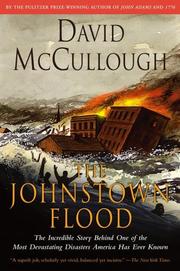
A gripping historical case study of a catastrophic flood that illustrates the deadly intersection of hydrology, infrastructure failure, and human decision-making.
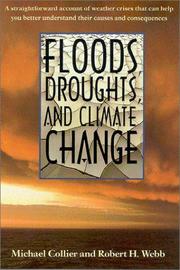
Synthesizes the science of hydrological extremes with climate change projections, connecting the physical processes learned earlier to the accelerating risks of the present day.
The Politics & Future of Fresh Water
ExpertEngage with freshwater as a geopolitical resource — who controls it, who is denied it, how it is priced and fought over — and evaluate competing visions for sustainable water governance.
▸ Study plan for this stage
Pace: 8–10 weeks, ~40–50 pages/day (approximately 3 books × 300–400 pages each)
- Water scarcity as a geopolitical flashpoint: how freshwater depletion creates conflict and power imbalances between nations and regions (Pearce's focus on river basins)
- The hidden economics of water: how pricing, subsidies, and corporate control shape access and consumption patterns (Fishman's examination of the bottled water industry and municipal systems)
- Water governance frameworks: comparing centralized state control, market-based solutions, and community-led management approaches across different contexts
- The role of infrastructure and technology: dams, aquifer extraction, desalination, and recycling as both solutions and sources of new inequities
- Water justice and inequality: who bears the costs of water scarcity, who profits, and how historical and colonial legacies shape current water access
- Competing visions for sustainability: balancing human needs, agricultural demands, industrial use, and ecosystem health in a water-stressed world
- The interconnection between water, climate, and migration: how freshwater stress drives displacement and shapes future geopolitical stability
- What are the major transboundary water conflicts Pearce documents, and what political and economic factors drive them?
- How does Fishman explain the rise of bottled water as a commodity, and what are its consequences for public water systems and equity?
- What is the relationship between water pricing and access to freshwater for poor and marginalized communities?
- How do different governance models (state-controlled, privatized, community-managed) approach the challenge of allocating scarce water resources?
- According to these authors, what role do dams, aquifer depletion, and other infrastructure choices play in creating or exacerbating water crises?
- What competing visions for the future of freshwater do Pearce, Fishman, and Boccaletti present, and what are the trade-offs of each approach?
- Map a transboundary river basin (e.g., Nile, Tigris-Euphrates, Ganges, or Colorado) using Pearce's case studies: identify upstream and downstream nations, their water demands, and existing or potential conflicts. Write a 2–3 page policy brief proposing a governance framework.
- Trace the supply chain of a bottled water brand in your region using Fishman's framework: where is it sourced, who profits, what are the environmental costs, and how does it compare to municipal tap water? Present findings as an infographic or short report.
- Conduct a local water audit: research your municipality's water sources, pricing structure, and access equity. Interview or survey residents about their water security and perceptions. Compare findings to patterns Fishman and Pearce describe.
- Debate exercise: divide into teams representing different stakeholders (agricultural interests, urban consumers, industrial users, environmental advocates, downstream nations) in a fictional water-scarce region. Use arguments and evidence from all three books to negotiate a water allocation agreement.
- Analyze a water privatization case study (e.g., Manila, Bolivia, or South Africa) using Fishman's critique of market-based solutions. Evaluate whether Boccaletti's alternative governance models could have produced better outcomes.
- Create a scenario analysis: choose a region facing water stress (identified by Pearce or Fishman) and project three futures (business-as-usual, market-driven, sustainability-focused) to 2050. Assess geopolitical, economic, and social consequences of each.
Next up: This stage equips you to recognize freshwater as a contested political and economic resource shaped by power, inequality, and competing visions—preparing you to evaluate specific technological, policy, and adaptation strategies in the next stage.
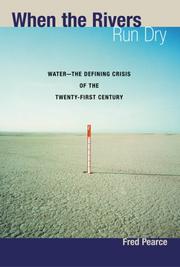
A globe-spanning journalistic investigation of freshwater crises — depleted aquifers, dying rivers, water wars — that applies all the hydrological science of earlier stages to real geopolitical conflicts.

Examines the economics, culture, and politics of water use in wealthy and developing nations alike, pushing the reader toward systemic thinking about pricing, waste, and reform.

A sweeping historical and scientific synthesis — written by a leading hydrologist and policy expert — that ties together the full arc of this curriculum: the science, the engineering, and the civilizational stakes of fresh water.
Discussion
Keep reading
Paths that share books, cover the same subject, or open a related topic.