Say the obvious thing first: whitewater is a hazardous sport with unforgiving failure modes, and no book teaches it. Moving water kills people who were technically competent but misread a strainer or an undercut, and a printed page cannot give you the reflex of bracing into a wave or the judgment to portage. Take instruction, paddle with people better than you, and get formal swiftwater rescue training before you assume responsibility for anyone else.
What books do well is the part that is slow and expensive to learn on the river: reading water, understanding hydraulics, rigging systems, rescue theory, and the mental rehearsal that turns an emergency into a procedure you have already thought through. Read them in that spirit — as preparation between trips rather than a substitute for them.
Start with the raft and the river
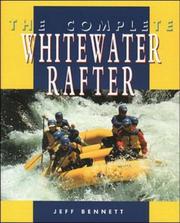
Jeff Bennett's The complete whitewater rafter is the broadest foundation on this path. It covers gear and rigging, oar and paddle technique, reading rapids, hydraulics — holes, eddies, pillows, pourovers — and trip planning. Even if you intend to kayak, the water-reading chapters transfer completely, and the rafting frame makes the hydraulics easier to see because the boat is large enough to show you what the river is doing to it.
The kayak skill that gates everything else
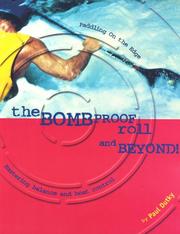
Paul Dutky's The bombproof roll and beyond is the book on the Eskimo roll, and it is unusually good at diagnosing why a roll is failing — hip snap timing, head position, the specific ways body mechanics break down under stress. It goes on to bracing, boat control and the mechanics of paddling technique. A reliable roll is what makes the rest of whitewater kayaking survivable at any interesting difficulty, so this is the book to read alongside pool sessions, ideally with someone watching you.
Rescue is a separate discipline
River rescue by Les Bechdel is the standard text on organised river rescue: rope work, mechanical advantage systems, entrapment and foot-entrapment, boat recovery, and the decision-making about when to attempt a rescue at all. Slim Ray's Swiftwater rescue covers similar ground with a broader emphasis, including scenarios involving flood and non-recreational rescue, and it is thorough on hazard assessment.
Read both, then take the course. Rope systems in particular are one of those skills that reads as simple and falls apart in cold water under time pressure; the books are the reference, the certification course is where the skill is actually built. Neither substitutes for the other, and neither substitutes for a first-aid qualification appropriate to remote settings.
Two books about rivers
Norman Maclean's A river runs through it is on this path as literature rather than technique — it is about fly fishing, a family and a Montana river, not about running rapids. Read it for what it does to your sense of moving water. And Kevin Fedarko's The Emerald Mile tells the story of a record-setting speed run through the Grand Canyon during the 1983 flood release, wrapped around the history of the Colorado, the dam, and the boatmen. It is the best narrative account of what big water actually does, and it is honest about the cost.
The practical sequence, if you are starting now: read Bennett, take a course, get in a boat, then read Dutky while you are learning to roll, then take a swiftwater rescue class and read Bechdel and Ray around it. Follow the full path to keep the technical books and the river books in a useful order.
Follow the full ordered path here: How to Learn Whitewater Rafting and Kayaking from Books.