What to Read Before In Search of Lost Time: Getting Started with Proust, in Order
In Search of Lost Time is roughly four thousand pages across seven volumes, and the first fifty are the ones that stop people — a child waiting for a goodnight kiss, described at a length that feels like a mistake. It is not a mistake, and this path exists to get you across that opening and through volume one, at which point you can decide honestly whether to continue. This is not a survey of Proust's work; it is company for a very long walk, and the novel comes last. If you need plot momentum, or you resent a sentence that runs half a page, no amount of preparation will make this yours.
Decide whether you actually want this
BeginnerFind out what the novel is for, and what four thousand pages will and will not give you, before buying volume one
▸ Study plan for this stage
Pace: Two weeks, and the whole point of the stage is that it costs almost nothing. How Proust Can Change Your Life is 208 pages of short chapters and reads in a weekend. Proust is a 151-page biography and takes two evenings. Do both before spending money on a seven-volume set.
- De Botton's book is organised as mock self-help — chapters on how to take your time, how to suffer successfully, how to be a good friend, how to open your eyes — and the joke is a delivery mechanism for the novel's actual observations about love, jealousy, snobbery and habit.
- It is doing something specific and useful: extracting the propositional content from a book whose reputation is entirely about style, so you can see whether you want the observations before deciding whether you can bear the sentences.
- The biographical anecdotes it uses — the elaborate tipping, the duel, the reading of a newspaper as though it were scripture — are true and they establish the temperament: a man for whom no experience was too small to be examined at length.
- White's short biography supplies the material facts the novel keeps encoding: severe asthma from childhood, a nocturnal existence in a sound-proofed room, a Jewish mother in a France convulsed by the Dreyfus affair, and a homosexuality that the novel redistributes among its characters rather than st
- Knowing that the narrator's Albertine draws on a man Proust loved does not decode the novel, and White is careful about that. It does explain a great deal of the jealousy plot's texture, which is why reading the biography first costs you nothing in surprise.
- The novel had a long preparation — an abandoned early novel and a critical book arguing against reading works through their authors' lives — and knowing that a first attempt failed makes the finished thing look less like a miracle and more like a solution.
- The honest test at the end of this stage is temperamental, not intellectual. If you need plot momentum, or you resent a sentence that runs half a page, no amount of preparation will make this book yours, and stopping here is a legitimate outcome.
- What does de Botton claim the novel is actually about? State it in three sentences without using the word memory.
- Which of his chapters describes something you recognise from your own life? That recognition is the best predictor of whether the novel will work for you.
- What did Proust's illness and his schedule do to the conditions under which the book was written?
- What does White say about the relationship between Proust's life and the novel's material, and what does he warn against?
- Having read both, what do you now expect four thousand pages to give you? Write it down; you will check it later.
- Read de Botton first and mark every passage he quotes from the novel. Read those quotations again on their own — that is your first real sample of the prose.
- Time yourself on one of the quoted long sentences and read it aloud. This is the single most informative two minutes in the whole stage.
- From White, write a one-page chronology of Proust's life with the composition of the novel marked against it.
- Write 200 words on why you want to read this book. Keep it; the honest version of that paragraph is what gets you through volume one.
Next up: If you are still here, the next stage assembles the companions that keep a multi-year reading alive rather than dutiful.

Short, funny, and the least intimidating door into Proust: it extracts the novel's actual observations about love, friendship and time and shows why anyone would spend years on it. Read it in a weekend before committing to anything.
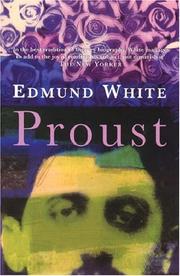
A brief biography — a hundred and fifty pages — that supplies the asthma, the cork-lined room and the sexuality the novel encodes. Read it now rather than later; it costs you nothing in surprise and explains a great deal of the texture.
The company for the long stretch
IntermediateAssemble the companions that keep a multi-year reading alive rather than dutiful
▸ Study plan for this stage
Pace: Four to five weeks, and these three are not read like ordinary books. Monsieur Proust is 387 pages of dictated memoir and reads easily; two weeks. Proust's Way is 289 pages — read the practical chapters now and keep the rest for later. Paintings in Proust is 352 pages and is never read through; open
- Albaret's memoir was dictated in old age by the woman who kept his household for the last decade of his life, and it is the closest anyone gets to the room where the book was written: the hours, the coffee, the fumigation for the asthma, the visitors admitted and refused.
- Its most useful detail is physical. The manuscript grew by additions glued onto the pages until they unfolded to enormous lengths, which is the material fact behind the novel's expanding sentences — the book physically got longer in the same way it reads.
- It is also a memoir with a stake in its subject. She adored him, defended him, and was recalling fifty years later. Read it for proximity rather than for verdicts.
- Shattuck's field guide was written by a critic who read the novel for half a century, and its practical chapters are the reason it is here: how fast to go, what to do with the longueurs, which passages reward slowness, and how the novel's structure works over the whole span.
- His most useful structural claim is that the novel has a small number of load-bearing passages and a great deal of connective tissue, and that a reader who treats every page as equally weighted will not finish. That is permission to read at uneven speed.
- Karpeles's book reproduces every painting Proust names beside the passage that names it. The novel constantly assumes you can see a specific picture — a fragment of a Botticelli in a face, a Giotto figure in a pregnant kitchen maid, a Vermeer on which a whole death scene turns.
- That is a problem no amount of rereading solves, because the information is not in the text. This is the one companion that changes the experience rather than commenting on it.
- Assembling company before starting is not procrastination for a book of this length. It is the difference between a reading you sustain and one you abandon in the third volume.
- What does Albaret's account tell you about how the novel was physically made, and how does that map onto how it reads?
- Where is Albaret clearly protecting her subject, and what would a more sceptical witness have said?
- What is Shattuck's advice about pace, and what does he say to do with the passages that do not hold you?
- Pick two paintings from Karpeles. What does knowing the image add to the passage that names it?
- What do these three companions each do — proximity, method, and information? Which do you expect to use most?
- Read the paperole material in Albaret and then look at any reproduction of a Proust manuscript page. Five minutes, and the sentences stop looking like a style and start looking like a process.
- Take Shattuck's practical advice and write yourself an actual reading plan: pages per day, days per week, and what you will do when you stall.
- Leaf through Karpeles now, before the novel, and note five paintings. You will meet them and the recognition is the point.
- Write down the three passages Shattuck says most reward slowness, and put the list inside your copy of volume one.
Next up: With the pace decided and the companions on the shelf, there is nothing left to prepare — the next stage is the book itself.
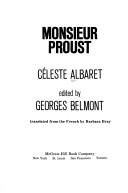
His housekeeper's memoir of the last decade, dictated in old age: who came to the flat, how the manuscript grew, what he ate. Nothing else puts you as close to the man writing, and it is the book that most often turns duty into affection.
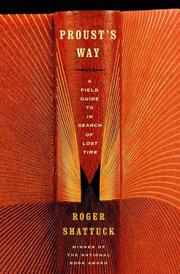
A field guide from a critic who read the novel for fifty years, including practical advice about pace, memory and which passages reward slowness. Read it before volume one and keep it for the volumes after.

Every painting Proust names, reproduced beside the passage that names it. The novel's descriptions constantly assume you can see a Vermeer or a Botticelli; this is the one companion that solves a problem no amount of rereading solves.
Volume one, which is the real test
IntermediateGet through Swann's Way and make an honest decision about the remaining six volumes
▸ Study plan for this stage
Pace: Eight to ten weeks. Swann's Way is 495 pages in three unequal parts, and the pacing should be deliberately uneven: allow three weeks for the first part and expect to slow to ten pages a day in the opening fifty, then move faster through the central novella. The Year of Reading Proust is 268 pages an
- The first fifty pages are the ones that stop people: a child in bed waiting for his mother to come and kiss him goodnight, described at a length that feels like an error. It is not an error, and it is the novel establishing its unit of attention — that an ordinary evening will be given the space a b
- The famous scene in which a cake dipped in tea restores an entire lost town is the book's thesis stated early: that voluntary recollection produces only facts, and that the past returns whole only by accident, through a sensation.
- The first part sets out the two directions of a childhood walk, which become the novel's organising opposition — one associated with bourgeois desire and the other with aristocracy and art. That the two are eventually shown to meet is the structural payoff of the entire seven volumes.
- The central section is a self-contained novella about a love affair that predates the narrator's birth, and it is the most conventionally gripping thing Proust wrote: a man of taste falls for a woman he does not even find attractive, and jealousy manufactures the passion that attraction did not.
- It also introduces the little phrase from a sonata — a piece of music that carries the affair's whole emotional history — which is the novel's clearest model for how art holds experience that a person cannot.
- That section is the fair test. If a self-contained two-hundred-page story about jealousy does not hold you, the remaining six volumes will not, and stopping here is a decision rather than a defeat.
- Rose's memoir is here because the reverent criticism will not tell you the truth about the boredom, the stalling and the guilt. She interleaves the reading with an ordinary year of her life and is honest about all three.
- Reading her alongside rather than afterwards matters: her account of week eleven is useful in your week eleven, and useless in retrospect.
- Why does the goodnight-kiss episode need to be that long? Answer in terms of what the novel is establishing rather than defending it.
- State the difference between voluntary and involuntary memory as the madeleine passage presents it, and find a second instance of the same mechanism in this volume.
- What do the two ways of the childhood walk stand for, and what is the reader told about whether they can be reconciled?
- In the central love story, what actually produces Swann's passion? Track the sequence.
- What does the little phrase do for Swann that the affair itself cannot?
- Honestly: did the central section hold you? If not, what specifically failed — the pace, the sentences, or the concerns?
- Read the first fifty pages at ten pages a day, aloud where possible, and do not attempt to speed up. That is the whole technique for the opening.
- Mark every involuntary-memory episode in the volume and note what sensation triggers each. The list is short and it is the novel's spine.
- Look up in Karpeles every painting named in this volume as you reach it, rather than in a batch afterwards.
- Write 300 words at the end of the volume on whether you will continue, and compare it with the paragraph you wrote in the first stage.
- Keep a one-line note per reading session about what you actually felt. Rose's book is the model, and it is what makes a multi-year reading survivable.
Next up: If volume one held you, the next volume is lighter than it and the decision effectively makes itself.

Volume one, and the only volume most readers ever need to decide by. Push through the Combray opening to Swann in Love, which is a self-contained novella and the most conventionally gripping thing Proust wrote; if it does not hold you, stop here without guilt.
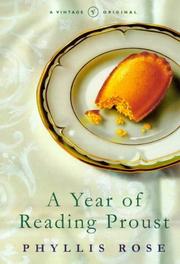
A memoir of actually doing this, interleaving the reading with an ordinary life. Included because it is honest about the boredom and the abandonment, which the reverent criticism is not, and because it is the best argument for going on.
In Search of Lost Time
IntermediateContinue into the full novel with a sustainable pace and a clear sense of what the last volume pays back
▸ Study plan for this stage
Pace: A year at fifty pages a day, or several years in bursts — both are legitimate and the first is easier. Volume two is 558 pages and the full novel runs to roughly four thousand across seven volumes. Read volume two next at your existing pace, then commit to a fixed daily quota for the remainder. Note
- Volume two is where the reading stops being an experiment. It is lighter than volume one, much of it set at a seaside resort, and it introduces the friendships, the aristocracy and the band of girls that carry the next several thousand pages.
- It also introduces the novel's painter, whose studio scene contains Proust's clearest statement of what he thinks art does: renaming things as they are perceived rather than as they are known.
- The seven volumes divide unevenly in difficulty. The third is the most socially dense and the hardest to love; the middle volumes contain the long jealousy sequence that many readers find punishing; the last is the one everything has been for.
- The final volume retroactively explains the beginning. A series of accidental sensations at a party — an uneven paving stone, a spoon against a plate, a stiff napkin — produce the same recovery the cake produced in volume one, and the narrator finally understands what he is to do with it.
- That discovery is that the novel you have been reading is the one he is about to write. The book is the record of becoming the person capable of writing it, which is why nothing before the last volume is quite legible on a first pass.
- The party scene that closes the novel also does something no other book attempts at that scale: everyone the narrator has known appears at once, decades older, almost unrecognisable, and time becomes visible as a physical fact.
- Translation matters more here than for most novels. The long-standing revised English version reads as one voice across the whole; the multi-translator edition assigns each volume a different translator and reads differently volume by volume. Pick one and stay in it.
- Proust died before finishing his revisions, so the last volumes were published posthumously and are less polished than the first. That unevenness is a fact about the text and not a failure of your reading.
- What does volume two add that volume one did not have, and why does it convert most readers who reach it?
- What does the painter's studio scene say art does? Compare it with what the little phrase did for Swann.
- In the final volume, what triggers the recoveries, and how do they differ from the madeleine?
- What is the narrator's vocation, and at what moment does he understand it? Name the page.
- The two childhood ways are eventually shown to be connected. How, and what does the connection do to the novel's shape?
- Having finished, check the expectation you wrote down in the first stage. What did the four thousand pages give you that you did not predict?
- Fix a daily page quota and hold it. Nobody finishes this novel by enthusiasm; they finish it by arithmetic.
- Keep a single running list of characters with one line each, updated as they reappear. The cast is large and reappears after hundreds of pages.
- Compare one paragraph in two translations before committing to an edition, and then do not change edition mid-novel.
- At the end of each volume, write 200 words on what changed. Seven such notes are a better record of the reading than any summary.
- After the final volume, reread the first fifty pages. That reread is the actual reward and takes an hour.
Next up: This is the end of the path: the decision, the companions, volume one as the honest test, and the full novel read at a pace that finishes it.

Volume two, and the point at which the reading stops being an experiment. It is lighter than volume one and set largely at the seaside, which is why readers who reach it usually finish the rest.
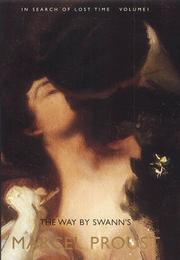
The destination: the complete seven-volume novel. Our catalogue record points at the standard set under its first volume's numbering, so buy the Moncrieff–Kilmartin–Enright revision or the Penguin multi-translator edition as a set. Read fifty pages a day and it takes a year; read it in bursts and it takes ten.
Discussion
Keep reading
Paths that share books, cover the same subject, or open a related topic.