Marcel Proust Reading Order: Where to Start
This curriculum is designed for an expert reader who wants to engage with Proust's In Search of Lost Time at the deepest level — not as a casual introduction, but as a sustained intellectual and aesthetic encounter. The path moves from the most essential volumes of the novel itself, to the critical and biographical frameworks that illuminate its architecture, and finally to the philosophical and intertextual companions that reveal Proust's place in the history of thought and literature.
The Novel Itself: The Essential Core
ExpertRead the volumes of In Search of Lost Time that form the irreducible spine of the work — the opening, the pivot, and the culmination — establishing the full arc of Proustian time, memory, and selfhood before tackling the whole.
▸ Study plan for this stage
Pace: 16–20 weeks total, reading ~25–35 pages per day. Suggested breakdown: Swann's Way alone (3–4 weeks, ~430 pages); Remembrance of Things Past Vol. 1 (covering Swann's Way again plus Within a Budding Grove and The Guermantes Way Vol. 1) as a re-immersion and expansion pass (5–6 weeks, ~900 pages); The
- Involuntary Memory vs. Voluntary Memory: The distinction between willed recollection (which yields only flat, lifeless images) and the sudden, unbidden resurgence of the past — epitomized by the madeleine episode in Swann's Way — as the engine of the entire novel's aesthetic and philosophical projec
- The Proustian Sentence and Narrative Time: How Proust's famously long, subordinate-clause-laden sentences enact the very experience of memory they describe — time dilating and contracting within a single paragraph, so that form and content are inseparable.
- The Self as Multiple and Discontinuous: Proust's radical claim, developed across all four volumes, that the 'I' is not a stable entity but a succession of selves separated by time; the Marcel of Swann's Way is a stranger to the Marcel of Time Regained.
- Love as Epistemological Failure: Traced through Swann's obsession with Odette in Swann's Way and the Narrator's agonized relationship with Albertine in The Captive and the Fugitive — love is shown to be a projection of the lover's imagination, never a true knowledge of the beloved.
- Jealousy, Possession, and the Fugitive: The Captive and the Fugitive dramatize how the desire to possess another person is structurally doomed — the more one tries to fix and know the beloved, the more elusive she becomes, culminating in Albertine's flight and death.
- Social Performance and the Guermantes World: The Guermantes Way (within the Vol. 1 omnibus) exposes aristocratic society as a theater of codes, snobbery, and wit — a world the Narrator idolizes and then demystifies, mirroring the novel's broader movement from illusion to disillusionment.
- Art as the Only True Time Regained: Time Regained delivers the novel's culminating argument — that only the work of art can rescue lost time from oblivion, transforming suffering and loss into something permanent; the Narrator's vocation as a writer is finally understood and accepted.
- The Architecture of the Whole: Reading these four volumes reveals the novel's structural symmetry — Swann's Way plants every seed (the madeleine, Swann's love, the two 'ways'), and Time Regained harvests them all, with The Captive/Fugitive and the Guermantes sections providing the emotional and soci
- After reading Swann's Way, can you explain in your own words why the madeleine episode is philosophically central — not merely a charming anecdote — and how it differs from the Narrator's deliberate attempts to remember his childhood?
- How does Proust use the 'two ways' (Swann's Way and the Guermantes Way) as more than geographical paths — what do they represent thematically, and how does Time Regained retrospectively collapse the distinction between them?
- In The Captive and the Fugitive, what does the Narrator's treatment of Albertine reveal about Proust's theory of love and jealousy? Why is Albertine's absence (as a fugitive and then as a dead person) more tormenting than her presence?
- How does the social world of the Guermantes (as depicted in the Vol. 1 omnibus) function as a parallel structure to the love plots — what does the Narrator seek there, and how is that desire similarly disappointed?
- By the end of Time Regained, what has the Narrator concluded about the relationship between time, suffering, and artistic creation? How does the final matinée at the Princesse de Guermantes's house synthesize the novel's major themes?
- Across all four volumes, how does Proust represent the discontinuity of the self over time? Choose two moments — one from Swann's Way and one from Time Regained — and show how they speak to each other across the novel's arc.
- The Madeleine Journal: Immediately after reading the madeleine passage in Swann's Way, write a 500-word account of your own experience of involuntary memory — a smell, sound, or taste that suddenly resurrected the past. Then annotate it using Proust's vocabulary (sensation, essence, time, resurrection) to feel the concept from the inside.
- Sentence Dissection Workshop: Select three of Proust's longest sentences — one from Swann's Way, one from The Captive and the Fugitive, and one from Time Regained. Diagram each sentence by identifying its main clause and every subordinate layer. Then write a one-paragraph summary of what each sentence 'does' narratively and emotionally that a shorter sentence could not.
- Character Dossier — Swann and the Narrator as Mirrors: Keep a running two-column dossier as you read. On the left, log Swann's behavior toward Odette (from Swann's Way); on the right, log the Narrator's parallel behavior toward Albertine (from The Captive and the Fugitive). After finishing both volumes, write a one-page reflection on what Proust achieves by making the Narrator repeat Swann's mista
- The Two Ways Map: After finishing the Vol. 1 omnibus, draw or diagram the symbolic geography of the 'two ways.' Label each path with the values, characters, social worlds, and themes associated with it. Then, after reading Time Regained, return to your map and annotate it with how the novel's ending reframes or reunites the two paths.
- Time Regained Close-Reading Essay: Write a 750–1,000-word close reading of the final 20 pages of Time Regained, focusing specifically on the Narrator's theory of art and memory. Quote directly from the text at least four times. Argue for what you think is Proust's single most important claim about why art matters — and push back on it with at least one counterargument.
- Arc Tracking — Loss and Recovery: Create a simple timeline running across all four volumes. Mark every significant moment of loss (a person, an illusion, a self) and every moment of recovery or transformation. At the end, assess the overall emotional and philosophical trajectory: does Proust's ending feel earned by the losses that precede it?
Next up: Having internalized the novel's full arc — its opening mysteries, its social and erotic middle, and its hard-won aesthetic resolution — the reader is now equipped to return to the volumes they skipped (Within a Budding Grove in full, The Guermantes Way Vol. 2, Sodom and Gomorrah, and The Prisoner's fuller context) not as new territory but as the rich interior of a structure whose walls they alread

The indispensable entry point: the overture, Combray, and 'Un amour de Swann' establish every major theme — involuntary memory, jealousy, time, and the nature of art. Read the Lydia Davis translation for its fidelity to Proust's syntax.

The social world reaches its satirical and psychological peak here; the death of the narrator's grandmother is among the most devastating passages in the novel, and the volume is essential for understanding Proust's moral vision.

The obsessive, claustrophobic study of jealousy and possession with Albertine represents Proust's most radical psychological excavation — the emotional and philosophical center of the entire work.

The triumphant conclusion and the novel's aesthetic manifesto: Proust reveals the theory of art and involuntary memory that retroactively justifies everything that came before. Reading this before the middle volumes is a legitimate expert strategy.
The Novel in Full: Completing the Search
ExpertRead the remaining volumes to experience the complete novel as a unified whole, with the architecture and themes now fully in view.
▸ Study plan for this stage
Pace: 10–13 weeks total: "In the Shadow of Young Girls in Flower" (~3 weeks, ~25–30 pages/day), "Cities of the Plain (Sodom and Gomorrah)" (~3–4 weeks, ~25–30 pages/day), "Finding Time Again" (~4–5 weeks, ~20–25 pages/day, slower to allow for retrospective synthesis of the whole novel)
- The architecture of the complete novel as a unified whole — how the opening volumes' promises are fulfilled or subverted by the close
- Social performance and the theatricality of the aristocracy in 'In the Shadow of Young Girls in Flower': the Swann circle, Odette's salon, and the narrator's idealization of Gilberte and the 'jeunes filles'
- The revelation of Sodom and Gomorrah in 'Cities of the Plain': inversion, secrecy, and the parallel worlds of homosexual desire as a structural and thematic counterweight to heterosexual jealousy
- Jealousy as an epistemological crisis: the impossibility of truly knowing another person, dramatized through the narrator's obsession with Albertine across both 'Cities of the Plain' and 'Finding Time Again'
- Time as the novel's supreme subject: involuntary memory, the destruction and recovery of the past, and the famous madeleine episode revisited in light of the whole arc
- The Proustian epiphany in 'Finding Time Again': the series of involuntary memories at the Guermantes reception and the narrator's resolution to write the very novel we have just read
- Art as redemption and the vocation of the writer: how 'Finding Time Again' retroactively transforms every preceding volume into raw material for the narrator's artistic mission
- The novel's circular structure: how the ending of 'Finding Time Again' loops back to the beginning of the Search, making the reader the co-creator of its meaning
- How does 'In the Shadow of Young Girls in Flower' develop the theme of idealization and disillusionment — particularly through the narrator's relationships with Gilberte and the band of girls at Balbec — and how does this pattern echo or deepen what was established in earlier volumes?
- What is the structural and thematic significance of the 'revelation' scene in 'Cities of the Plain,' and how does Proust use the parallel of Sodom and Gomorrah to reframe the novel's treatment of desire, secrecy, and social identity?
- How does jealousy function as a form of knowledge-seeking in 'Cities of the Plain,' and in what ways does Proust suggest that this pursuit is fundamentally doomed?
- In 'Finding Time Again,' what triggers the cascade of involuntary memories at the Guermantes reception, and how does Proust distinguish these experiences from ordinary recollection? What do they reveal about the nature of time?
- How does 'Finding Time Again' serve as both a conclusion and a key to the entire novel — and in what sense does the narrator's decision to become a writer transform the reader's understanding of everything that came before?
- Looking across all three books in this stage, how has the Proustian social world changed by the end of 'Finding Time Again' — in terms of class, mortality, and the passage of time — and what does this transformation say about Proust's vision of history and memory?
- Architectural mapping: Draw a diagram or timeline of the entire novel's structure using only the three books in this stage as anchors — mark the major turning points, the key epiphanies, and the social 'rises and falls' of characters like Odette, Saint-Loup, and Charlus. Annotate where each book fits into the novel's overall arc.
- Close-reading journal — the epiphany sequence: Select the three most important involuntary memory passages in 'Finding Time Again' (e.g., the uneven paving stones, the stiff napkin, the sound of a spoon). Write a one-page analysis of each, comparing Proust's language and structure to the original madeleine passage from earlier in the novel.
- Character retrospective: Choose one character who appears in all three books of this stage (e.g., Charlus, Albertine, or Odette). Write a 500-word character study tracing their arc across these volumes, focusing on how the narrator's perception of them changes rather than their 'objective' biography.
- Thematic essay — Sodom and Gomorrah as mirror: Write a 600–800 word essay arguing how the theme of inversion in 'Cities of the Plain' functions as a structural parallel to the heterosexual jealousy plots. Use specific textual evidence from that volume.
- The circular ending exercise: Re-read the opening pages of the first volume you read in your entire curriculum alongside the closing pages of 'Finding Time Again.' Write a one-page reflection on how the ending recontextualizes the beginning — what do you now notice that you could not have seen before?
- Synthesis discussion or essay: Write or discuss the answer to this question — 'Is the Search ultimately a novel about memory, about time, about art, or about desire?' Use evidence drawn specifically from 'In the Shadow of Young Girls in Flower,' 'Cities of the Plain,' and 'Finding Time Again' to defend a single, arguable thesis.
Next up: Completing the Search in full equips the reader with the panoramic view of Proust's architecture needed to move into critical and scholarly engagement — whether that means reading secondary literature, comparative studies, or deeper analysis of Proust's manuscripts and influences — because only now can individual passages and choices be evaluated against the whole.

Fills in the crucial middle period — Balbec, Elstir, and the first encounter with Albertine — and deepens the novel's meditation on art, adolescence, and desire.

Proust's most daring social and sexual analysis; the opening scene is one of the great set pieces in world literature, and the volume reframes every character relationship that precedes and follows it.

If using the Penguin Modern Classics edition (translated by Ian Patterson), this serves as a useful re-reading of Time Regained with fresh translation choices that reward comparison and close attention to Proust's final intentions.
Biography and Letters: The Life Behind the Work
ExpertUnderstand the biographical, social, and historical conditions that shaped the novel — Proust's illness, his sexuality, his social world, and his working methods — so that the fiction and the life illuminate each other.
▸ Study plan for this stage
Pace: 10–12 weeks total. Weeks 1–7: William C. Carter's "Marcel Proust" biography (~850 pages), reading roughly 25–30 pages per day, 5 days a week — treat each chapter as a discrete session. Weeks 8–12: "Marcel Proust, Selected Letters, 1880–1903" — read chronologically, ~15–20 letters per sitting, pausin
- The relationship between Proust's chronic asthma and nervous illness and his artistic development — how physical confinement and the cork-lined room became conditions of creation rather than mere obstacles
- Proust's sexuality and the coded, displaced treatment of homosexuality in his life versus its transformation into the Albertine cycle and the Baron de Charlus — the gap between lived experience and fictional transposition
- The Belle Époque social world: the salons of the Faubourg Saint-Germain, the Dreyfus Affair as a moral and social fault line, and how Proust used his social climbing as anthropological fieldwork for the novel
- Proust's working methods as revealed by Carter: the notebooks, the layered revision process, the simultaneous composition of multiple volumes, and his obsessive correspondence as a form of literary labor
- The letters (1880–1903) as a primary source: how to read them as documents of self-fashioning, social negotiation, literary ambition, and emotional dependency — distinct from but continuous with the fiction
- The role of grief and loss — the deaths of his parents, especially his mother Jeanne Weil Proust — as biographical triggers for the novel's deepest themes of time, memory, and mourning
- Proust's Jewish heritage and its intersection with French nationalism, the Dreyfus Affair, and questions of identity, assimilation, and social belonging
- The formation of Proust's aesthetic through early friendships, literary mentors (Anatole France, Ruskin), and the apprentice works that Carter traces before 'À la recherche' takes shape
- According to Carter's biography, how did Proust's illness shape both the material conditions and the thematic content of his writing — and what specific evidence from the Selected Letters (1880–1903) supports or complicates Carter's account?
- How does Carter describe Proust's navigation of his sexuality in his social and private life, and how do the letters from this period reveal the emotional and rhetorical strategies Proust used to manage that navigation?
- What does the arc of the Selected Letters — from adolescence through 1903 — reveal about Proust's evolving literary ambitions, and which letters most clearly anticipate the concerns that will dominate 'À la recherche'?
- How did the Dreyfus Affair function in Proust's biography as Carter presents it, and what tensions does it expose between Proust's social world, his Jewish identity, and his moral commitments?
- In what ways do Carter's biography and the letters together illuminate the gap between Proust's lived relationships (with his mother, with Reynaldo Hahn, with social patrons) and their fictional counterparts in the novel?
- What does Carter identify as the key turning points — biographical, emotional, or intellectual — that moved Proust from the apprentice works of the 1890s toward the conception of 'À la recherche du temps perdu'?
- Biographical-to-fictional mapping: After finishing Carter's chapters on a given period, open your copy of 'À la recherche' (or your notes on it) and identify one character, scene, or theme that clearly draws on the biographical material Carter has just described. Keep a running two-column log — 'Life (Carter)' vs. 'Fiction' — and review it at the end of the stage.
- Close-reading a letter: Choose five letters from the Selected Letters that strike you as especially revealing. For each, write a one-page analysis: What is Proust performing or concealing? What does the letter's rhetoric (flattery, self-deprecation, urgency) tell you about his social and psychological strategies? Compare your reading to any commentary Carter provides on the same letter or period.
- Timeline construction: Build a detailed chronological timeline from 1871 (Proust's birth) to 1903 (the end of the letters volume), drawing on both books. Mark biographical events (illness episodes, deaths, social milestones, Dreyfus Affair moments) alongside literary events (publications, drafts, key correspondences). Use this as a reference tool for all future stages.
- Salon reconstruction exercise: Using Carter's descriptions of the salons Proust frequented (Mme Straus, Mme de Caillavet, etc.), write a one-to-two page 'field report' as if you were an anthropologist observing Proust in one of these settings. Draw on specific details from Carter and, where possible, from the letters. This exercise forces active synthesis of social-historical context.
- Comparative voice exercise: Select a passage from Carter's biography describing a specific emotional episode in Proust's life (e.g., his mother's death, a romantic crisis). Then find a letter from the Selected Letters written close to that period. Write a short reflection (300–400 words) on how the two sources — biographer's narration and Proust's own voice — differ in what they reveal and conceal
- Thematic essay: At the close of the stage, write a 600–800 word essay answering the question: 'Which single biographical fact or pattern uncovered in Carter and the letters do you believe is most essential for understanding 'À la recherche du temps perdu', and why?' This essay will serve as a reference document for all subsequent stages of the curriculum.
Next up: By grounding the reader in the concrete biographical and historical conditions behind the novel — Proust's illness, social world, sexuality, and working methods — this stage transforms abstract literary analysis into an act of informed interpretation, preparing the reader to encounter the novel's text itself with a richly contextualized eye for what is autobiographical, what is transformed, and wh
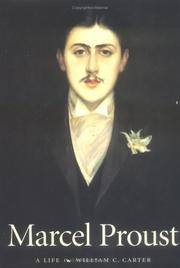
The most comprehensive and scholarly English-language biography; Carter draws on the full correspondence and notebooks to show exactly how lived experience was transformed into the novel's architecture.
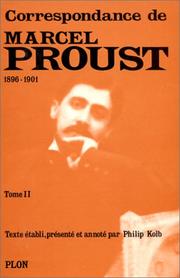
Proust's letters are themselves literary masterpieces and reveal his aesthetic intentions, his anxieties about the novel's reception, and his extraordinary social intelligence — essential primary source material.
Critical Companions: Reading Proust with the Best Minds
ExpertEngage with the most rigorous and illuminating critical interpretations of the novel — narratological, philosophical, and aesthetic — to consolidate and deepen your own reading.
▸ Study plan for this stage
Pace: 8–10 weeks total: ~2.5 weeks per book at a measured pace of 15–20 pages/day. Deleuze (Week 1–3): dense philosophical prose — read in short sessions with note-taking pauses. Beckett (Week 4–5): short but aphoristic — read slowly, twice through. Phyllis Rose (Week 6–8): more essayistic, read at a bris
- The apprenticeship of signs (Deleuze): Proust's novel as a training in interpreting worldly, amorous, sensory, and artistic signs — not a memoir but an epistemological quest
- Essence and style as revelation (Deleuze): art as the only domain where signs yield their full, non-contingent truth, and style as the expression of a unique 'world-view' or essence
- Involuntary memory vs. voluntary memory (Beckett): Beckett's sharp distinction — voluntary memory as habit and deadening repetition, involuntary memory as the only authentic resurrection of the past
- Time, habit, and suffering (Beckett): Beckett's reading of Proust as a philosopher of time's corrosive power, boredom, and the redemptive shock of the unexpected sensation
- The novel as self-creation (Beckett): the Recherche as the story of a vocation discovered — the narrator's life as raw material for the book we are reading
- Living with Proust (Phyllis Rose): the memoir-critical hybrid as a method — how a reader's own biography becomes a lens for and is transformed by sustained engagement with the Recherche
- Proust and the texture of daily life (Rose): how the novel illuminates jealousy, snobbery, illness, aging, and social performance in ways that resonate with contemporary experience
- Triangulating critical voices: how Deleuze's structuralist-philosophical reading, Beckett's existential-aesthetic reading, and Rose's autobiographical-humanist reading produce complementary and sometimes contradictory accounts of the same novel
- According to Deleuze, why is the Recherche fundamentally a novel about signs rather than memory, and how does he distinguish the four regimes of signs (worldly, amorous, sensory, artistic)?
- How does Beckett characterize the difference between habit and involuntary memory, and why does he argue that suffering — not pleasure — is the precondition for genuine artistic perception in Proust?
- In what sense does Beckett read the Recherche as a book about its own genesis? How does this interpretation compare with Deleuze's claim that the novel is an 'apprenticeship'?
- How does Phyllis Rose use her own year of reading as critical method? What does her approach reveal about the Recherche that more purely theoretical readings (Deleuze, Beckett) might miss or suppress?
- Where do Deleuze and Beckett most sharply diverge in their interpretations of Proust — for instance on the role of memory, time, or the status of art — and which divergence do you find most productive for your own reading?
- After engaging all three critics, how has your understanding of a specific scene or motif in the Recherche (e.g., the madeleine, the steeples of Martinville, the Vinteuil sonata) changed or deepened?
- Sign-mapping exercise (Deleuze): Choose one volume of the Recherche and identify at least two examples of each of Deleuze's four sign-regimes. Write a paragraph for each explaining how the narrator 'deciphers' or fails to decipher the sign, and whether it leads toward or away from artistic truth.
- Beckett close-reading drill: Select any three aphoristic sentences from Beckett's essay (e.g., his formulations on habit, boredom, or involuntary memory) and write a one-page gloss on each, tracing the exact passage(s) in the Recherche that Beckett seems to have in mind — even where he does not cite them explicitly.
- Comparative critical annotation: Take a single pivotal scene from the Recherche (the madeleine episode, the death of Bergotte, or the final revelation in Le Temps retrouvé) and write three short paragraphs — one in the voice/framework of Deleuze, one in Beckett's, one in Rose's — showing how each critic would read it differently.
- Rose's method — your own memoir-critical entry: Following Phyllis Rose's hybrid approach, write a 500-word journal entry in which a specific episode from your own life is illuminated by a passage from the Recherche, and vice versa. Reflect on what this method adds to and costs a critical reading.
- Debate preparation: Draft a one-page position paper arguing either FOR or AGAINST the following claim — 'Beckett's Proust is ultimately a more faithful guide to the Recherche than Deleuze's Proust and Signs' — drawing only on evidence from the two books and the novel itself.
- Synthesis essay: After completing all three books, write a 750–1000 word essay answering: 'What is the Recherche about?' Use at least one key concept from each of the three critics, show where they converge and diverge, and conclude with your own critical position.
Next up: Mastering these three critical frameworks — Deleuze's semiotic, Beckett's existential, and Rose's autobiographical — equips the reader with a flexible interpretive toolkit that any subsequent stage (whether focused on historical context, translation studies, or thematic deep-dives) can build directly upon, since the reader now has both a vocabulary and a habit of triangulating perspectives rather

The most philosophically original reading of Proust ever written; Deleuze reframes the entire novel as an apprenticeship in the interpretation of signs, transforming how one understands its structure and purpose.

Beckett's early essay is a dense, brilliant, and deeply personal encounter with Proust's treatment of time and habit — essential reading that also reveals how profoundly Proust shaped one of the twentieth century's greatest writers.
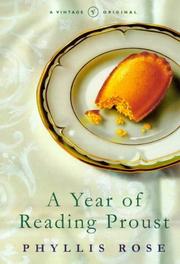
A rigorous yet personal account of reading the entire novel in a year; it models the kind of sustained, reflective engagement the expert reader should aspire to and raises questions about how Proust is lived as well as read.
Discussion
Keep reading
Paths that share books, cover the same subject, or open a related topic.